
Your First BJJ Competition: How to Prepare Without Losing Yourself

Your first BJJ competition is a strange kind of day: a few minutes on the mat that you have thought about for weeks. It is also completely optional. Nobody at Knots & Collar needs a medal to belong here. But if you are curious about testing yourself, this is the honest guide to preparing well — the divisions, the weight, the nerves, and what to carry home whether you win or lose.
Should you compete at all?
Let us settle this first, because it matters. Competition is not compulsory. You can train for years, earn your blue belt and your purple belt, become a genuinely skilled grappler, and never once step onto a competition mat. That is a complete and respectable path. At Knots & Collar we teach Kindness Over Toughness — growth over medals, learning over ego — and that principle does not bend for a tournament.
So why do it? Because a competition compresses pressure in a way regular training rarely can. Your usual partners know your game and, kindly, accommodate it. A stranger across the mat does not. In five minutes they will find the gaps your training environment has quietly smoothed over. That is uncomfortable, and it is also some of the most honest feedback you will ever get. Most students come back from their first competition having learned more about their actual jiu-jitsu than in the previous three months. If you want to grow faster, competition is one of the sharpest tools available — and if you would rather grow through consistent training alone, that is genuinely fine too.
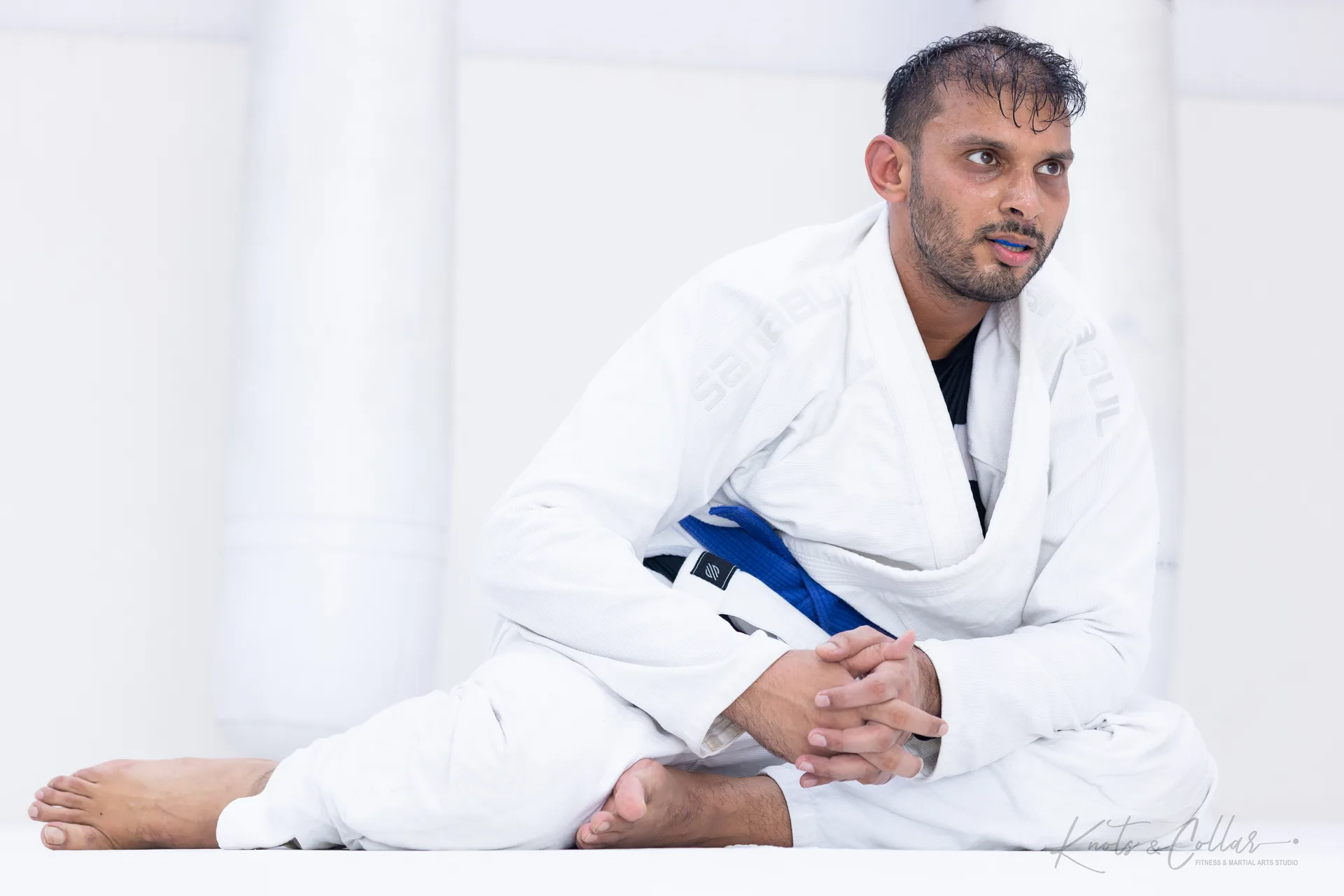
Gi, no-gi, and the rulesets you will meet
When you register, you will choose gi or no-gi, an age group, a belt division, and a weight class. Start with the format you actually train most. If your foundation is in the gi, compete in the gi first — the grips and the slower pace will feel familiar under pressure. If you have spent more time in no-gi, that is your home. There is no rule that you must pick one forever; many students eventually do both. If you are still weighing the two formats, our gi vs no-gi guide for beginners walks through the differences in detail.
The other thing to understand is the ruleset, because scoring shapes how you should play. Most gi events, and many no-gi ones, run on IBJJF-style points: two points for a takedown, three for a guard pass, four for mount or back control, two for a sweep, with a submission ending the match outright. Under these rules, controlling position patiently and scoring is a sound game plan. Some no-gi events instead use ADCC-style or submission-only formats, where scoring differs, overtime rules change, and leg locks that are restricted for beginners under IBJJF rules may be permitted. None of this is complicated once you read it, but you must read it. Pull up your specific event's ruleset, and ask your coach which positions score under it, so nothing on the day is a surprise.
Weight: pick your division honestly
Here is the part where new competitors most often hurt themselves, and it is entirely avoidable. Weight classes exist to keep matches fair. They are not an invitation to crash-diet down two categories in the week before an event.
For a first competition, the sensible target is to cut nothing at all. Register in the division closest to your normal walking weight — the weight you carry when you are eating and sleeping normally. A hard cut leaves you dehydrated, weak, foggy, and slow, and those deficits cost you far more across a five-minute match than the small size advantage a lower class might buy. Grip strength fades. Cardio collapses. Reactions dull. You will have trained for months and then handed the match away at the scale.
Train sensibly in the weeks beforehand, eat well, sleep, and let your body settle where it settles. If you genuinely sit between two classes, choose the higher one for your first event and compete strong and hydrated. There will be time later, with a coach's guidance, to think about weight management properly. Your first competition is not the day for it.
Build a small, reliable game plan
You do not win your first competition with thirty techniques. You win — or, more importantly, you compete well — with three or four that you can hit under pressure when your heart is pounding and your mind has gone quiet.
Sit down with your coach and map a simple chain. Where do you want the match to start: standing, or pulling guard? If you get the takedown or the pull, what is your passing or sweeping path? Once you are on top, what is your control position and your one or two submissions from there? What is your escape if you end up underneath? That is a game plan — a short, honest sequence built from what already works in your rolls, not a wish list of what you hope to learn by Saturday. Under real pressure you will revert to your strongest tools anyway, so spend the run-up sharpening those rather than adding new ones. Our guide on how to improve at BJJ faster goes deeper on building an A-game before a B-game.
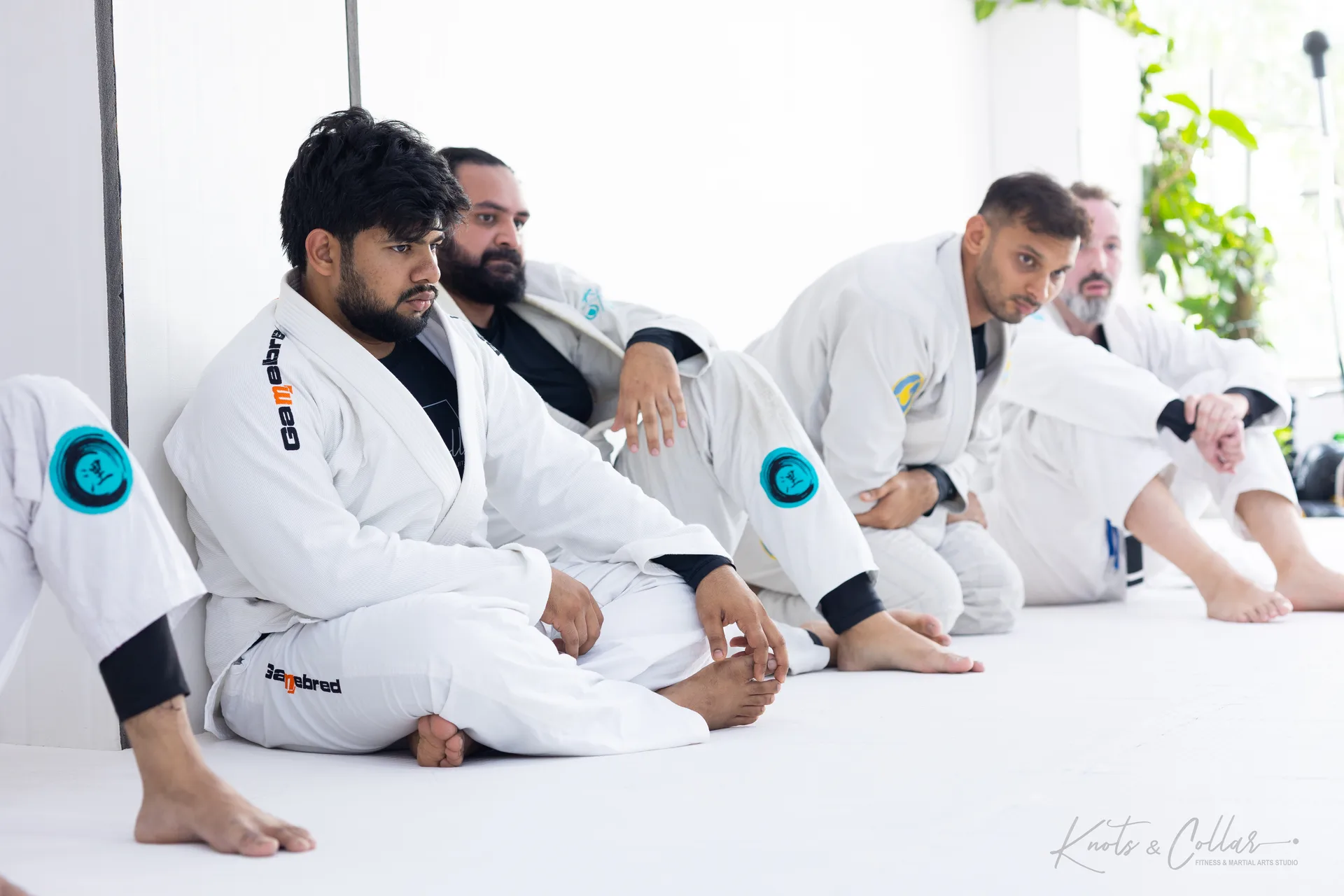
Managing nerves on the day
You will be nervous. Everyone is — the black belts you admire were nervous at their first competition, and many still are before big matches. Nerves are not a sign that something is wrong; they are your body preparing to work hard. The goal is not to feel calm, it is to function while nervous.
A few things genuinely help. Arrive early, so you are not rushing and can see the venue, the mats, and the flow of matches before yours. Warm up properly rather than sitting cold and anxious in a corner — a light roll or some movement settles the mind as much as the body. Keep your breathing slow and long in the minutes before you are called; short, shallow breathing feeds panic. And narrow your focus to the first exchange only. You do not need a plan for the whole match, you need to know what you do in the first ten seconds. Everything after that is just jiu-jitsu, which you already know how to do. When the referee starts the match, the nerves usually vanish — the body remembers the training and gets on with it.
The competition scene in India
You do not need to travel to another country to compete. India's grappling scene has grown steadily, with gi and no-gi tournaments running through the year across cities including Delhi-NCR, Mumbai, Bangalore, Pune and Hyderabad, alongside larger international-affiliated circuits that hold events here. Divisions typically run by belt, age and weight, and beginner white-belt brackets are common and welcoming.
For most of our students, a first competition is a local or regional event where the travel is manageable and the stakes feel human-sized. We help you pick one that fits your level, and we travel with students where we can, so you are not standing at the bullpen alone. If you want the wider picture of training and competing here, our complete guide to BJJ in India covers the landscape. When you are ready, just ask us and we will point you toward a sensible first event.
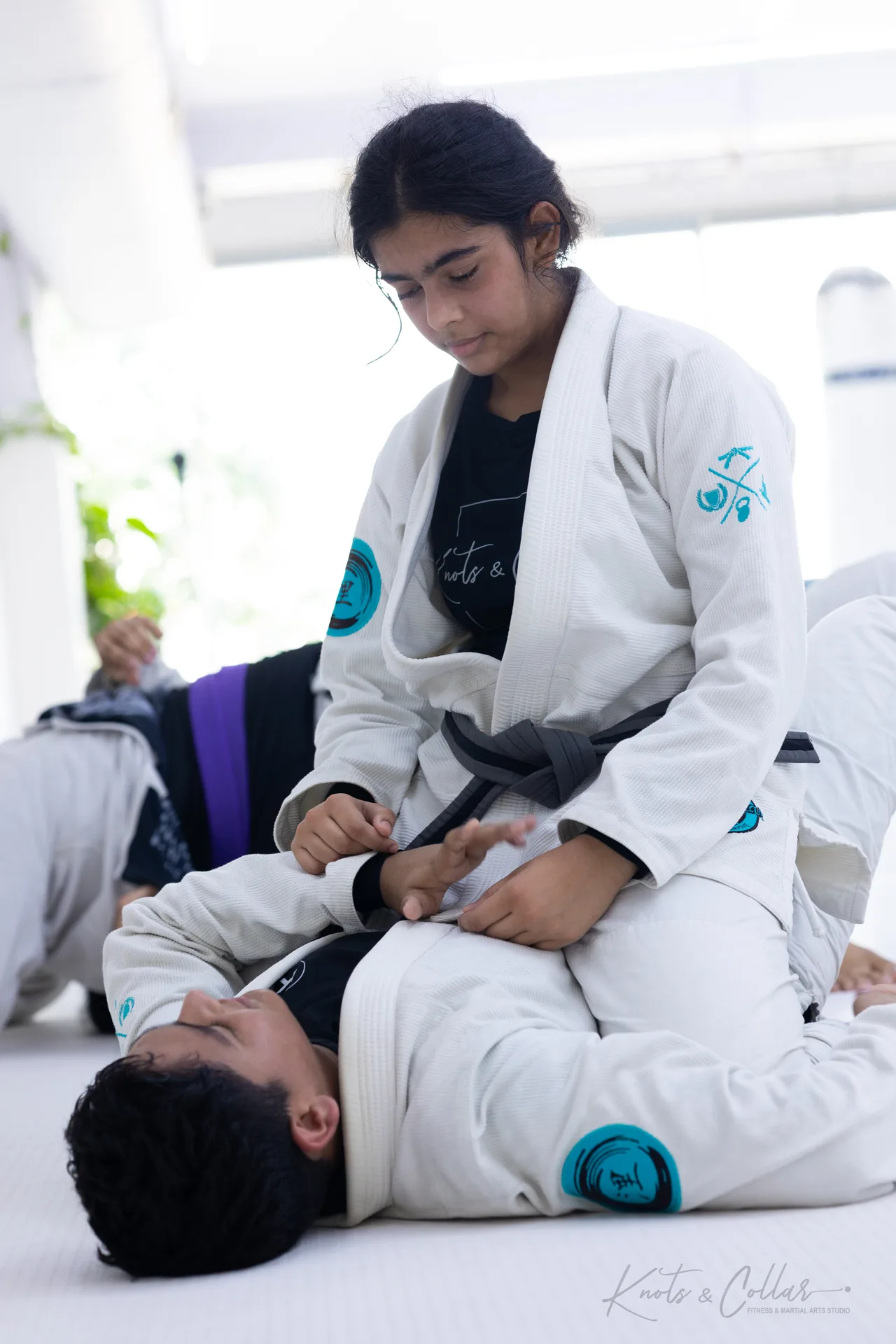
Recovery, and what to take from a loss
However the day goes, it is not the end of a story — it is one data point in a long one. In the days after, recover properly: rest, eat, sleep, and let sore joints settle before you throw yourself back into hard training. If you competed in the morning, you do not need to prove anything by rolling hard that same night.
And you may lose. Most people lose their first competition, and that is completely normal — you are matched against strangers who trained just as hard to be there. A loss is not a verdict on you. It is a detailed, honest map of what to work on next: the takedown you could not stop, the guard pass you could not answer, the moment your cardio dipped. Take that map back to the mat. This is exactly the mindset we mean by Kindness Over Toughness — you compete without ego, you learn from whoever beats you, and you measure the day by how much you grew, not by the colour of a medal. The students who improve fastest are the ones who can lose a match on Saturday and be curious about it by Monday.
If a first BJJ competition is something you would like to work toward, you do not have to decide today — and you do not have to do it at all. Come and train first. When the time feels right, we will help you prepare properly. You are welcome to schedule a visit and see how we train, no pressure either way.
FAQs
Do I have to compete to get good at BJJ?
No. Competition is completely optional at Knots & Collar. Plenty of students train for years, earn their belts, and never enter a tournament. Competing is one tool for accelerating growth, not a requirement. It compresses a lot of pressure into a few minutes and shows you exactly where your game holds up and where it does not — but you can get much of that from hard open mats and rolling with visitors too.
How much weight should I cut for my first BJJ competition?
For a first competition, ideally none. Register in the division closest to your walking weight so you can eat and drink normally in the week before. Hard weight cuts leave you dehydrated, weak, and slow — which matters far more in a five-minute match than the small size advantage a cut might buy. Train sensibly, pick your division honestly, and compete healthy.
What rulesets will I see at a beginner BJJ competition in India?
Most events run on IBJJF-style points rules — points for takedowns, guard passes, mount, back control and sweeps, with submissions ending the match. Some no-gi events use ADCC-style or submission-only formats with different scoring and leg-lock rules. Read the specific ruleset for your event beforehand and ask your coach which positions score, so nothing on the day surprises you.
Where can I compete in BJJ in India?
India has a growing tournament scene, with gi and no-gi events run across cities including Delhi-NCR, Mumbai, Bangalore, Pune and Hyderabad through the year, plus larger international-affiliated circuits that visit the country. At Knots & Collar we help students pick an event that fits their level and travel with them where we can. Ask us and we will point you to a first competition that suits you.