
BJJ for Teenagers: Building Character in the Teen Years
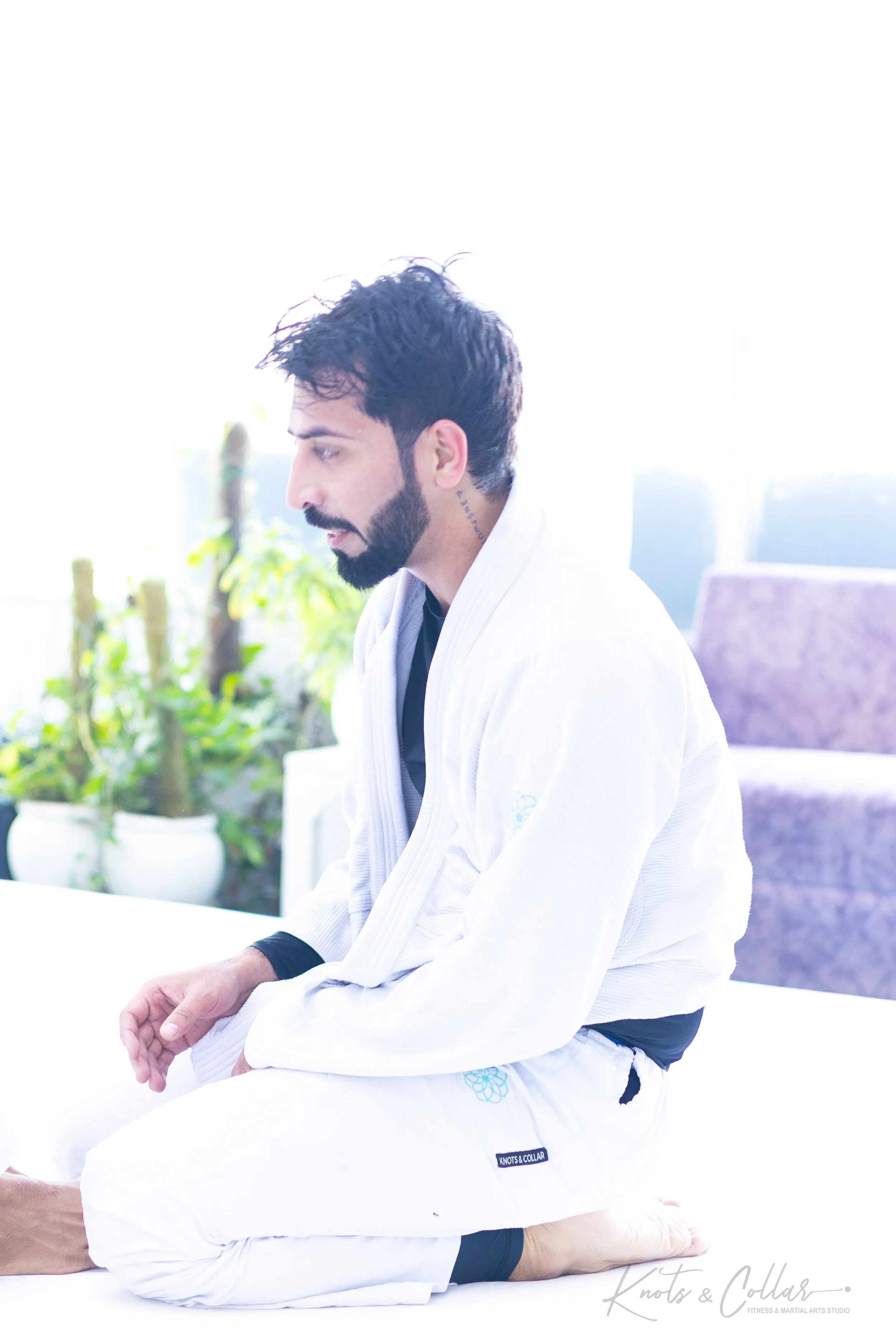
The teenage years ask a lot of a young person: exams, screens, shifting friendships and the daily work of figuring out who they are. Brazilian Jiu-Jitsu will not solve all of that, but it gives a teenager a real place to stand while they do the figuring out. Here is how BJJ for teenagers works at Knots & Collar in Defence Colony, New Delhi, and why parents keep bringing their teens back to the mats.
What teenagers are carrying right now
Ask a fourteen-year-old in Delhi how their week is going and the honest answer is often: full. There is the pressure of marks and board exams. There is the phone, which never stops, and the quiet, constant comparison it invites — everyone else's holidays, everyone else's bodies, everyone else's confidence, all curated and glowing. There is the ordinary but heavy work of belonging, of not saying the wrong thing, of being liked. And underneath all of it sits the biggest question of the teen years: who am I, when nobody is telling me who to be?
Screens make this harder in a specific way. They offer attention without effort and reward without risk, and they rarely ask a teenager to be uncomfortable, to fail in front of others, or to try again. But growing up is largely the practice of doing exactly those things. A teenager who has never been allowed to struggle safely can reach sixteen or seventeen with a fragile kind of confidence — the sort that looks fine until it is tested.
Confidence you cannot fake
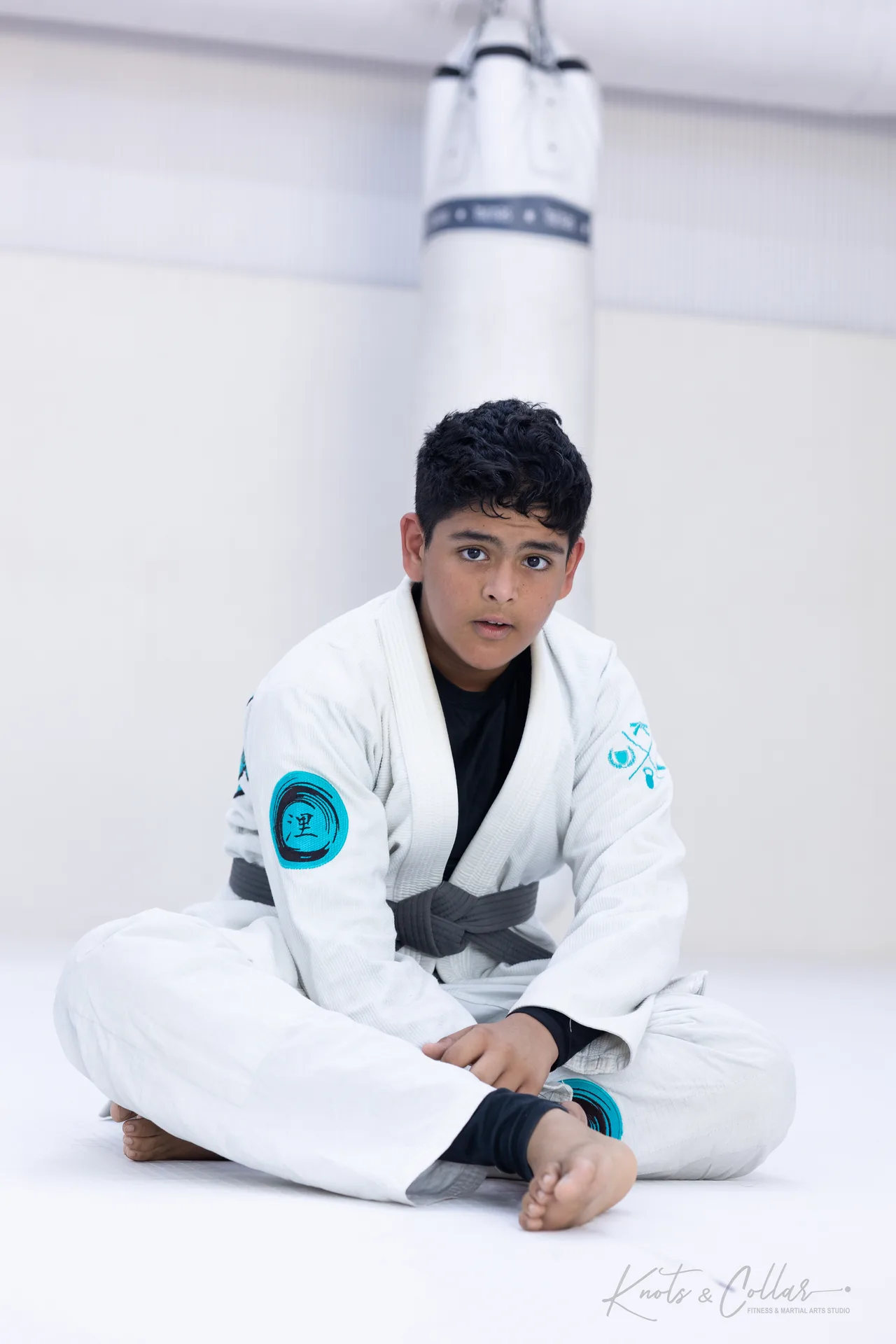
The confidence a teenager builds on the mats is different because it is earned. There is no shortcut in jiu-jitsu. A teenager cannot argue their way out of a bad position, and they cannot pretend to know something they have not drilled. They learn a technique, they try it against someone who is honestly resisting, it fails, and they adjust. Over weeks and months, that loop does something a motivational quote never can: it teaches a young person that they can face a hard problem, stay calm, and work through it.
This is the quiet promise of martial arts for teens. The confidence does not come from winning. It comes from surviving the moment when things go wrong — being stuck, being tired, being outmatched — and finding out that they can breathe, think, and keep going. A teenager who has done that a hundred times on the mat carries a steadier version of themselves off the mat, into the exam hall and the classroom and the friendship that has gone quiet.
Discipline and resilience, built by repetition
Jiu-jitsu rewards the unglamorous virtues. Showing up on a day you do not feel like it. Drilling the same escape until your body knows it without your mind. Losing a round with grace and asking the person who beat you how they did it. None of this is dramatic, and that is the point — discipline is mostly small, repeated choices, and the mats give a teenager a place to practise making them.
Resilience works the same way. In a live round a teenager will be in a losing position, and they will have two options: panic or problem-solve. The training teaches the second. They learn to notice the rush of frustration, to slow their breathing, and to look for the one small thing they can change. That skill — staying composed when the situation is not in your favour — is exactly what an exam, an interview or a difficult conversation demands later on. We are not teaching teenagers to fight. We are teaching them to keep their heads.
The Bullyproof idea: strong, and kind with it
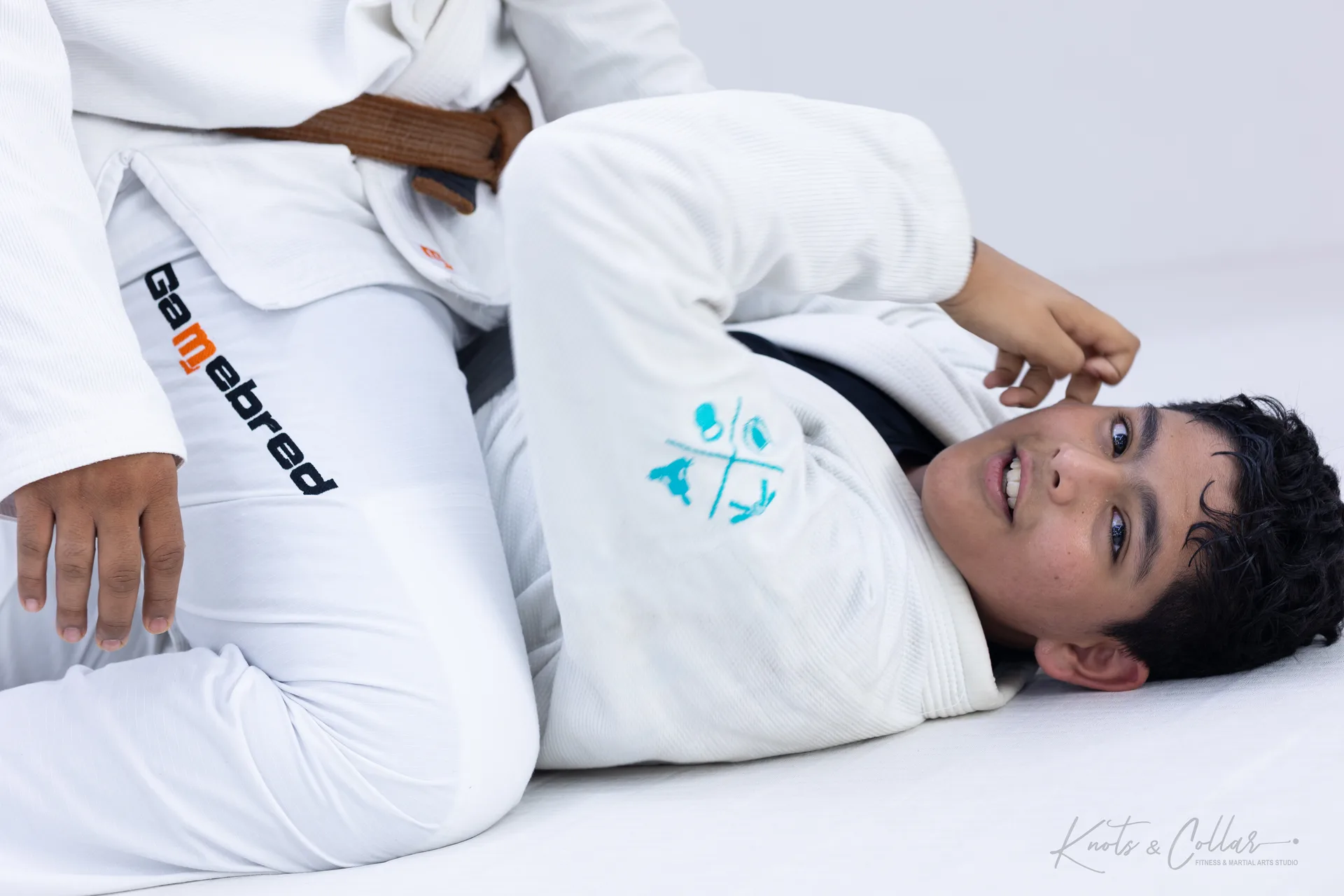
The heart of how we teach young people is an idea we call Bullyproof: a teenager should be able to protect themselves and others without ever becoming a bully. These two things go together. A teenager who genuinely knows they can handle themselves has far less to prove. They do not need to escalate, to posture, or to answer a taunt with a threat. Real capability tends to make a young person calmer, not more aggressive.
So the training deliberately pairs skill with restraint. Teenagers learn to control a situation using position and leverage rather than force — how to defuse, to create space, to walk away, and to use only as much as a moment actually requires. They learn that the strongest response to conflict is usually the quietest one. This is where the studio's ethos, Kindness Over Toughness, becomes something a teenager lives rather than a phrase on a wall. The goal is a young person who is hard to intimidate and slow to intimidate anyone else.
From kids classes into teen and adult training
At Knots & Collar the path is continuous. We teach kids from age 3, and our structured kids and teen curriculum is designed so that a young student is never dropped off a cliff between age groups. The games and fundamentals of the children's classes grow, step by step, into the more detailed and physically honest training of the teen and adult mats. A child who started young does not arrive at thirteen and start over; they graduate into the next stage with people who know them.
A teenager who is completely new is just as welcome. Beginners join and learn the same fundamentals from the ground up, and because the room already runs on respect, older and more experienced students help the newer ones rather than test them. Young students train Monday to Saturday, which means jiu-jitsu can become a steady weekly rhythm — a reliable point in a week that is otherwise full of moving parts.
How sessions are structured, and why they stay safe
Safety is not an afterthought; it is built into the shape of every class. A session opens with a warm-up to prepare the body, moves into guided drilling where teenagers practise technique with a cooperative partner, and then into supervised live practice against someone offering real but measured resistance. Coaches watch the room the whole time.
The single most important safety habit is the tap. Teenagers learn from the first day to tap early and without ego, and to release the moment a partner taps. That mutual agreement — I will look after you, you will look after me — is what makes it possible to train hard and stay whole. Jiu-jitsu is grappling, not striking, so there is no trading of blows; the aim is control, and control does not require getting hurt. With good coaching and a culture of care, serious injuries are uncommon, and teenagers quickly learn to read their own limits and their partner's.
A note to parents in Delhi
If you are a parent weighing this up, here is the plain version. Your teenager will get regular movement away from a screen, a respectful peer group, and a set of adults who hold a consistent, kind standard. They will learn to lose without falling apart and to win without gloating. They will build the sort of confidence that does not need an audience. And they will do it in a room where the first rule is care for the person across from you.
You do not have to take that on faith. Come and see. If you would like to understand more about the foundations this builds on, our writing on BJJ for kids in Delhi and the Bullyproof idea covers where the journey begins, while how BJJ builds confidence beyond the mats looks at where it leads. For the emotional side of the teen years, our note on jiu-jitsu, anxiety and stress may be useful, and if you are still choosing a first martial art, BJJ and karate for kids lays out the honest differences.
When you are ready, schedule a visit and come watch a class in Defence Colony. Bring your teenager, ask us anything, and take your time deciding. There is no pressure — only an open door.
FAQs
At what age can a teenager start BJJ at Knots & Collar?
Teenagers can start at any point in the teen years. We teach kids from age 3, and our structured curriculum carries young students up through the kids classes and into teen and adult training. A teenager with no experience is welcome to begin from the first day.
Does my teenager need to be fit or flexible to start?
No. Teenagers arrive at every level of fitness and coordination, and the training builds those things gradually. Early sessions focus on movement, breathing and the basics of position. Fitness follows the practice rather than being a requirement to begin it.
Is jiu-jitsu safe for teenagers?
Yes, when it is taught carefully. Sessions are structured with a warm-up, guided drilling and supervised practice against a resisting partner. Teenagers learn to tap early and to protect a training partner, and coaches watch every round. Injuries are uncommon because control, not force, is the point.
How do I arrange a first visit for my teenager?
You can schedule a visit through our website and come see a class in Defence Colony before deciding anything. Your teenager can watch or take part, meet the coaches and the group, and you can ask whatever you need to. There is no pressure to sign up on the day.