
BJJ Guard Types Explained: A Beginner's Guide to the Main Guards
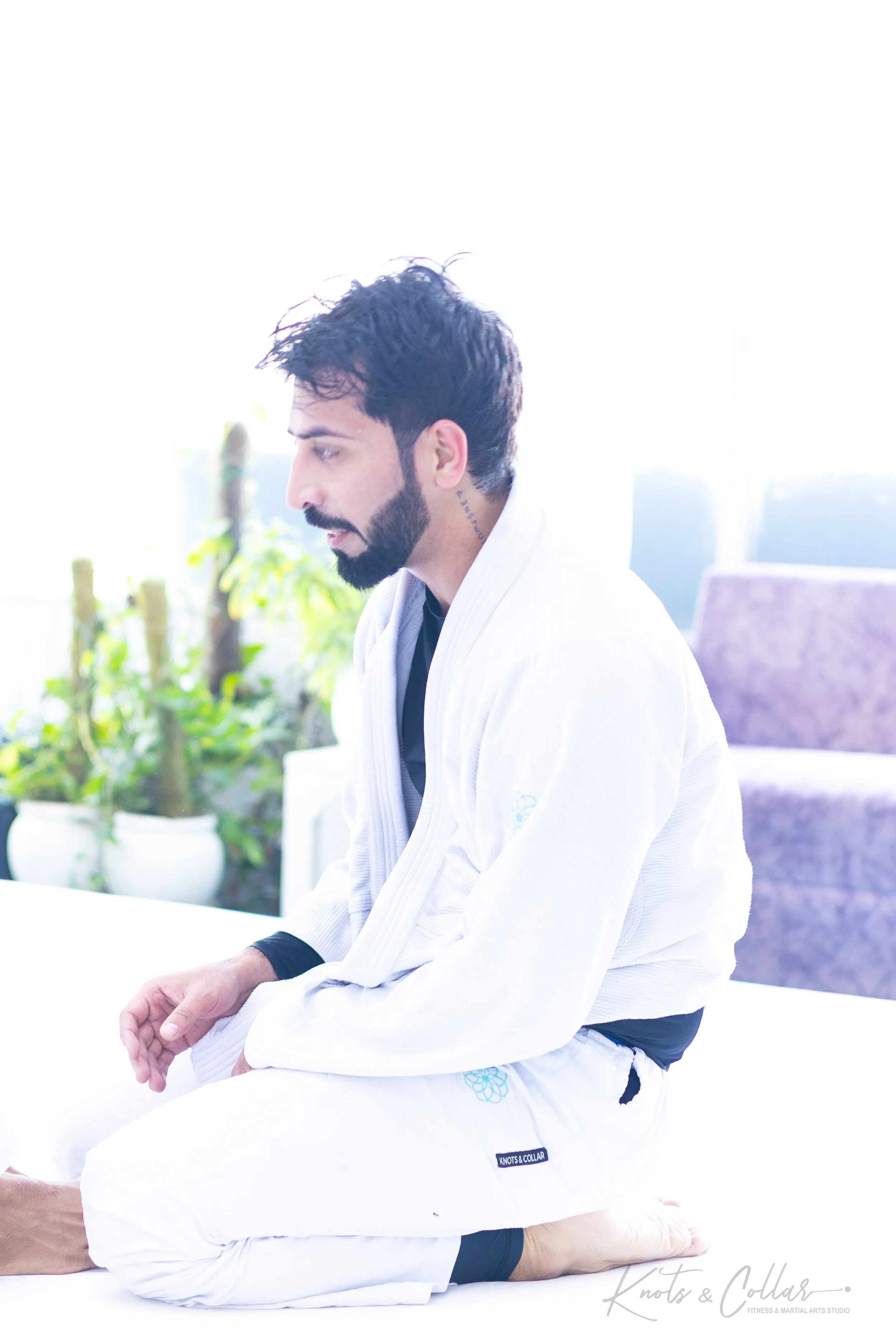
If you are new to Brazilian Jiu-Jitsu, the word "guard" comes up in almost every class — here is a plain, friendly walk through the main BJJ guard types and why the bottom is a place to attack from, not a place to be stuck.
Ask someone outside the sport what happens when you end up on your back in a fight, and they will tell you it is bad news. Brazilian Jiu-Jitsu quietly turns that idea on its head. The BJJ guard is the family of positions you use when your partner is standing over you or kneeling in front of you, and your legs and hips are between the two of you. Far from being a losing spot, guard is where a smaller, calmer person can control a bigger one, defend safely, and go looking for sweeps and submissions. Learning the different guard types is one of the first real milestones on the mats.
At Knots & Collar in Defence Colony, New Delhi, guard is part of nearly every beginner's first month. We teach in the De La Riva lineage, in both Gi and No-Gi, seven days a week, and we introduce the guards in an order that lets each one build on the last. This guide covers the ones you will meet first.
What "guard" actually means in BJJ
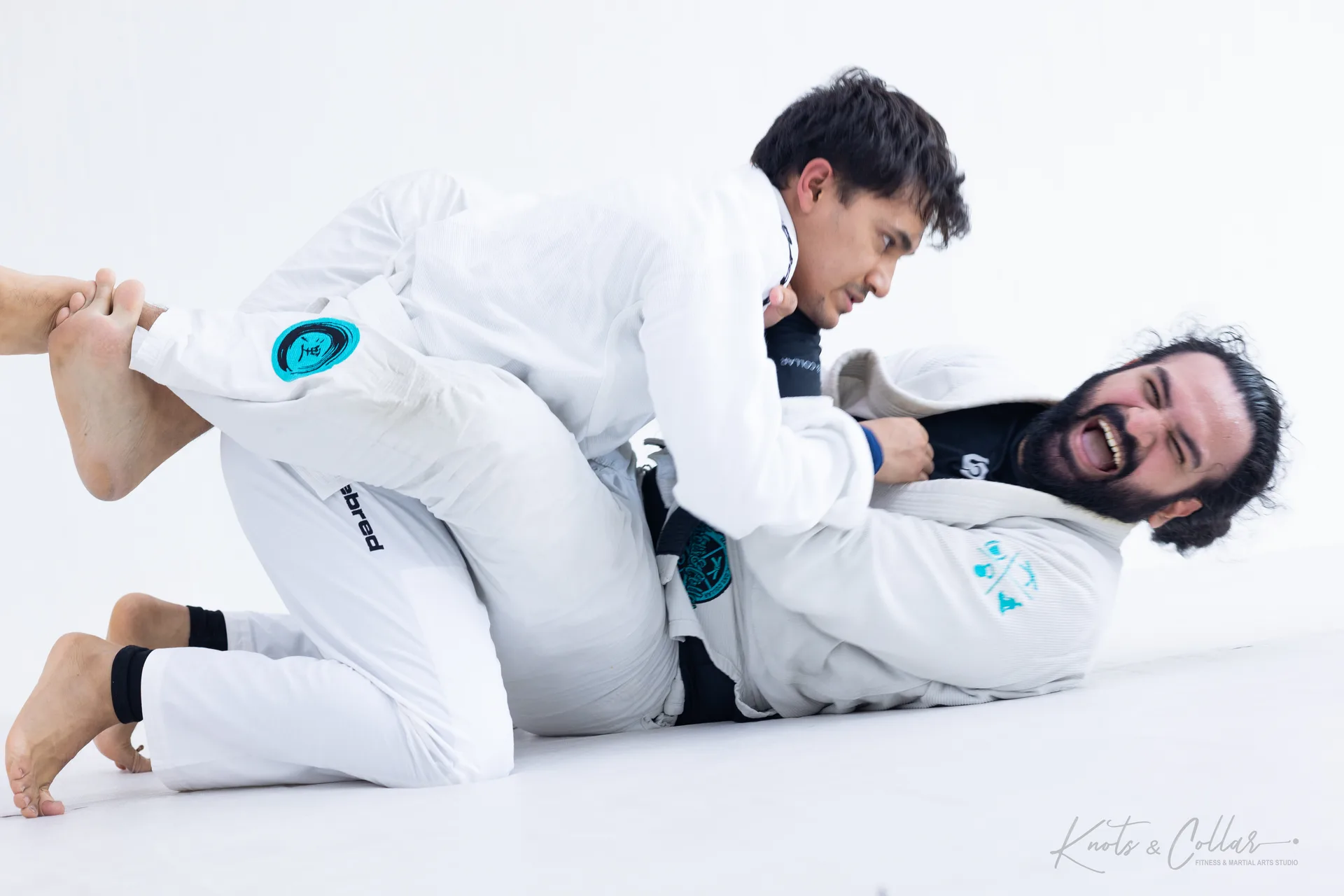
Guard describes any position where you are underneath or in front of your partner and using your legs to manage the distance between you. The person on top is trying to get past your legs to reach a pin; the person playing guard is using grips, frames and hooks to stop that and to create their own attacks. Because your legs are longer and stronger than your arms, they make excellent tools for keeping a heavier person at a manageable range. Every guard type is really just a different way of arranging your legs, hips and grips to solve that same problem.
Closed guard — the first guard you will learn
The closed guard is where most beginners begin. You are on your back, your partner is kneeling in front of you, and your legs wrap around their waist with your ankles crossed behind their back. Because you have locked them in place, you have time to think, breathe and work. Nothing is rushing you.
Closed guard teaches the ideas that every other guard depends on: controlling your partner's posture so they cannot sit up tall, managing grips on the sleeves and collar in the Gi or the wrists and neck in No-Gi, and using your hips to angle off to one side. From here you can break their posture down, sweep them over, or attack the arms and neck. It is forgiving, stable and a genuinely calm place to be once it clicks — which is exactly why it comes first.
Open guard — when your legs come off the lock
The moment your ankles unlock and your feet start pressing on your partner's hips, thighs or arms, you are in open guard. This is less a single position and more a whole world of them, and it is where a lot of the creativity in modern BJJ lives. Open guard asks more of your timing and grips than closed guard does, because your partner can move more freely, but it also opens up far more ways to off-balance and sweep them.
Beginners often meet open guard as soon as their closed guard gets opened up, so it is worth getting comfortable with early. The key habit is simple: keep something connected to your partner at all times — a foot on the hip, a grip on the sleeve — so there is never a clean gap for them to charge through. If you want a sense of how open guard feels different with and without the jacket, our guide to the difference between Gi and No-Gi BJJ is a good companion read.
Half guard — the honest middle ground
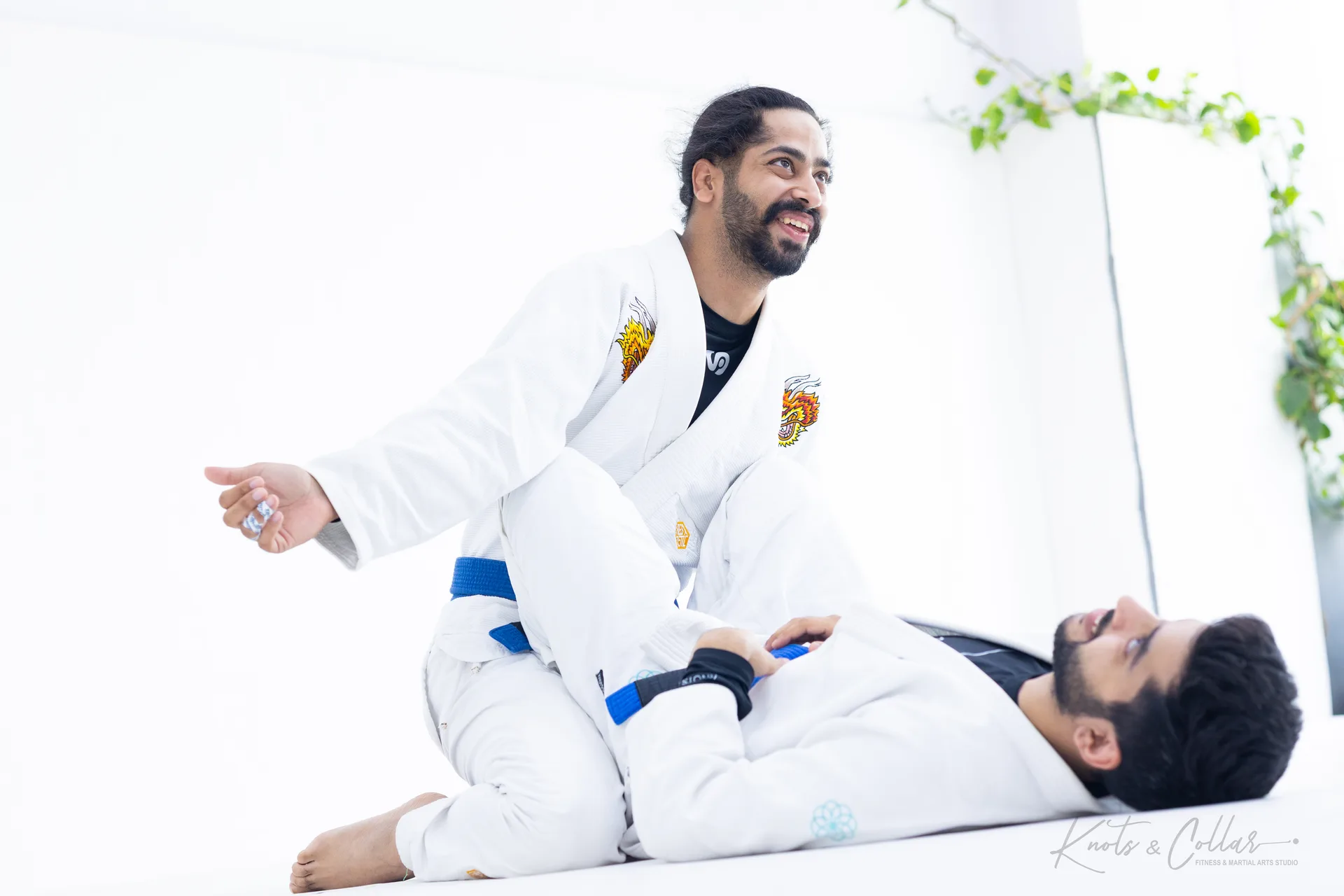
Half guard happens when your partner has worked one leg free but you have trapped their other leg between yours. For a long time half guard had a reputation as a spot you got stuck in on the way to being pinned. That is no longer how we think about it. Half guard is a genuine attacking guard, full of sweeps and ways to take the back, and it becomes a favourite for many students because it works so well when you are underneath someone heavier.
The turning point for most beginners is learning to get onto their side rather than lying flat, and to place an underhook — an arm threaded under their arm — so you are the one applying pressure, not just receiving it. Once that habit sets in, half guard stops feeling defensive and starts feeling like a launchpad.
Butterfly guard — sitting up and lifting
Butterfly guard is a seated guard. Instead of lying back, you sit up with the soles of your feet hooked on the insides of your partner's thighs, like two little hooks ready to lift. It is a lively, athletic position that suits close-range exchanges and shows up a great deal in No-Gi, where there are fewer grips to slow the action down.
The whole idea of butterfly guard is elevation: you use those foot hooks together with a grip on the upper body to load your partner's weight and tip them over to one side. Because you are sitting up and facing them, butterfly guard also keeps you active and connected, which many beginners find more intuitive than lying flat. It rewards good posture and a strong core more than raw flexibility, so it is friendly to a wide range of bodies.
De La Riva guard — the guard our lineage is named for
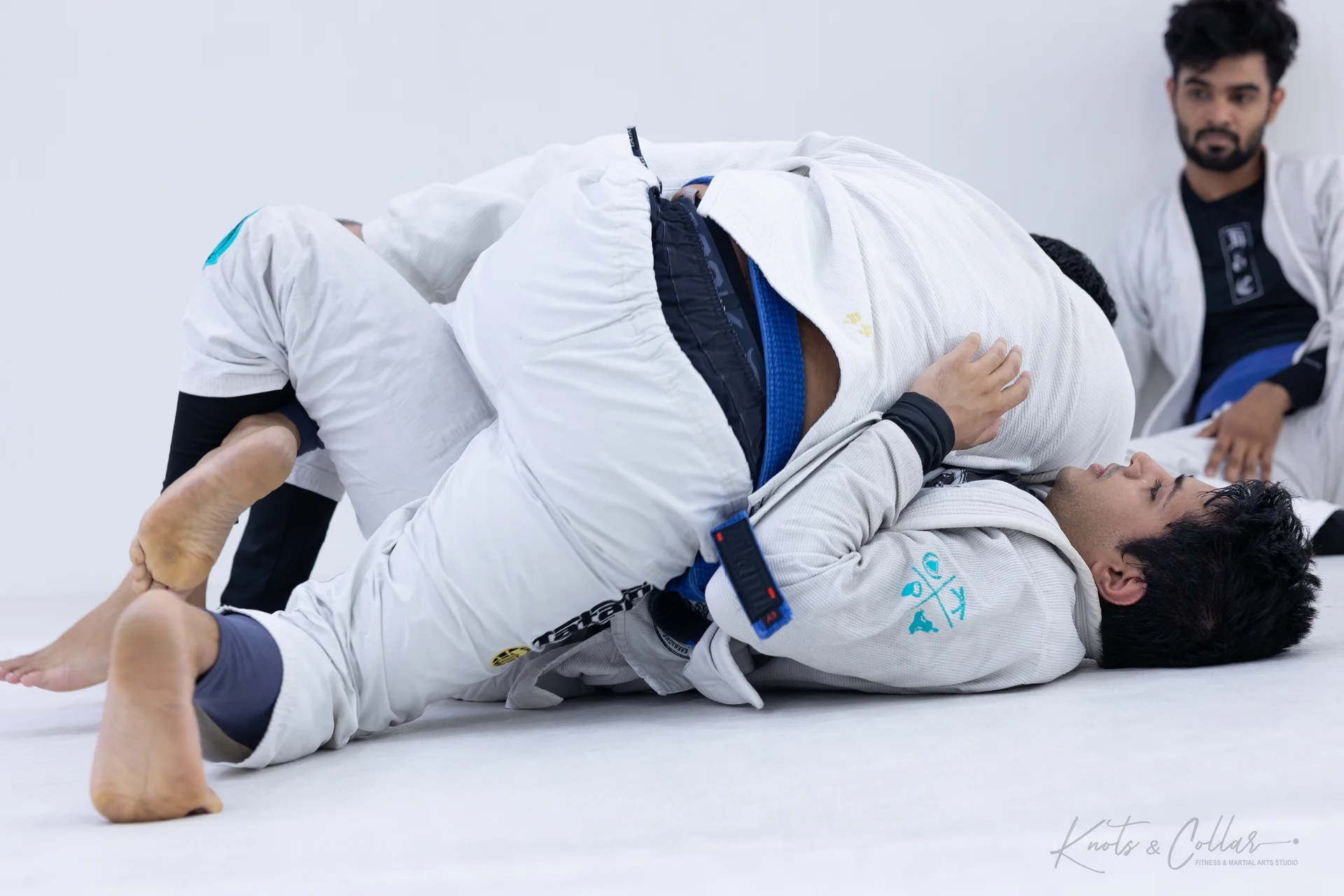
The De La Riva guard is an open guard where you wrap one leg around the outside of your partner's leg, hooking behind their knee, while a grip on the ankle or sleeve completes the control. That single outside hook lets you steer their base, break their balance and flow into a range of sweeps and back-takes. It is a guard built around precision and angles rather than strength.
At Knots & Collar this one is close to home: we teach in the De La Riva lineage, so this guard runs through the way we understand the sport. You will not be thrown into its details on day one, but you will hear the name early and return to it often as you progress. It is a lovely example of how BJJ rewards patient, thoughtful control over hurry.
Guard is an attacking position, not a losing one
If there is one idea to carry away from all of this, it is that guard is offence. Every guard type here — closed, open, half, butterfly and De La Riva — exists so that the person underneath can defend calmly and then attack: sweep the top person over, climb to their back, or set up a submission. That is what makes BJJ such a fair sport for beginners, for smaller players and for anyone who assumed being on their back meant the exchange was already lost. It rarely does.
You do not need to memorise all of these before you step on the mats. In a beginner's first weeks we work mostly from closed guard and introduce the others as they become useful, so nothing feels like too much at once. If you want a sense of the wider journey, our guides on what to expect in your first six months as a white belt and how to improve at BJJ more steadily pick up where this one leaves off.
Come and feel it for yourself
Reading about guard only takes you so far — it makes far more sense the moment a friendly training partner is kneeling in front of you and your legs finally understand the job. If you are curious, you are welcome to come and try it. We train in Gi and No-Gi, seven days a week, in Defence Colony, New Delhi, and beginners are looked after with care and patience. Kindness Over Toughness is not a slogan for us; it is how the room feels. When you are ready, schedule a visit and come and roll. Verified, always.
FAQs
Is playing guard in BJJ a losing position?
No. Guard is one of the few positions in grappling where the person on the bottom can attack, sweep and submit. In BJJ the guard is treated as an active, offensive position, not somewhere you end up by accident.
Which BJJ guard should a beginner learn first?
Most beginners start with the closed guard, because it is stable, forgiving and teaches the core ideas of grips, posture and hips. From there you meet open, half and butterfly guard as you progress. At Knots & Collar we introduce guard types in a steady order, seven days a week, in both Gi and No-Gi.
What is the De La Riva guard?
The De La Riva guard is an open guard where you hook one leg around the outside of your partner's leg to control their base and set up sweeps. Knots & Collar teaches in the De La Riva lineage, so it is a guard we care about and return to often.
Do I need to be flexible to play guard?
No. Guard rewards good timing, grips and hip movement far more than flexibility. Beginners of every age and body type learn guard here, and it becomes more comfortable with a few weeks of steady practice.