
The Open Mat: What Really Holds a Jiu-Jitsu Community Together
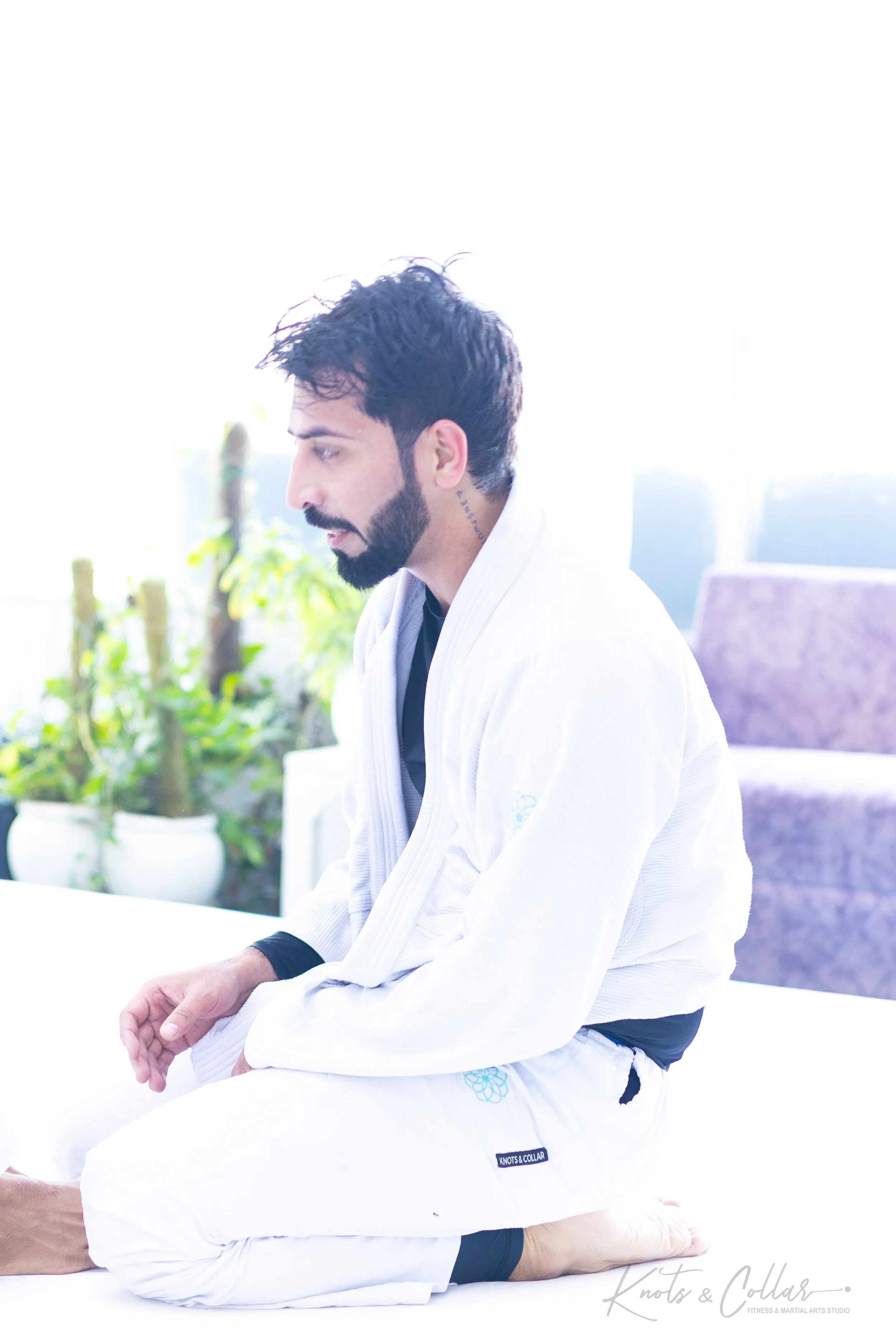
Ask people who have trained Brazilian jiu-jitsu for years why they stayed, and almost none of them lead with technique. They talk about the room. They talk about the people they roll with, the friends they made on the mat, the open mat on a slow Sunday when nobody was teaching and everybody was learning. This is a piece about that part of the sport — the open mat, the jiu-jitsu community, and the quiet culture that turns a training hall into a second family.
What an open mat actually is
An open mat is the simplest session on the schedule and, for many people, the most important. There is no lesson plan, no coach walking you through a sequence, no set curriculum for the hour. The mat is open. You come in, you warm up, and you train what you want to train.
In practice that means people roll freely — live sparring, at whatever pace the two partners agree on. It means drilling a position you got stuck in during the week. It means asking someone who is better than you to show you what they did, and then trying it, slowly, until it starts to make sense. Ranks and experience cross without ceremony. A white belt of three months might roll with a brown belt, tap a dozen times, and then sit against the wall while that same brown belt explains exactly why the grip kept slipping.
That mixing is the point. In a structured class everyone works the same thing at the same time. At an open mat, the room sorts itself out by curiosity. People find the partners they need, work the problems they actually have, and help each other along the way. It is jiu-jitsu at its most honest.
Why community is the thing that keeps people training
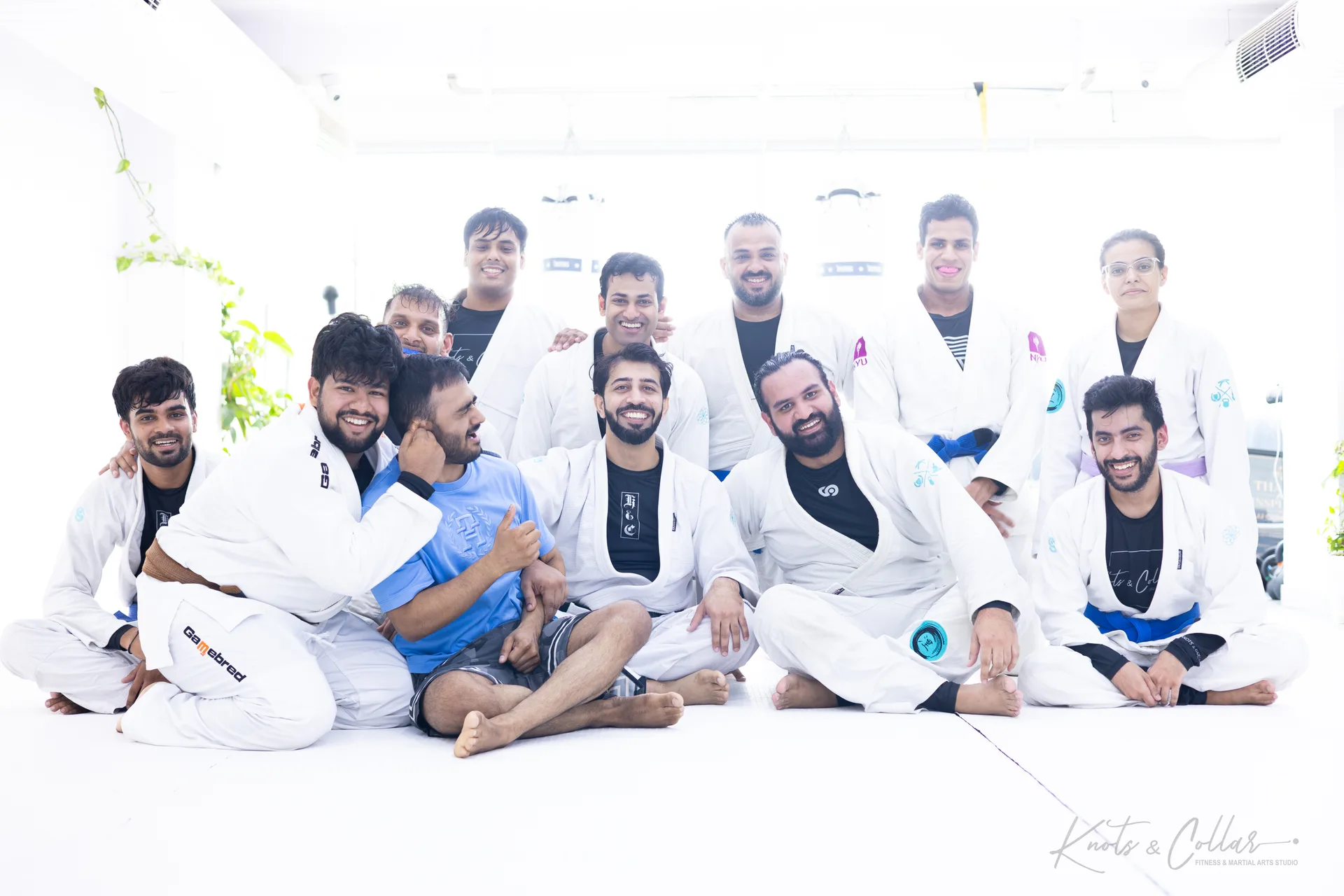
Jiu-jitsu is hard, and it stays hard for a long time. The techniques are humbling, progress is slow, and there is no way to fake your way through a roll. If technique alone were the draw, most people would quit inside a year. They do not, and the reason is the jiu-jitsu community around them.
What keeps a person coming back on a tired Tuesday is rarely the promise of a new sweep. It is the fact that a handful of people will be there, will notice if you are missing, and will greet you like you belong — because you do. Training becomes a standing appointment with friends who happen to also be teaching you to defend yourself. The belt is a byproduct. The relationships are the thing.
We have written before about how jiu-jitsu builds confidence that follows you off the mat, and community is where a lot of that confidence is grown. You learn to be comfortable being uncomfortable, in a room full of people who have all been exactly where you are.
The unwritten culture: respect, control, and care
Every good training room runs on rules nobody writes down. The first is control. When you roll with someone, you are responsible for their safety as much as your own. You apply a submission with enough control to make your partner tap, not to hurt them. You let go the moment they tap. Nobody remembers who "won" a friendly roll; everybody remembers the person who cranked a joint on a beginner because they could not stand to lose.
The second rule is care for newer and smaller partners. A larger, more experienced person can steamroll a beginner and learn almost nothing. So we do the opposite. You match your intensity to your partner. You give a new person room to try things, to fail safely, to feel what a position does before you shut it down. Looking after the people below you is not politeness; it is how the whole room gets better, and it is the clearest expression of what we mean by Kindness Over Toughness.
The third is respect that has nothing to do with rank. You shake hands before and after every roll. You thank the person who just spent six minutes exposing every gap in your game, because they gave you something to work on. Rank tells you who has been at it longer. It does not tell you who to value.
What a training day feels like at the studio
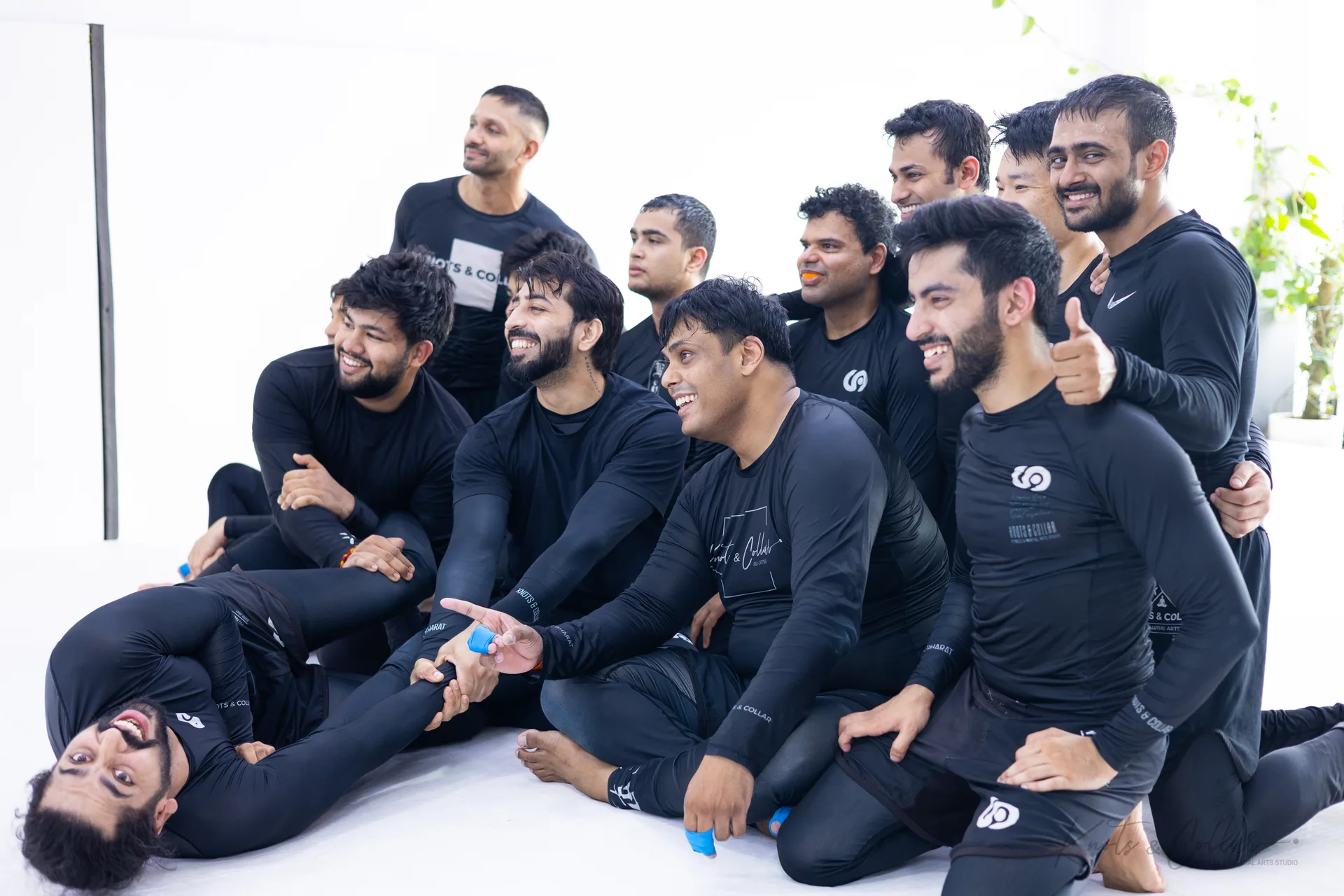
A day at our studio in Defence Colony, New Delhi has a rhythm to it. People filter in from work, from school, from the traffic outside, and the room changes them at the door. The gis come out or the rash guards go on. There is chatter, the sound of someone drilling a takedown against the mat, a coach quietly fixing a grip for a student who asked.
Class runs — warm-up, technique, drilling, then rolls. On open-mat days the hour loosens and the room organises itself. You will see a teenager rolling with someone twice their age, a beginner asking a blue belt to slow down and show a detail again, two experienced players working a hard position over and over in near-silence. Between rounds people sit, breathe, laugh at how badly something went, and get back up.
Because we train seven days a week, the studio is rarely a stranger to anyone. You can build the habit around your life rather than forcing your life around a narrow window. Over weeks, the faces stop being faces. They become the people you look forward to seeing.
How strangers become a second family
There is something about rolling with a person that shortcuts the usual slowness of making friends. You cannot roll with someone for months and stay strangers. You have trusted them with your joints and your neck; they have trusted you with theirs. You have seen each other tired, frustrated, and stubborn, and you have helped each other up every single time.
That is how a jiu-jitsu community turns into a second family. Not through any grand gesture, but through the accumulation of small ones — a spare mouthguard lent on a forgotten day, a lift home, advice about a job or a move or a hard week that had nothing to do with jiu-jitsu at all. People celebrate each other's promotions like they earned them too, because in a sense they did. Every belt is stitched together from hundreds of rolls with the same room.
We see the family stretch beyond the mat as well. When we ran KC Manthan, our jiu-jitsu retreat in Mukteshwar, it was the same people, the same care, just carried up into the hills. The community does not stay behind when you leave the building.
The young, growing jiu-jitsu scene in India
Jiu-jitsu in India is still young. A decade ago there were only a handful of places to train, and most people found the sport through a video or a friend rather than a gym down the road. That is changing. More rooms are opening, more people are staying long enough to earn their belts and teach the next wave, and the community is knitting itself together across cities.
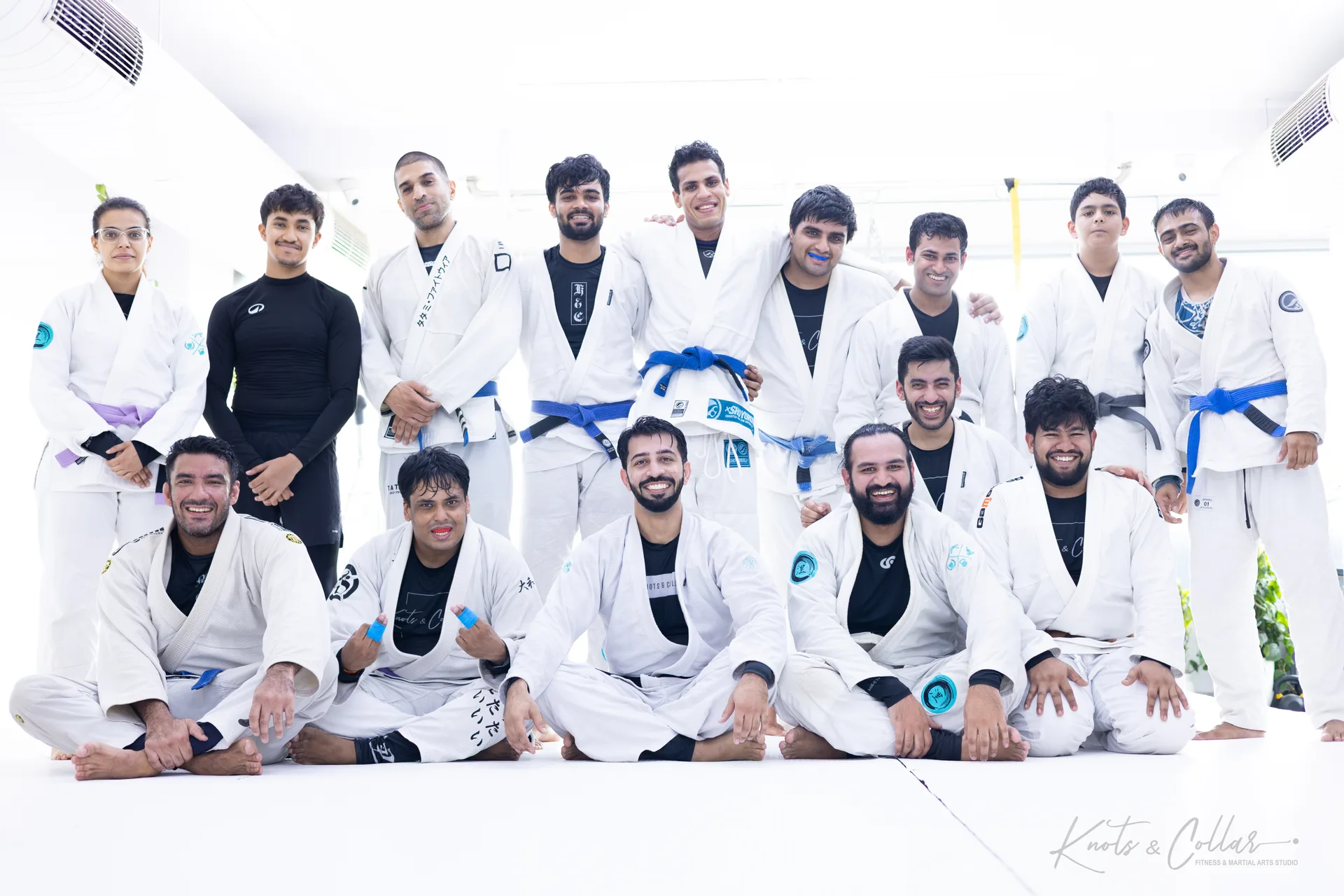
Being early has its own gift: the scene is small enough that it still feels personal. Belts are earned slowly and mean something. New students are genuinely welcomed, because every room remembers being new. At Knots & Collar we teach a mixed community of all levels through the De La Riva lineage, and we are proud to be part of building that scene carefully — one honest room at a time. If you want the practical details on getting started, our page on jiu-jitsu classes in Defence Colony lays them out.
Come and stand on the mat
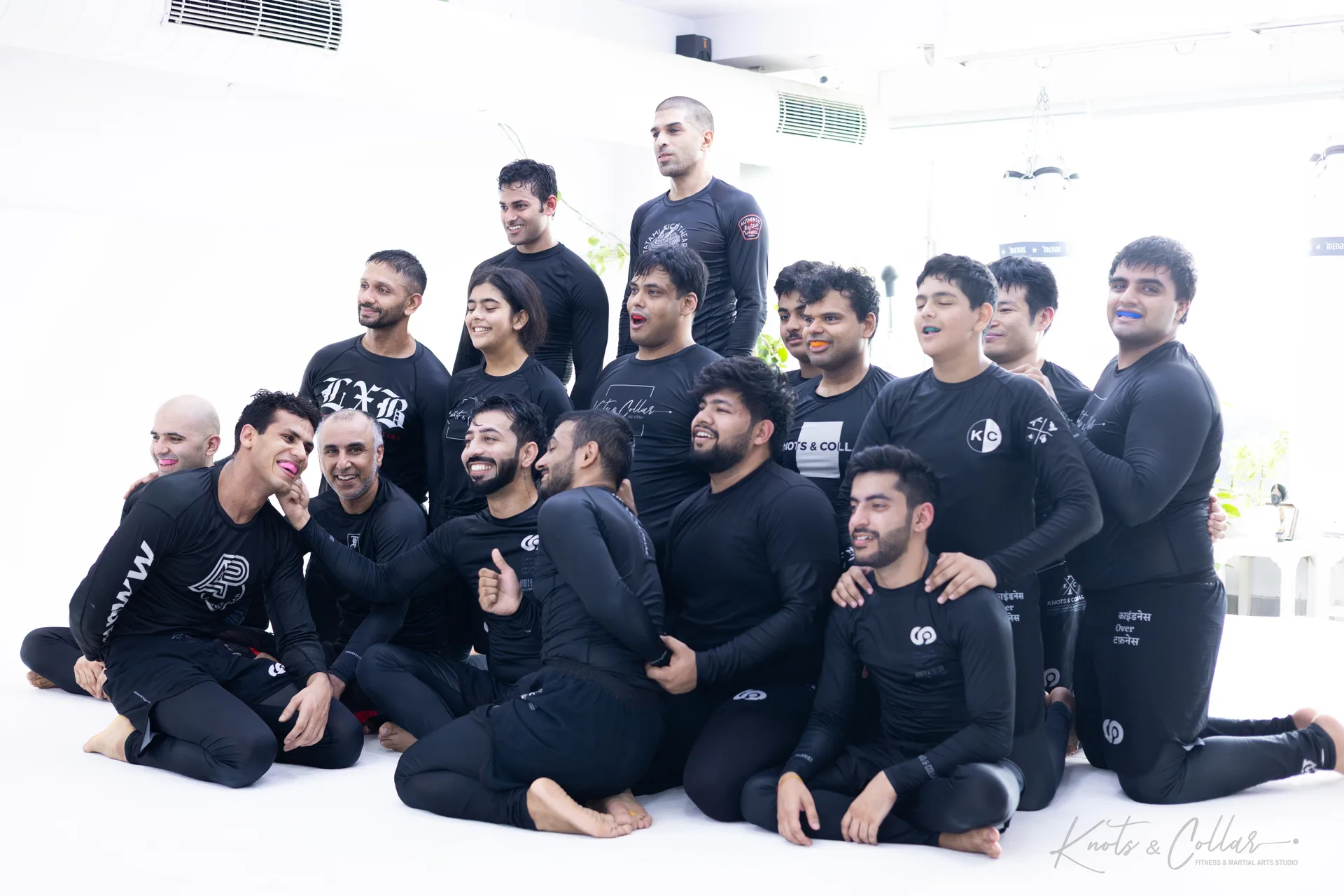
You cannot really understand an open mat by reading about it. You understand it by standing on the mat, shaking a few hands, and rolling. Everyone in every photo on this page walked in for the first time not knowing anyone, and stayed because of who they met. If you have been curious about jiu-jitsu, or you have trained before and want a room that will look after you, we would be glad to have you. Come and schedule a visit whenever you are ready — no rush, no pressure, just a mat and the people on it.
FAQs
What is an open mat in Brazilian jiu-jitsu?
An open mat is a session with no set curriculum. Instead of following a lesson, people roll freely, drill what they want to work on, and help each other. Ranks and experience levels mix, so a white belt might roll with a purple belt and then swap notes on the same position.
Do I need experience to join an open mat?
You need enough grounding to train safely, so open mat suits people who have been to a few classes and understand tapping, control, and looking after a partner. If you are brand new, start with a beginner class first, then come to open mat once the basics feel familiar.
Is the jiu-jitsu community in India welcoming to beginners?
Yes. The scene in India is young but growing, and most rooms are glad to see new faces. At Knots & Collar in Defence Colony, New Delhi we train seven days a week with a mixed community of all levels, and looking after newer and smaller partners is part of how we train.
How often should I train to feel part of the community?
Turning up two or three times a week is enough to start recognising faces, learning names, and building the trust that rolling depends on. Consistency matters more than intensity. The people who stay for years are usually the ones who kept coming back, not the ones who trained hardest for a month.