
BJJ vs Muay Thai: Grappling or Striking, Which Should You Train?
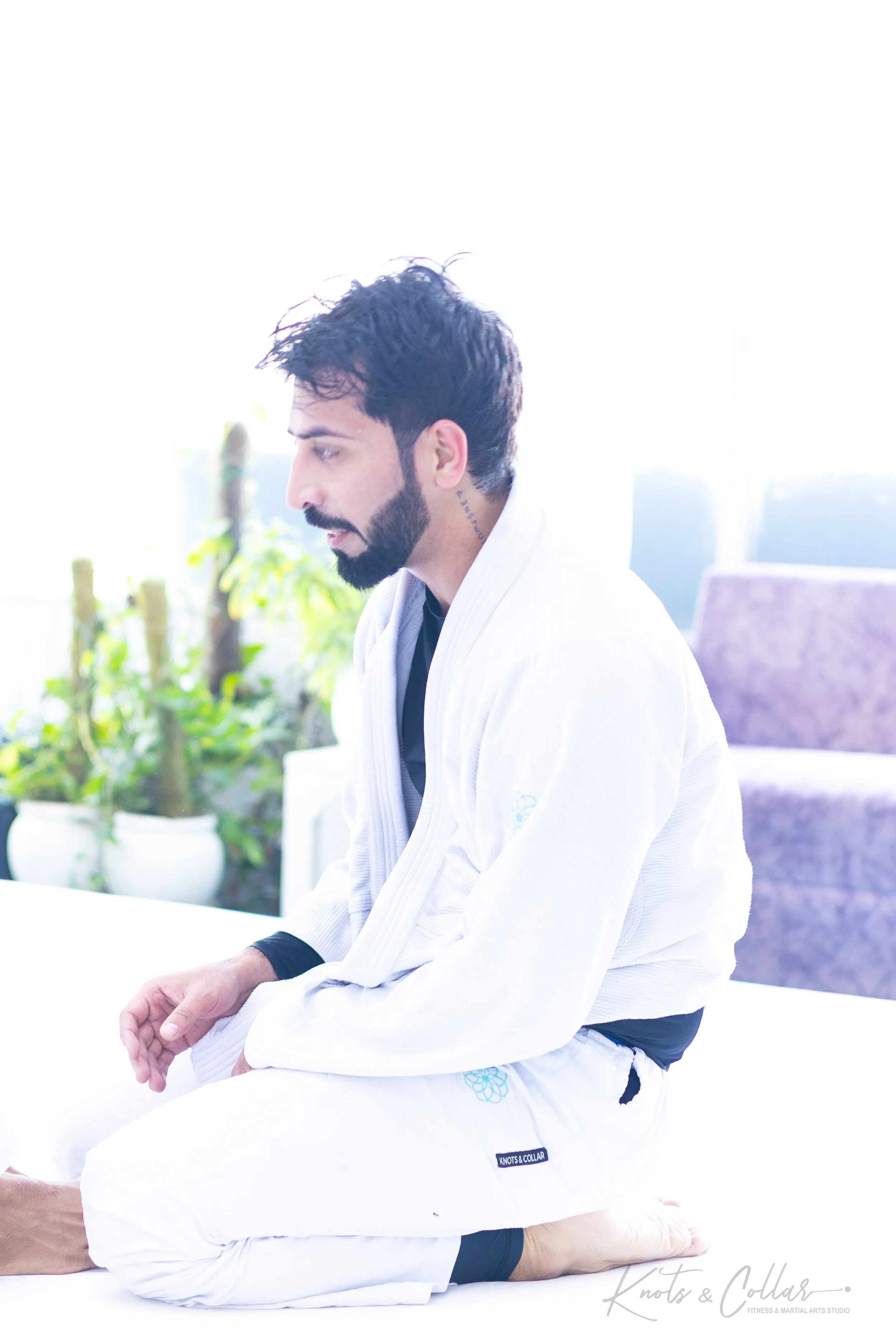
BJJ vs Muay Thai is really a question of grappling versus striking — control on the ground against strikes on the feet. Neither is "better"; they answer different questions. Here is an honest comparison to help you choose, or decide to train both.
If you are weighing up martial arts, Brazilian Jiu-Jitsu and Muay Thai are two of the most popular and effective choices — and they could hardly be more different in feel. One is a grappling art fought on the ground; the other is a striking art fought on the feet. This guide compares them honestly across the things that actually matter — how they work, self-defence, fitness, safety, and who each suits — so you can pick the right starting point. We teach Brazilian Jiu-Jitsu at Knots & Collar in Defence Colony, New Delhi, and we will be fair to both.
BJJ vs Muay Thai: The Core Difference
Brazilian Jiu-Jitsu is a grappling art. There is no striking; instead you close the distance, take the contest to the ground, and control your opponent with position before finishing with a joint lock or a strangle they can safely concede. Its guiding idea is leverage over strength. Muay Thai, the art of eight limbs from Thailand, is a striking art — punches, kicks, elbows, and knees, thrown largely at standing range, with a powerful clinch of its own. In short: BJJ is control and leverage on the ground; Muay Thai is strikes and range on the feet.
Self-Defence: Different Situations, Different Tools
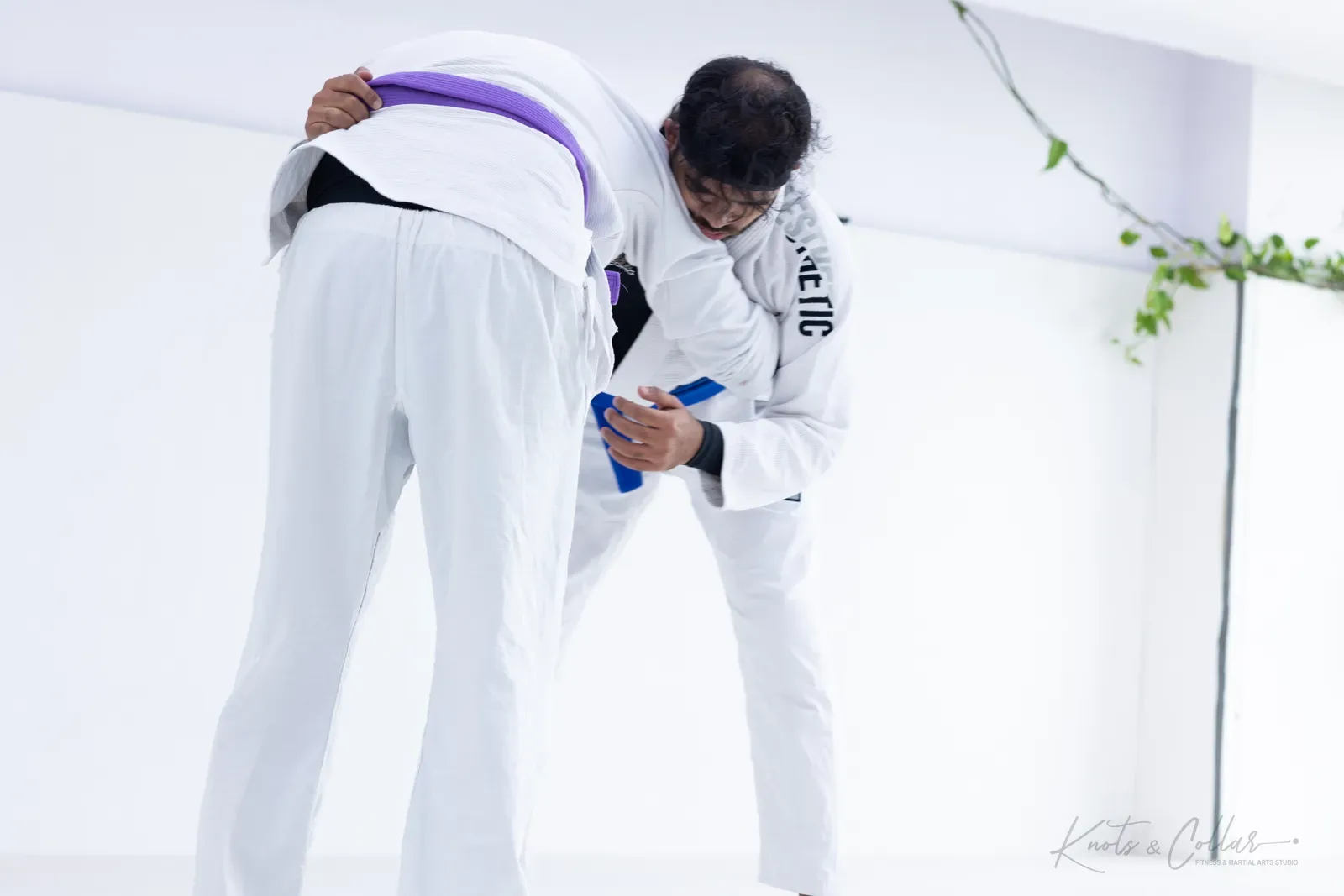
Both arts have genuine self-defence value, and they cover different moments. Muay Thai helps you manage striking range and defend yourself standing, where many confrontations begin. Brazilian Jiu-Jitsu comes into its own once things become a clinch or go to the ground — which is where a great many real altercations end up — allowing you to control a larger person without having to strike them. This is why so many people see them as complementary rather than as rivals. Our black belt's honest take on whether BJJ is good for self-defence goes deeper if that is your main reason for training.
Fitness and Feel
Both build excellent, functional fitness, but they feel different. Muay Thai is explosive and conditioning-heavy, with a lot of pad work, footwork, and cardio. Brazilian Jiu-Jitsu builds a quieter kind of fitness — grip strength, core control, stamina, and mobility — through drilling and rolling. If you love the idea of striking and sweating hard on your feet, Muay Thai will draw you in; if you are drawn to control, patience, and a physical chess match, BJJ will. Our guide to what Brazilian Jiu-Jitsu is describes that feel in full.
Safety
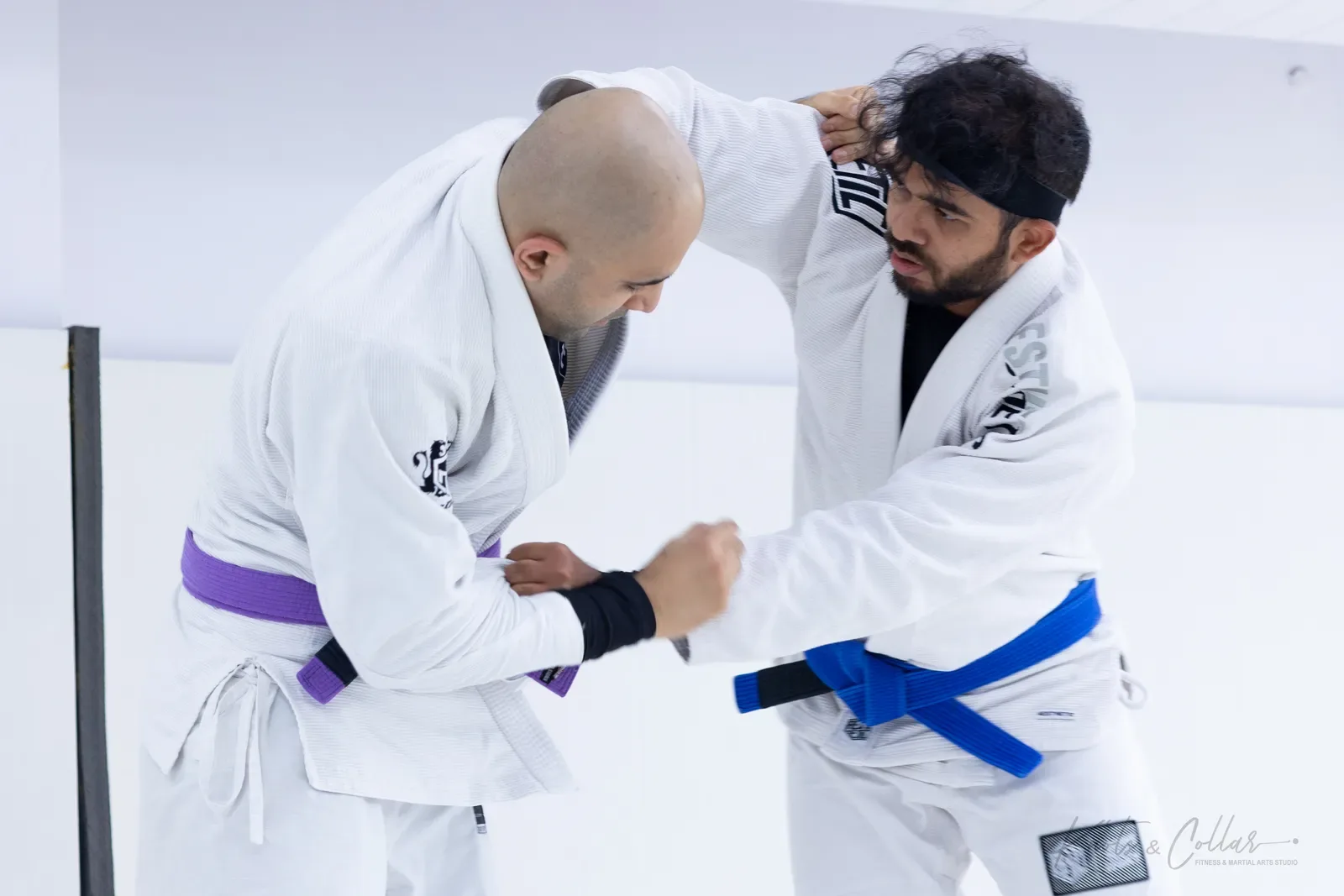
For day-to-day training, Brazilian Jiu-Jitsu tends to be the lower-impact option, simply because there is no striking and every submission has a built-in off switch — the tap — that stops it the moment you signal. Muay Thai is a superb art, and controlled sparring keeps it sensible, but it does involve impact by nature. Both can be trained safely under good coaching; if a gentler day-to-day practice matters to you, that often tips the balance towards grappling.
Can You Train Both?
Yes — and many people do. Striking on the feet and grappling on the ground are the two halves of a complete skill set, which is exactly why mixed martial arts combines them. Training both takes more time, but it gives you a far broader base than either alone. There is no rush, though; most people start with one, fall in love with the training, and add the other when they are ready.
Which Should You Choose?
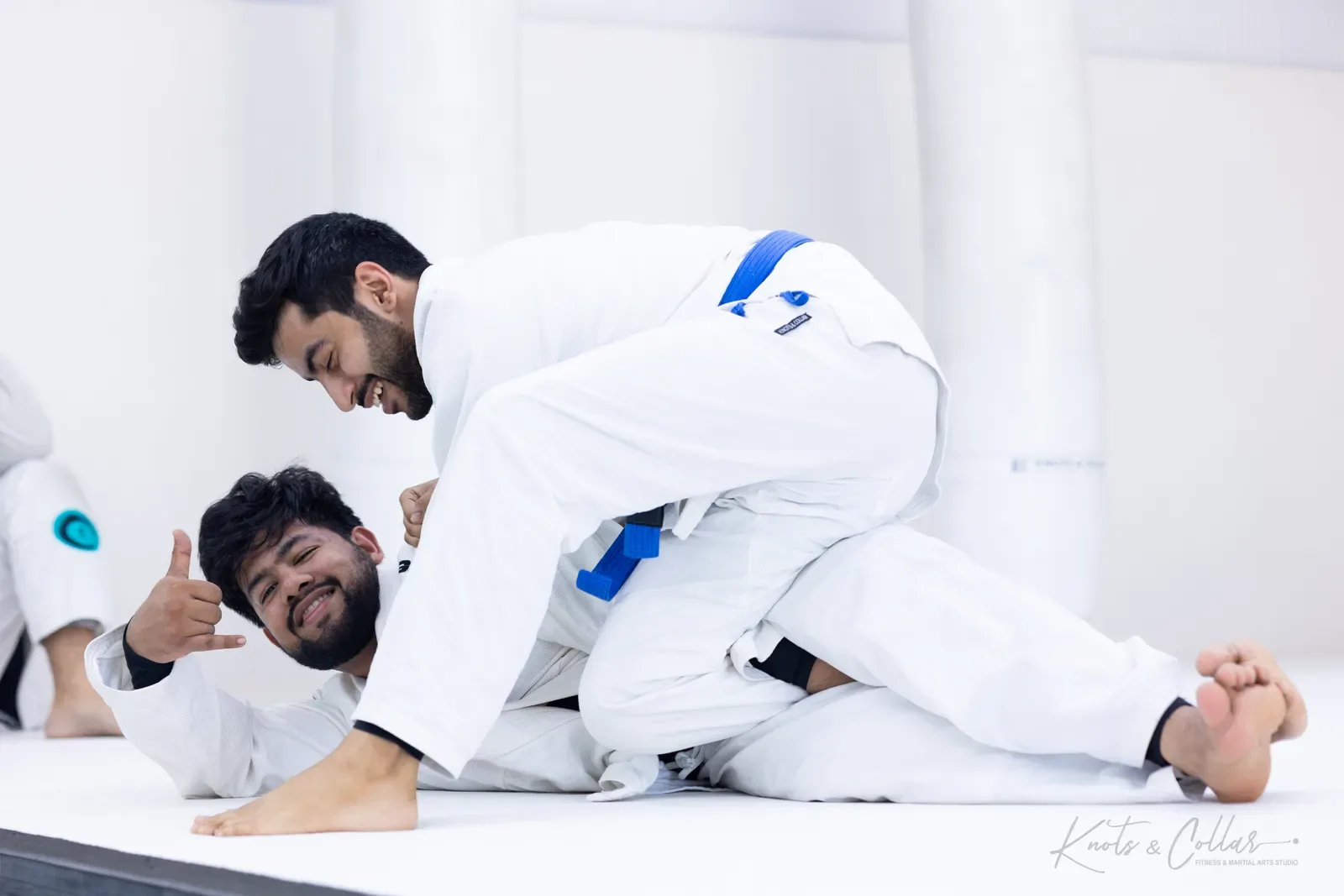
There is no universally "better" art — only the one that fits you. Choose the training you will enjoy enough to keep doing, because consistency is what turns any martial art into real skill. If you can, try a class of each and let your own experience decide. At Knots & Collar we teach Brazilian Jiu-Jitsu and also run kickboxing, so you can feel the grappling side and the striking side and see what draws you.
FAQs
What is the difference between BJJ and Muay Thai?
Brazilian Jiu-Jitsu is a grappling art — it takes a fight to the ground and controls an opponent with position and submissions, without striking. Muay Thai is a striking art from Thailand using punches, kicks, elbows, and knees, largely at standing range. One is about control and leverage on the ground; the other is about strikes on the feet.
Is BJJ or Muay Thai better for self-defence?
Both have real value and they cover different situations. Muay Thai helps you manage striking range and defend yourself standing. BJJ excels once a confrontation becomes a clinch or goes to the ground, where it lets you control a larger person without needing to strike them. Many people consider them complementary rather than rivals.
Should a beginner start with BJJ or Muay Thai?
Either is a good start — it depends on what draws you. If you prefer control, problem-solving, and a lower-impact style, BJJ suits you. If you enjoy striking, footwork, and conditioning, Muay Thai will appeal. The best choice is the one you will enjoy enough to keep doing, so try a class of each if you can.
Can you train BJJ and Muay Thai together?
Yes, and many people do. They complement each other well — striking on the feet and grappling on the ground are the two halves of a complete self-defence and mixed martial arts skill set. Training both takes more time, but it gives you a far broader base than either alone.
Which is safer, BJJ or Muay Thai?
Brazilian Jiu-Jitsu is generally lower-impact to train, because it involves no striking and every submission has a built-in tap to stop it safely. Muay Thai is excellent but involves impact even when sparring is controlled. Both can be trained safely with good coaching; BJJ tends to be the gentler day-to-day option.
Does Knots & Collar teach BJJ and striking in Delhi?
Yes. We are primarily a Brazilian Jiu-Jitsu studio, and we also run kickboxing and other classes at our Defence Colony studio in New Delhi. The best way to find what suits you is to try a class — your first one is free. Call +91-9717956687 or schedule a visit.
The honest answer to BJJ versus Muay Thai is: try them and see which one you cannot stop thinking about. Come and feel the grappling side with us — your first class is free, seven days a week — schedule a visit and we will see you on the mats. Kindness Over Toughness.