
What Is Brazilian Jiu-Jitsu? A Plain-English Guide for Beginners

Brazilian Jiu-Jitsu is a grappling martial art built on a simple idea: leverage and technique let a smaller, calmer person control a larger, stronger one. This is a plain-English guide to what it is, where it comes from, and how to try it.
If you have heard the term "BJJ" and were not quite sure what it meant, you are in the right place. Brazilian Jiu-Jitsu is one of the fastest-growing martial arts in the world, and in India it is finally finding its feet. But the name can be intimidating, and a lot of what you find online assumes you already train. This guide starts from zero: what Brazilian Jiu-Jitsu actually is, how a class works, the two ways it is practised, who it suits, and how to take a first class at Knots & Collar in Defence Colony, New Delhi. No jargon, no pressure.
What Is Brazilian Jiu-Jitsu?
Brazilian Jiu-Jitsu is a grappling art. That means there is no punching or kicking — instead of striking an opponent, you learn to close the distance, take the contest to the ground, control the person with your body position, and, if you choose to, finish with a joint lock or a strangle that gives them the chance to concede safely. The guiding principle is leverage over strength. A well-timed angle, a good grip, and the right position let a lighter person control a heavier one. That is not a slogan; it is the mechanical fact the whole art is built on, and it is why people of every size and age can train together.
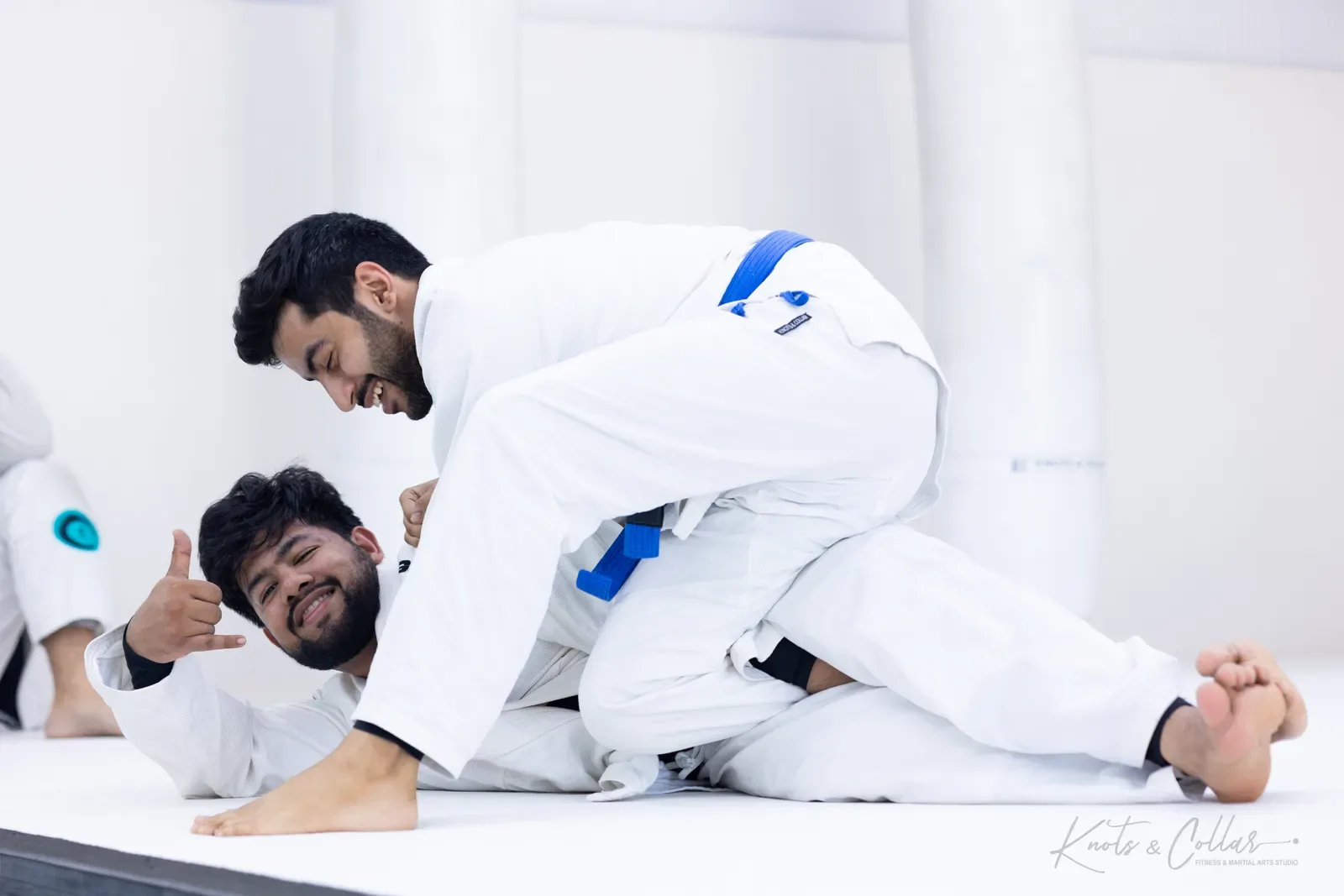
There is a phrase you will hear early: position before submission. Beginners often want the finish straight away, but the art teaches you to earn a controlling position first — the submission is what happens once control is total. This is what makes Brazilian Jiu-Jitsu feel like a physical form of chess. You are constantly solving a problem with a thinking, resisting partner, and the person who stays calm and works in the right order usually comes out ahead.
Where Brazilian Jiu-Jitsu Comes From
The short version: Brazilian Jiu-Jitsu grew out of Japanese jujutsu and early judo, which travelled to Brazil in the early twentieth century. There, over generations, it was refined into an art that specialised in ground fighting and submissions, and from Brazil it spread across the world. If you would like the fuller story — including how grappling has deep roots in India's own wrestling traditions — our guide to the history of Brazilian Jiu-Jitsu in India lays it out. The point worth keeping is that BJJ is a living art, still evolving on mats everywhere, including here in Delhi.
How a Brazilian Jiu-Jitsu Class Actually Works
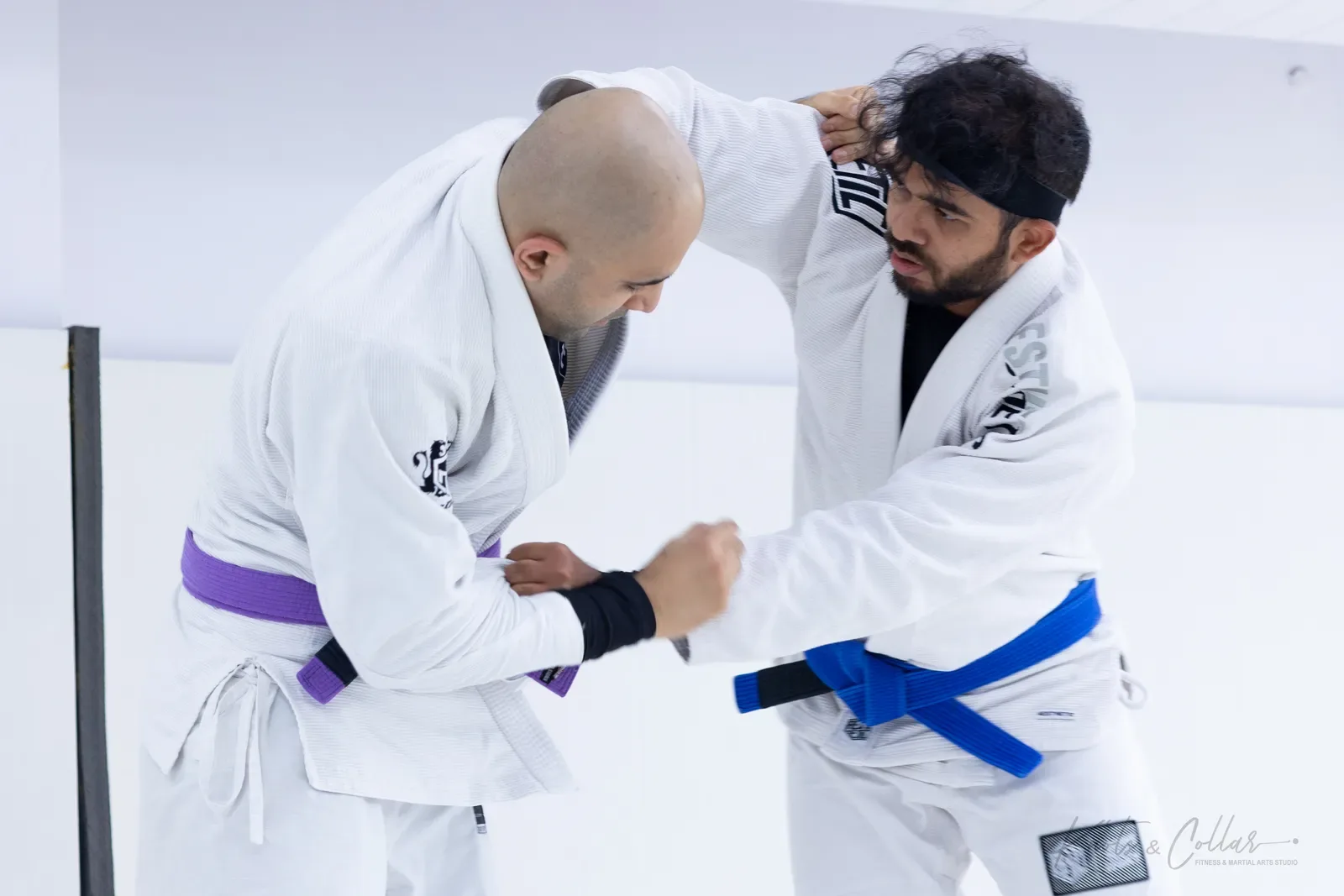
A typical class has a shape. It opens with a warm-up to get your body moving and to practise the basic movements the art relies on. Then the instructor teaches a technique — an escape, a control, a submission — and you drill it with a partner at a cooperative pace, repeating it until it starts to feel natural. Finally comes rolling, which is BJJ's word for live sparring: you and a partner practise against real, if friendly, resistance. Rolling is where the art comes alive, and it is completely scalable — you and your partner control the intensity, and nobody is trying to hurt anyone. If you are curious what that first experience feels like, our beginner's guide to how to roll walks through it honestly.
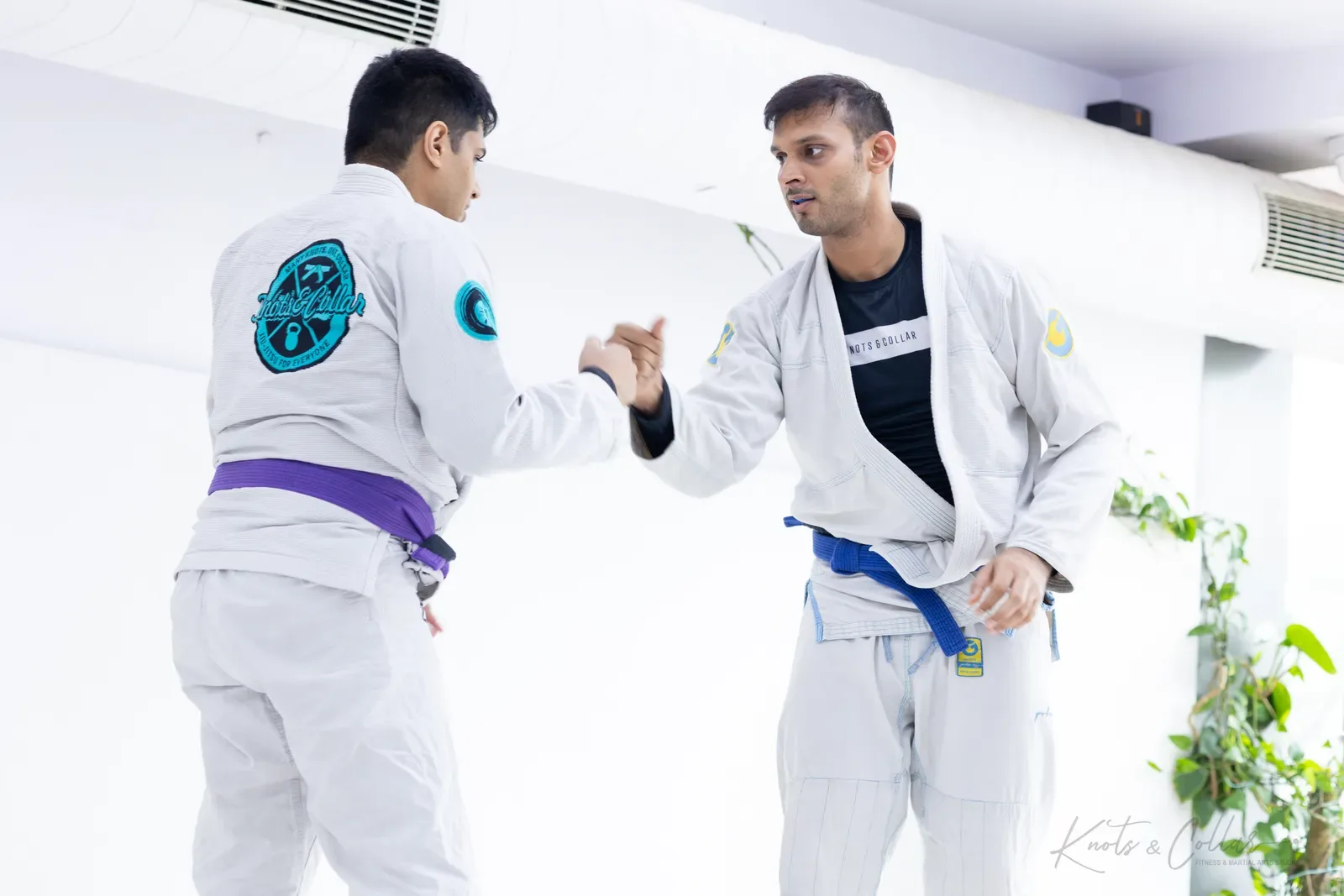
You will notice that every roll begins and ends the same way — a handshake or a clasp of hands. That small ritual matters. It is a reminder that the person opposite you is a training partner helping you improve, not an opponent to beat. This is the culture that keeps people coming back, and it is the heart of how we train.
Gi and No-Gi: The Two Ways It Is Practised
You will see people training in two different outfits. The gi is the traditional uniform — a heavy cotton jacket, trousers, and a belt — and gripping the cloth is part of the game. No-gi is the same art practised in a rashguard and shorts, with no jacket to hold, so it tends to move faster. The principles are identical; the feel is different. Most students end up doing both over time. If you are wondering where to begin, our gi versus no-gi guide gives the honest answer.
Who Brazilian Jiu-Jitsu Is For
Because the art rewards technique over athleticism, it genuinely suits a wide range of people. Children train it for focus and confidence — we welcome kids from age three. Adults start in their thirties, forties, and beyond, and do perfectly well; our note on starting BJJ over 30 covers that in full. Women train alongside everyone and find it one of the most practical skills they can learn — see our guide to BJJ for women in Delhi. You do not need to arrive fit, flexible, or brave. You arrive as you are, and the training does the rest.
Is Brazilian Jiu-Jitsu the Same as Self-Defence?
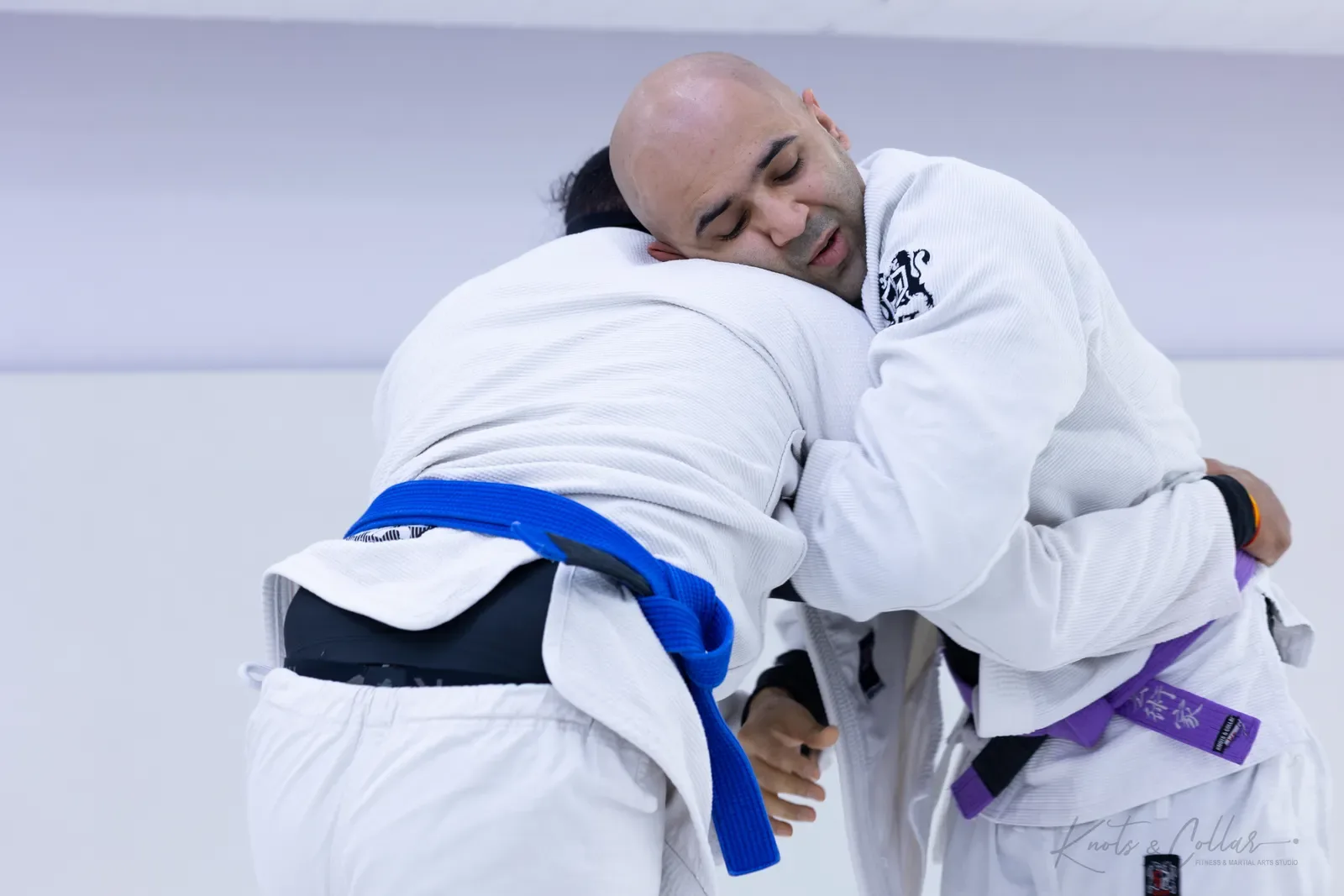
It is closely related. Most real confrontations collapse into a clinch or end up on the ground, which is exactly the territory Brazilian Jiu-Jitsu is built for. It teaches you to stay composed, control distance, and neutralise a larger person without needing to strike them — a calmer, more controlled answer than most people expect. It is a skill that has to be trained honestly rather than a magic solution, and our black belt's take on whether BJJ is good for self-defence is worth reading if that is your reason for starting.
How to Try Brazilian Jiu-Jitsu in Delhi
The best way to understand Brazilian Jiu-Jitsu is to feel it, and that costs nothing to try. At Knots & Collar in Defence Colony, New Delhi, your first class is free — no experience, no kit, no commitment. Wear something you can move in, arrive a few minutes early, and come as you are. We run mornings from 6:30am to 12 and evenings from 3 to 9:30pm, seven days a week, with kids welcome from age three and adults of every level on the mats, teaching from the De La Riva lineage. One class will tell you more than a week of reading.
FAQs
What is Brazilian Jiu-Jitsu in simple terms?
Brazilian Jiu-Jitsu (BJJ) is a grappling martial art. Instead of striking, you learn to take a fight to the ground, control your opponent with body position, and finish with a joint lock or a strangle. Its central idea is that leverage and technique let a smaller, calmer person control a larger, stronger one.
Is BJJ a striking or a grappling martial art?
It is grappling. There is no punching or kicking in Brazilian Jiu-Jitsu. Everything happens through grips, position, and control — takedowns, pins, sweeps, and submissions — which is part of why it can be trained hard and safely by ordinary people, not just athletes.
Do you need to be fit or strong to start BJJ?
No. You do not need fitness, flexibility, or any prior martial arts background to start. The whole point of the art is that technique beats strength, so beginners start exactly where they are. Fitness arrives as a by-product of training, not as a requirement to begin.
What is the difference between BJJ and judo?
Both are grappling arts and they share a common root. Judo focuses on throwing an opponent to the ground from standing. Brazilian Jiu-Jitsu takes the fight to the ground and specialises in what happens there — control positions, escapes, and submissions. In practice the two overlap, and many BJJ students learn takedowns too.
Is Brazilian Jiu-Jitsu good for self-defence?
It is one of the most practical self-defence arts precisely because most real confrontations end up in a clinch or on the ground, where BJJ is strongest. It teaches you to stay calm, control distance, and neutralise a larger person without having to strike them. It is a tool, not a guarantee, and it works best trained consistently.
How long does it take to get good at BJJ?
You will feel more capable within a few months of steady training. A realistic timeline to a blue belt — the first real milestone — is around one and a half to two and a half years training three to four times a week. Progress is gradual and honest: belts are earned through live sparring, not handed out.
Can I try Brazilian Jiu-Jitsu in Delhi for free?
Yes. Your first class at Knots & Collar in Defence Colony, New Delhi is free, with no experience needed and no commitment. Call +91-9717956687 or schedule a visit online, and come and feel a class before you decide anything.
That is Brazilian Jiu-Jitsu in plain terms — a grappling art that rewards calm, technique, and patience over size and strength. The best next step is simply to try it. Your first class is on us, seven days a week — schedule a visit and we will see you on the mats. Kindness Over Toughness.