
How to Roll: A Beginner's Guide to BJJ Sparring

Sooner or later, every beginner in Brazilian Jiu-Jitsu hears the same invitation — "Want to roll?" Rolling is BJJ sparring, and it is where the art you have been drilling slowly finally comes to life. This is a plain guide to what rolling means, how to spar safely as a beginner, and how to make every round a place to learn rather than something to survive.
What "rolling" actually means
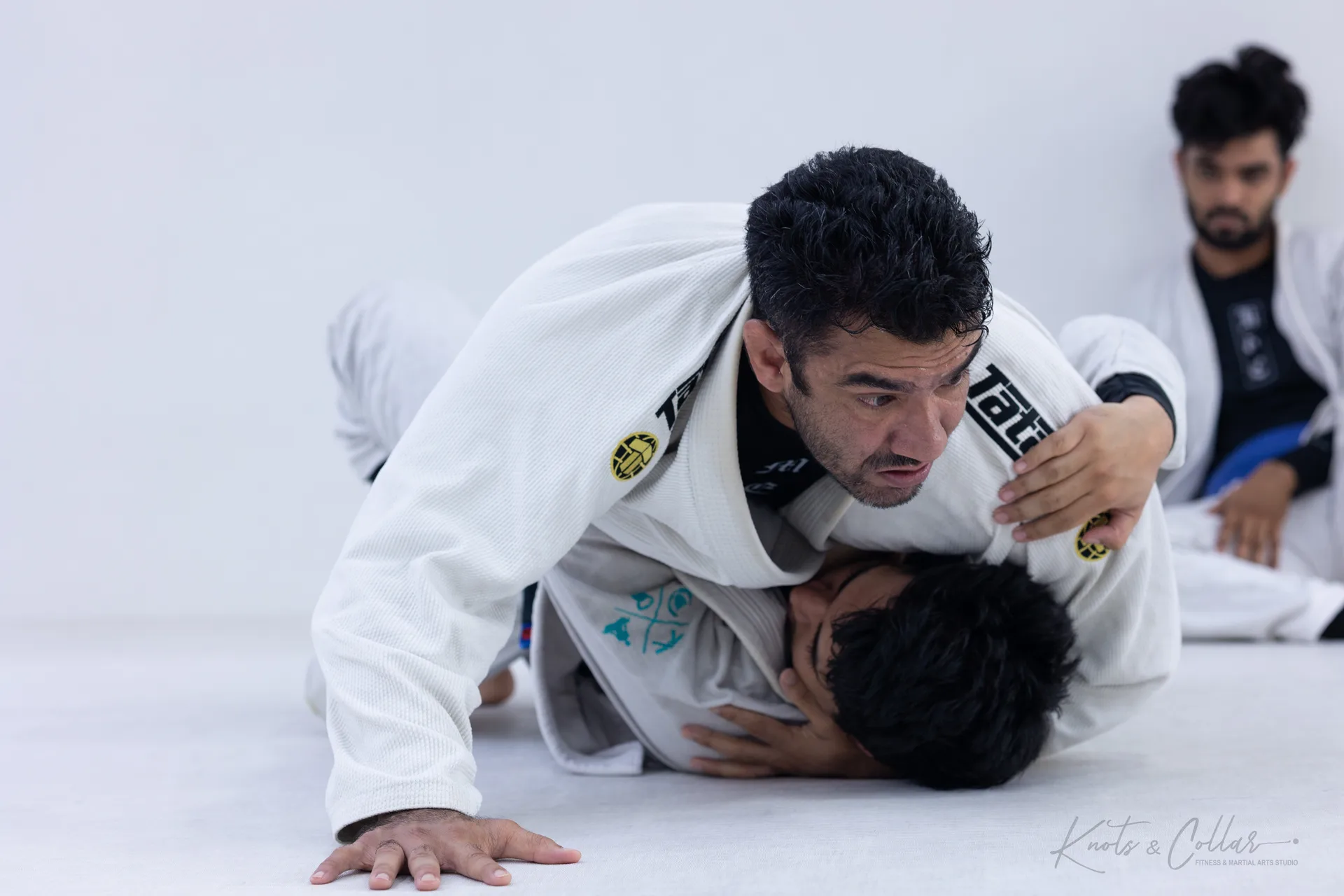
Rolling is the word Brazilian Jiu-Jitsu uses for live sparring. Instead of practising one technique slowly against a cooperative partner, you start from a position and play the whole game at once — passing, sweeping, escaping, defending, and looking for submissions — against someone who is moving and resisting in real time. Most rounds run for a few minutes, then you reset and go again, often with a new partner.
If drilling is learning the notes, rolling is playing the music. It is the part of training where you find out what you can actually do under pressure, and, just as importantly, where your gaps are. Beginners are sometimes nervous about their first roll, and that is completely understandable. The good news is that rolling is a skill you learn like any other. Nobody expects you to be smooth at the start.
How to spar safely as a beginner
The single most useful thing a beginner can do is start slow. There is no prize for winning a training round, and there is a real cost to rolling too hard too early. Use a fraction of your strength, keep your movements controlled, and treat your first months of rolling as a shared study session rather than a fight. Rolling gently for longer will teach you far more than a two-minute sprint that leaves you gasping and tense.
Breathe. New white belts tend to hold their breath, grip with everything they have, and go rigid. Try to notice that and let it go. A calm, breathing body learns; a panicking one just gets tired. Safe rolling is not about being passive — it is about being controlled, so that you and your partner can train again tomorrow and for years after that. If you would like a fuller picture of training in a way your body can sustain, our guide on how to train BJJ without getting injured goes deeper on staying healthy on the mats.
Tap early, and communicate
Tapping is how you keep rolling safe, and it deserves saying plainly: tap early. The moment a submission is locked in, or a position becomes uncomfortable, tap clearly on your partner or the mat. You never need to wait for pain, and you never need to test how much your joints can take. Tapping ends the exchange so you both reset and start again. Every belt in the room taps, black belts included, and tapping early is the mark of a smart training partner.
Rolling is also a conversation, so communicate. If something hurts, say so. If you have an old injury, tell your partner before you start. If a grip is landing on your face or a position is genuinely painful rather than just awkward, speak up. And if you catch a submission on someone, apply it with control and give them the moment to tap rather than wrenching it on. Looking after your partner is not a courtesy you add on top of the training — it is part of the training itself. The way we hold ourselves in these small moments is covered in our note on the foundation of etiquette, hygiene and discipline at Knots & Collar.
Setting a goal for each round
One of the quiet shifts that turns rolling from stressful into useful is deciding what a round is for before it starts. If you step onto the mat only trying not to lose, every roll feels like a test. If you step on with a small goal, every roll becomes a lesson.
Your goal can be tiny. Work on escaping from underneath. Stay calm in a bad position for the whole round rather than scrambling in panic. Try the sweep you learned in class, even if it fails. Hold one position and see if you can keep it. When you roll with a purpose like this, tapping to a submission stops feeling like a failure, because winning was never the point — the point was the thing you set out to practise. Beginners who roll this way improve noticeably faster, and they enjoy their training more too. There is a longer discussion of what genuinely helps in our companion piece on the first six months as a BJJ white belt.
Rolling with bigger and smaller partners
Brazilian Jiu-Jitsu is built around leverage, which is exactly why it is worth rolling with people of every size. But how you roll should change depending on who is in front of you.
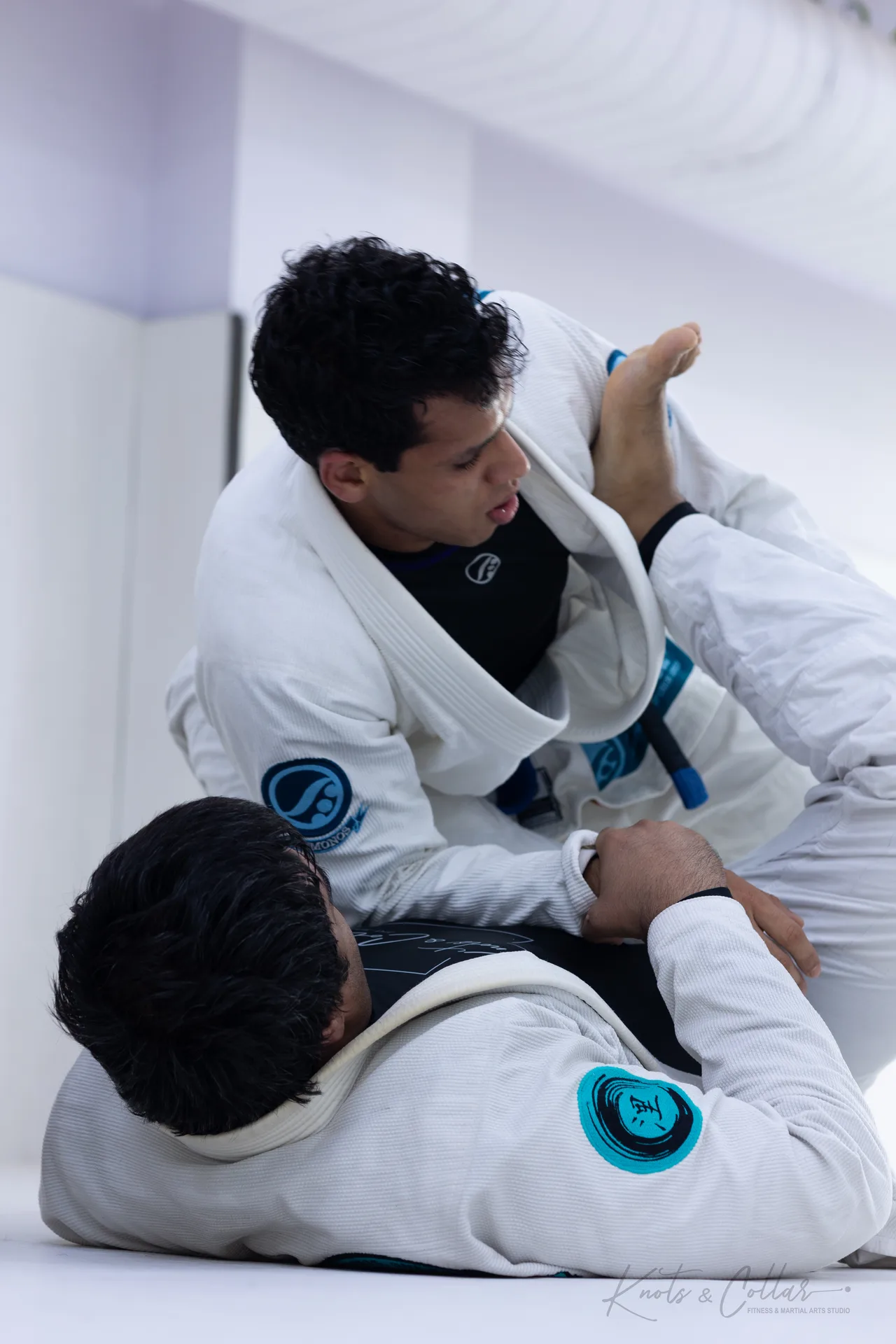
With a bigger partner, resist the urge to match strength with strength — you will lose that trade and learn little. Lean on technique, angles and timing instead, stay patient in defence, and tap early if you get stuck. A larger partner is one of the best teachers of clean technique you will ever have, because sloppy technique simply does not work against them. With a smaller partner, the responsibility flips to you. Ease off your strength and weight, control the pace, and give them room to try things. There is no value in flattening someone half your size, and a great deal of value in rolling in a way that helps them get better. Matching your effort to the person in front of you is one of the clearest ways the idea of kindness over toughness shows up on the mat — you can read more about it in our piece on the Kindness Over Toughness philosophy.
Where the art is really learned
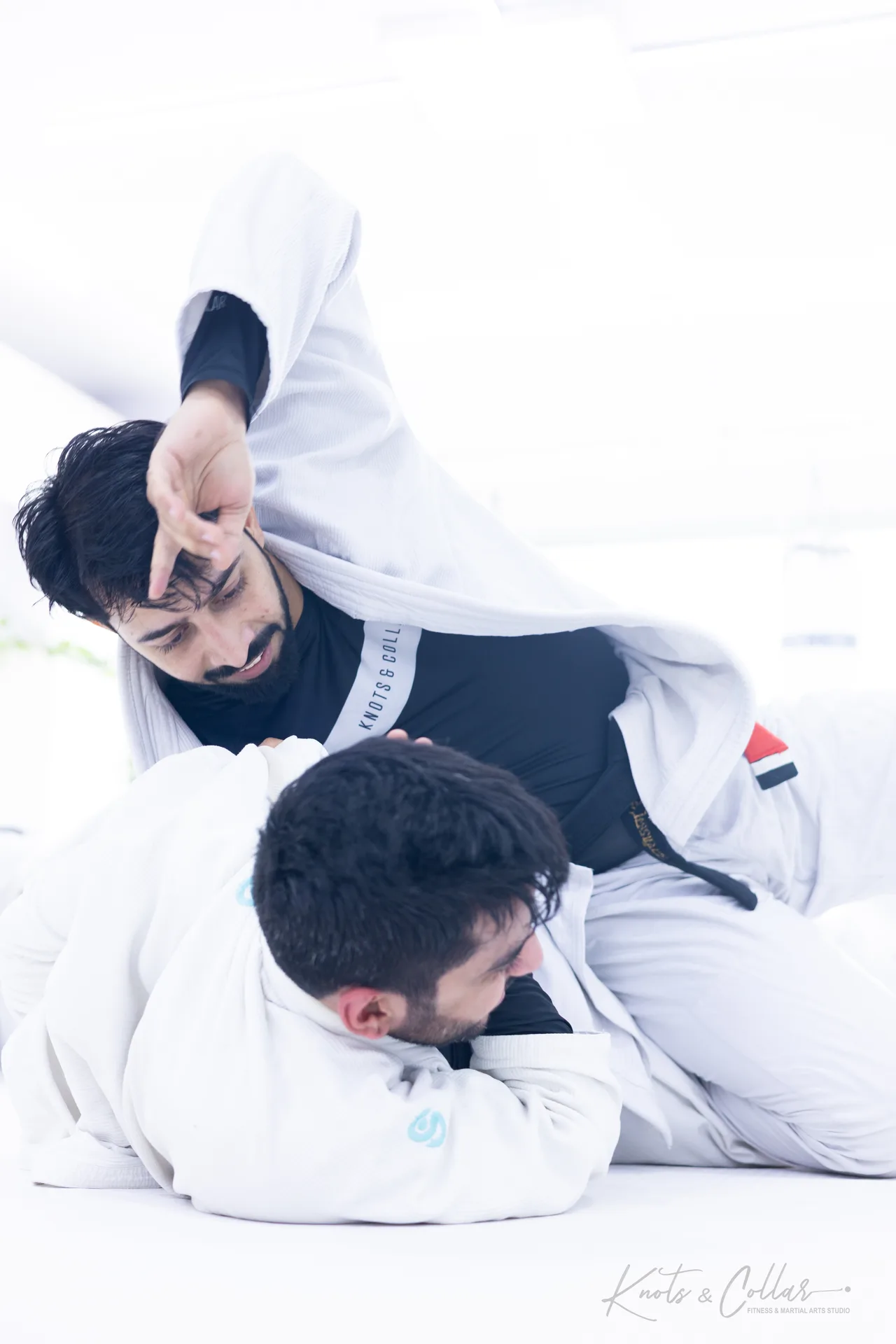
You can watch instructionals for years and drill a technique a thousand times, but Brazilian Jiu-Jitsu only truly lives when you roll. Rolling is where a technique stops being a shape you can copy and becomes a tool you can use when someone is moving, resisting and trying to do their own thing. It is where you learn timing, which no diagram can teach. It is where you discover that the calm you keep matters as much as the moves you know.
It is also, more than anywhere else, where the character of a room shows. A room that rolls with control, taps early, looks after its smaller members and treats every partner as someone to help rather than someone to beat is a room where people learn quickly and stay for years. This is where kindness over toughness stops being a slogan and becomes something practical: the rounds are hard enough to be real and safe enough to keep coming back to. That balance is the whole thing.
Come and roll with us
If the idea of rolling sounds daunting, that is normal, and it fades quickly once you have done it a few times with patient partners. At Knots & Collar in Defence Colony, New Delhi, beginners are eased into rolling at a pace that suits them, and nobody is thrown into the deep end on day one. If you would like to see how a class runs, or step onto the mat for your first light rounds, you are welcome to schedule a visit whenever you are ready. There is no pressure and no rush, and we will meet you exactly where you are.
FAQs
What does "rolling" mean in BJJ?
Rolling is the word Brazilian Jiu-Jitsu uses for live sparring. Two people start from a position, usually kneeling or on the ground, and practise the whole game at once — passing, sweeping, escaping, and finishing with submissions — against a partner who is moving and resisting. It is where the techniques you drill slowly finally get tested at a realistic pace, and it is where most of the real learning in BJJ happens.
How hard should a beginner roll?
Start slow and stay light. In your first months, treat rolling as a shared study session rather than a contest to win. Use a fraction of your strength, keep your movements controlled, and give your partner room to work too. Rolling gently for longer teaches you far more than rolling hard for two exhausting minutes, and it keeps both of you safe enough to train again tomorrow.
When should I tap while rolling?
Tap early, and tap the moment a submission is locked in or a position becomes uncomfortable — you never need to wait for pain. Tapping clearly on your partner or the mat ends the exchange so you both reset and start again. It protects your joints and your neck. Every belt in the room taps, and tapping early is a sign of a smart, experienced training partner, not a weak one.
How do I roll safely with a much bigger or smaller partner?
Match your effort to the person in front of you. With a larger partner, rely on technique, angles and timing rather than trying to out-muscle them, and tap early if you are stuck. With a smaller partner, ease off your strength and weight, control the pace, and give them space to try things. Good rolling is a conversation where both people leave the mat safe and having learned something.