
BJJ vs Wrestling: Two Grappling Arts, Honestly Compared

If you are weighing up a grappling art in India, "BJJ vs wrestling" is one of the first searches people run, and most of what comes back is noise. Here is a plain comparison from someone who teaches one of them for a living. Both are excellent. They are close cousins on the mat, not rivals, and India happens to have one of the oldest wrestling cultures on earth, which makes this a very natural conversation to have here.
BJJ vs wrestling: what each art is really about
Start with what each art wants to happen. Wrestling is the art of the takedown and the pin. Its whole logic is to close the distance, get hold of your opponent, put them on the ground against their will, and control them there until their shoulders touch the mat. Everything in wrestling serves that chain: level changes, penetration steps, sprawls, hand-fighting, and relentless top pressure. It is one of the oldest sports humanity has, and it produces some of the toughest, best-conditioned athletes in any gym.
Brazilian Jiu-Jitsu is the art of ground control and the submission. A takedown, in BJJ, is only the doorway; the art really begins once both people are down. From there BJJ works through a hierarchy of positions and finishes with a joint lock or a choke that gives your partner the chance to tap and reset. The clearest fault line in the whole BJJ vs wrestling question sits right here: in wrestling, being on your back with your shoulders pinned is losing, while in BJJ your back is a place you can attack from. The guard, a position played from underneath, is one of jiu-jitsu's deepest chapters.
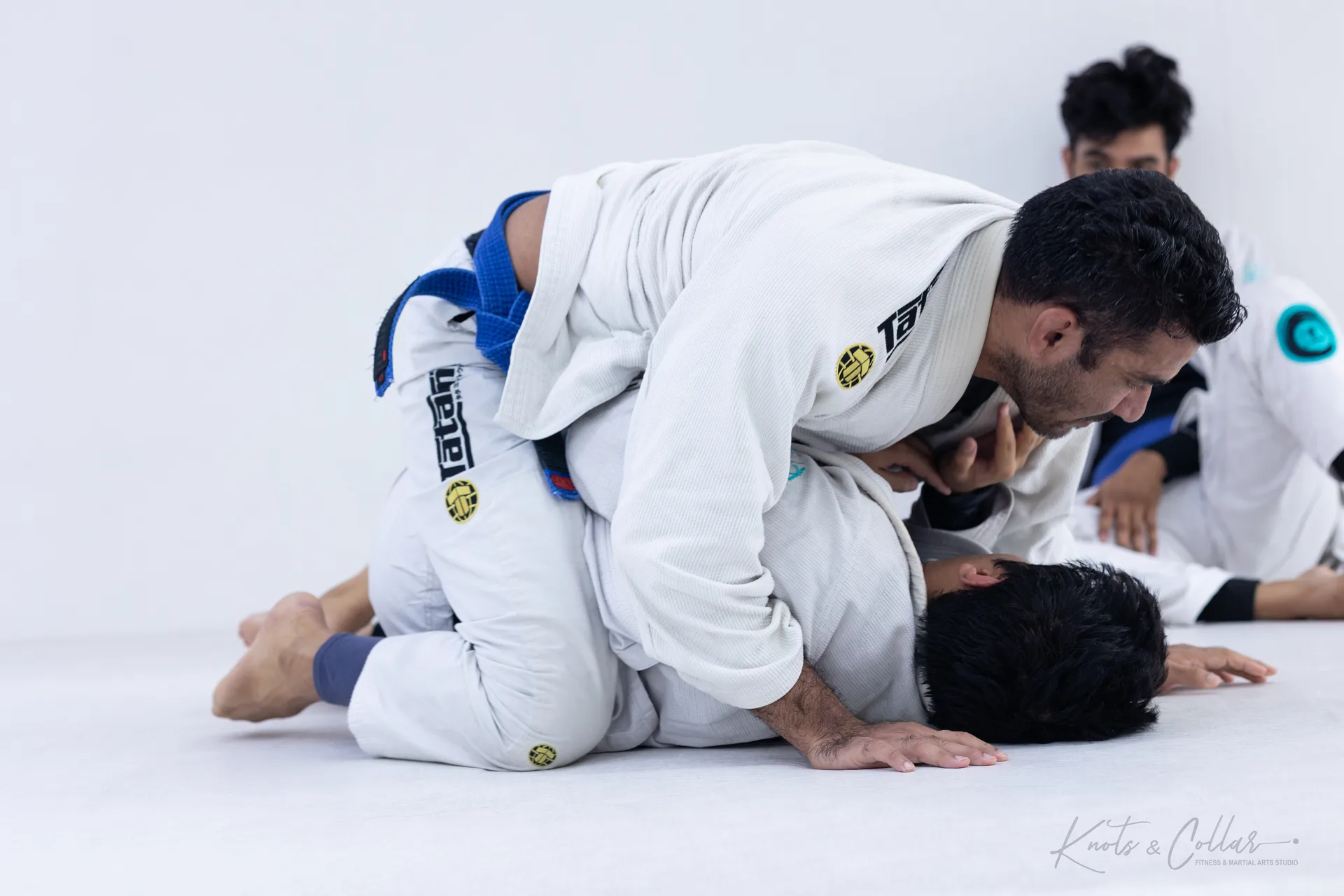
Takedowns, top control, and pins: wrestling's centre of gravity
Watch a wrestling match and you feel the intent immediately. Two people fight for grips and angles standing up, then one changes levels and drives underneath the other to score the takedown. Once on top, a wrestler works to flatten and turn their opponent, hunting for the pin that ends the match outright. The reward structure prizes the takedown and top control, so wrestlers develop extraordinary balance, a low unshakeable base, and the kind of forward pressure that is genuinely hard to describe until you have felt it from underneath.
What wrestling deliberately leaves out is the submission and the offensive back. There is no tapping to a joint lock or a choke, and there is no reward for playing from your back, so those simply are not part of the game. That is not a flaw; it is a different set of rules protecting a different thing. It does, however, mean a wrestler who steps onto a BJJ mat has a magnificent set of tools with one clear gap to fill, and the same is true in reverse for a jiu-jitsu player who has never learned to shoot a proper double leg.
Ground control and submissions: where BJJ lives
BJJ scores the slower story of the ground. Points accumulate as you advance through positions, passing the guard, taking mount, taking the back, and a submission ends the match at any moment. Because the reward favours control and the finish rather than the pin, BJJ tends to unfold as a patient game of chess played horizontally. You learn to stay calm while someone heavier is trying to control you, to create small angles, and to treat the bottom position as a place to attack from rather than a place to survive.
This is the part that surprises wrestlers most. In BJJ, giving up a takedown is not the end of anything; you can pull guard on purpose, catch a submission off your back, or sweep your way back on top. The tap is central to all of it. It lets you fail safely and often, learn from each mistake, and reset without anyone getting hurt. If you want the fuller picture of the jiu-jitsu game itself, our complete guide to BJJ in India lays it out from the ground up.
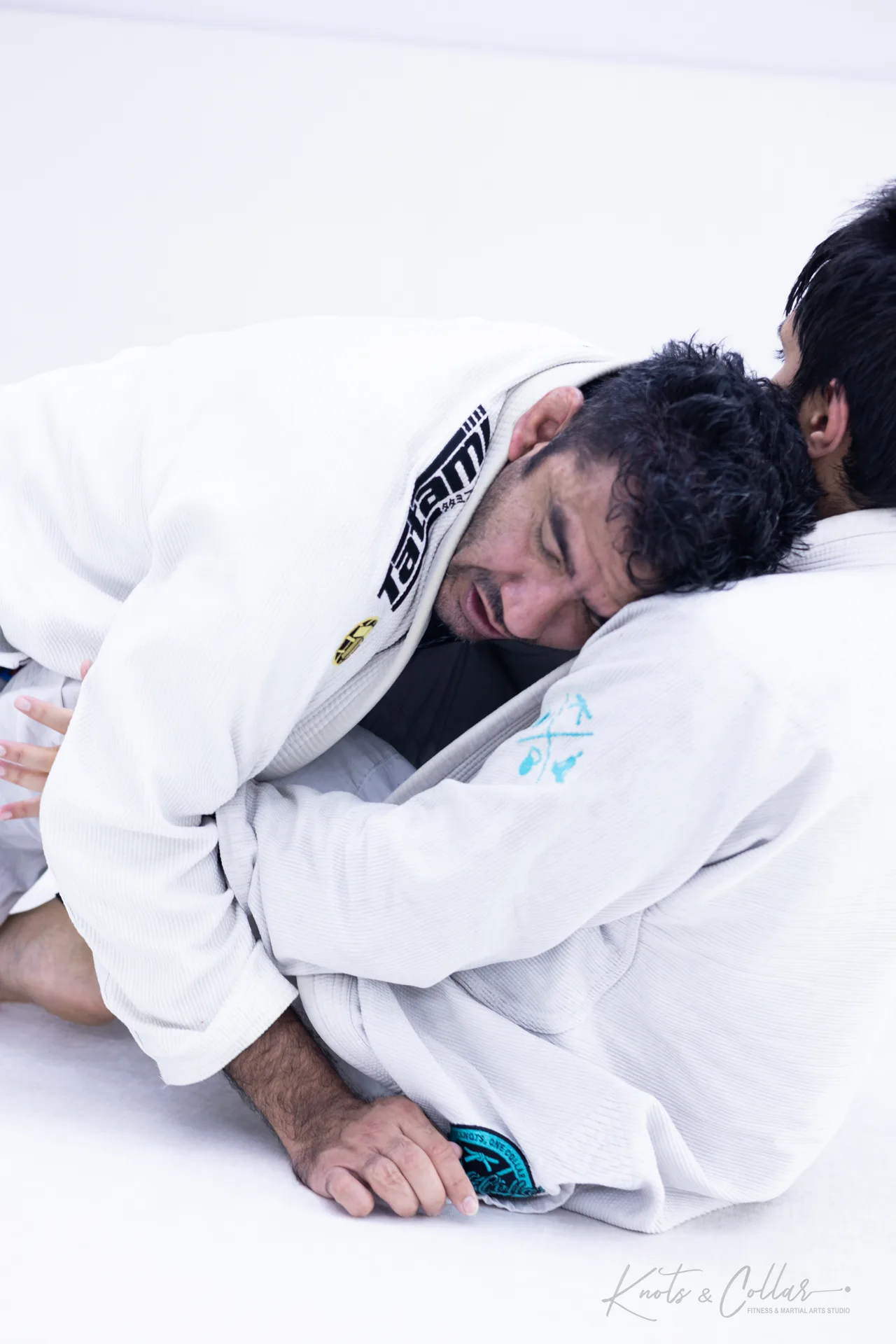
The shared ground: where BJJ vs wrestling stops being a contest
For all their differences, the two arts share an enormous amount, and the overlap is exactly where the BJJ vs wrestling framing falls apart. Both are grappling to the core. Both live in the clinch, the scramble, and the fight for control. Both reward leverage, timing, and grip over raw size, and both demand the same honesty: you cannot fake your way through live rounds, because your partner is resisting for real. A wrestler's sense of pressure and balance transfers straight onto a BJJ mat, and a jiu-jitsu player's understanding of angles and control helps in any scramble.
That is why so many complete grapplers train both. Wrestling answers a genuine, common weakness in BJJ, which is getting the fight to the ground on your terms and staying on top once you are there. BJJ answers the genuine gap in wrestling, which is what to do when the action goes to the mat and stays there: how to finish, and what to do from underneath. Put the two together and you have someone who can dictate where a match happens and what happens once it does.
India's wrestling heritage as a bridge to BJJ
India does not need to import a wrestling culture; it has one of the deepest on earth. Kushti, practised in the akhara for centuries, built its athletes on a foundation of balance, grip, conditioning, and a comfort with hard physical contact that most beginners spend years developing. That heritage runs through generations of Indian families, and it makes this a country unusually well prepared for jiu-jitsu.
A wrestler who walks into a BJJ room already owns the hardest parts to teach. They know how to change levels, how to hold top position, how to stay composed when someone is bearing down on them, and how to keep working when they are tired. What they gain from BJJ is the submission game and a real answer from their back, the two chapters their sport was never written to include. In practice, this makes wrestling one of the most natural on-ramps to jiu-jitsu we see, and it is a big part of why the art is growing so quickly here. For the wider view of that growth, our piece on BJJ vs Judo, honestly compared traces another branch of the same grappling family.
Should a beginner in India start with BJJ or wrestling?
Here is the honest, non-partisan answer. For most beginners in India, the single biggest factor is not the art, it is access. The right first grappling art is the one with a qualified instructor and a welcoming room near enough that you will actually turn up two or three times a week for a year. Consistency beats the style printed on the door. Wrestling has deep, proud roots across India, and a wrestling background is a superb foundation for anything that follows.
If both are genuinely available to you, choose by what draws you. If explosive takedowns, top pressure, and hard conditioning excite you, wrestling is a wonderful place to start. If you are pulled toward ground control, submissions, and the patient puzzle of working from the guard, BJJ will suit you, and it stays kind to beginners because the tap lets you train hard without wearing yourself down. This is the spirit we mean at Knots & Collar when we talk about Kindness Over Toughness: the point is to help each other improve, not to prove anything.
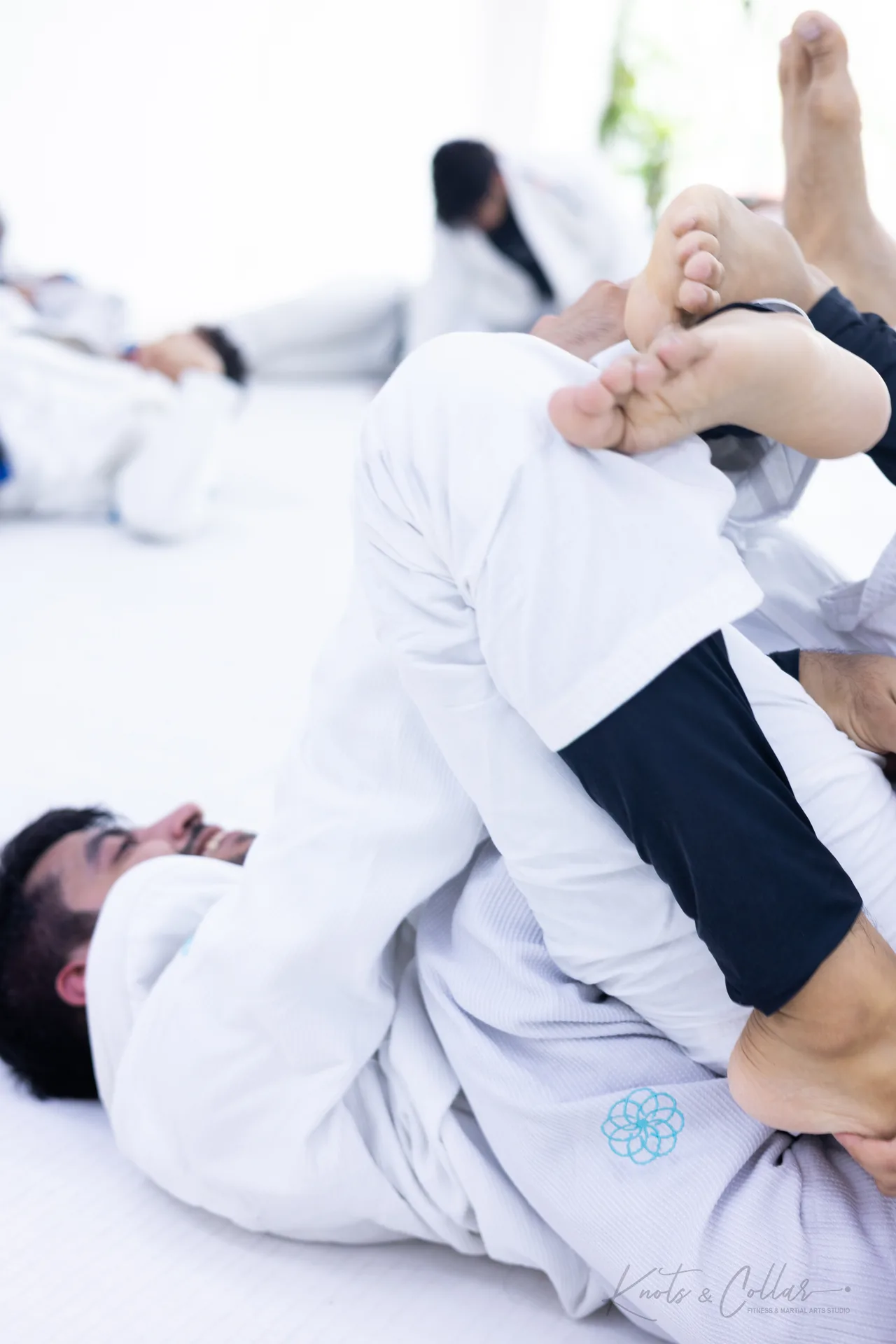
I teach BJJ, under the De La Riva lineage, so I will not pretend to be neutral about how much I love the art. But I will not tell you it is better than wrestling, because that would be neither true nor useful. They are two good answers to the same old question of how to control another person safely, and wrestling has earned its place in this country over a very long time. If you are leaning toward the ground game, once you decide to give jiu-jitsu a try our beginner's look at Gi vs No-Gi BJJ will help you pick where to begin.
The best way to settle a BJJ vs wrestling debate is to feel it for yourself. If you are in or near Defence Colony, New Delhi, you are welcome to come watch a class, ask questions, and see whether the room feels right. No pressure, no sales pitch. Schedule a visit and we will show you around.
FAQs
What is the difference between BJJ and wrestling?
Wrestling centres on takedowns, top control, and pinning your opponent's shoulders to the mat. BJJ centres on ground control and submissions, joint locks and chokes that let a partner tap. Wrestling wants to put you down and hold you there; BJJ wants to control you on the ground and finish. They overlap heavily in the scramble, which is why they complement each other so well.
Which is better, BJJ or wrestling?
Neither is better in a general sense. Wrestling builds ferocious takedowns, top pressure, and conditioning; BJJ builds ground positioning, submissions, and the ability to work from underneath. The right choice depends on what you want to learn, not on one art outranking the other.
Can you cross-train BJJ and wrestling?
Yes, and they fit together naturally. Wrestling gives a BJJ practitioner a reliable way to get the fight to the ground and stay on top. BJJ gives a wrestler submissions and a real game from the bottom, where wrestling has no answer. Many grapplers train both over time.
Does India's wrestling heritage help with BJJ?
It helps a great deal. India's Kushti tradition builds exactly the base a grappler needs: balance, grip, conditioning, and comfort with hard contact. Wrestlers who come to BJJ already move well and stay calm in a scramble; they mainly need to learn the submission game and how to work from their back.