
How Long Does It Take to Get a BJJ Black Belt?

The honest answer surprises most people who ask: getting a BJJ black belt usually takes around a decade of consistent training. That is longer than almost any other martial art, and it is the most important thing to understand before you begin. Here is what the road actually looks like.
The honest answer: roughly a decade
If you ask how long to get a BJJ black belt, the most honest number anyone can give you is around ten years of consistent training. Not ten years of intending to train. Ten years of actually being on the mat, two to four times a week, rolling with people who are trying to submit you while you try to submit them.
Some people reach black belt faster. A practitioner who starts young, trains four or five times a week, and competes seriously might earn it in seven or eight years. Others take fifteen years or more, training around a full life of work, family, injury, and travel. Both journeys are completely valid. The belt is not a stopwatch reading — it is a description of what you can do.
In most martial arts, a black belt is achievable in two or three years of dedicated study. BJJ is deliberately different. That difference is not an accident or an obstacle. It is the point.

The belts and roughly how long each takes
The adult belts, in order, are white, blue, purple, brown, and black. There are no shortcuts and no skipped belts. Each one represents a genuine level of capability that an instructor has watched you demonstrate over months of live training.
Here is a realistic picture of the time each stage tends to take for someone training two to four times a week:
White to blue: around one and a half to two and a half years. This is where you learn to survive, to recognise positions, and to stop panicking. Blue to purple: roughly two to three years, where your own style starts to appear. Purple to brown: about one and a half to two years of refinement. Brown to black: another two to four years of tightening everything you know.
Add those together and you land near a decade. If you want the full breakdown of what each colour means and how promotions actually work, we cover it in detail in our BJJ belt system explained: white to black belt guide.
Why the journey is deliberately slow
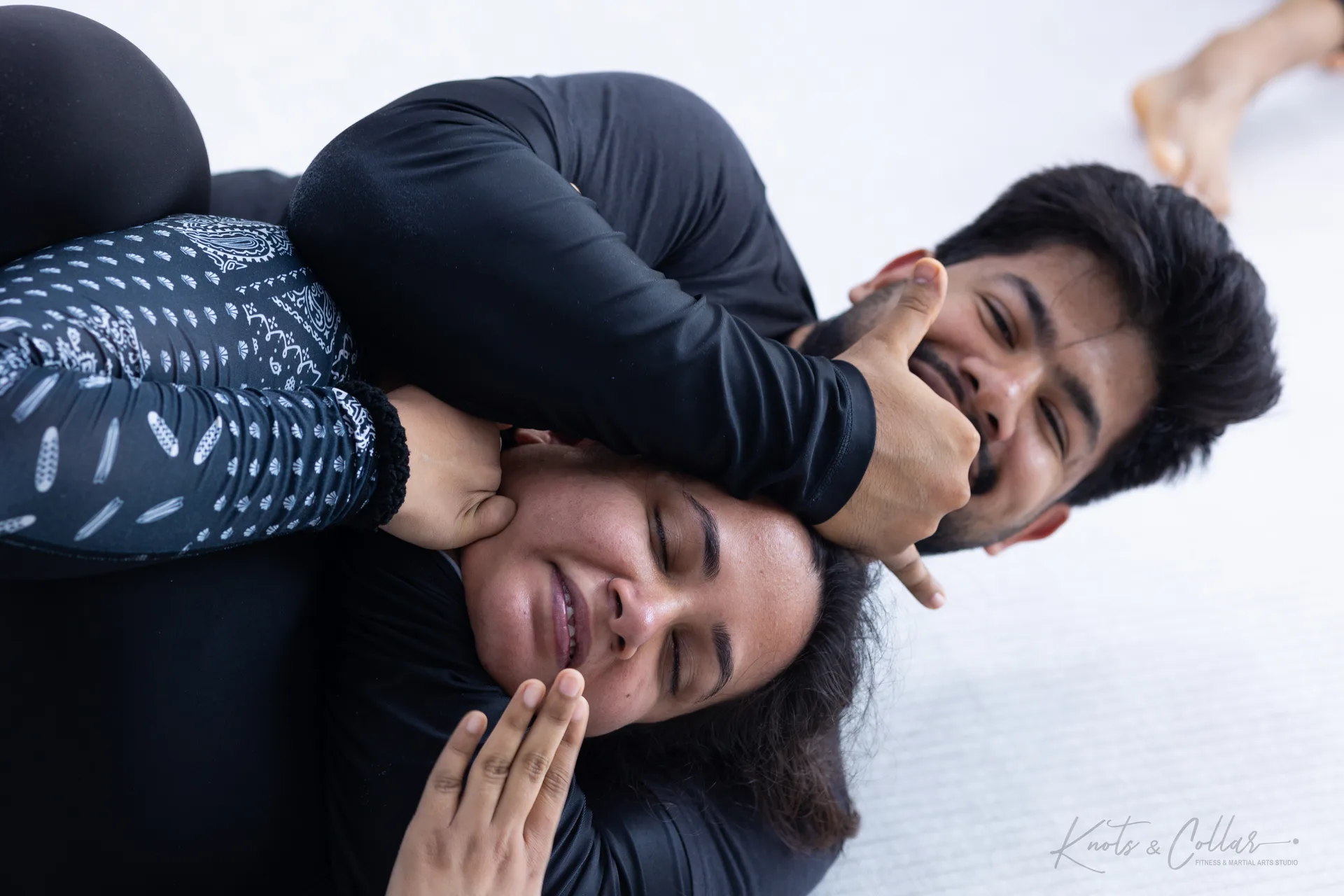
BJJ belts are not handed out for attendance or for memorising a curriculum. They are awarded when you can apply technique against someone who is genuinely resisting and actively trying to beat you. There is no written test, no set of forms to perform, and no examination board. There is only rolling, and whether or not you can do what the belt claims you can do.
This is why the timeline is long. You cannot fake capability against a resisting partner. A blue belt is meaningfully harder to deal with than a white belt on the mat, a purple belt harder still, and the gaps are visible to anyone rolling with them. The belt has to wait for the ability to arrive, and real ability is built slowly.
The slowness does something else, too. Ten years of tapping, adjusting, and coming back the next day builds patience and humility that a fast track could never produce. Many students tell us the person they became over those years matters more to them than the belt itself. That is not a marketing line — it is simply what consistent, ego-free practice tends to do to people.
What actually determines your pace
People assume athleticism decides how fast you progress. It helps at the very start, but it is not what carries you to black belt. Consistency does.
The single biggest factor is how often you train, and for how many years without long gaps. Someone naturally gifted who trains in bursts and disappears for months at a time will be passed by a steady, unremarkable student who simply keeps showing up. The mat rewards the person who is still there in year six, not the person who impressed everyone in month two.
Beyond frequency, a few things move the needle: rolling honestly instead of protecting your ego, tapping early and learning from why you got caught, drilling with intention rather than going through the motions, and staying healthy enough to train through the years. If you want practical ways to make your training count for more, our guide on how to improve at BJJ faster goes deeper. Notice the framing: faster, not instant. There is no version of this where you skip the years.
The picture in India, where the art is younger
BJJ is still a young art in India compared with Brazil, the United States, or Europe. That shapes the timeline in real ways. There are fewer black belts, fewer higher belts to roll with, and fewer decades-old academies. All of that can make the road feel longer here, because part of your development depends on the training partners around you.
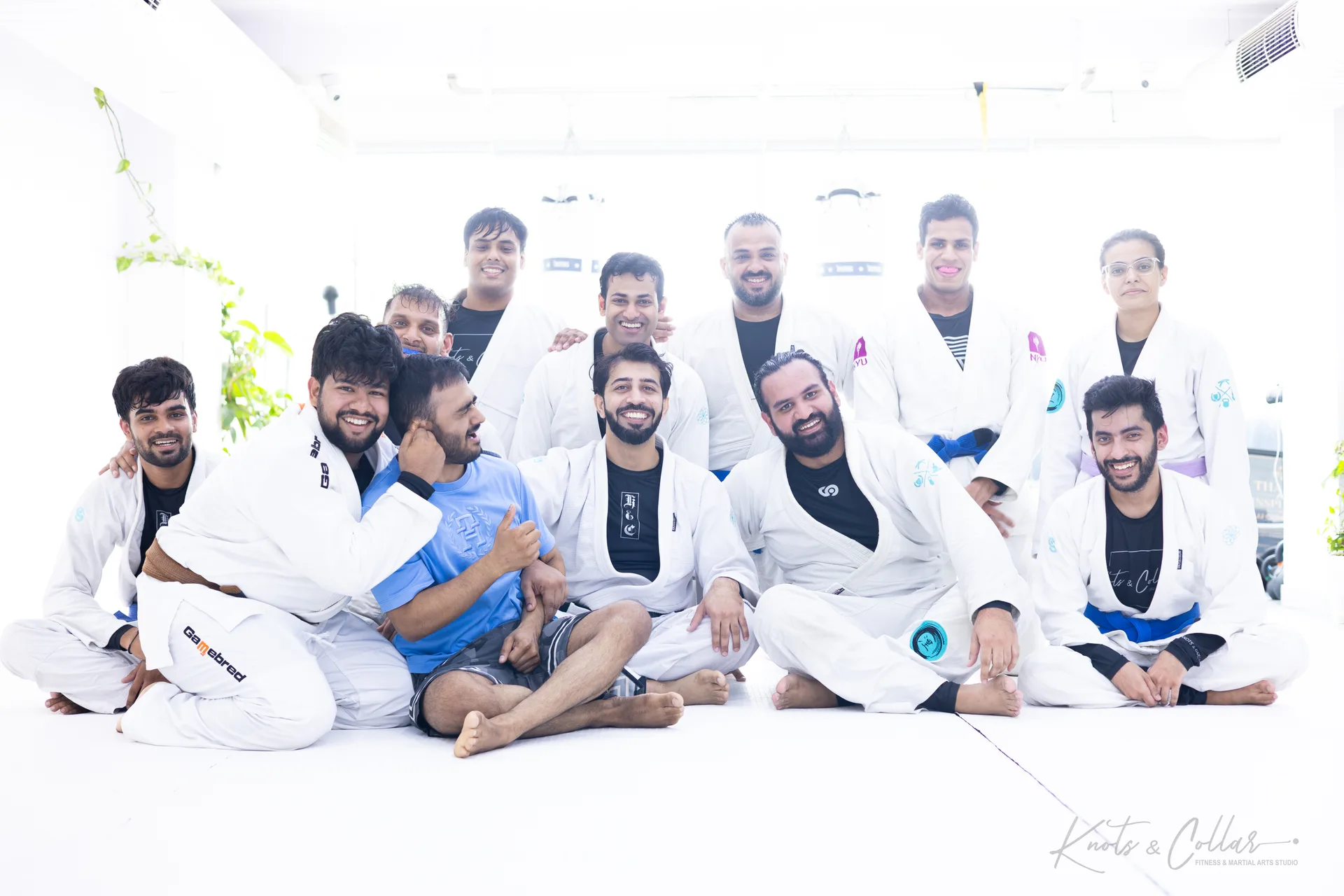
It also means legitimate lineage matters more, not less. A belt is only worth what stands behind it. At Knots & Collar, promotions follow the standards of the De La Riva lineage, and Professor Binish Sukhija — a black belt in that lineage — evaluates readiness through months of observation rather than a fixed schedule or a fee. A belt earned here is respected at legitimate academies anywhere in the world, because it represents exactly what it is supposed to.
If you are weighing up starting in Delhi or elsewhere in the country, our complete guide to BJJ in India lays out the landscape honestly, including what to look for in an academy before you commit your years to it.
The black belt is a beginning, not a finish
Here is the part that reframes the whole question. Every legitimate black belt will tell you the same thing: the black belt is not the end of learning. It is where the deepest learning starts. You spend the years to white, blue, purple, and brown belt building a foundation, and the black belt is the moment you finally have enough of one to explore the art properly.
So if the ten-year answer feels daunting, try turning it around. You are not waiting a decade for a piece of coloured cloth. You are spending a decade becoming someone who moves, thinks, and handles pressure differently — on the mat and, as many students find, well beyond it. We wrote about that carry-over in how BJJ builds confidence beyond the mats.
The clock only counts the years you actually train, which is really another way of saying the only meaningful step is the first one. If you are curious what a class feels like before committing to anything, you are welcome to come and watch or roll. You can schedule a visit whenever you are ready — no pressure, no sales pitch, just an honest look at the first day of a long, worthwhile road.
FAQs
How long does it take to get a BJJ black belt?
For most people training consistently two to four times a week, a BJJ black belt takes roughly a decade. Some who train more often and start young reach it in seven or eight years; others take fifteen or more. The belt follows genuine capability, not the calendar.
Is a BJJ black belt harder to earn than in other martial arts?
It usually takes much longer. In many martial arts a black belt is achievable in two to three years. In BJJ the average is closer to ten years, because every belt is tested in live sparring against a resisting partner rather than through a graded curriculum alone.
What decides how fast I progress in BJJ?
Consistency, far more than talent. Someone who trains steadily for years, taps without ego, and keeps showing up will pass someone more athletic who trains in bursts. The order of the belts is white, blue, purple, brown, black, and each one is earned on the mat.
Can I get a BJJ black belt faster by paying more or training harder?
You cannot buy a legitimate BJJ belt, and no honest instructor promotes on a fixed schedule. Training more often can shorten the timeline, but only because it builds real capability sooner. The belt is awarded when your instructor judges you genuinely ready.