
No-Gi Jiu-Jitsu: A Complete Beginner's Guide

No-gi jiu-jitsu is Brazilian Jiu-Jitsu trained without the uniform — same art, different feel, and a good place to start.
If you have watched grappling and noticed some people wearing a heavy cotton jacket and others in tight athletic wear, you have already seen the two faces of the same art. No-gi jiu-jitsu is Brazilian Jiu-Jitsu practised without the traditional gi. The principles are identical — leverage, control, position before submission — but the absence of the jacket, trousers, and belt changes how the whole thing moves. This guide walks a beginner through what no-gi is, how it differs from training in the gi, what to wear, the positions you will meet early, who it suits, and how to take your first class at Knots & Collar in Defence Colony, New Delhi.
What Is No-Gi Jiu-Jitsu?
No-gi jiu-jitsu is grappling that starts standing or on the knees and moves to the ground, where you work to control your partner and, eventually, to finish with a submission — a joint lock or a strangle that a partner taps to acknowledge. The difference from the gi version is simply what you are wearing. Instead of gripping fabric, you grip the body: wrists, necks, elbows, hips, the connection between your limbs and theirs. That one change ripples through everything, from how you hold a position to how quickly the action flows.
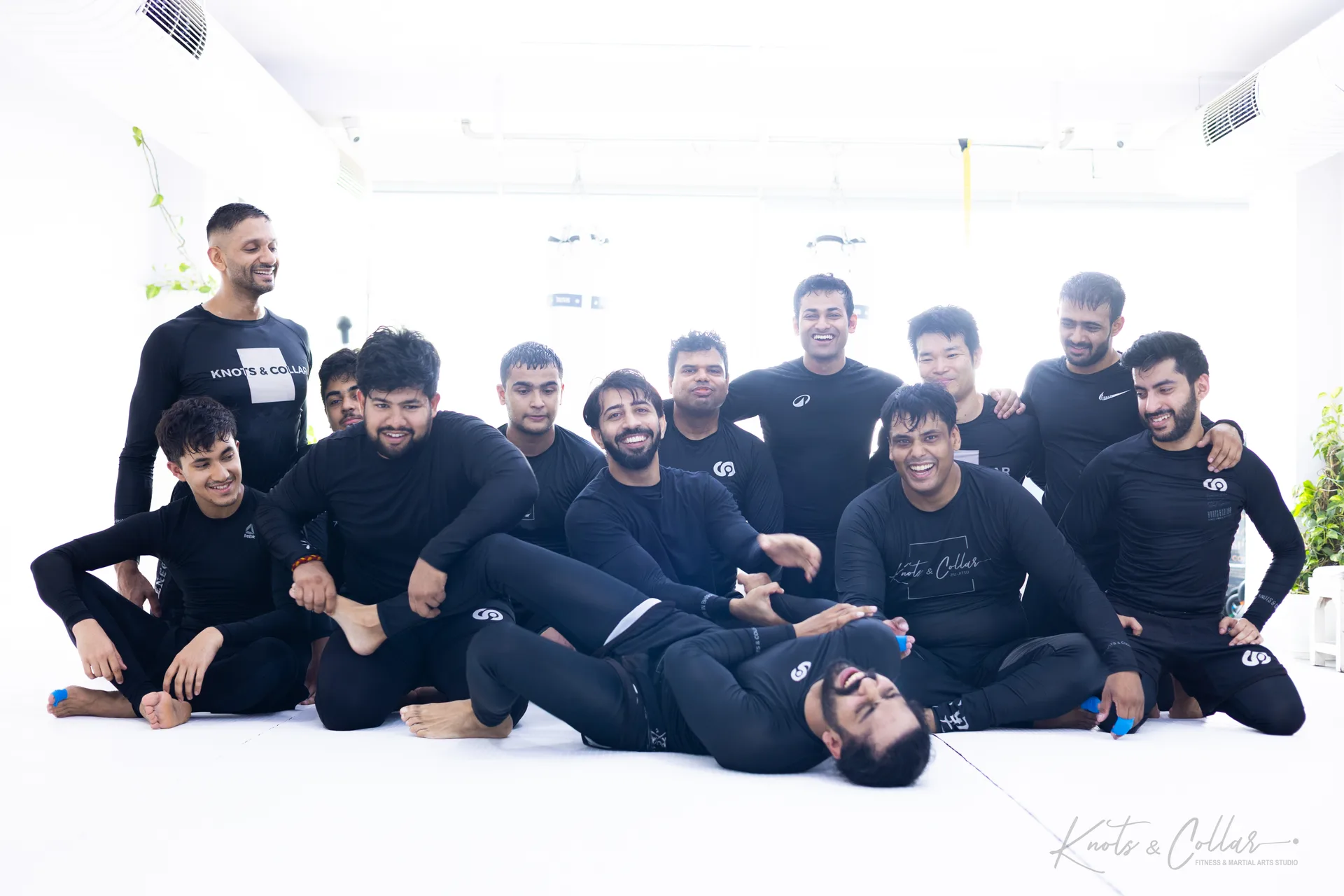
Because there is nothing to grab and hold onto, no-gi rewards timing, body awareness, and steady pressure over static grips. Many people find it intuitive early on because it looks and feels close to wrestling, which is a familiar reference point. It is one of two ways we train at Knots & Collar — we run both Gi & No-Gi classes, seven days a week, so students learn the art from both angles rather than only one.
How No-Gi Jiu-Jitsu Differs from Training in the Gi
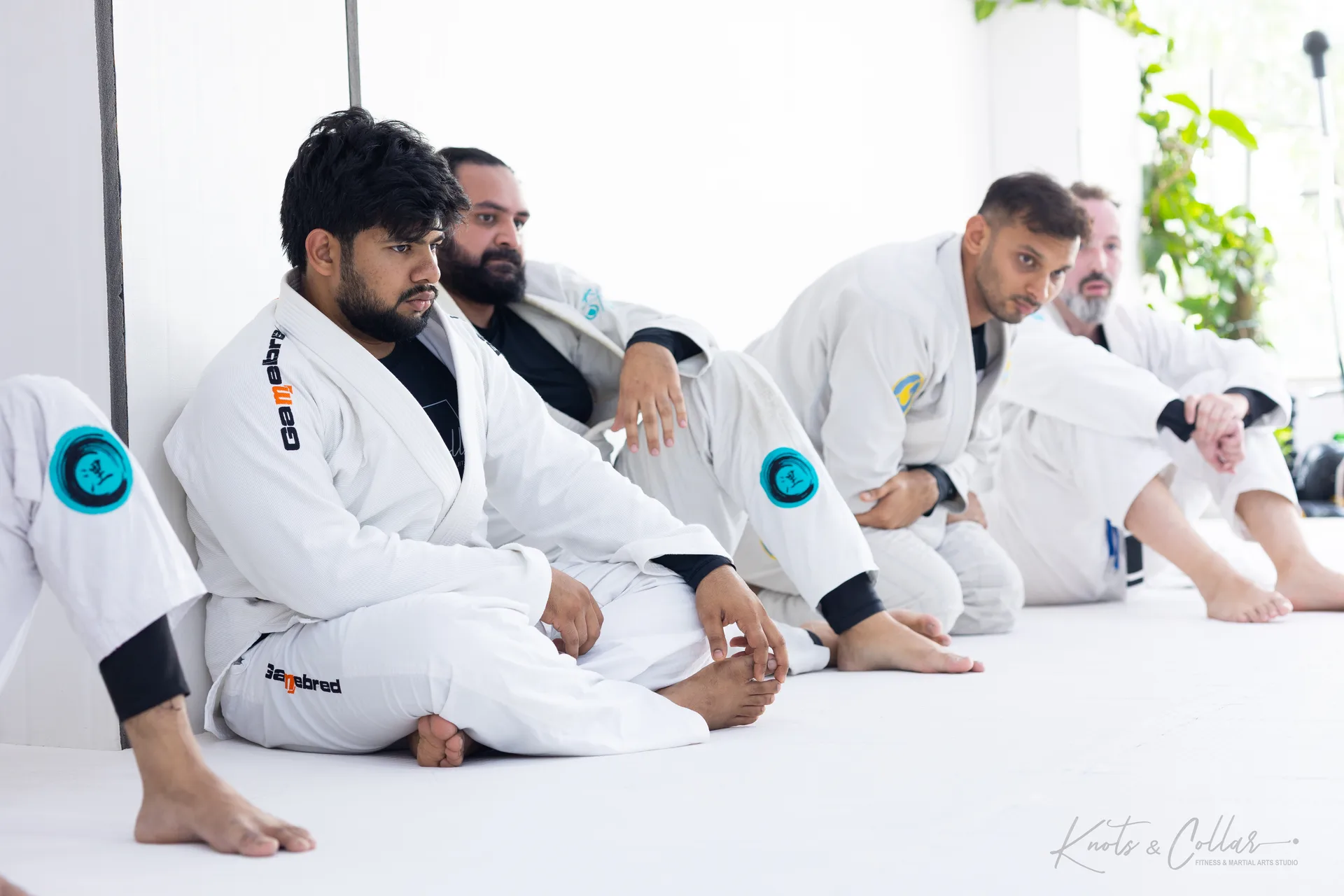
The clearest difference is grips. In the gi you can hold sleeves, collars, and pant legs, and those grips let you anchor a position and slow a partner right down. In no-gi those handles are gone. You control with underhooks, wrist ties, head position, and the frames your own limbs make. Grips that would hold someone in place in the gi simply slide off skin, so you learn to control with angle and pressure instead of fabric.
The second difference is pace. Without cloth to lock things down, positions can be escaped more easily, so no-gi tends to move faster. That is part of why it feels tiring at first — you cannot rest inside a grip the way you sometimes can in the gi. The third difference is the submission menu. Both formats share chokes, armlocks, and control positions, but the gi adds collar and sleeve strangles that rely on the jacket, while no-gi leans more on strangles from the arms and on leg locks. We cover this trade-off in detail in our gi vs no-gi guide for beginners, and the honest answer there is that most students benefit from doing both.
What You Wear: Rashguard & Spats
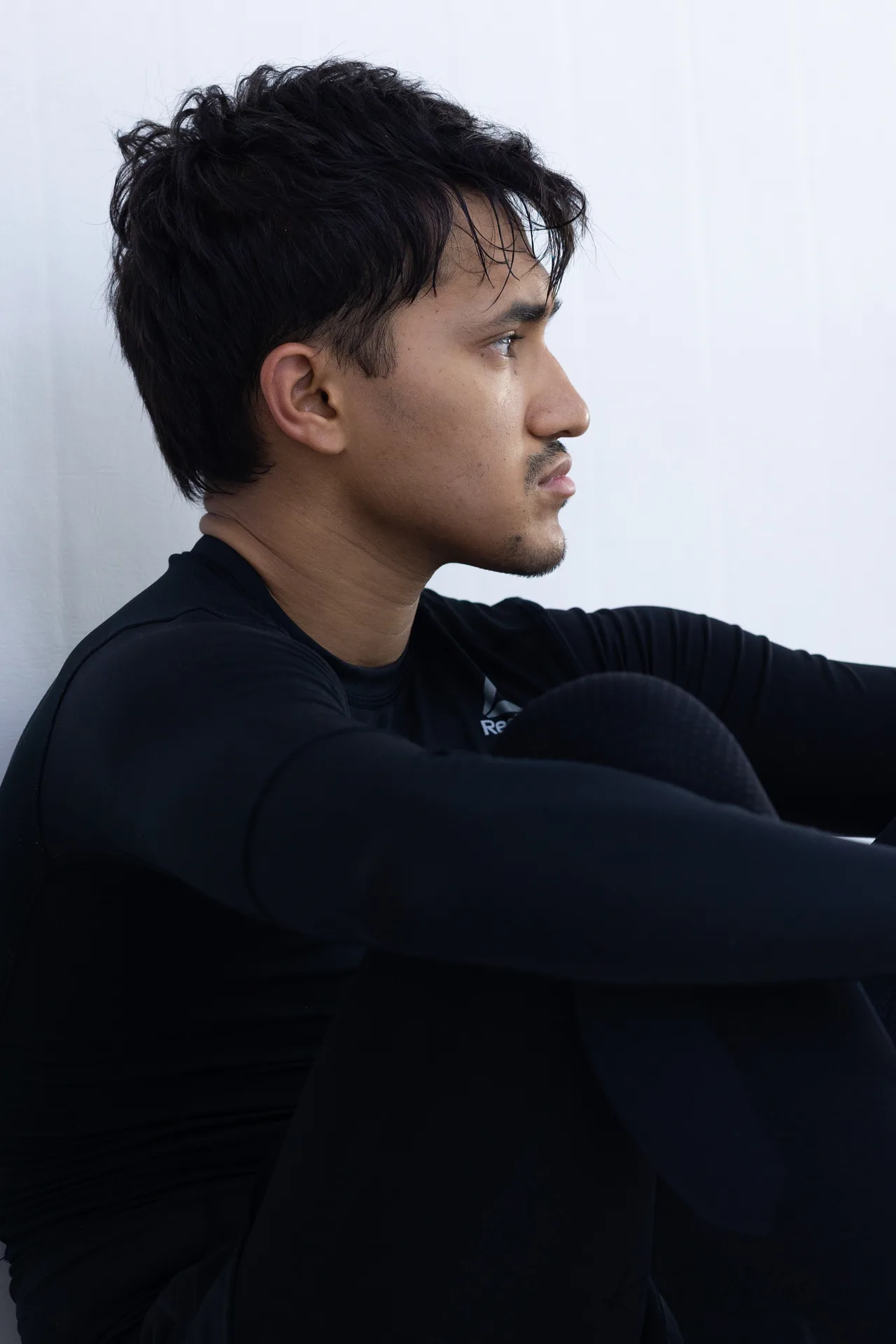
The gear for no-gi is simple and close-fitting. On top you wear a rashguard — a snug synthetic shirt that protects your skin from mat burn, keeps sweat off your partner, and does not bunch up when you move. On the bottom, spats — close-fitting leggings — go underneath, with grappling shorts over the top; wearing spats under your shorts is compulsory in our no-gi classes. Close-fitting kit matters for a practical reason: loose material catches fingers and toes and can cause small injuries, and it gives your partner something to grab that would not exist in a real no-gi exchange.
When you kit out, we make our own rashguards and spats as part of our Made in Bharat line, manufactured here in India and built for regular training — and if you are new and not sure what to bring, the desk will point you to the right gear before your first class. If you want to understand our approach to gear more broadly, our note on the Made in Bharat gi explains why we chose to produce locally rather than import.
Key Positions & Submissions in No-Gi Jiu-Jitsu
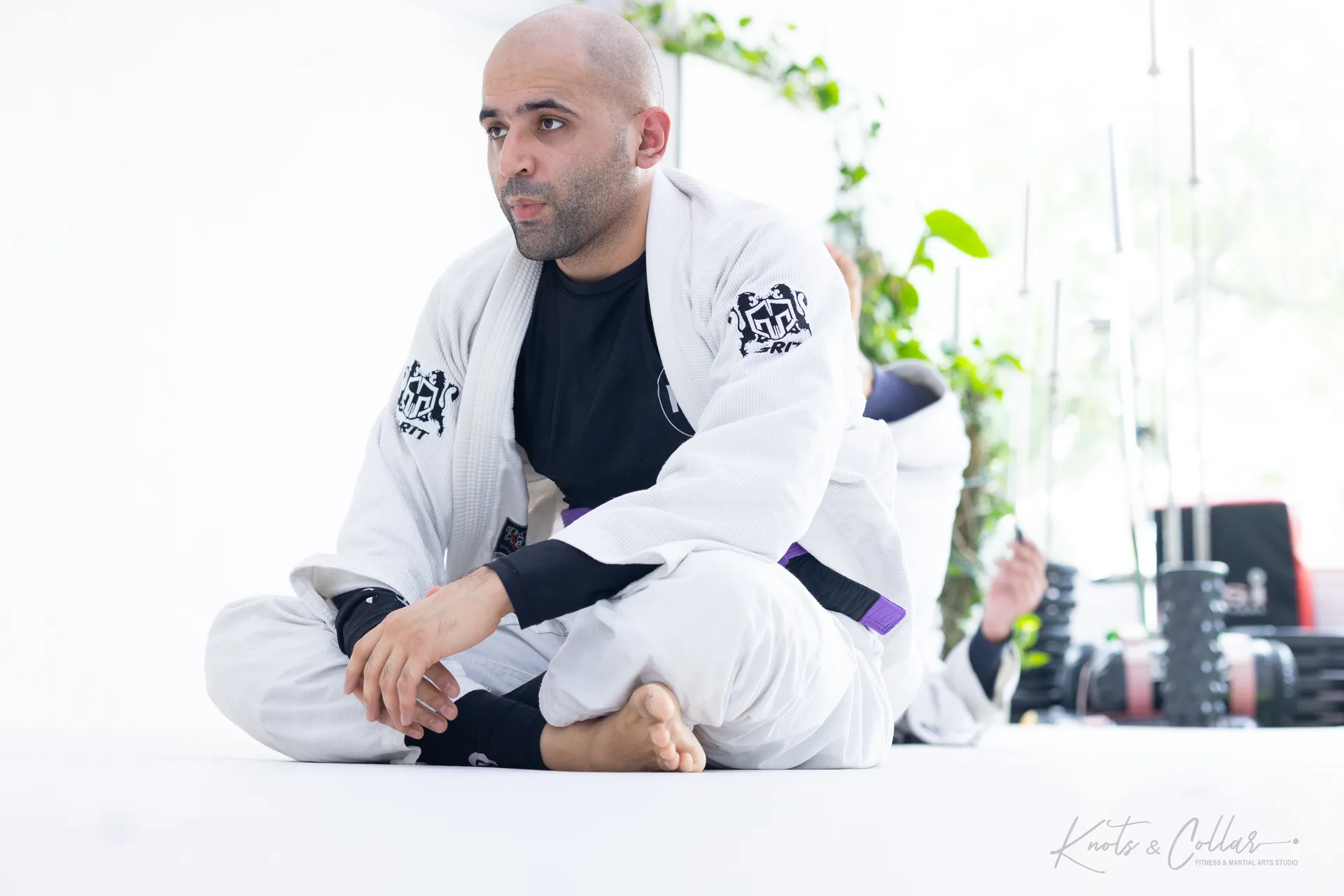
You do not need to memorise a syllabus before you start, but it helps to recognise the shapes you will meet in your first weeks. The guard is the position where you are on your back with your partner in front of you, using your legs to control the distance and set up sweeps and attacks. Far from being a losing spot, guard is one of the most active places in jiu-jitsu, and much of no-gi begins from it. Because there are no pant grips, no-gi guard relies more on hooks, foot placement, and controlling the wrists.
Back control is the position most people are working towards — sitting behind your partner with your chest to their back, chest connection and hooks in place, hunting for a strangle. In no-gi the classic finish from here is the rear naked strangle, applied with the arms alone. It is worth being honest about the learning curve: none of these positions is a trick that works on its own. They take repetition, and there is no shortcut that guarantees a submission on a resisting partner. If you want a realistic picture of how progress actually happens, our piece on improving at BJJ lays it out plainly.
The area that gets the most attention in modern no-gi is leg entanglements — positions where you tie up one of your partner's legs with both of yours to control it and set up leg locks. This is a large and technical part of the no-gi game, and a good coach introduces it carefully, with clear safety rules about how far and how fast to apply anything, so that both training partners stay healthy. Beginners learn the control first and the finish much later, which is exactly the right order.
Who No-Gi Jiu-Jitsu Suits
No-gi suits a wide range of people. If you like a faster, more athletic feel, or you have a wrestling background, it will feel natural quickly. If you train in a warm climate — and Delhi certainly qualifies for much of the year — the lighter kit is welcome. It also appeals to anyone drawn to the grappling side of mixed martial arts, since fights happen without a uniform. None of this means no-gi is only for the young or the fit; steady pressure and good position work at any age, and beginners start exactly where they are.
That said, we would gently push back on the idea that you must choose one format forever. The gi teaches patience and precise grip fighting; no-gi teaches connection and pace. Training both makes you a more complete grappler, which is why our timetable carries both. At Knots & Collar we teach from the De La Riva lineage, and that inheritance runs through how we teach guard in both the gi and no-gi.
How to Start No-Gi Jiu-Jitsu at Knots & Collar
Starting is simpler than it looks. Wear a fitted top and shorts, arrive a few minutes early, and come as you are — you do not need to be fit first, and you do not need any prior experience. Your first class is free, so you can feel the training before deciding anything. We run mornings from 6:30am to 12 and evenings from 3 to 9:30pm, seven days a week, with kids welcome from age 3 and adults of every level on the mats.
If you are still weighing things up, our beginner's checklist for starting BJJ in Delhi covers the practical questions in order. And if you would rather just try it, that is the honest recommendation: one class tells you more than a week of reading.
FAQs
What do I wear for a no-gi jiu-jitsu class?
A rashguard on top, and on the bottom spats worn under grappling shorts — wearing spats beneath your shorts is compulsory in our no-gi classes, for hygiene and so loose fabric does not catch fingers or toes. Everything is close-fitting on purpose. You do not need a gi; if you are new and not sure what to bring, the desk will help you get the right kit before your first class.
Should a beginner start with gi or no-gi jiu-jitsu?
Either is a good place to begin, and at Knots & Collar you can train both. The gi tends to slow the pace and rewards patient grip fighting, while no-gi moves faster and relies on body connection. Most students end up training both over time because the two formats teach different lessons.
Is no-gi jiu-jitsu harder than training in the gi?
It is not harder, only different. Without sleeves and lapels to hold, positions can feel slippery and the pace is quicker, so beginners often find it tiring at first. As your control improves through drilling and rolling, the faster pace becomes something you can manage rather than something that overwhelms you.
Can complete beginners do no-gi jiu-jitsu?
Yes. No-gi classes at Knots & Collar are open to complete beginners, and your first class is free. You will learn from the ground up alongside more experienced students who are used to training with newcomers.
Come and try a class. Whether you start in the gi or no-gi, the door is open seven days a week, and your first session is on us — schedule a visit and we will see you on the mats. Kindness Over Toughness.