
Strength & Conditioning for Jiu-Jitsu: Building a Body That Trains for Years
Jiu-Jitsu is a skill first, last, and always. No amount of gym work will out-muscle a good technician, and chasing strength before technique is a well-worn way to plateau. Yet the grapplers who are still rolling comfortably in their forties and fifties almost all have one thing in common: a body that has been quietly looked after. This is a plain guide to strength and conditioning for BJJ — what actually helps, how to build it without wearing yourself out, and how it fits around mat time at Knots & Collar in Defence Colony, New Delhi. It is general information, not medical advice: build up sensibly, and if you are unsure, speak to a doctor first.
Technique comes first — strength supports the years, not the round
Let us be clear about the order of things. On any given day, skill beats strength. A calm, well-timed technique will settle a round more reliably than a strong grip or a heavy squat ever will, and time spent drilling positions is time better spent than time spent lifting. If you only have a few hours a week, put them on the mat.
So why bother with strength and conditioning at all? Because it does not win the round — it wins the decade. A resilient body lets you train more often, bounce back quicker between sessions, and stay off the sidelines when a hard roll would otherwise leave you sore for days. The point of conditioning for jiu-jitsu is longevity: more mat time, over more years, with fewer interruptions. Think of it as the thing that keeps you healthy enough to keep learning, not a shortcut around learning itself.
The qualities that actually help grapplers
You do not need to be strong everywhere. A handful of qualities do most of the work in jiu-jitsu, and knowing which ones lets you spend your effort well. Grip strength is the obvious one. So much of the gi game runs through your hands, and a grip that lasts is a grip that holds positions late in a round when others are fading. Forearms and hands respond well to steady, patient work.
The core comes next, and by core we mean the whole trunk that links your upper and lower body. A stable midsection is what turns a hip movement into a sweep or lets you hold a frame under pressure. Then the hips: almost everything in guard and on top is driven from the hips, so mobile, strong hips are worth a great deal. Finally, an aerobic base — the unglamorous engine that keeps you breathing easily and thinking clearly in the last two minutes of a hard roll, rather than gassing and forcing errors. Grip, core, hips, and wind: build those, and the rest tends to look after itself.
Simple ways to build them without overtraining
None of this needs a complicated programme. For grip, holding a towel or gi over a bar, farmer's-style carries, and simply not letting go of your grips in training all help. For the core, slow, controlled movements — bridges, hollow holds, and the shrimping you already do in warm-ups — build the kind of stability that transfers to the mat, far more so than chasing crunch numbers. For the hips, spend time in deep positions, work through their full range gently, and add some hinging and squatting movements as your body allows.
For the aerobic base, steady work you can sustain — brisk walking, cycling, easy running, or longer rounds of light drilling — builds an engine without leaving you flattened. The guiding principle for all of it is the same: leave a little in the tank. Strength and conditioning for BJJ should make your next session better, not steal from it. Two or three short sessions a week is plenty for most people. Add load slowly, over months rather than weeks, because tendons and joints adapt more slowly than enthusiasm does. If your gym work is making you dread the mat, you are doing too much of it.
Recovery and sleep — where the work becomes fitness
Here is the part people skip, and it is the part that matters most. You do not get fitter or stronger while you train. You get fitter while you recover from it. Training is the signal; recovery is where your body actually answers. Skimp on the recovery and all the extra sessions in the world will simply pile up as fatigue.
Sleep does more for a grappler than any supplement or gadget. It is when tissue repairs, when the previous day's technique settles into memory, and when your body clears the fatigue of a hard week. Protect it. Alongside sleep, eat enough and eat well, keep your water up — especially through a Delhi summer — and give yourself the occasional easy week when you feel run down. Rest days are not lost days; they are when the work you have already done turns into fitness. A grappler who sleeps well and trains sensibly will out-last one who trains furiously and recovers poorly, every time.
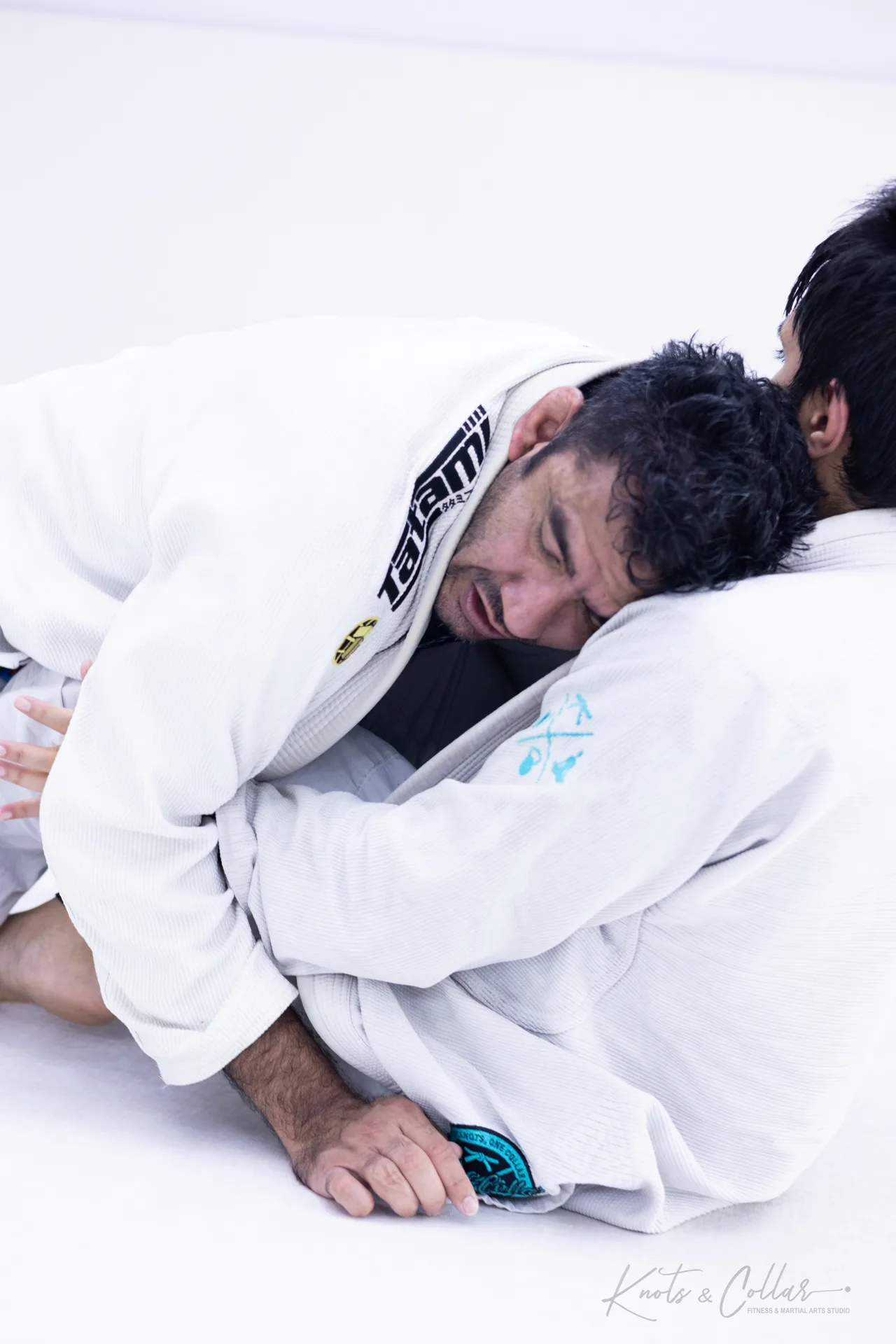
How our fitness classes complement mat time
You can do all of this on your own, and many people do. But if you would rather have it built for you, our fitness classes at Knots & Collar are designed with the grappler in mind. They focus on the movement, grip, core, and conditioning that carry over to jiu-jitsu, and they are dosed to complement your rolling rather than compete with it. The aim is simple: help you show up to class fresher, hold your positions longer, and keep training for years.
This sits squarely within how we teach — Kindness Over Toughness. Conditioning here is about building people up sensibly, not grinding them down for the sake of a hard session. If you are new to structured training, or returning after a break, we would rather you build a base slowly and stay healthy than chase intensity and burn out. That patience is the whole point.
Putting it together
Keep the order straight and the rest is easy. Technique first, always. Strength and conditioning second, in a supporting dose — grip, core, hips, and an aerobic base, built gradually two or three times a week. Recovery and sleep underneath all of it, protected fiercely, because that is where the work turns into fitness. Do that, and you give yourself the best chance of the thing every grappler actually wants: to still be rolling, and still improving, many years from now.
If you want to see how our fitness classes fit around your jiu-jitsu, you are welcome to come and watch a session and ask questions. You can schedule a visit whenever it suits you — there is no pressure to sign up on the spot.
For more on training smart, read our honest look at why jiu-jitsu is such good fitness, our guide to training BJJ without getting injured, and our advice for anyone starting jiu-jitsu over 30.
FAQs
Do I need to lift weights to be good at BJJ?
No. Technique comes first, and skill will always outpace raw strength on the mat. Strength and conditioning is a support, not a substitute. It helps you train more often, recover faster, and keep going for years. Plenty of people train jiu-jitsu happily with no separate gym work at all, and they still improve.
What physical qualities matter most for jiu-jitsu?
Grip strength, a stable core, mobile and strong hips, and a steady aerobic base. Grip lets you hold positions, the core links your upper and lower body, the hips drive most movement in guard and on top, and the aerobic base keeps you calm and thinking late in a hard round. You can build all four gradually.
How do I add strength work without getting worn out?
Keep the mat as your priority and treat strength and conditioning as a smaller supporting dose around it. Two or three short sessions a week is plenty for most people. Leave a little in the tank, build up slowly over months rather than weeks, and protect your sleep. Recovery is where the gains actually happen.
Can I do strength and conditioning at Knots & Collar?
Yes. Our fitness classes are built to complement mat time rather than compete with it, focusing on the movement, grip, and conditioning that help grapplers. You are welcome to come and see how they fit around your jiu-jitsu. This article is general information, not medical advice, so build up sensibly and check with a doctor first if you are unsure.