
The History of Brazilian Jiu-Jitsu: From Japan to Brazil to the World

Brazilian Jiu-Jitsu can feel timeless once you are on the mat, but it has a real and traceable story — one that crosses oceans and generations. The history of Brazilian Jiu-Jitsu runs from the grappling traditions of Japan, through the refinement of judo, across to Brazil, and out into the wider world. Understanding that journey makes the art you train richer, because every technique you learn carries more than a century of careful, patient work inside it. Here is the arc, told plainly.
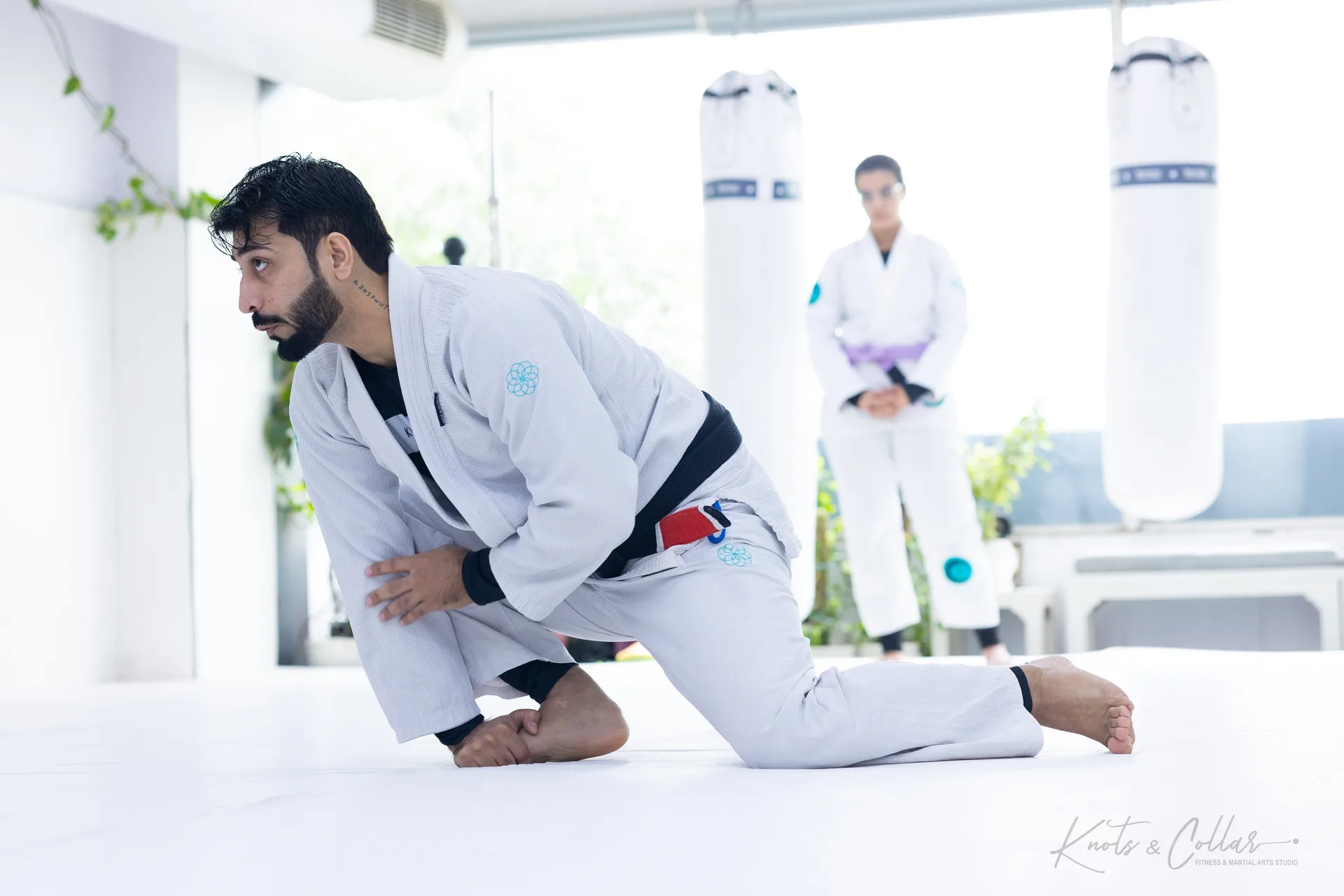
Japanese roots: jujutsu and the samurai era
The story begins in Japan, with the old grappling systems known collectively as jujutsu. These methods date back centuries, to the age of the samurai. A warrior in armour, disarmed or thrown to the ground, needed ways to control an opponent without a sword — through throws, joint controls, pins and holds. Jujutsu was that body of knowledge: close-quarter techniques built for real situations, where size and strength alone could not always be relied upon.
The word itself tells you a great deal. Ju means gentle or yielding, and jutsu means art or technique. The name points to the central idea — yielding to force and redirecting it rather than meeting it head-on. That principle, worked out on Japanese ground centuries ago, is the same one you feel the first time a technique works against a stronger partner and you realise how little effort it took.
Jigoro Kano and the birth of judo
In the late nineteenth century, a Japanese educator named Jigoro Kano gathered the older jujutsu methods, studied them carefully, and organised them into a coherent system he called judo. Kano was a teacher first, and it showed in his approach. He kept the techniques that worked under honest, resisting practice, set aside those that were too dangerous to train regularly, and built a way of learning that let students spar safely at full effort. That method of live practice against a resisting partner is a huge part of why the art became so effective — and it is still how we train today.
Kano also gave the art much of its structure. The coloured-belt system that jiu-jitsu students recognise around the world traces back to his judo, as a plain way to mark a student's progress over time. If you want the fuller picture of how ranks work now, we lay it out in our guide to the BJJ belt system from white to black belt.
The journey to Brazil: Mitsuyo Maeda
Among Kano's students was a remarkable practitioner named Mitsuyo Maeda. In the early twentieth century, Maeda travelled widely, demonstrating and teaching the art across many countries, and eventually settled for a time in Brazil. There, the thread of this story crosses an ocean and takes root in new soil.
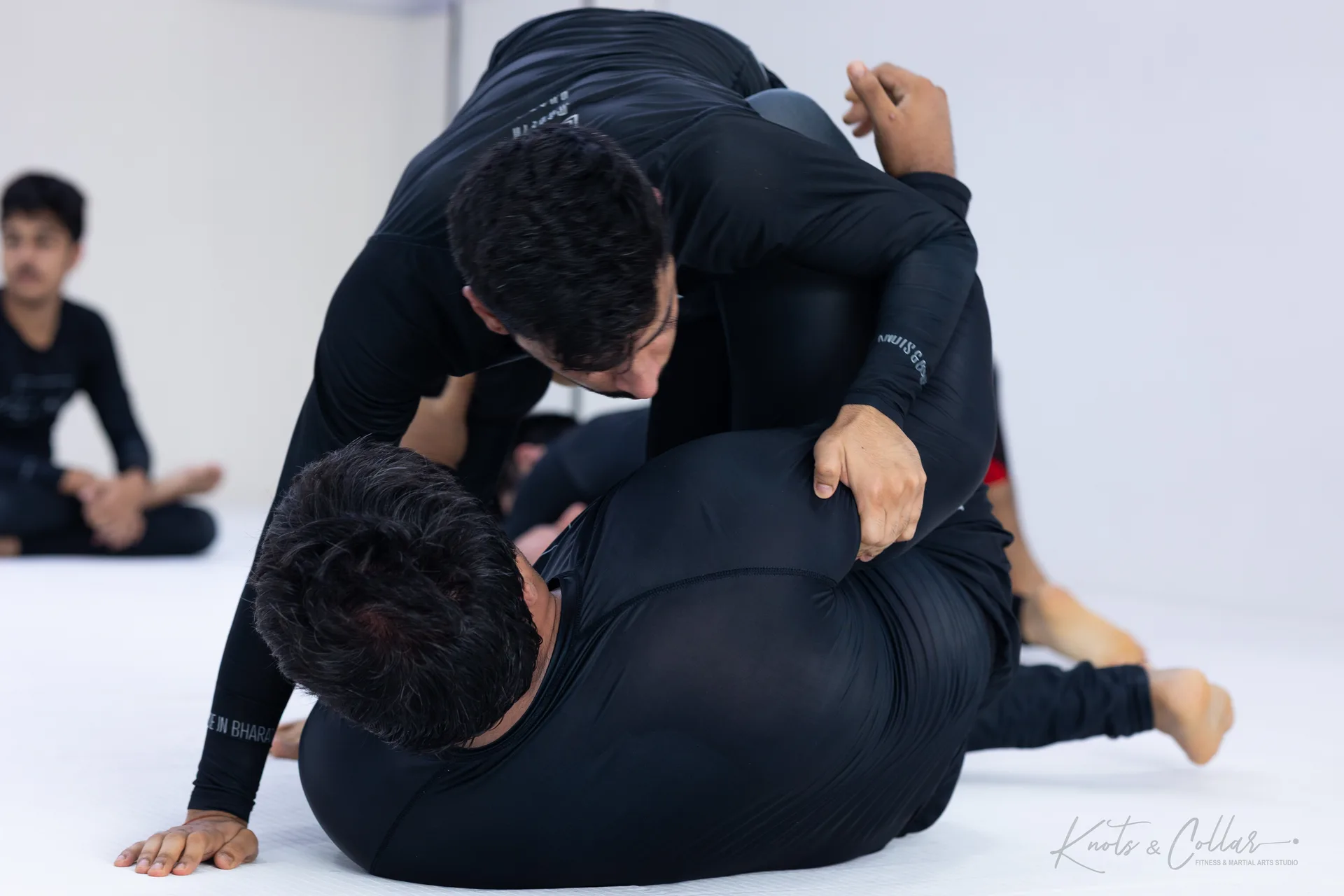
In Brazil, Maeda taught the art to local students, among them members of the Gracie family. What they received was a complete grappling system with deep Japanese roots. What they did with it over the following decades turned it into something with its own distinct character — and gave the art the Brazilian name it carries today.
The Gracie family and refinement in Brazil
Over generations, the Gracie family and other Brazilian practitioners studied, tested and refined what they had learned. Their particular focus became the ground: what happens once a confrontation leaves the standing position and moves into close grappling, where control, position and leverage decide everything. They spent decades working out how a smaller person could safely manage a larger, stronger one from the bottom as well as the top, and how to move methodically from control to a finishing technique.
This is the refinement that gives Brazilian Jiu-Jitsu its modern identity. The emphasis on ground control, on positional hierarchy, on patient problem-solving rather than raw aggression — much of that character was developed and stress-tested in Brazil across the twentieth century. It was not the work of one person or one moment. It grew through many hands, many students, and a great deal of honest practice, which is exactly why the art still feels alive and open to discovery.
Leverage over strength: the philosophy at the centre
Underneath the whole history sits one enduring idea: leverage over strength. From the samurai-era jujutsu to Kano's judo to the refinement in Brazil, the constant thread is that technique, timing and position can overcome brute force. A smaller, calmer person who understands leverage can control a larger, stronger person who is relying on muscle alone.
This is not a slogan. It is mechanics, and it is the reason the art is so widely accessible. You do not need to arrive strong, young or athletic to begin. You need patience and a willingness to keep showing up. That same principle is why we describe jiu-jitsu as the gentle art — a phrase we unpack fully in our piece on what jiu-jitsu really means. Gentle does not mean easy; it names the method of yielding and redirecting rather than clashing.
Going global: the UFC and the modern gi and no-gi scene
For much of the twentieth century, this refined grappling art was known mainly within Brazil. That changed in the 1990s. When mixed martial arts events, most notably the first Ultimate Fighting Championship in 1993, put different styles in front of a wide audience, many people saw for the first time what a skilled grappler could do — controlling and finishing much larger opponents through position and leverage rather than size. The demonstration was hard to argue with, and interest in the art grew quickly around the world.

From that visibility grew the vibrant scene we know today. There is the traditional gi form, where you use the jacket, collar and sleeves as tools for grips and control, and the no-gi form, faster and more slippery, where you rely on body position and connection instead of cloth. Both are the same art, expressed differently, and a well-rounded student learns from both. That global journey has reached India too, a story we tell in our articles on the history of Brazilian Jiu-Jitsu in India and our wider complete guide to BJJ in India.
Where the lineage lives on
One of the quietly beautiful things about Brazilian Jiu-Jitsu is that its history is not just written down — it is carried, teacher to student, in an unbroken line. Every practitioner can trace their instruction back through the generations, a chain of lineage that links the mat you stand on today to Maeda, to Kano, and to the older Japanese roots beyond. When you learn a technique, you are receiving something that has been passed carefully from hand to hand for more than a hundred years.
At Knots & Collar, we train under the De La Riva lineage, here in Defence Colony, New Delhi, with Professor Binish Sukhija, a black belt. We welcome adults of every background and children from age three, seven days a week. That is the living end of this long history: a warm room where the same principle Kano organised and the Gracies refined gets handed on again, patiently, to the next person who decides to begin.
Come and be part of the story
The history of Brazilian Jiu-Jitsu is best understood with your hands on it. Reading about leverage is one thing; feeling a technique work against a stronger partner, and understanding in your body why this art travelled the world, is another. If you are curious — whether you are an adult who has never trained or a parent asking for your child — you are welcome exactly as you are. Come and watch a class, or step onto the mat and try it. The first class is free.
Schedule a visit to Knots & Collar whenever you are ready. There is no rush and no expectation — just a patient room, a long tradition, and a place for you in the next chapter of it.
FAQs
Where did Brazilian Jiu-Jitsu originally come from?
Its roots run back to Japanese jujutsu, the grappling methods of the samurai era, which were later organised and refined into judo by Jigoro Kano in the late nineteenth century. One of Kano's students, Mitsuyo Maeda, carried the art to Brazil in the early twentieth century, where the Gracie family and others learned it and developed it over generations into the ground-focused grappling art we now call Brazilian Jiu-Jitsu.
Who is credited with developing Brazilian Jiu-Jitsu?
The art is a shared inheritance. Jigoro Kano systematised judo; Mitsuyo Maeda brought it to Brazil; and the Gracie family, along with other Brazilian practitioners, spent decades refining its ground game and testing it. No single person invented it. It grew through many hands over more than a century, which is part of why it keeps evolving today.
Why did Brazilian Jiu-Jitsu spread around the world?
The early mixed martial arts events of the 1990s, especially the first Ultimate Fighting Championship in 1993, showed a wide audience that a skilled grappler could control much larger opponents through leverage and position. That visibility, combined with the art's honest, tested nature, carried it onto mats across the globe, including here in Defence Colony, New Delhi.
Where does the jiu-jitsu belt system come from?
The coloured-belt idea traces back to judo and Jigoro Kano, who introduced ranked belts to mark a student's progress. Brazilian Jiu-Jitsu adapted that structure into its own path, most commonly white, blue, purple, brown and black for adults, with stripes marking steps along the way. The belt is a record of time, understanding and mat hours rather than a trophy.