
The Gentle Art: What Jiu-Jitsu Really Means
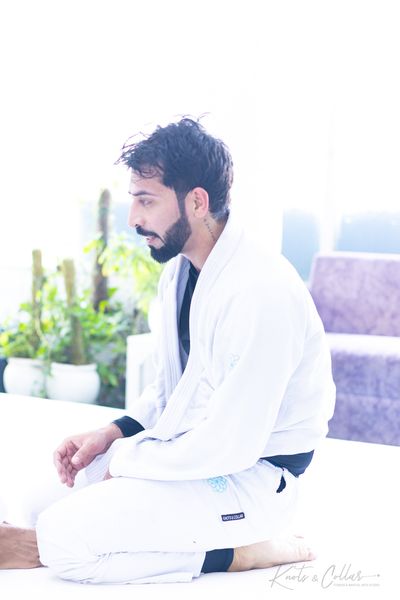
People hear "martial art" and picture force — someone hitting harder, pushing further, overpowering everyone in the room. Brazilian Jiu-Jitsu asks a quieter question: what if the person in control is the calm one, the one using leverage instead of muscle? That question is written into the name itself. Jiu-jitsu means the gentle art, and understanding why tells you almost everything about how we train at Knots & Collar.
What "the gentle art" actually means
The jiu-jitsu meaning is hiding in plain sight. The name comes from Japanese: ju, meaning gentle or yielding, and jutsu, meaning art or technique. Put together, jiu-jitsu is the gentle art — the art of yielding. Brazilian Jiu-Jitsu grew out of that older Japanese system, carried to Brazil and reshaped over generations into the grappling art taught on mats around the world today.
It helps to be clear about one thing: "gentle" here does not mean soft, easy, or lacking effort. A hard training session leaves you tired and honest about your limits. What "gentle" describes is the method. Instead of meeting force with force, you yield to it, absorb it, and redirect it. When someone pushes, you do not push back harder — you use their push. That single idea, worked out over thousands of small techniques, is the whole art.
Leverage: how the smaller, calmer person stays in control
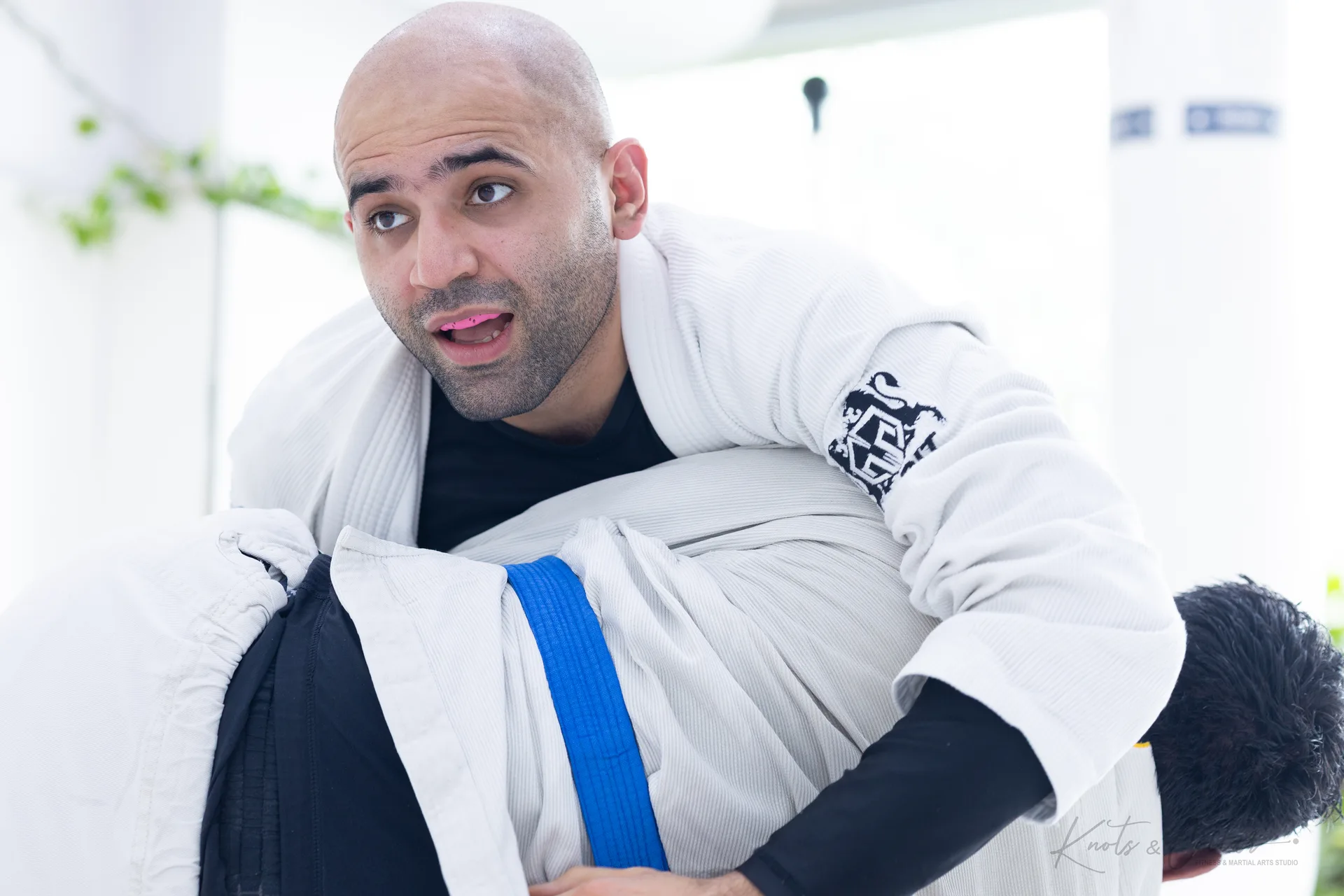
The heart of jiu-jitsu is leverage. If you have ever used a spanner to loosen a bolt your fingers could not budge, you already understand the principle. A small force applied through the right lever does work that raw effort cannot. Jiu-jitsu turns your whole body into that lever — your hips, your legs, your frames, the angles you create — and applies it against one isolated part of a larger body.
This is why a smaller, calmer person can control a larger, stronger one. It is not a slogan; it is mechanics. When you learn to use your entire body against your partner's single arm, to keep your weight where it counts, to choose the angle rather than the collision, the strength gap shrinks and then stops mattering. Add calm to that. A person who can breathe and think under pressure will out-position a person who is stronger but panicking and burning energy. Leverage plus composure beats force and haste — reliably, and in a way anyone can learn.
That is also why tapping matters so much in our room. Tapping is how you say "you got there" without anyone getting hurt, and it is how both people keep training tomorrow. It is information, not defeat.
Why this is different from brute strength
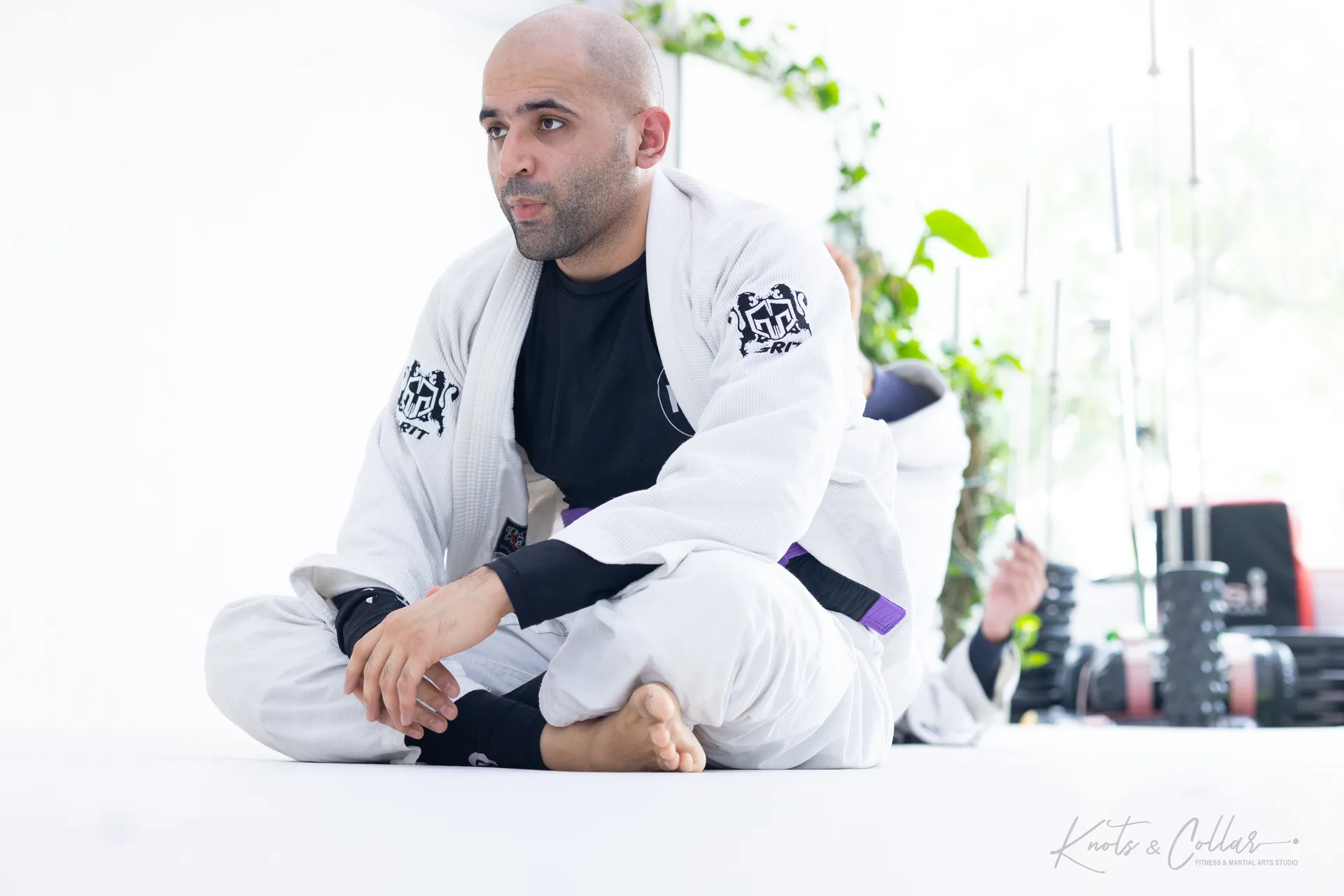
Most people expect a combat sport to reward whoever is bigger and hits hardest. Jiu-jitsu quietly reorganises that expectation. Because the art lives on the ground — in control, position, and the connection between two bodies — the deciding factor is rarely who is stronger. It is who understands the situation better.
Brute strength has a ceiling and it tires. Technique does not tire in the same way, and it keeps compounding for as long as you train. This is what makes jiu-jitsu accessible in a way many martial arts are not. You do not need to already be athletic, flexible, or young. You need to be willing to learn, to be patient with slow progress, and to show up. Over months, the understanding accumulates, and one day you notice you are controlling someone you could never have out-muscled. Nothing about your size changed. Your knowledge did.
The gentle art and Kindness Over Toughness
Our studio runs on a simple idea: Kindness Over Toughness. People sometimes assume that is a soft motto pinned onto a hard sport. It is the opposite. Kindness Over Toughness is just a plain-language description of what the gentle art already teaches.
Think about it mechanically. Because control in jiu-jitsu comes from leverage and position rather than from striking or hurting, you can practise the art fully — at real intensity, against a resisting partner — without harming the person across from you. The art is built so that the goal is control, not damage. That means every roll is also a lesson in care: you learn to feel when your partner reaches their limit, and to ease off the instant they tap. Strength through compassion is not a paradox on the mat; it is the operating instruction.
This is why the gentle art suits people who never saw themselves as fighters. It rewards patience over aggression and understanding over ego. A person can become genuinely capable of protecting themselves — a subject we treat plainly in our piece on what BJJ really offers for self-defence — while becoming calmer and kinder in the process, not harder. Control instead of harm. That is the whole point.
What a beginner actually feels
Honesty helps here, because the first weeks of the gentle art rarely feel gentle from the inside. Early on, most beginners feel clumsy and a little overwhelmed. You spend energy you did not mean to spend. You get controlled by people smaller than you and cannot understand how. Your instinct under pressure is to tense up and muscle out, which is exactly the instinct the art is trying to retrain.
Then something shifts, usually sooner than people expect. You stop panicking when someone has top position. You start breathing again. You feel a technique work — really work, with almost no effort — and you understand, in your body rather than your head, what leverage means. That first quiet moment of "oh, I barely did anything and it worked" is the doorway. From there the art opens up. Many students find that the calm they build on the mat follows them off it too, which is something we explore in our article on how BJJ builds confidence beyond the mats.
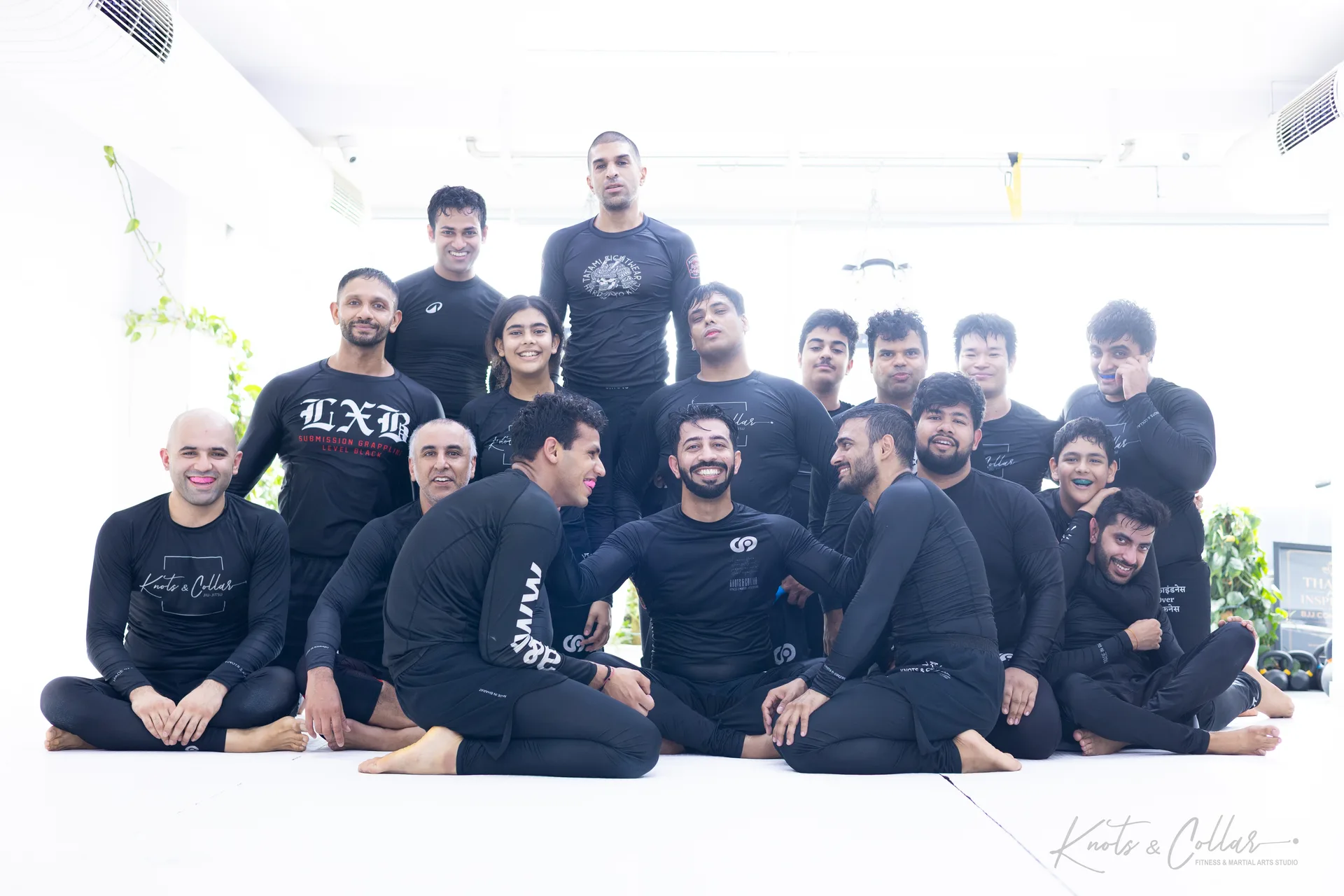
None of this requires you to arrive fit, coordinated, or brave. It requires you to keep coming back. We teach adults of every background and children from age three, seven days a week, here in Defence Colony, New Delhi, under the De La Riva lineage. Beginners are welcomed and looked after rather than thrown in — that is a deliberate part of how we run the room. If you are an adult wondering where to begin, start with our guide to BJJ for adults in India.
Come and feel it for yourself
The gentle art is much easier to understand once your hands are on it. No explanation quite matches the moment a technique works and you realise how little force it took. If you are curious — whether you are an adult who has never trained, a parent asking for your child, or a woman thinking specifically about self-defence and confidence — you are welcome exactly as you are. Come and watch a class, or step onto the mat and try it. The first class is free.
Schedule a visit to Knots & Collar whenever you are ready. There is no rush, and no expectation. Just a warm room, patient teaching, and the gentle art waiting for you to begin.
FAQs
What does "the gentle art" mean in jiu-jitsu?
It is a plain translation of the name. In Japanese, "ju" means gentle or yielding and "jutsu" means art or technique — so jiu-jitsu means the gentle art. The word "gentle" does not mean soft or easy. It points to the method: yielding to force and redirecting it with leverage and timing rather than meeting it head-on with muscle.
How can a smaller person control a larger, stronger one?
Through leverage, angles, and position rather than raw strength. Jiu-jitsu teaches you to use your whole body against one part of your partner's, to stay calm and breathe, and to control the connection between two people. A smaller, calmer person who understands leverage can manage a bigger, stronger person who is relying on force alone. That is the whole premise of the art.
Is jiu-jitsu suitable for a complete beginner?
Yes. Most people who train with us started with no martial arts background at all. The first weeks are about learning to move, to relax under pressure, and to trust that technique will do the work. We welcome adults of every fitness level and children from age three, and classes run seven days a week in Defence Colony, New Delhi. The first class is free.
How does the gentle art connect to Kindness Over Toughness?
Kindness Over Toughness is our way of naming what the gentle art already teaches. Because control comes from leverage and not from hurting anyone, you can practise fully with a partner without harming them. You learn to protect the person you are training with. Strength through care, control instead of harm — that is the art and the philosophy saying the same thing.