
Brazilian Jiu-Jitsu for Adults in India: How to Start, Whatever Your Age
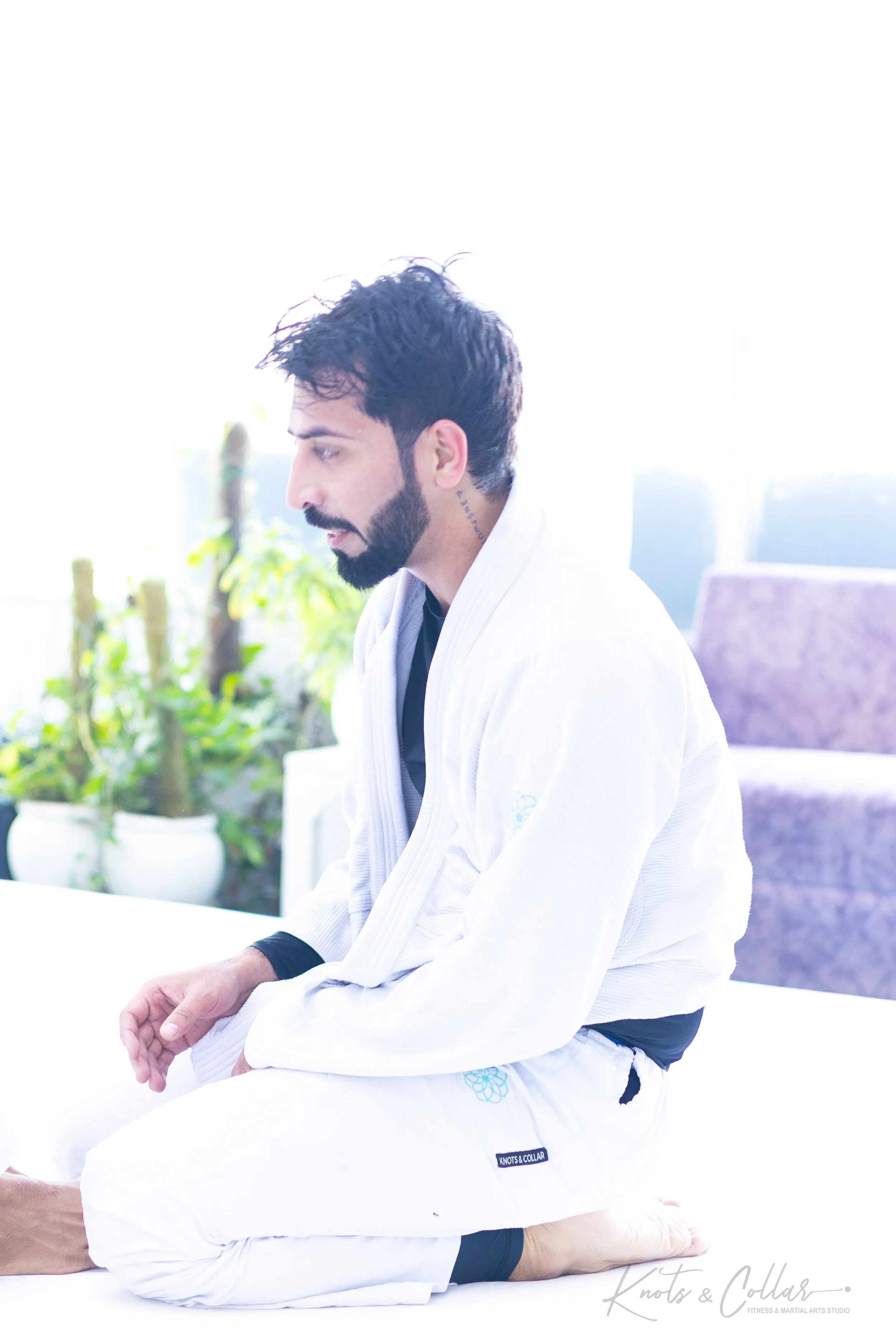
Starting Brazilian Jiu-Jitsu as an adult can feel like a big step, especially with a full working week already on your shoulders. The good news is simpler than you might expect: any adult can begin, at any age, and a few hours a week is enough to build a real skill, genuine fitness, and a community you look forward to seeing. This is a warm, honest guide to Brazilian Jiu-Jitsu for adults in India, written for people with jobs, families and busy calendars.
Why jiu-jitsu suits working adults
Brazilian Jiu-Jitsu is a grappling art built on technique, timing and leverage rather than raw strength or speed. That single fact is what makes it so well suited to adults. You are not asked to be the fastest or the strongest person in the room. You are asked to think, to stay calm, and to solve a problem with your hands, your hips and your patience. For anyone who spends the day making decisions at a desk, that kind of focused problem-solving is a welcome change of pace.
It is also one of the few things you can do in a few hours a week that gives you several returns at once. You learn a genuine self-defence skill. You get real, honest fitness. You clear your head. And you become part of a community. For a working adult with limited time, that combination is hard to match.
It is never too late to start
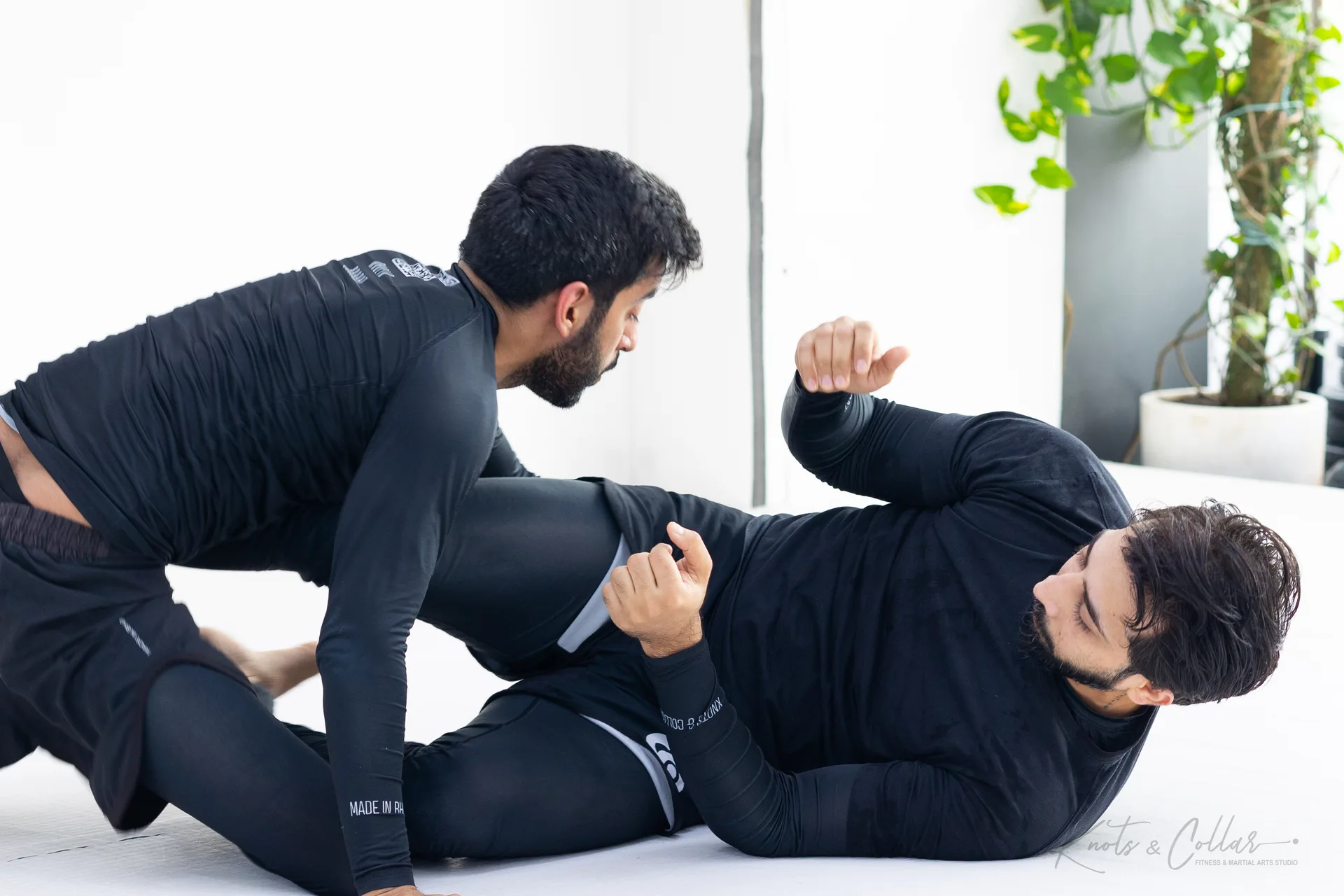
One of the most common worries we hear is about age. People wonder whether they have missed their chance, whether their 30s or 40s are too late to learn something so physical. They have not. Brazilian Jiu-Jitsu for adults in India is a growing, welcoming space, and adults begin every week in their 20s, 30s, 40s and beyond.
Because the art rewards technique over athleticism, an adult beginner can learn steadily and see clear progress. Your first months are about understanding position, learning to stay relaxed under pressure, and building the small habits that make grappling feel natural. Age brings patience and focus, and both are real advantages on the mat. You do not need a background in sport. You do not need to already be fit. You get fit by training, gradually and safely, and that is exactly how it should be.
Fitting training around a job
The honest question for most working adults is not whether they want to train, but when they will find the time. This is where a proper schedule matters. We run sessions seven days a week, with both morning and evening options, so you can train before the office opens or after it closes. If your week is unpredictable, you can move between times rather than being locked to a single slot.
A steady rhythm of two or three sessions a week is a sustainable starting point. That is enough to keep the skills fresh, let your body recover between classes, and build momentum without disrupting the rest of your life. Some weeks you will make every session; some weeks you will make one. Both are fine. Consistency over months matters far more than intensity in any single week.
Training sustainably, without burning out
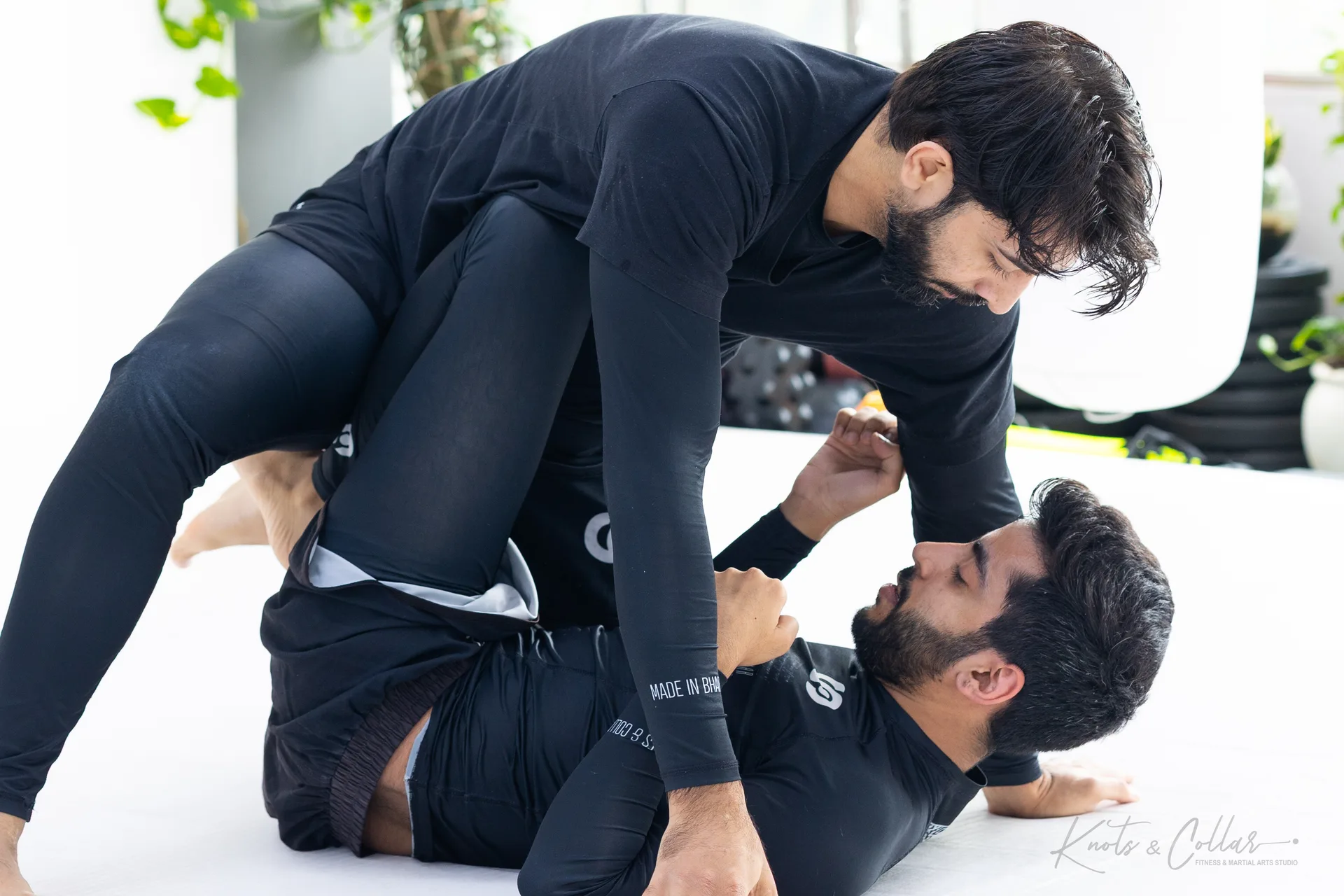
Enthusiasm is wonderful, and it is also the thing to manage carefully in your first months. New adults often want to train every day and push hard in every round. A patient approach lasts far longer. We keep the early weeks gentle, let your body adapt, and build stamina over time rather than all at once.
Sustainable training comes down to a few plain habits. Warm up properly. Communicate with your training partners and go at a shared, sensible pace. Tap early and without ego, because a tap is simply information, not a failure. Rest when your body asks for it, and treat sleep and recovery as part of the training, not a break from it. Adults who train this way are still on the mat years later, and that longevity is where the real rewards live. If you want a fuller picture of staying healthy on the mat, our guide on how to train BJJ without getting injured goes deeper.
Fitness, stress relief and a community
Adults often come to jiu-jitsu for one reason and stay for another. Many arrive wanting to get fit, and they do. A single session works your whole body, builds stamina and mobility, and does it while your mind is occupied with something more interesting than a rep count. If you have found ordinary workouts hard to keep up, you may find grappling far easier to stay consistent with, precisely because it is a skill and not a chore. We explore that difference in why BJJ fitness beats the gym for many people.
Then there is the quieter benefit. When you are learning to escape a position or set up a technique, there is simply no room left to worry about your inbox. For an hour, the noise of the day goes silent. Many adults describe their training as the best stress relief in their week. Add the friendships that form on the mat, where people of every age and walk of life train side by side, and you have a genuine community rather than just a place to exercise.
A patient, technique-first approach
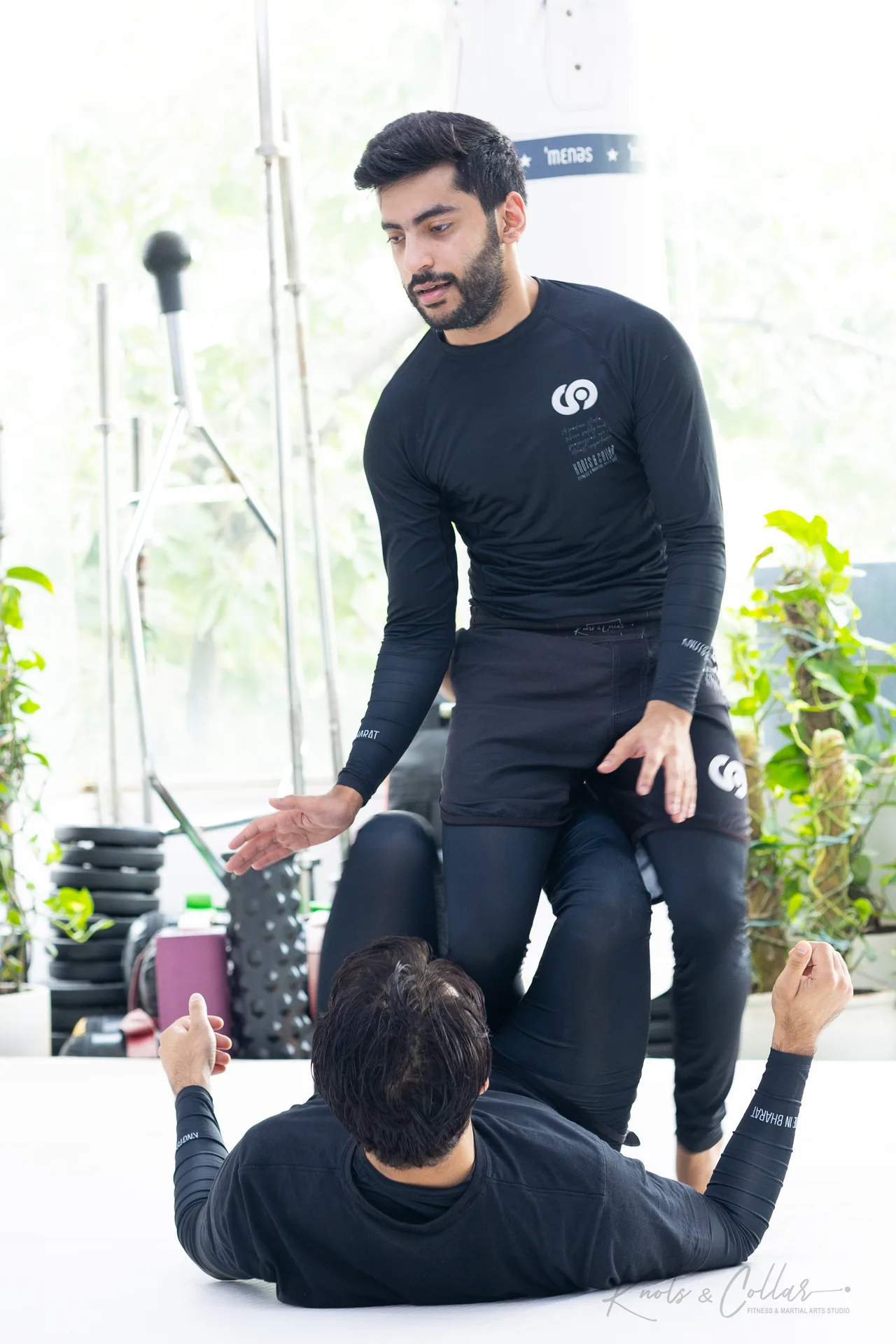
Our approach at Knots & Collar is simple, and it guides everything we do: Kindness Over Toughness. For a busy adult, a technique-first environment is not just kinder, it is more effective. When you understand why a movement works, you can repeat it, adapt it and rely on it. Learning is faster and safer when nobody is trying to overwhelm you and everyone is trying to help you improve.
Professor Binish Sukhija is a black belt in the De La Riva lineage, and that heritage shapes how the fundamentals are taught here, with care and clear detail. Whether you train Gi or No-Gi, you will be met where you are and helped to take the next small step. If you are weighing up the decision, our companion articles on starting jiu-jitsu over 30 and our complete guide to BJJ in India for 2026 are good next reads.
Taking the first step
Beginning is the hardest part, and it is also the smallest. You do not need to be fit, flexible or experienced. You need comfortable clothing, a little curiosity and a willingness to learn. Everything else is built on the mat, one session at a time. If you have been thinking about it, that thought is worth acting on, because the version of you a year from now will be glad you started today.
When you feel ready, come and see the studio for yourself. You are warmly welcome to schedule a visit, watch a session, ask questions and get a feel for the place before you decide anything. There is no rush, and no pressure. Just an open door and a mat that has room for you.
FAQs
Am I too old to start Brazilian Jiu-Jitsu as an adult in India?
No. Any adult can start, whether you are in your 20s, 30s, 40s or beyond. Jiu-jitsu is built on technique and leverage, so you learn at your own pace and progress steadily. We begin with the basics, keep the first weeks gentle, and let your body adapt over time.
How many days a week do I need to train to see progress?
A few hours a week is enough to build a real skill and genuine fitness. Two or three sessions is a steady, sustainable start for a working adult. We run sessions seven days a week, with morning and evening options, so you can fit training around your job.
Do I need to be fit before I begin?
No. You get fit by training, not before it. Come as you are. Every session lets you work at your own level, rest when you need to, and build stamina gradually. Fitness follows naturally once you start showing up.
What should I wear to my first class, and do I need a Gi?
For your first visit, comfortable athletic clothing without zips or pockets is fine. We train both Gi and No-Gi, so you can try both and see what you enjoy. If you decide to continue, we will help you choose a Gi that fits well.