
How Often Should You Train BJJ? An Honest Answer for Real Lives

It is the question almost everyone asks in their first week on the mat: how often should you train BJJ to actually get good? The honest answer is not the one people expect. It is not about squeezing in as many sessions as humanly possible. It is about finding a rhythm you can hold on to, week after week, for years. Consistency beats volume. Here is what that means in practice, and how to choose a frequency that fits your real life.
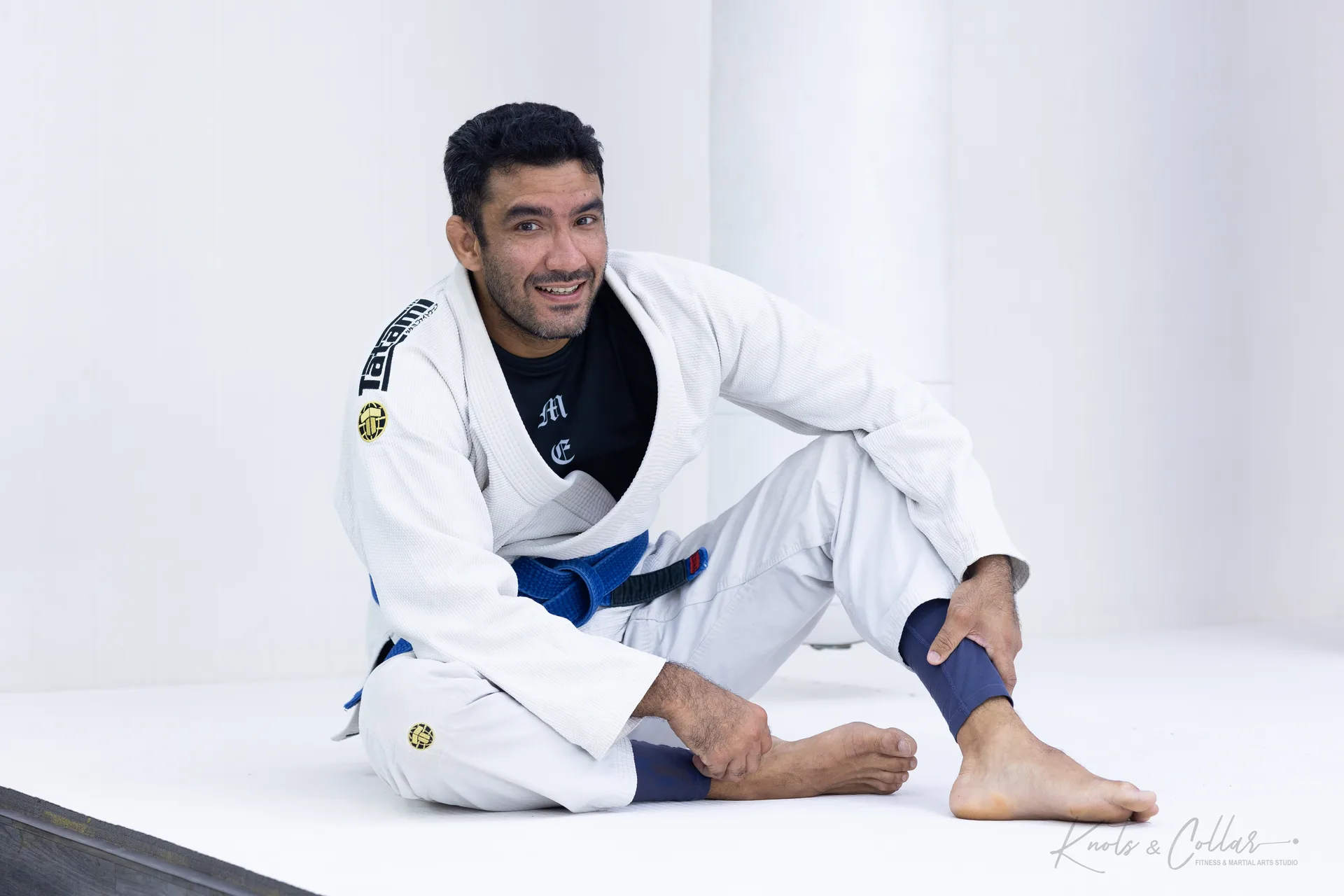
The honest answer: consistency beats volume
If you take one idea away from this article, take this one. The person who trains twice a week for three years will almost always be further along than the person who trains six times a week for three months and then disappears. Brazilian Jiu-Jitsu is a skill, not a fitness bootcamp. Skill is built through repetition spread out over a long time, and it is kept alive by showing up regularly enough that your body does not forget what it learned last week.
So when people ask how often they should train, the useful question underneath it is really this: what frequency can you keep going, honestly, for the next year and beyond? A rhythm you can sustain is worth more than an intense schedule you will quietly abandon in a month. Everything else in this article sits on top of that single idea.
What once a week realistically gives you
Training once a week is a real, legitimate choice, and we want to say that plainly because some people are told it is not worth bothering. It is worth bothering. If your work, family or studies leave you one session a week, take that session and take it every week.
What you should expect is honest, gradual progress. With a seven-day gap between sessions, you will spend part of each class re-remembering the technique from the last one, so the learning curve is gentler. But it still moves upward. Over a year, one committed session a week builds a foundation you will feel: you will move better, panic less, and understand what is happening around you on the mat. If once a week is what life allows right now, it is a good decision, not a compromise to feel bad about.
What two to three times a week gives you
This is the range where most people find their happy place, and it is the one we most often suggest to newcomers. Two sessions a week means the gap between classes is short enough that last week's technique is still fresh when you return, so far less time is lost to re-remembering and far more goes into building. Three sessions a week adds even more repetition and lets the pieces start connecting into a game that feels like yours.
Two to three sessions is also kind to a body that is still adapting to a completely new way of moving. It leaves proper room for recovery between classes, which is exactly when your body does the quiet work of getting stronger and more resilient. For most people, this is the sweet spot of steady progress and a schedule you can actually keep. It is sustainable, and sustainable is the whole game.

Is three times a week enough? Yes, and here is why
People ask this so often it deserves its own answer: is three times a week enough? Yes. For the vast majority of people, three sessions a week is not a stepping stone to "real" training, it is real training, and a genuinely strong rhythm to hold for years.
At three times a week you accumulate a lot of mat hours over a year without pushing your body past what it can recover from. You get frequent enough repetition that techniques move from "I saw that once" to "I can do that." And you still have four days in the week for rest, work, family and everything else that makes a training life last. Plenty of people train at this frequency their whole journey and progress the entire way. If you are aiming for three good sessions a week and keeping them, you are doing this right. For more on getting the most out of each of those sessions, see our guide on how to improve at BJJ faster.
What training more often gives you, and its trade-offs
Some people reach a point where they want more: four, five, even six sessions a week. Training more often does accelerate skill, and if you have the time and your body handles it well, it can be wonderful. There is nothing wrong with loving something enough to do it a lot.
But higher frequency comes with a trade-off you have to respect, and that trade-off is recovery. More mat time means more wear, and skill is built during rest as much as during training. Ramping up volume too fast, before your body has adapted, is one of the most common ways people pick up niggles that keep them off the mat entirely. The way to train often and well is to add sessions gradually and pay close attention to how you feel, an approach we go into in our guide on how to train BJJ without getting injured. More is only better when you can recover from it.
Listening to your body and avoiding burnout
Whatever frequency you choose, the practice that keeps you training for years is learning to listen to your body. Tiredness that a good night's sleep fixes is normal and part of the process. A specific ache that lingers, sleep that keeps getting worse, or a growing reluctance to go to a class you used to look forward to are all signals worth heeding. Taking a rest day when your body asks for one is not falling behind. It is how you keep going.
Burnout is rarely caused by training itself. It is usually caused by an unsustainable pace held too long, or by measuring yourself against everyone else instead of against where you were last month. Choose a frequency you can hold calmly, treat rest as part of the plan rather than a failure of willpower, and let progress be slow and steady. This is what "Kindness Over Toughness" means in practice: being kind to the version of you who has to show up again next week. Brazilian Jiu-Jitsu rewards the people who are still here in five years, and staying here is a skill of its own.

How our schedule helps busy people stay consistent
Here is the practical problem with all of the advice above: consistency is easy to agree with and hard to live, because life keeps getting in the way. That is exactly the problem our schedule is built to solve. We run classes seven days a week, with both morning and evening sessions, so that a steady rhythm survives a busy, unpredictable week.
When there is a class in the morning and another in the evening, most days, a missed session is not a missed week. Meeting ran late and you could not make the evening class? There is a morning one. Travelling one week and back the next? The mats are still there, at a time that works. This is what makes two or three sessions a week realistic for working professionals, students and parents in Defence Colony and across South Delhi, rather than a nice idea that falls apart the first busy week. If you want to see how this fits your own week, come and visit us and try a class. You can schedule a visit whenever you are ready. To understand where regular training can take you over time, our guide to Brazilian Jiu-Jitsu for adults in India and the broader BJJ in India complete guide are both good next reads.
FAQs
Is 3 times a week enough to train BJJ?
Yes. Three sessions a week is a genuinely strong training rhythm for most people. It gives you enough repetition to remember what you learned last time, enough mat hours to build real skill over the months, and enough rest in between to recover and keep coming back. Many people train at this frequency for years and progress steadily the whole way.
Can I make progress in BJJ training only once a week?
Yes, you can. Progress is slower, and you will spend some of each session re-remembering the last one, but a person who trains once a week for two years and keeps showing up will end up far ahead of someone who trained hard for a month and stopped. If once a week is what your life allows right now, it is worth doing.
How many times a week should a beginner train BJJ?
Two to three times a week is a great starting point for most beginners. It is frequent enough to build steady skill and habit, and gentle enough on a body that is still adapting to a new kind of movement. You can always add sessions later once the training feels like a natural part of your week.
How do I train BJJ often without burning out?
Listen to your body, treat rest as part of training rather than a failure of it, and pick a sustainable frequency you can hold for months rather than a heavy one you can hold for weeks. Our seven-days-a-week schedule, with both morning and evening sessions, is built so you can keep a steady rhythm around a busy life.