
Back Control in BJJ: How the Most Dominant Position Works
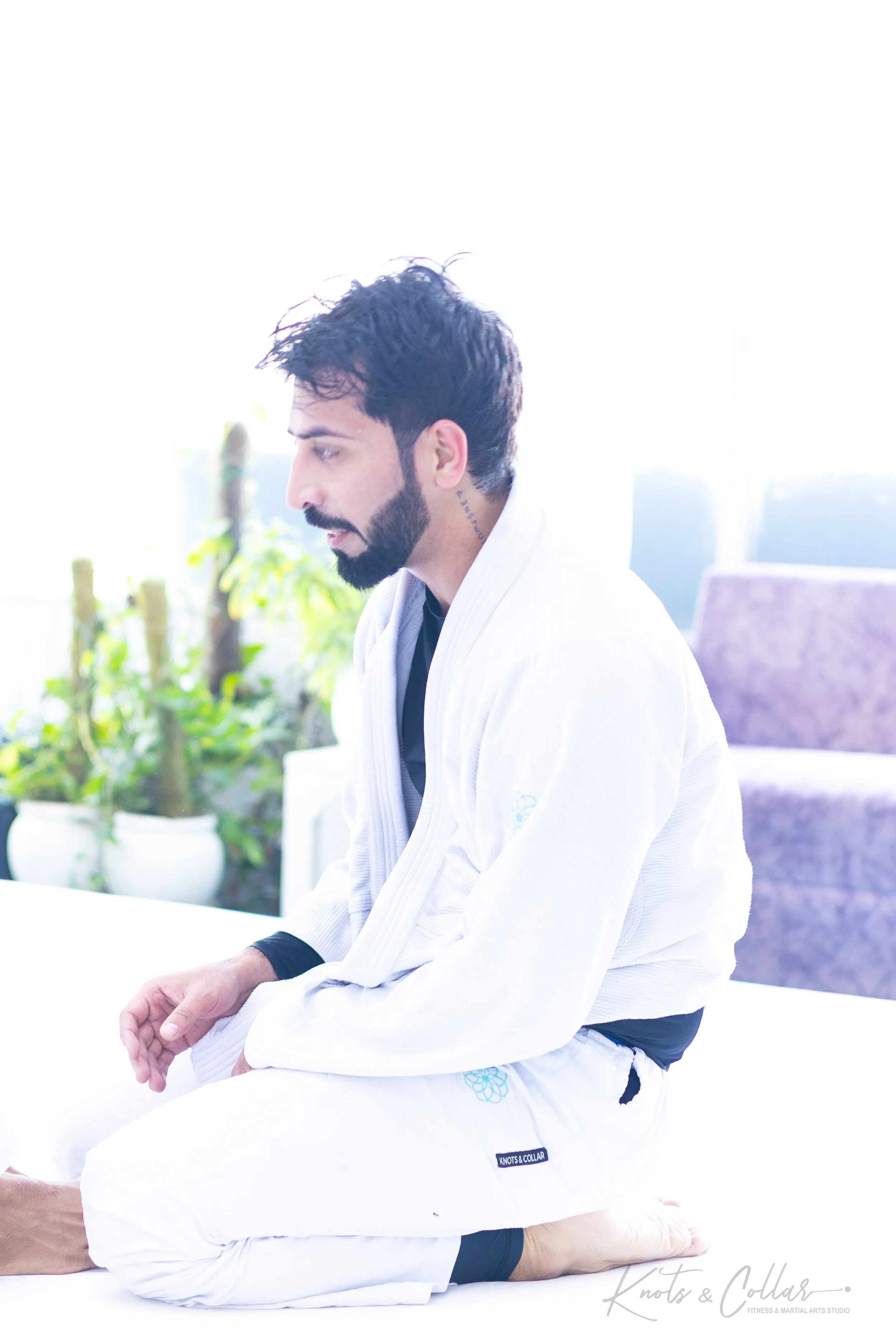
In Brazilian Jiu-Jitsu, positions are ranked. Some keep you safe, some put you in charge, and one sits above the rest. That position is back control. When you learn it well, you understand why so much of the art is built around getting there and staying there — and why the person underneath is taught, above all else, to protect the neck and stay calm.
Why back control is considered the most dominant position
Jiu-Jitsu teaches a hierarchy of positions, and back control sits at the top of it. The reasoning is simple and honest. When you are on someone's back, you can see them and they cannot easily see you. Your two arms are free to work, while their arms are busy defending. You are behind their line of sight and outside the reach of most of their strength. Every other dominant position — mount, side control, knee on belly — has an answer the person underneath can see coming. On the back, they are working blind.
There is a second reason, and it matters just as much. Back control leads directly to the rear naked choke, a submission that needs no gi, no grip on clothing, and no striking. That means it works the same way in the gi and in no-gi, for a beginner and for a black belt. A position that keeps you safe, keeps you in charge, and offers a clean finish is why we treat back control as the goal of so many sequences on the mat.
The seatbelt grip: how you tie yourself to the back
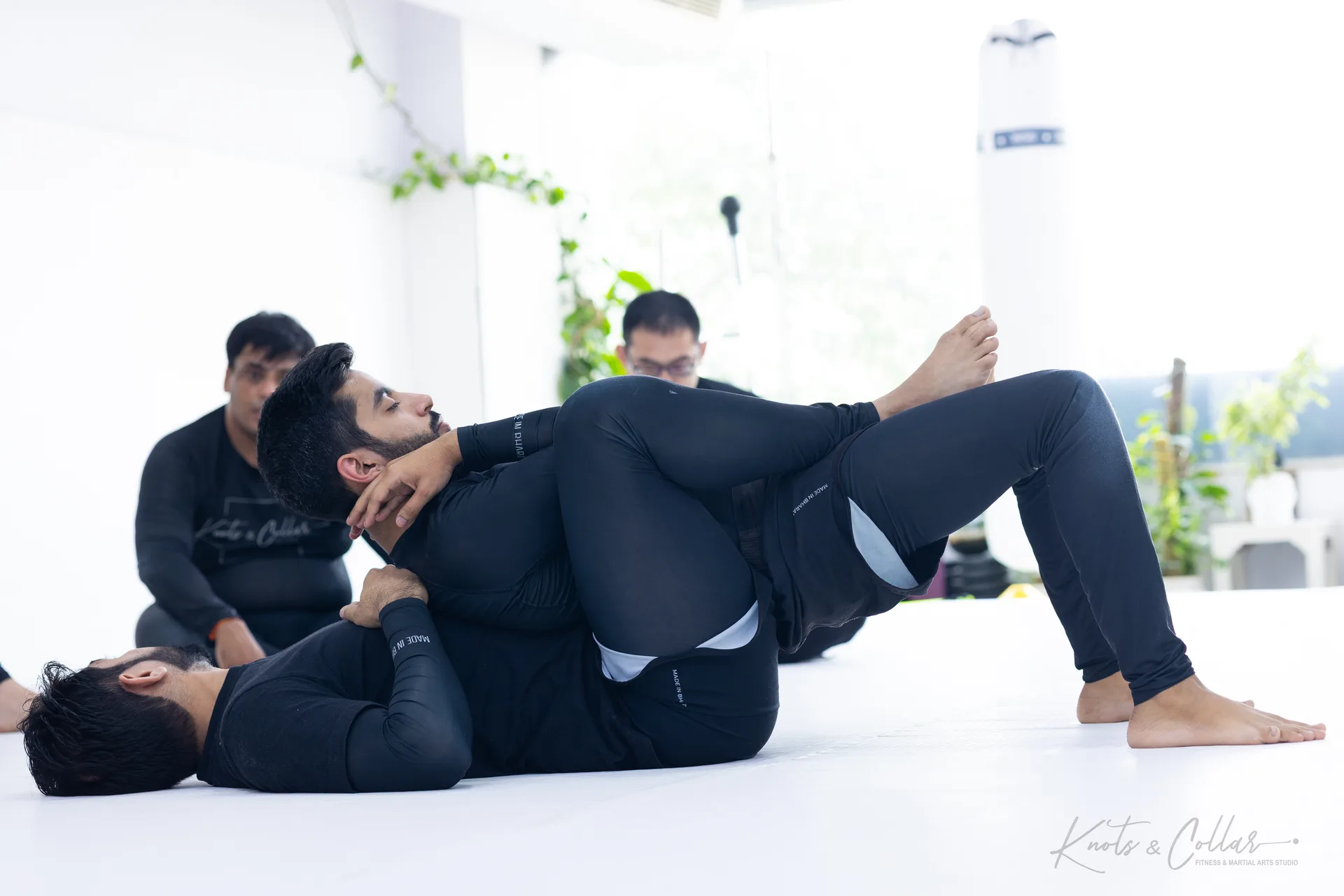
Back control has two parts, and the upper body comes first. The grip that holds you to your partner's back is called the seatbelt. One arm reaches over the shoulder, the other passes under the same-side armpit, and the hands join in front of the chest. It looks exactly like a car seatbelt lying across the torso, which is where the name comes from.
The seatbelt does quiet, important work. It stops your partner from turning in to face you, which is the first thing they will try to do. It keeps your chest glued to their back, so that when they move, you move with them. Beginners often reach for the choke straight away and lose the seatbelt in the process. The lesson we return to again and again is that the grip comes first and the submission comes later. Hold the back well, and the finish tends to appear on its own.
The hooks: controlling the hips and legs
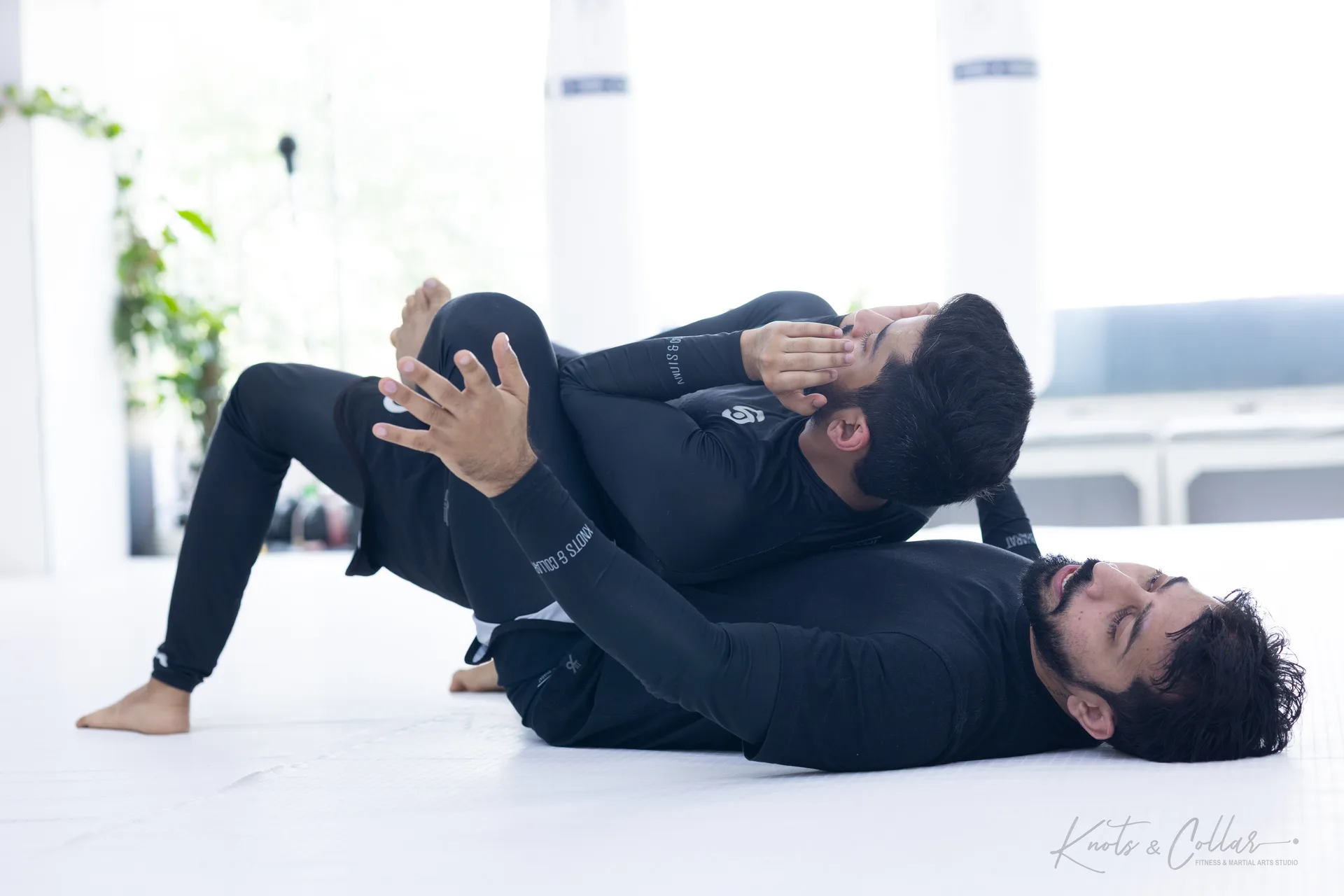
The second part of back control is the legs. Your feet come inside your partner's thighs, and the front of each ankle hooks around the front of their leg. These are the hooks, and two of them together with a strong seatbelt give you the classic BJJ back mount. The hooks stop your partner from sliding their hips away and control the lower body while the seatbelt controls the upper body.
There is a common alternative worth knowing. Instead of two hooks, many players use a body triangle: one leg wraps across the waist and locks behind the knee of the other leg, forming a triangle around the torso. It is a patient, connected way to hold the back, and it frees you from having to fight for the hooks moment to moment. Whether you use two hooks or the body triangle, the principle is the same — the legs manage the hips so the hands can manage the neck.
Why the rear naked choke follows from the back
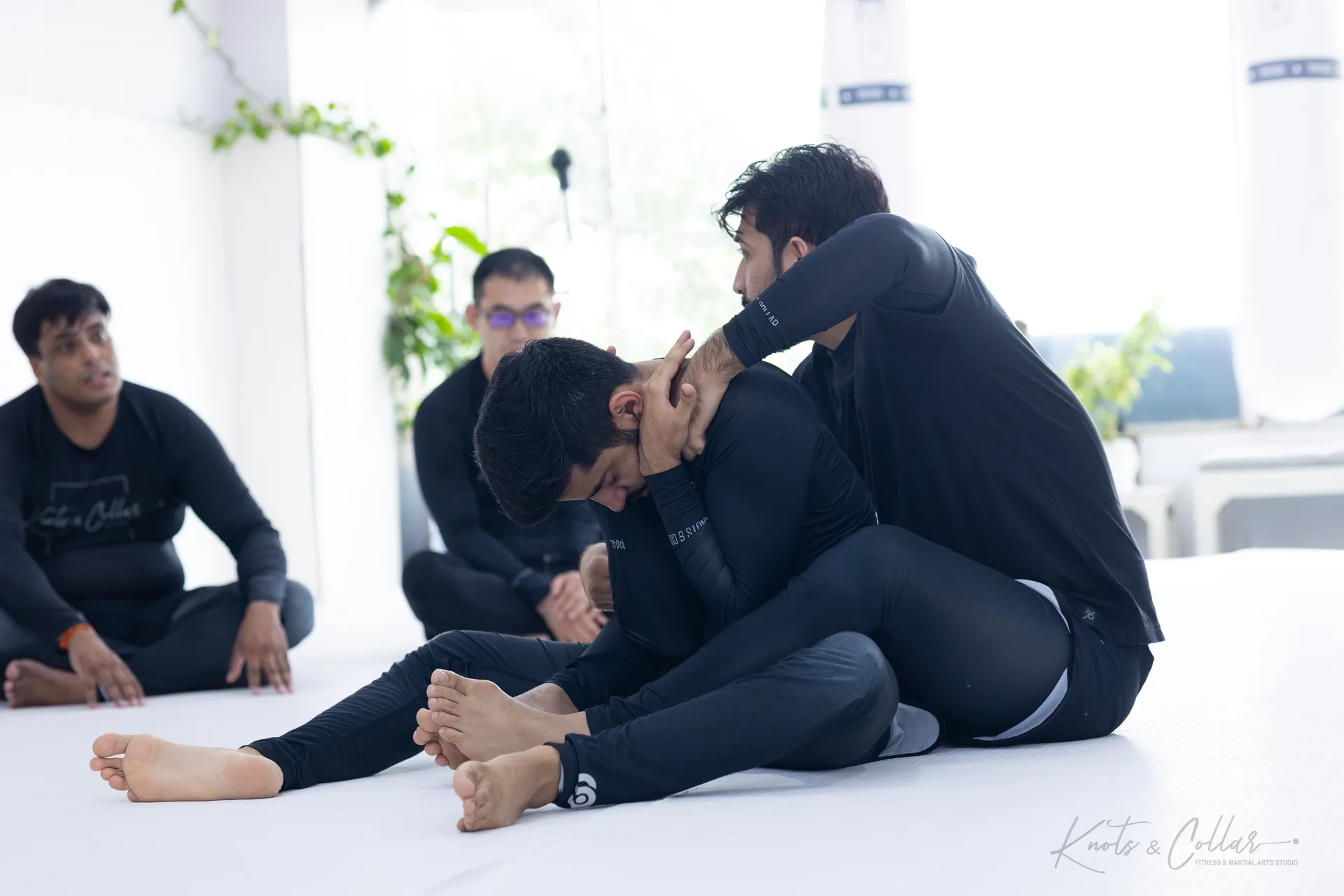
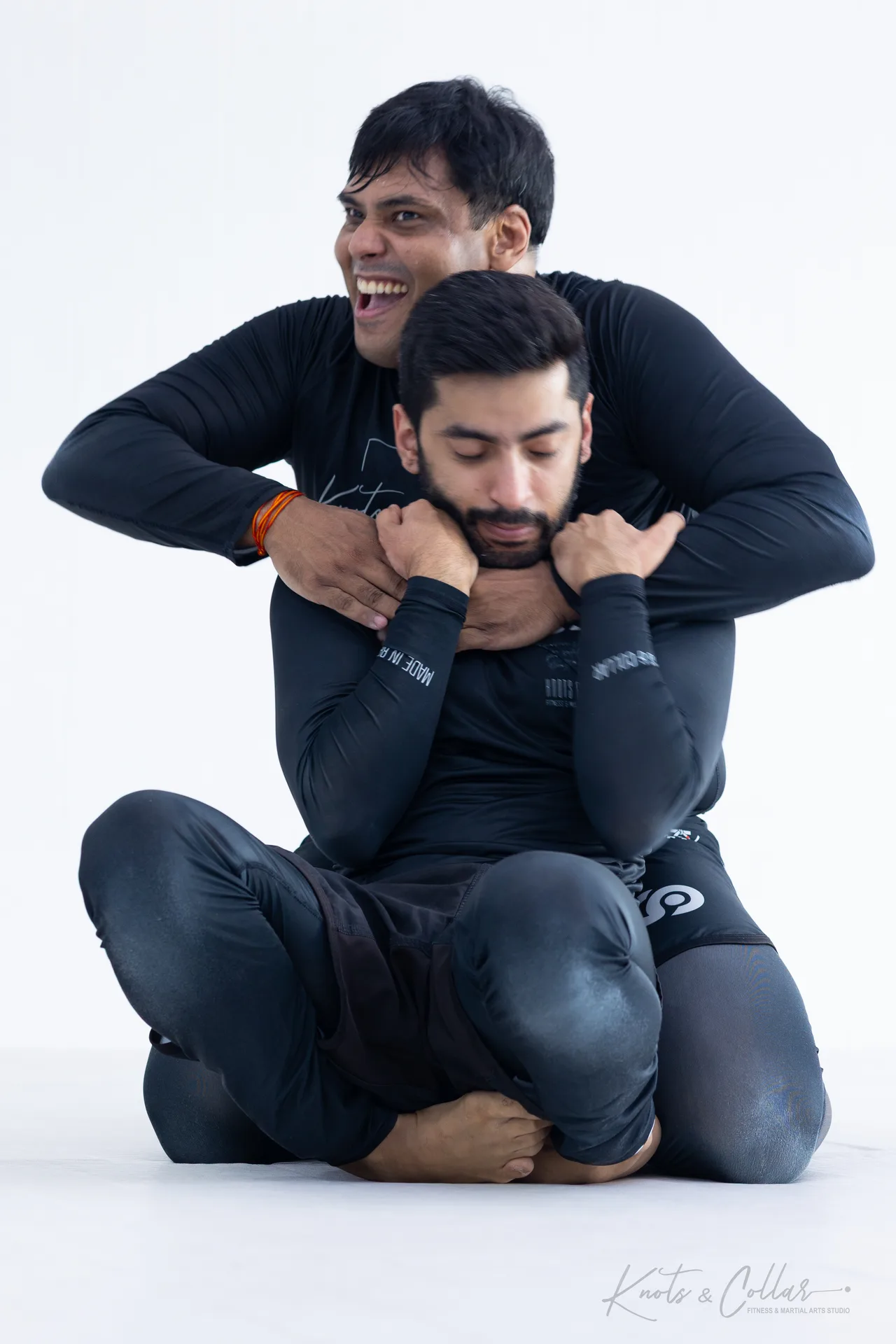
Once the back is held, the most natural finish is the rear naked choke. It flows from the seatbelt you already have. The arm that is over the shoulder slides across the front of the neck, the hand reaches towards the far shoulder, and the second arm closes the frame behind the head. The choke does not press on the windpipe. Done properly it closes the sides of the neck, which is why it is safe to practise under supervision, and why a training partner has plenty of time to tap.
The reason the rear naked choke pairs so well with back control is that it asks for nothing your position does not already give you. You do not need to strike, you do not need a gi, and you do not need to change your base. The over-arm of the seatbelt becomes the choking arm. That is why we teach the two together: the position sets up the submission, and understanding the submission teaches you why the position is held the way it is. If you are still mapping out how finishes connect to positions, our guide to BJJ submissions for beginners lays out how the common finishes fit together.
How to keep the position when your partner moves
Holding back control is an active job, not a resting place. Your partner's whole task is to get their back to the mat and slide their hips out, so your work is to move with them and keep your chest connected. The single most useful habit is to follow their shoulders. When they turn one way, you travel with them and stay behind the near shoulder rather than letting them square up to face you.
A few plain ideas keep the position alive. Keep the seatbelt tight and never let both of your hands come off at once. If your partner tries to trap one of your hooks, use the body triangle or re-insert the hook rather than crossing your ankles in front of them, which gives them something to attack. And stay heavy through your chest. Back control is lost slowly, through small gaps, far more often than it is lost in one big escape. Close the small gaps and the position holds. Positional control like this is the heart of the art — the same patient thinking runs through our writing on how to escape bad positions in BJJ.
Defending the back: protect the neck and stay patient
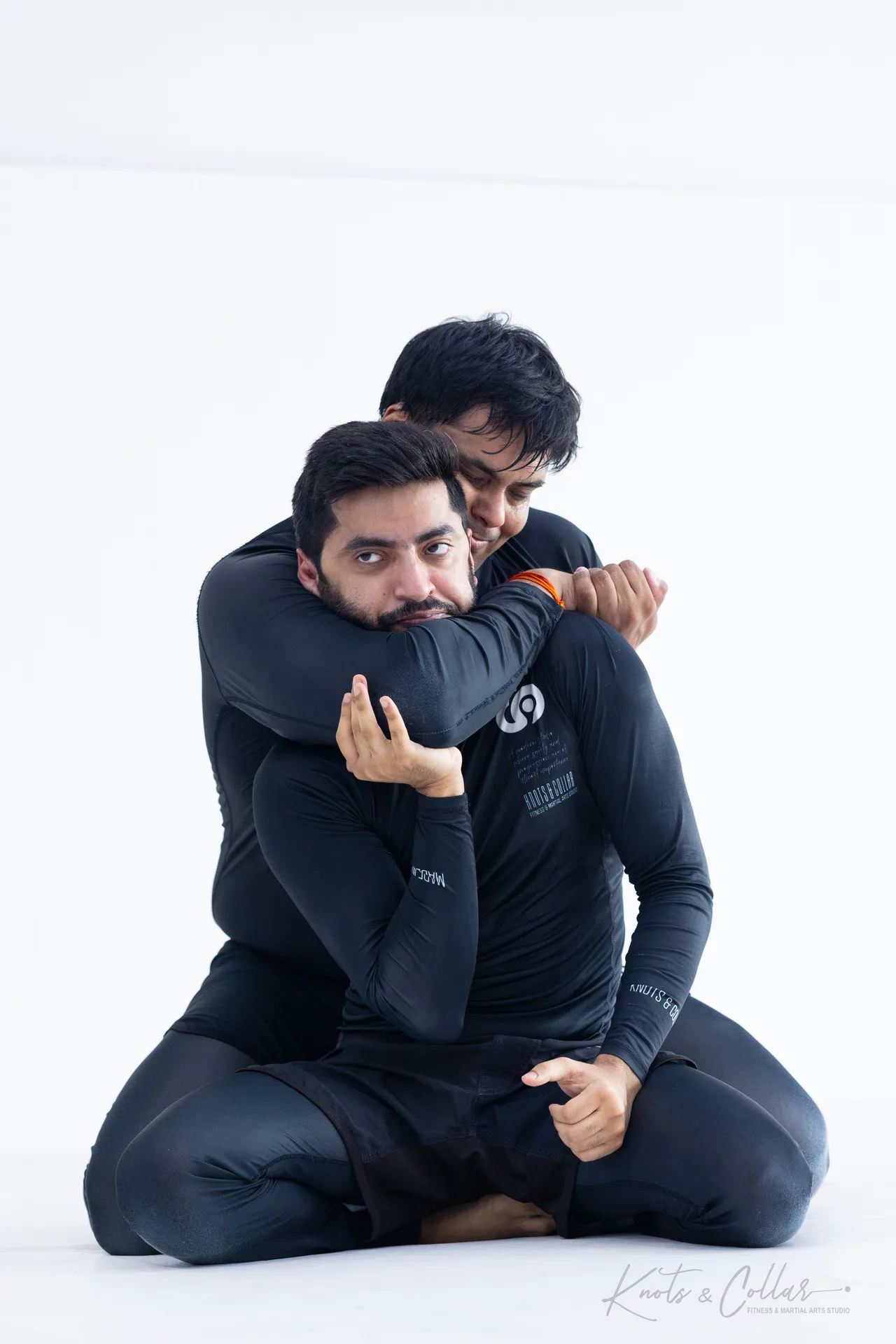
Every student spends time on the wrong end of back control, and learning to defend it calmly is part of becoming a rounded grappler. The order of priorities is clear and it never changes. Protect the neck first. Both of your hands go to the choking arm, your chin tucks down, and your shoulders come up to shield the sides of your neck. Nothing else happens until the neck is safe. A submission ends the round; a lost position does not.
With the neck protected, the escape is a patient one. Slide your back down towards the mat so your hips drop below your partner's hips. Clear one hook by pressing it down with your foot or knee, then turn your shoulders in towards the seatbelt side, never away from it. Turning away exposes the neck; turning in follows the grip and leads you towards their guard, which is a far better place to be. The whole thing rewards a slow head and steady breathing. Panic is what feeds the choke, and patience is what starves it. Where you sit in your journey — and how much mat time this kind of defence takes to feel natural — is something our guide to the BJJ belt system from white to black belt puts in context.
Learning back control on the mat
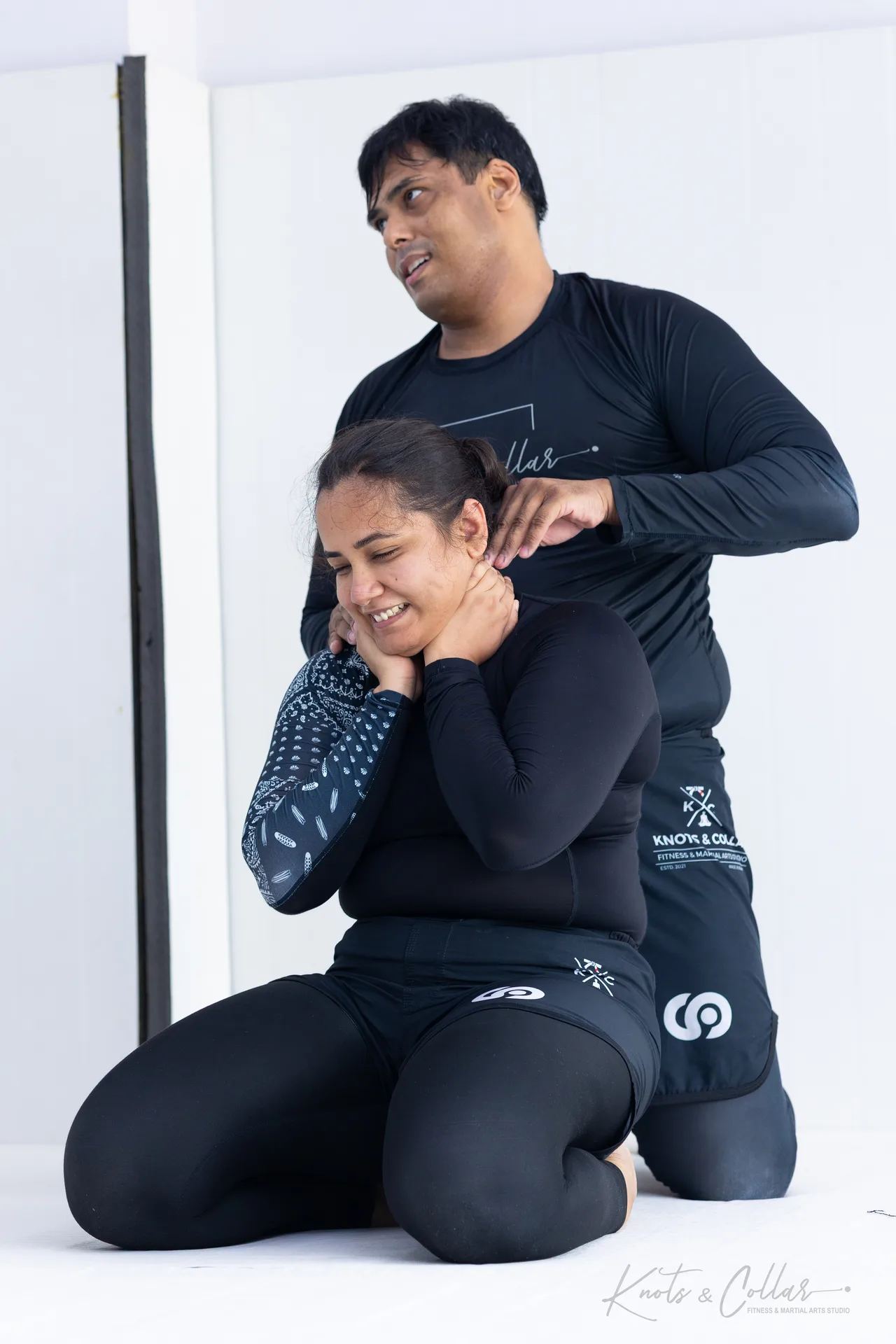
Back control reads simply on the page — a seatbelt, two hooks, a choke, a patient escape — but it comes alive only through repetition with a partner who moves and resists a little more each week. That is true of the whole art, which is why we train it live and in order, position before submission, control before finish. At Knots & Collar in Defence Colony, New Delhi, Professor Binish Sukhija teaches from a De La Riva lineage, and back control is one of the first dominant positions every student comes to understand deeply. If you are new to the art in this part of the world, our complete guide to BJJ in India is a good place to start.
Kindness Over Toughness is how we run the room, so a beginner defending the back for the first time is met with patience, not pressure. Verified, always. If you would like to see how a class works and try the position with a partner who will guide you through it, you are welcome to schedule a visit and train with us.
FAQs
Why is back control called the most dominant position in BJJ?
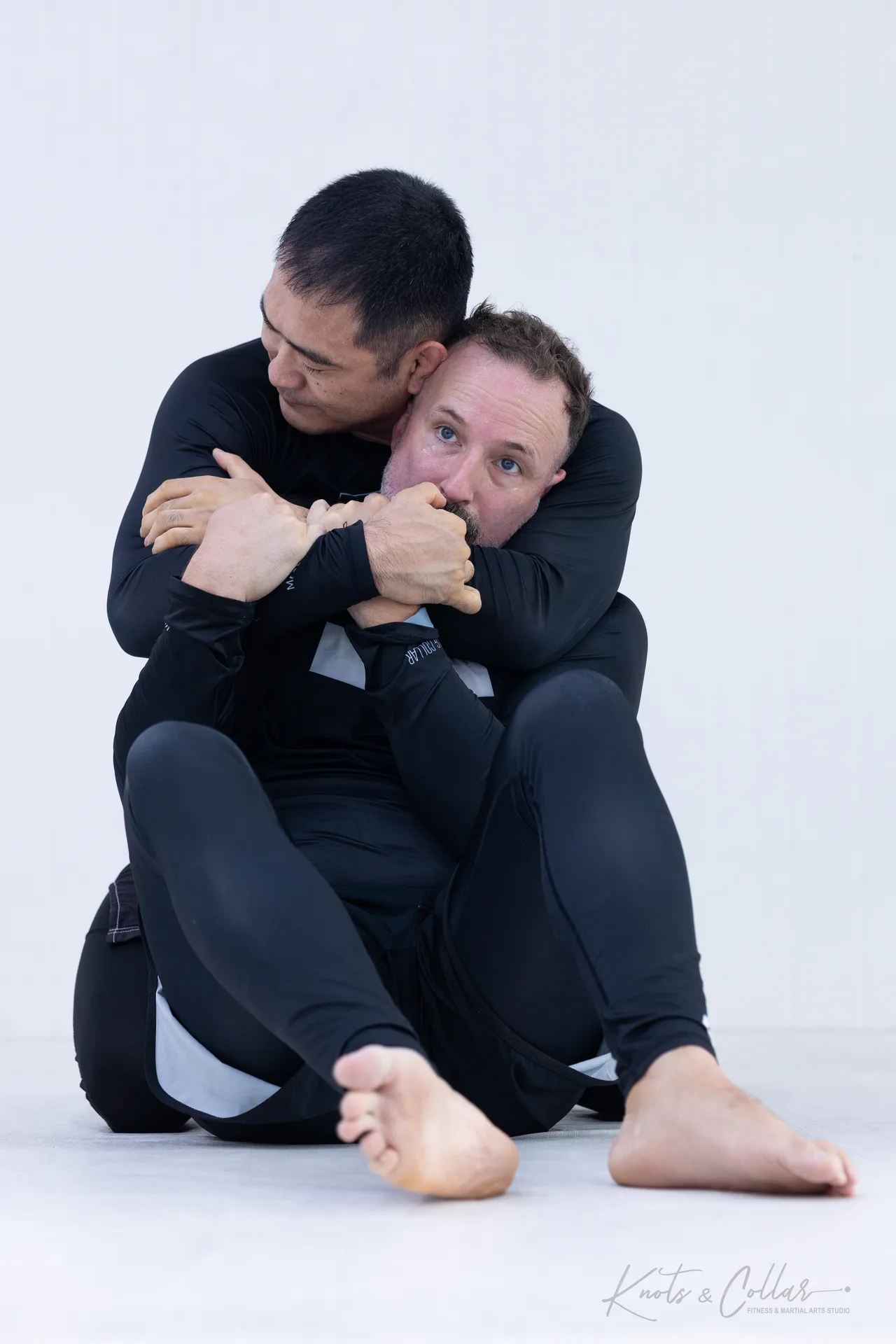
From back control you can see your training partner while they cannot easily see you, both of your arms are free to work, and their arms are mostly occupied with defence. It also leads directly to the rear naked choke, a submission that needs no gi grip. That combination of safety, control and a clear finish is why it sits at the top of the positional hierarchy.
What is the seatbelt grip in back control?
The seatbelt is the upper-body grip that ties you to your partner's back. One arm goes over the shoulder, the other under the armpit, and the hands join in front of the chest. It stops your partner turning into you and keeps your chest connected to their back as they move.
What are the hooks in back control?
Hooks are your feet placed inside your partner's thighs, using the front of the ankle to control their hips and legs. Two hooks plus a strong seatbelt give you the classic back mount. Some players use a body triangle instead, wrapping one leg across the waist and locking it behind the knee.
How do I defend against back control safely?
Protect your neck first by keeping both hands on the choking arm, tuck your chin, and stay patient. Work to slide your back down towards the mat, clear one hook, and turn your shoulders in to the seatbelt rather than away from it. It is a calm, methodical escape, not a scramble.