
Common BJJ Submissions Explained for Beginners

If you are new to Brazilian Jiu-Jitsu, the word "submission" can sound alarming. In practice, a submission is simply the point where one person shows they are safely in control and the other taps to reset. This is a plain, general introduction to the families of BJJ submissions a beginner meets, what they are at a conceptual level, and — most importantly — the etiquette of tapping early and releasing safely. It is general information, not a technical manual; the techniques themselves are best learned in person under qualified supervision.
What a submission actually is
A submission in Brazilian Jiu-Jitsu is a controlled position that, if held, would become uncomfortable enough that continuing makes no sense. Long before anything approaches that point, the person caught taps, the position resets, and both partners start again. That is the whole loop. Nothing about it needs to be frightening, and in a well-run room it never is.
It helps to think of BJJ submissions as a shared language rather than a fight. When your partner catches you, they are not defeating you — they are pointing at a gap in your position that you can now work on. When you catch your partner, the same is true in reverse. The tap is the full stop at the end of a sentence you both wrote together. Understanding this early takes all the fear out of the word and lets you learn quickly.
Position before submission
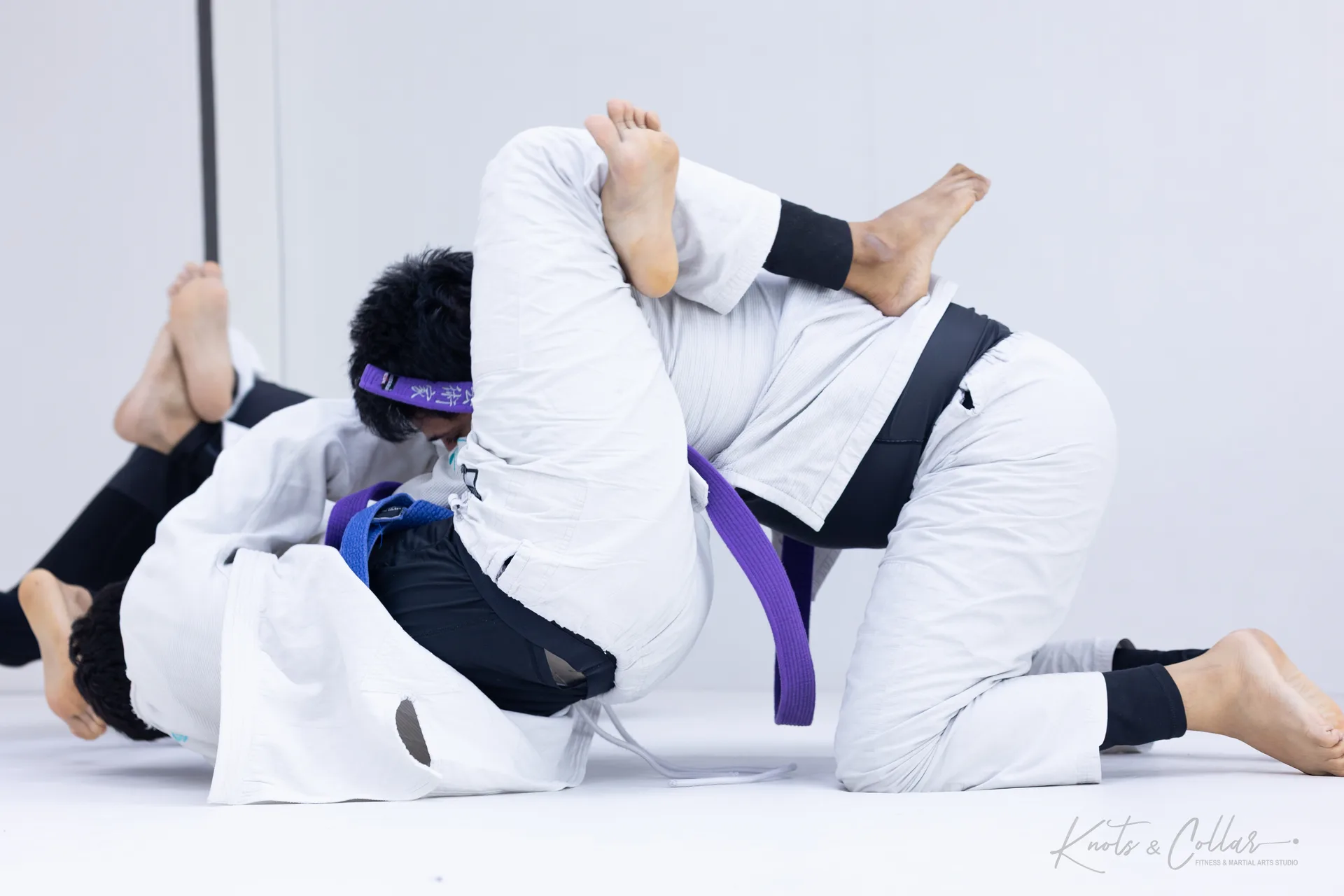
There is an old principle in Brazilian Jiu-Jitsu that beginners hear on their first week and understand fully only much later: position before submission. It means you establish a stable, controlling position before you ever look for a finish. A submission chased from a weak or scrambling position usually slips away and can leave you in a worse spot than before.
This matters because the families of submissions below all become reliable only once you can hold your partner in place. A choke needs a settled position behind or around your partner. A joint lock needs your partner's limb isolated and your own base solid. So the honest advice for your first six months is to fall a little in love with positions — mount, back control, side control, a strong guard — and treat submissions as something that grows naturally out of them. Students who build this order rarely regret it. If you want the wider picture of that early journey, our guide to your first six months as a white belt sits alongside this one.
Chokes and strangles
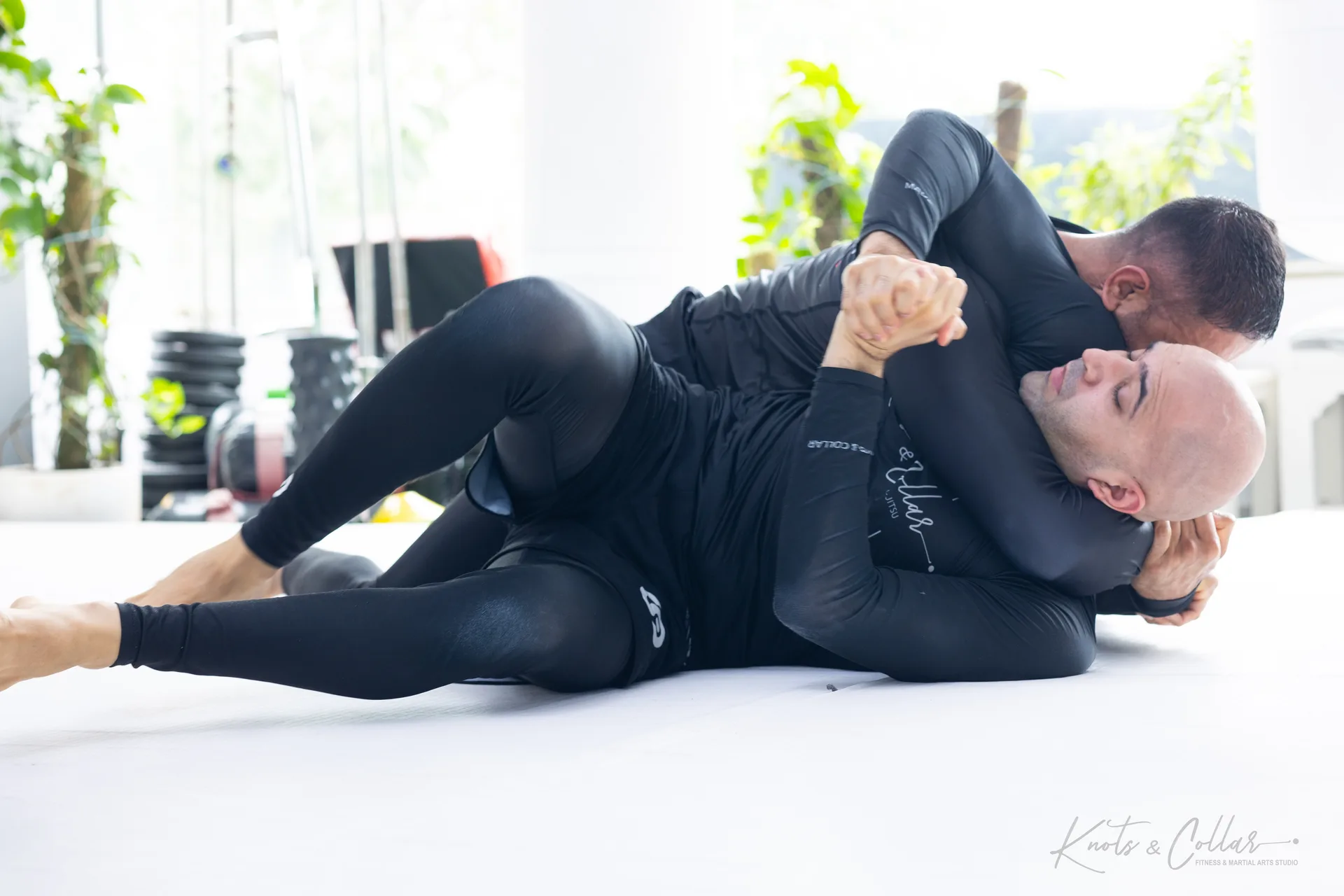
The first family of BJJ submissions a beginner meets is the group of chokes and strangles. In plain terms, these work by gently restricting blood flow at the sides of the neck rather than crushing the windpipe, which is why a well-applied strangle feels more like firm, closing pressure than pain. The moment it becomes real, you tap, and it is over.
Two examples will come up again and again. The rear naked choke is applied from behind, with your partner's back controlled, and it is one of the most reliable positions in the art precisely because control comes first. The triangle is formed with the legs from the guard, wrapping around your partner's neck and one arm. Both are worth understanding early not because you will master them quickly, but because you will feel them applied to you often, and knowing what they are makes tapping calm and easy rather than sudden. With strangles above all, the rule is simple: tap early, well before anything feels serious.
Joint locks — armbar, kimura and americana
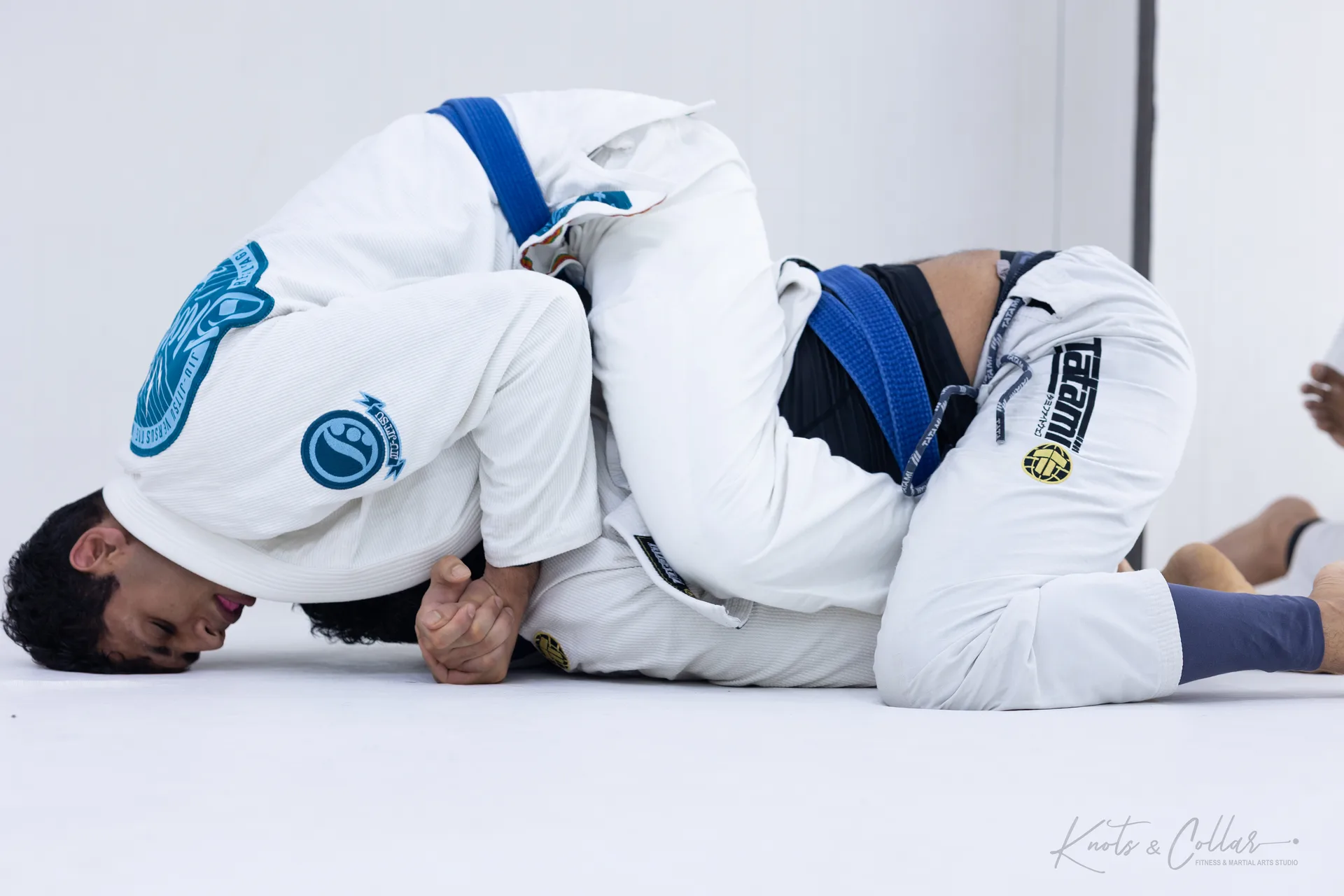
The second family is joint locks, which apply slow, controlled pressure to a joint — most often the elbow or the shoulder. Again, the sensation arrives long before anything is at risk, and the tap comes well inside that margin. Applied properly and released promptly, these are trained safely every day.
Three names cover much of what a beginner meets. The armbar isolates the arm and applies gentle pressure to the elbow, usually from mount or from the guard. The kimura and the americana both work on the shoulder from different angles, using a figure-four grip on the arm. You will learn to recognise the shape of each as it develops, which is a large part of learning to escape early — the best defence to a joint lock is noticing it forming and dealing with it before it settles. For beginners, the two habits that keep these completely safe are moving slowly when you apply them and tapping promptly when you feel them. There is never a reason to hold a joint lock hard or fast in training.
A gentle note on leg locks
Leg locks are the family that apply controlled pressure to the knee, ankle or foot. They are a genuine part of modern Brazilian Jiu-Jitsu, more so in no-gi training, and they are worth being aware of. For most beginners, though, they arrive later in the journey rather than in the first weeks.
There is a good reason for that ordering. Leg locks reward a calm, controlled approach and a clear understanding of how the lower body reacts, which is why they are usually introduced gradually and under close supervision. If you train no-gi, you will meet them sooner; if you would like to understand how the two styles differ, our gi versus no-gi guide for beginners explains the distinction plainly. The message for now is simple: leg locks are nothing to fear and nothing to rush, and the same rule governs them as governs every other submission — apply with control, and tap early.
The etiquette of tapping and releasing
Everything above rests on one shared agreement that every person in the room keeps, from the newest beginner to the most experienced black belt. It has two halves, and both matter equally.
The first half belongs to the person caught: tap clearly and tap early. Several firm taps on your partner or on the mat, or a spoken "tap" if your hands are trapped, is all it takes. Tapping is not losing — it is information, and it is how you stay healthy enough to train tomorrow and for years after. Nobody in a good room thinks less of a tap; everybody taps, every week. The second half belongs to the person applying the hold: the moment you feel or hear the tap, you release smoothly and immediately, without a final squeeze and without pressure. That instant, reliable release is what makes it safe to train BJJ submissions at all. It is the practical shape of kindness over toughness, and it is why partners trust one another on the mat.
Train with those two habits and submissions stop being something to fear and become simply part of the conversation. For more on keeping your training healthy over the long run, our note on how to train BJJ without getting injured covers the wider picture, and if you are still deciding whether to start, the complete guide to BJJ in India for 2026 is a good place to begin.
Reading about submissions can only take you so far — they make sense once you feel them applied slowly and safely by a patient partner. If you would like to see how we teach this at Knots & Collar in Defence Colony, New Delhi, you are welcome to schedule a visit and watch a class. This article is general information; the techniques themselves are always learned in person, under qualified supervision.
FAQs
What are the most common BJJ submissions a beginner will meet?
In your first months you will most often meet the rear naked choke and the triangle among the strangles, and the armbar, kimura and americana among the joint locks. Leg locks come later in most beginner journeys. These few families cover a large part of what you will see and feel early on, which is why understanding them well matters more than collecting a long list.
Are BJJ submissions dangerous to learn as a beginner?
Learned under qualified supervision and applied slowly, BJJ submissions are trained safely by beginners of many ages every day. The safety comes from two habits — the person applying the hold moves with control and stops the moment their partner taps, and the person caught taps early rather than waiting. Knots & Collar teaches both habits from the first class.
What does "position before submission" mean?
It means you establish a stable, controlling position before you look for a finish. A submission attempted from a weak or scrambling position usually fails and can leave you worse off. Beginners who spend their early months learning to hold good positions build a far more reliable base than those who chase finishes first.
How do I tap and how should my partner respond?
Tap clearly and early — several firm taps on your partner or the mat, or a spoken "tap" if your hands are trapped. The moment your partner feels or hears it, they release the hold smoothly and without pressure, and you both reset. Tapping is normal, expected and how everyone in the room stays healthy enough to keep training.