
How to Escape Bad Positions in BJJ: The Skill That Comes First
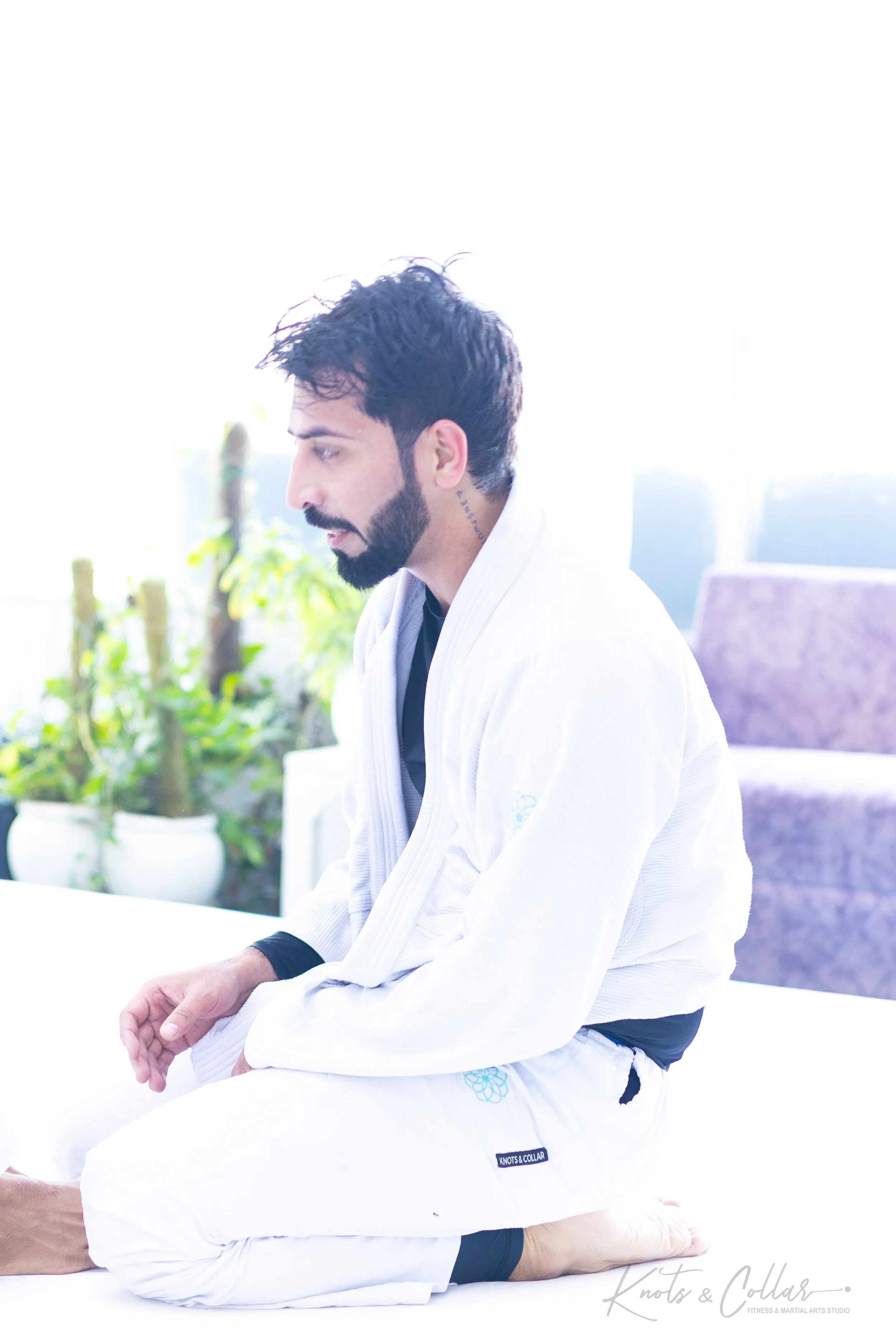
Before you learn to submit anyone, learn to escape. The ability to escape bad positions in BJJ is the first real skill of the art — and the one that lets everything else grow.
Most people arrive at Brazilian Jiu-Jitsu wanting to learn how to finish a roll: the armbar, the strangle, the moment a partner taps. Those things come. But the skill that matters first, the one that keeps you safe and keeps you enjoying training, is the opposite of attacking. It is escaping. Knowing how to get out of the hard spots — mount, side control, the back — is what turns a nervous beginner into a calm one. This guide walks through why BJJ escapes come first, and the simple ideas underneath them, at the level of principle rather than step-by-step instruction. The movements themselves are best learned on the mats with a coach watching, but understanding the ideas will make those lessons land far faster.
Why Escapes Are the First Real Skill
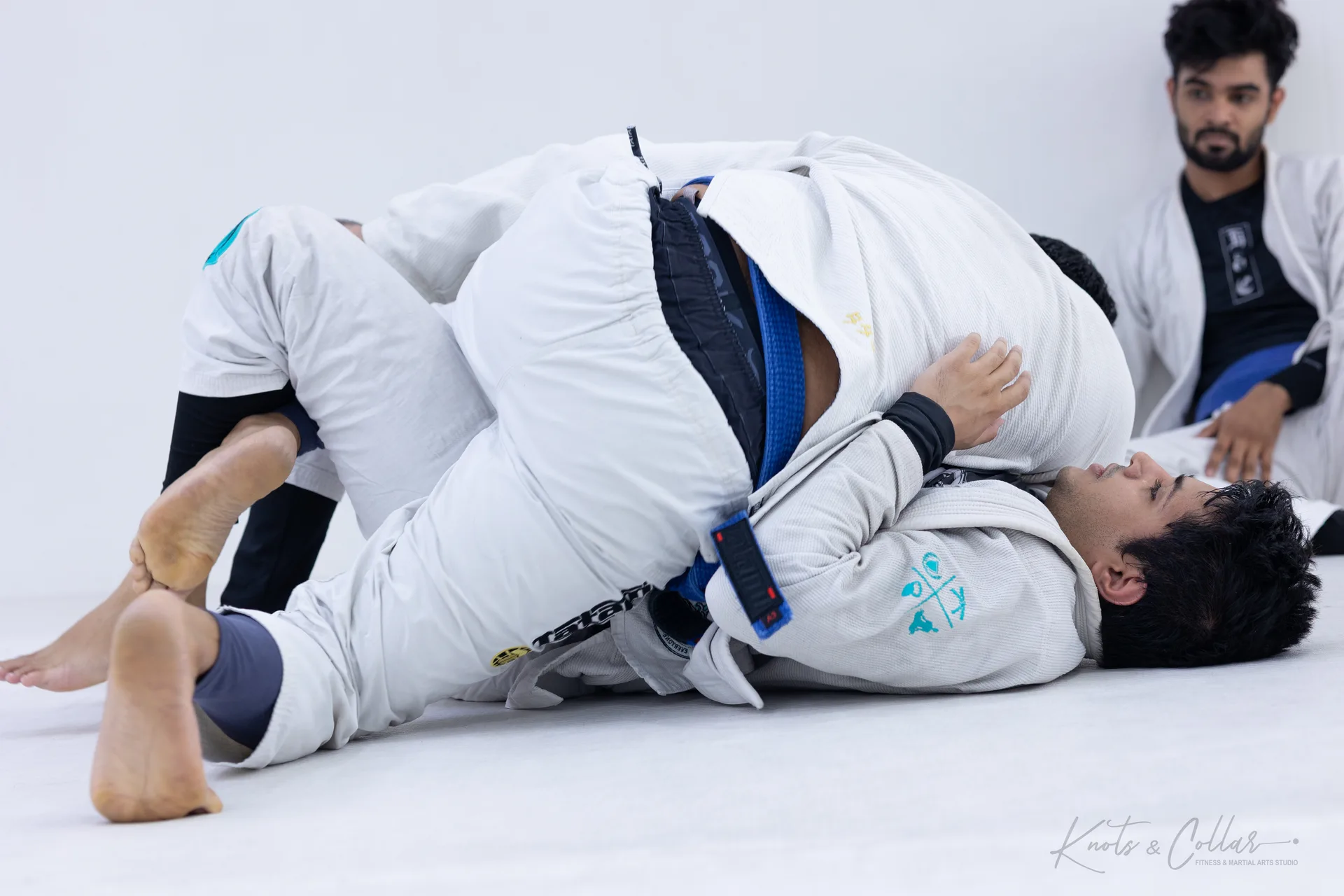
In your early months, most of your rolling will be spent in positions you did not choose. More experienced partners will pass your guard, settle into side control, and take your back — this is normal, and it is how everyone learns. If the only tools you own are attacks, those minutes feel like drowning. If you can escape, they become a puzzle you know how to solve. That single difference decides whether a beginner stays for years or quietly stops coming.
There is a reason experienced coaches teach survival and escape before submissions. A person who can escape bad positions in BJJ is difficult to beat and easy to be around on the mats, because they never panic and never force. They can roll with anyone, give up nothing they cannot recover, and learn from every exchange rather than fearing it. Attacks are built on top of this foundation. Escapes are the foundation itself, which is why they belong in your first six months. If you are just starting, our white belt's guide to the first six months sets the whole journey in order.
Staying Calm Under Pressure
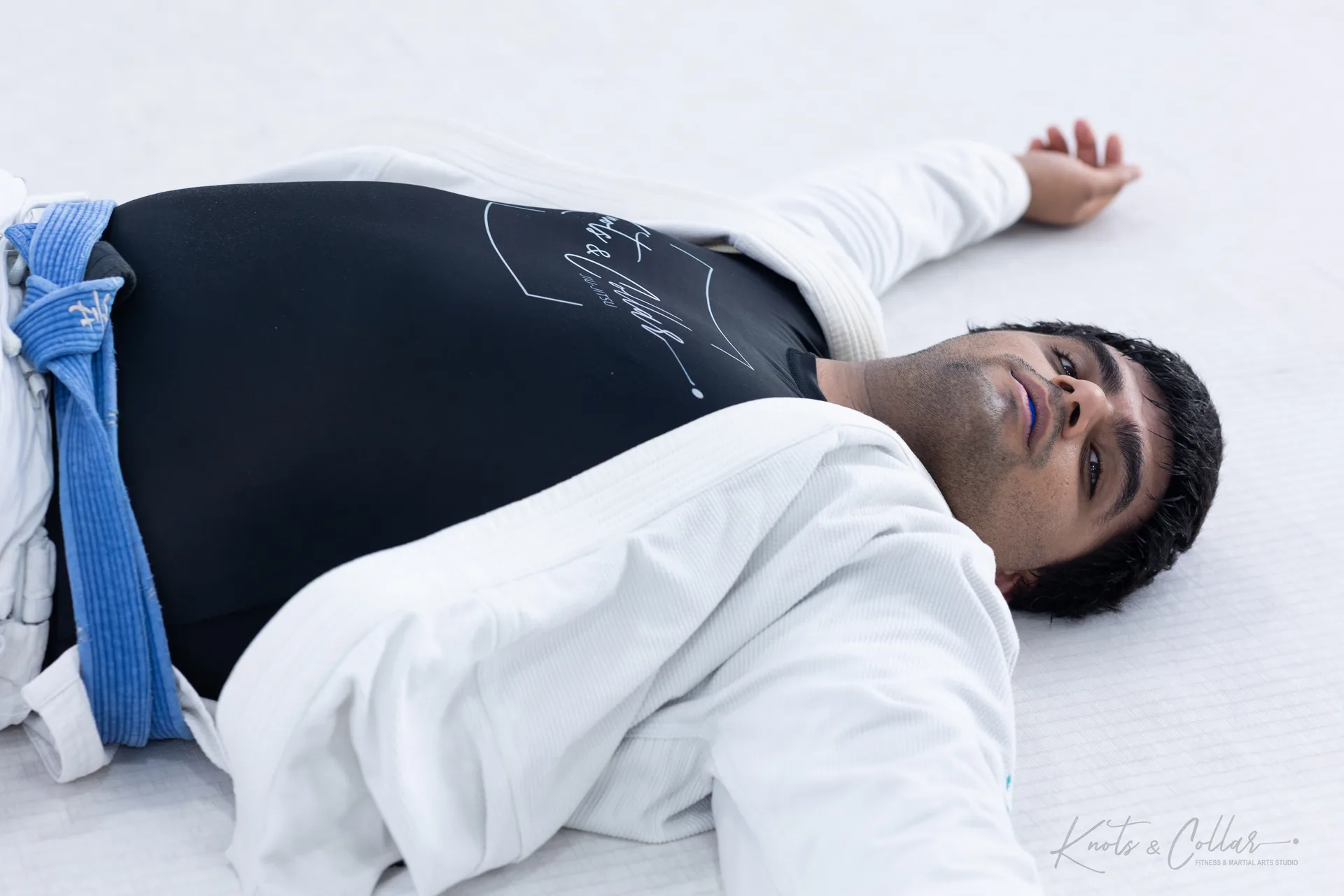
The first thing an escape asks of you is not a movement. It is composure. When a heavier partner settles their weight on your chest, the instinct is to hold your breath, tense every muscle, and thrash — and all three make things worse. Panic empties your tank in seconds and locks up the very muscles you need to move. The calm practitioner, meanwhile, breathes slowly, keeps their neck protected, and waits for the small opening that always comes.
Calm is not a personality trait you either have or lack. It is a trained response, and the training is simply time under gentle pressure with partners you trust. This is where the room you train in matters. At Knots & Collar our teaching is built on Kindness Over Toughness, which means the person on top is helping you learn, not proving a point. In that kind of room, being stuck stops feeling like danger and starts feeling like a problem you have all the time in the world to work out. That relaxed mind is what makes every escape possible, and it is the quiet gift the art gives back to the rest of your life.
Frames and the Idea of Space
Nearly every escape rests on two connected ideas: frames and space. A frame is a firm structure you build with your body — a forearm across the hips, a shin between you and your partner, an elbow tucked into a strong line. Frames hold using bone and alignment rather than muscle, which is exactly why a smaller person can use them against someone much heavier. You are not pushing with strength that will tire; you are propping with structure that does not.
What a frame buys you is space — a little gap between your body and the pressure on top of it. Space is the currency of every escape. With no space you are pinned; with a few centimetres you can move a hip, turn onto a side, or slide a knee through. So the pattern underneath most escapes is the same: make a frame, use it to create a small amount of space, then move into that space before it closes. Understanding this one idea makes the specific escapes far less mysterious. You are always doing the same thing — build structure, make room, move into the room — whichever position you happen to be in.
The Common Tough Spots
Three positions account for most of the difficulty a beginner meets: mount, side control, and back control. Each feels different, but each yields to the same principles.
Mount, where a partner sits on your chest, feels the most alarming and is often the most escapable. The instinct to bench-press them away rarely works. Instead the answer lives in your hips and your frames — trapping an arm and a leg on one side and using a bridge to turn them over, or framing to bring a knee back underneath. The lesson mount teaches is patience: hold your structure, protect yourself, and wait for the moment their balance shifts.
Side control, where a partner lies across you, is where you learn to fight for space with frames along their hip and shoulder. The escape is rarely explosive; it is the slow, quiet work of recovering your guard by turning towards them, walking your hips away, and threading a knee back into the gap. It is the position that teaches the framing idea most clearly of all.
Back control is where composure matters most, because this is where strangles live. The first job is always the same and it is defensive: protect your neck with your hands and keep your chin down. Only then do you work your shoulders and hips towards the floor on one side to slide out and turn to face your partner. Safety first, escape second — always in that order.
None of this is a substitute for a coach placing your elbow in the right spot, and it is not meant to be. It is the map. The territory is learned on the mats, one honest repetition at a time — and doing it in a way that keeps you healthy for years matters too, which is why training without getting injured is worth reading alongside this.
How Escapes Build Everything Else
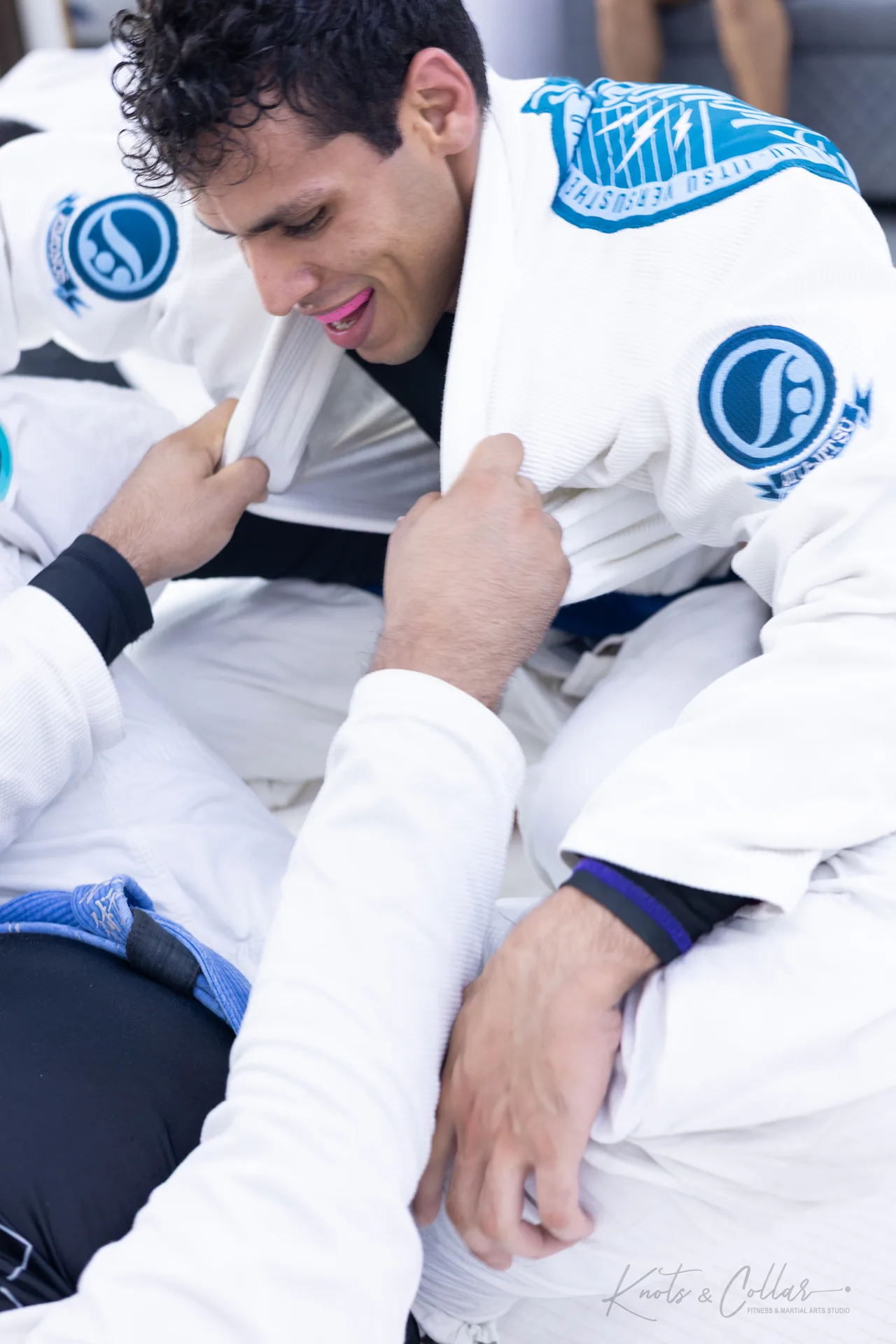
Here is the part that surprises new students. Learning to escape does not only keep you safe — it quietly makes you better at attacking, too. When you are no longer frightened of being stuck, you begin to take risks. You try the sweep, attempt the guard pass, reach for the submission, because you know that if it fails and you end up underneath, you can simply escape and start again. Fear makes people passive. A solid set of BJJ escapes removes the fear, and a fearless beginner learns at a pace a nervous one never can.
Escapes also build the composure that carries into every roll and, honestly, off the mats as well. The calm you practise while trapped under side control is the same calm that steadies you in a hard week at work or a tense conversation. This is the deeper reason we teach escapes first: they are how the art gives you patience, and patience is the thing that makes fast improvement possible. If you want to speed up your whole development, our guide on how to improve at BJJ faster builds directly on this foundation, and if you are looking at the bigger picture of training here, the complete guide to BJJ in India puts it all in context.
Come and Feel It on the Mats
Reading about frames and space prepares your mind, but escapes live in the body, and the body learns them by doing them slowly with a patient partner. That is what a class gives you that an article never can: a coach's eye, a friendly training partner, and the safe, unhurried repetition that turns an idea into something your body simply knows. We run mornings and evenings, seven days a week, with adults of every level and no expectation that you arrive fit or experienced — you learn all of that here.
FAQs
Why should beginners learn escapes before submissions?
Because escapes are what keep you safe and calm while everything else is still new. A beginner who knows how to escape bad positions in BJJ can survive difficult moments, stay relaxed, and keep training happily. Submissions come far more easily once you are no longer afraid of being stuck, so most students at Knots & Collar spend their early months building a reliable set of BJJ escapes first.
How do I stay calm when I am stuck under someone bigger?
Breathe slowly and give yourself small jobs — protect your neck, make a frame, find a little space, turn towards it. Panic burns energy and tenses the wrong muscles, while steady breathing keeps your mind clear. Calm is a skill you practise, and rolling in a friendly room with training partners who look after you is exactly how it grows.
What are frames in Brazilian Jiu-Jitsu?
Frames are the firm structures you make with your forearms, shins and knees to hold a little distance between you and your partner. They use bone and alignment rather than raw strength, so a smaller person can hold space against a heavier one. Frames create the room you need to move, which is why they sit at the heart of nearly every escape.
Can I learn escapes from an article alone?
An article can explain the ideas — staying calm, framing, making space, turning towards freedom — and that understanding helps a great deal. The movements themselves need a coach's eye and a live partner, because timing and feel are things you learn by doing. Reading prepares your mind, and a class turns the ideas into something your body knows. Your first class at Knots & Collar is free.
The best way to learn escapes is to feel one work. Come and try a class — the door is open seven days a week and your first session is on us. Schedule a visit and we will see you on the mats. Kindness Over Toughness, verified, always.