
BJJ Points and Scoring Explained: A Beginner's Guide to Watching and Competing

Watch a Brazilian Jiu-Jitsu match for the first time and it can look like two people wrestling with no obvious way of keeping score. There is a system underneath it, and it is simpler than it first appears. This is a plain, beginner-friendly guide to BJJ points and scoring: how positions earn points, what advantages and penalties mean, how submission-only formats differ, and why understanding all of it makes watching and competing far more enjoyable.
Why BJJ has a scoring system at all
The heart of jiu-jitsu is the submission — a joint lock or a choke that ends the match the moment your opponent taps. If every match ended in a submission, there would be no need for points at all. But two skilled grapplers can spend five, six or ten minutes without either landing a finish, and a fair sport needs a way to decide those matches.
That is what the points system does. It rewards positional progress — the idea, central to jiu-jitsu, that some positions are safer and more dominant than others. Taking someone down, getting past their legs, climbing to their back: each of these is a step towards control, and the scoring reflects it. So points are not a separate game bolted onto jiu-jitsu. They are a scoreboard version of the same logic you learn in your first months on the mat. Understanding BJJ points and scoring is really just understanding which positions matter and why.
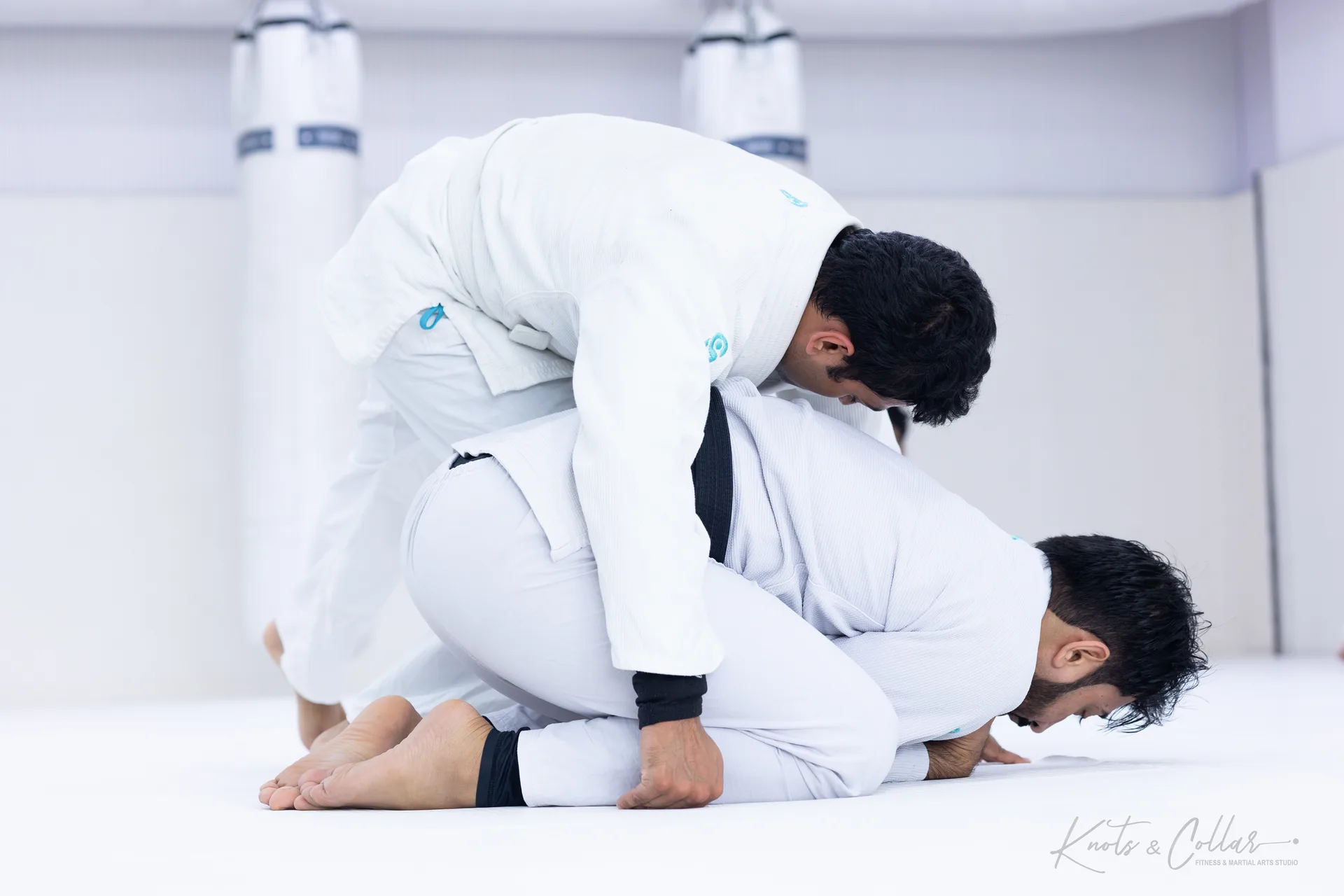
The main scoring positions under an IBJJF-style ruleset
Most gi events, and many no-gi ones, run on IBJJF-style points. The values are worth committing to memory, because once you know them a match becomes easy to follow. Here is the standard set:
- Takedown — 2 points. Bringing your opponent from standing to the mat and establishing top position.
- Sweep — 2 points. Reversing the position from underneath, so that you come up on top from your guard.
- Knee-on-belly — 2 points. Kneeling across your opponent's stomach with control, a mobile and pressuring top position.
- Guard pass — 3 points. Getting past your opponent's legs to establish side control, one of the more valued achievements in a match.
- Mount — 4 points. Sitting on your opponent's torso with your knees on the mat, a dominant top position.
- Back control — 4 points. Taking your opponent's back with your heels hooked inside their thighs, generally considered the most controlling position of all.
You will notice the values climb as the positions become more dominant. A takedown is worth two; taking the back is worth four. One important detail: to score, you usually have to hold the position for roughly three seconds. Flashing through mount and losing it immediately does not count — control is the whole point, so you must demonstrate it. This is why competitors often pause and settle their weight once they arrive somewhere, rather than rushing straight to the next thing.
Advantages and penalties: the finer marks
Points alone do not settle every match, so the ruleset adds two smaller marks that shape close contests.
An advantage is awarded when a competitor nearly scores but does not quite complete the position — a takedown that was defended at the last moment, a sweep that came within an inch, a submission the opponent escaped by a whisker. Advantages do not add to your point total. Their job is to break ties. If two grapplers finish level on points, the one with more advantages wins, which rewards the competitor who was more active and threatening even if neither could close the deal. It is the sport's way of saying that coming close, repeatedly, should count for something.
A penalty works the other way. Referees give penalties for things like stalling, gripping illegally, fleeing the mat to avoid a bad position, or minor rule breaches. A first penalty is often just a warning; repeated penalties can hand advantages or points to the opponent, and enough of them can disqualify a competitor. The message is straightforward and fits the spirit of the art: engage, work honestly, and do not win by avoidance. For a beginner, the practical takeaway is simply to keep moving with intent and play within the rules.
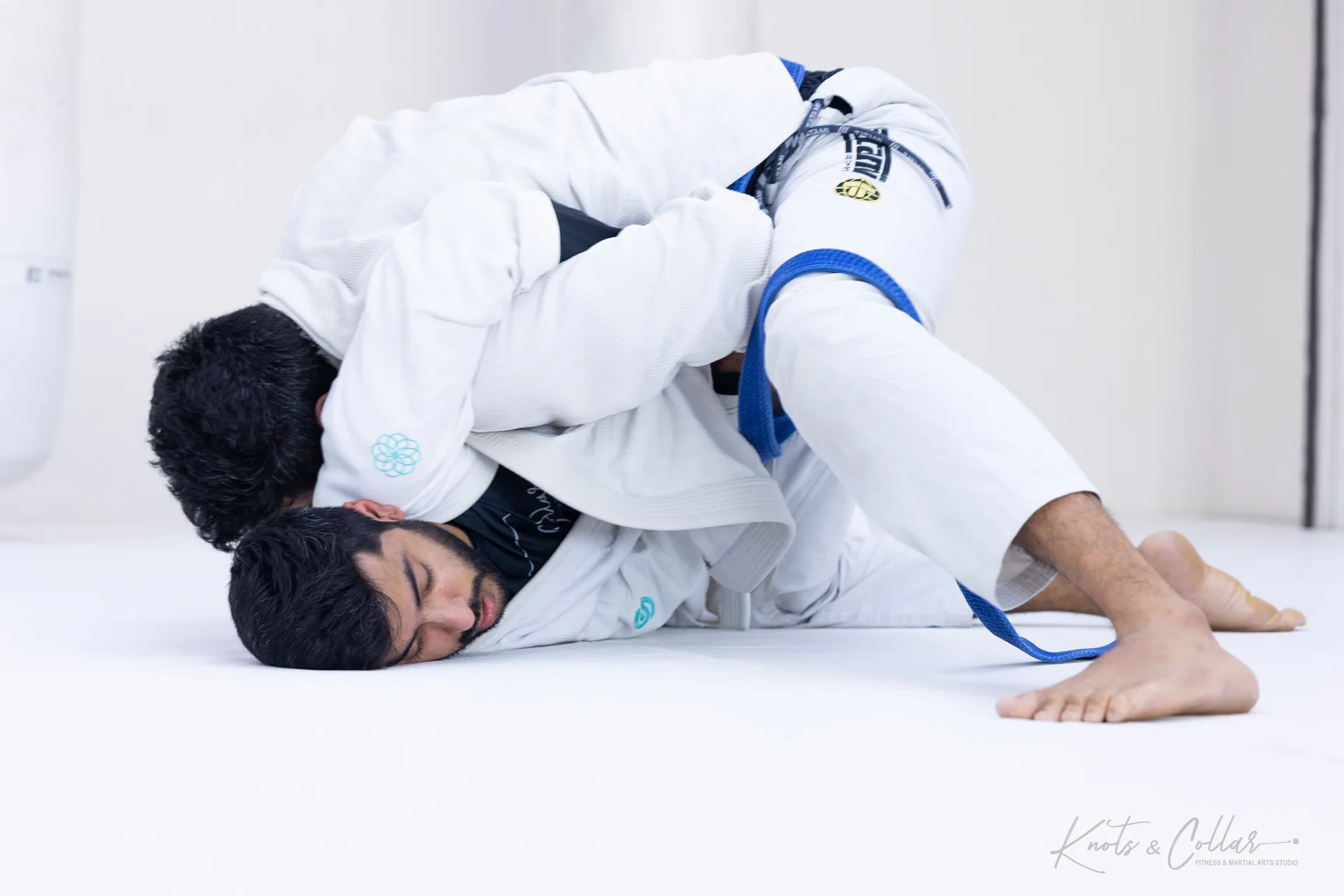
The submission trumps everything
Here is the rule that keeps jiu-jitsu honest, and it is worth stating plainly: a submission ends the match immediately, no matter what the score is. You can be down twelve points to nothing, and if you catch an armbar or a choke and your opponent taps, you win. The points only ever decide matches that run the full time without a finish.
This is why you will see competitors who are comfortably ahead on points still hunting for submissions, and competitors who are behind refusing to give up — the finish is always available. It also shapes how thoughtful grapplers play. Scoring positions such as mount and back control are not just points on a board; they are the positions from which submissions are easiest to attack. Working for points and working for the finish are usually the same journey. If you want to understand the finishes those positions lead to, our beginner's guide to BJJ submissions walks through the common ones.
Submission-only and ADCC-style formats
Not every event uses the points system above. You will meet other formats, especially in no-gi, and it helps to know how they differ.
Submission-only events remove points entirely. The only path to victory is a tap, so a match might end in the first thirty seconds or run its full length with no winner declared on positions at all. Some submission-only events add overtime rounds to force a result rather than leaving it a draw. These formats reward finishing above everything and tend to produce a more aggressive, submission-hunting style.
ADCC-style rulesets sit somewhere in between. They use points, but with their own values and, notably, a period at the start of each match where no points are scored at all, which encourages competitors to attack for the finish before the scoreboard opens. Leg locks and other techniques that are restricted for beginners under IBJJF rules are often more permitted in these formats. None of this is complicated once you read it — but you must read it. Rules differ between organisers, formats and belt levels, so before any event, pull up its specific ruleset and ask your coach which positions score and which techniques are allowed. If you are still weighing the two styles of training, our gi vs no-gi guide for beginners explains how they shape the way you play.
How knowing the scoring makes BJJ more enjoyable
Once the scoring clicks, watching jiu-jitsu changes completely. What looked like a formless scramble becomes a readable contest of goals: this competitor is working to pass the guard for three points, that one is threatening a sweep to reverse the position, and the tension you feel when someone fights to defend their back suddenly makes sense. You start to see the strategy — when a competitor slows to secure a lead, when someone behind on points must open up and take risks, why a referee raises a hand for an advantage. Matches become a conversation you can follow rather than a blur.
The same understanding helps you as a competitor. Knowing that a guard pass is worth three points and back control is worth four tells you where to spend your energy and how to build a lead. It shapes a sensible game plan and stops you giving away easy points or penalties. If a first tournament is on your mind, our guide on preparing for your first BJJ competition covers divisions, weight and nerves, and our guide to BJJ competitions in India maps out the events on offer here.
You do not need any of this to begin, though. At Knots & Collar we teach Kindness Over Toughness — you learn the positions first, on the mat, and the scoring simply becomes a way of describing what you are already doing. When you are ready to see how it all fits together, come and schedule a visit and watch a class in Defence Colony. Understanding is verified, always, through training.

FAQs
How do points work in a BJJ match?
Under a common IBJJF-style ruleset, points are awarded for reaching and holding dominant positions: two points for a takedown or a sweep, three for passing the guard, and four for mount or back control, with two points for knee-on-belly. You must usually hold each position for about three seconds for it to count. A submission ends the match at any time regardless of the score, so points only decide matches that go the full time without a tap.
What is the difference between an advantage and a point in BJJ?
A point is awarded when you complete a scoring position and control it. An advantage is a smaller mark given when you almost achieved something — a takedown attempt, a near sweep, a submission your opponent escaped. Advantages do not add to your point total, but if two competitors finish level on points, the one with more advantages wins. They are a tie-breaker that rewards the more active, threatening grappler.
What is submission-only BJJ?
Submission-only formats remove points entirely. The only way to win is to make your opponent tap through a submission, so a match can be decided in the first minute or run its full length with no winner declared on positions. Some events add overtime rounds to force a result. These formats reward finishing over positional control, and the leg-lock rules are often more open than in points competition.
Do I need to understand scoring before I compete or watch BJJ?
You can enjoy BJJ without it, but a little knowledge goes a long way. Once you understand why a competitor works to pass the guard or take the back, matches stop looking like a scramble and start reading like a conversation. Before you compete, always check your specific event's ruleset and ask your coach which positions score, because rules differ between organisers and formats.