
Flexibility & Mobility for BJJ: Move Better, Roll Longer
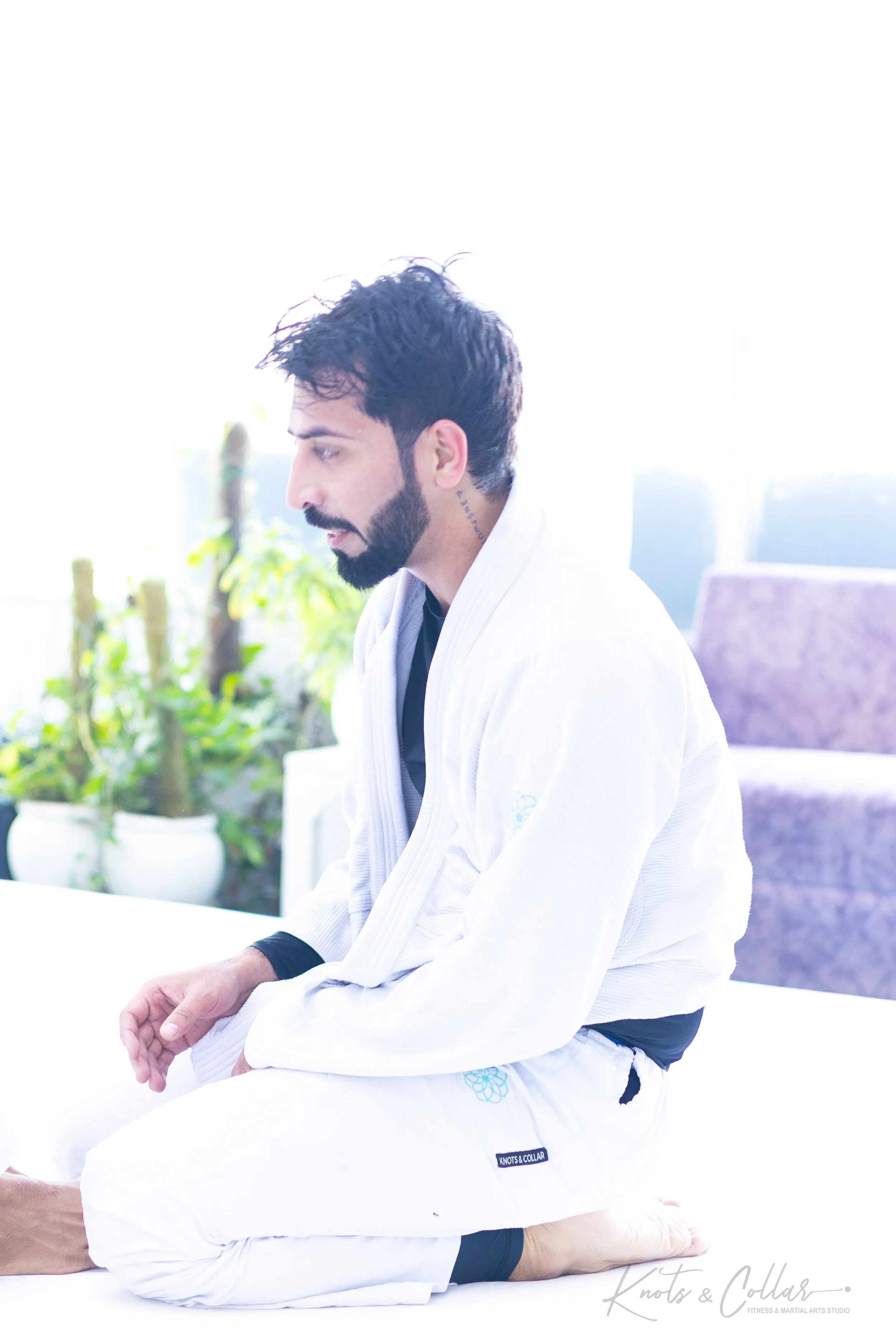
You do not need to be flexible to start jiu-jitsu. What helps most is mobility — controlled, usable range, especially through the hips — and that is something training builds in you over time.
One of the quiet worries we hear from people thinking about their first class is some version of "I'm not flexible enough." It is an understandable thought, and it is also the wrong one to hold you back. Brazilian Jiu-Jitsu does not ask you to arrive able to do the splits. What it rewards is mobility: the ability to move a joint through its range with control, under a little load, when someone is in front of you. This guide explains the difference between flexibility and mobility for BJJ, why the hips sit at the centre of it, the areas grapplers benefit from opening, and gentle habits you can build at home. It is general information from our experience on the mat, not medical advice — if you have an injury or a specific condition, please check with a qualified professional first.
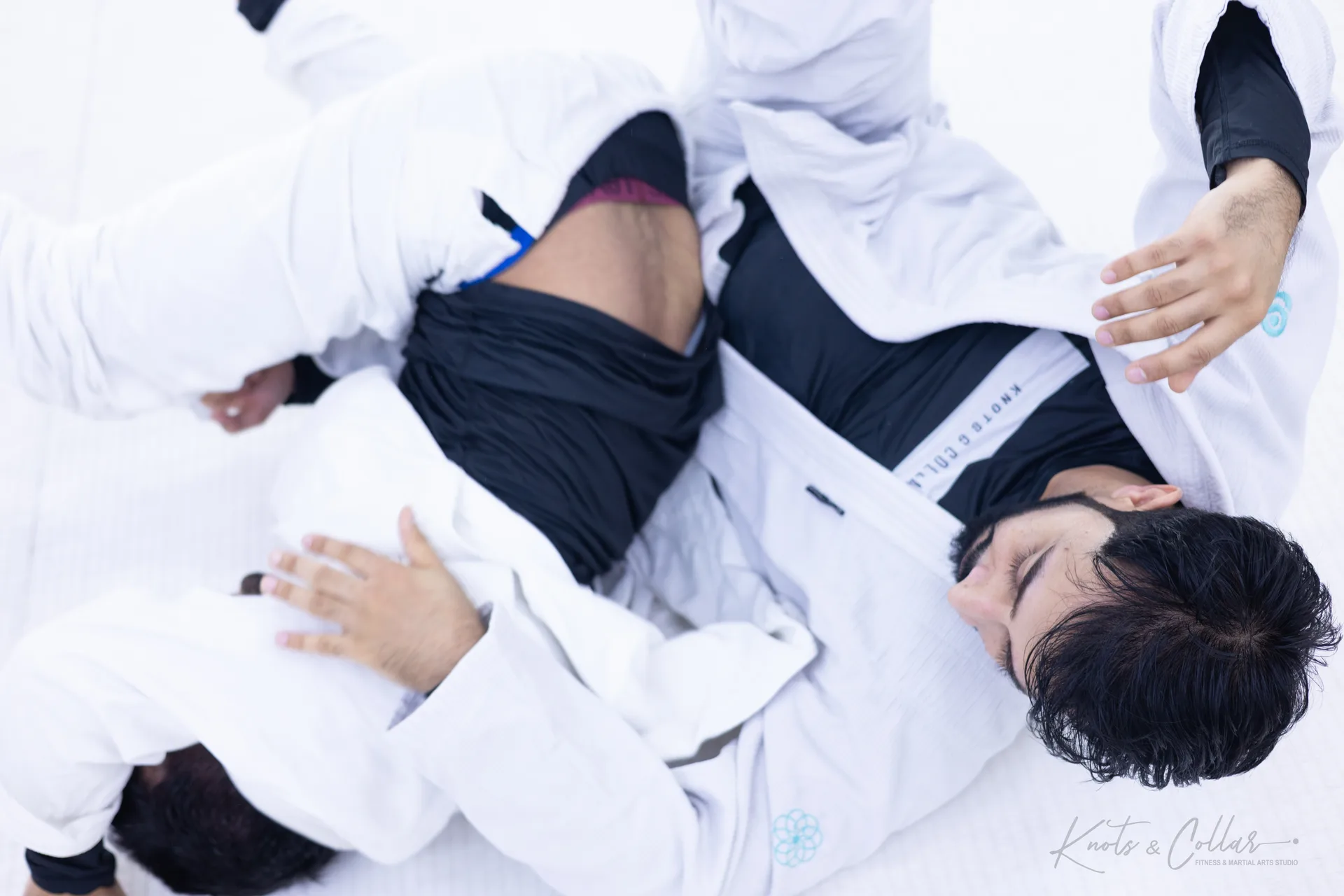
Flexibility & Mobility: What the Difference Really Means
These two words get used as if they mean the same thing, but on the mat they behave differently. Flexibility is how far a muscle can lengthen when you are relaxed and something else is doing the moving — think of a hamstring stretch where gravity pulls you down. Mobility is how far you can move a joint under your own control, actively, through its useful range. A person can be very flexible in a passive stretch and still struggle to use that range when they are moving with intent. In grappling, it is the usable, controlled range that counts.
This matters because it takes the pressure off. You are not chasing a party trick or an extreme shape. You are building the kind of movement that lets you turn your hips, frame with your arms, and get off the floor without strain. That is a far more reachable goal, and it is one that improves steadily with regular, gentle work rather than forcing. Elastic, extreme flexibility can look impressive, but plenty of skilled grapplers are not especially bendy — they simply move well through the range they have.
Why the Hips Matter More Than the Splits
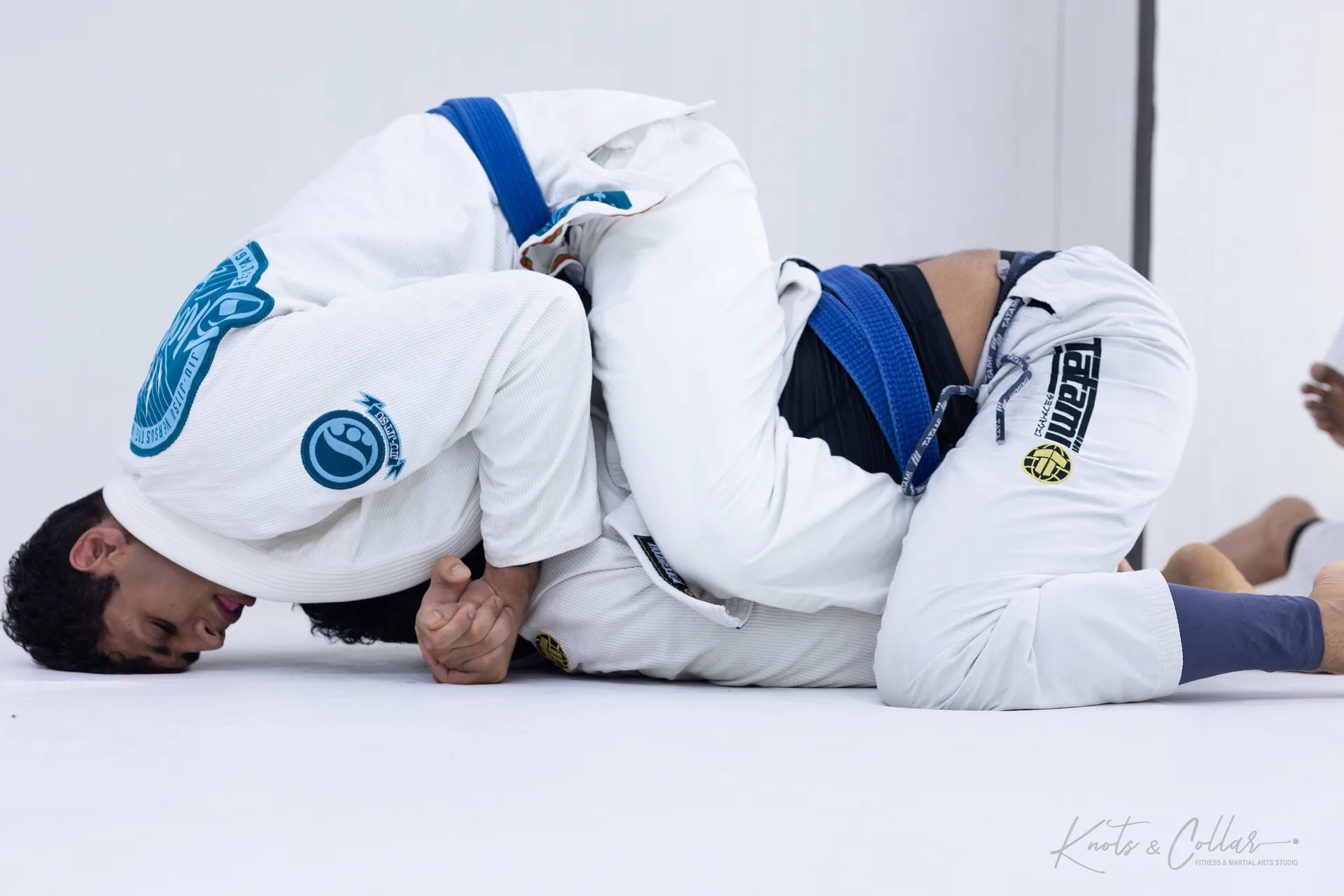
If there is one region that carries jiu-jitsu, it is the hips. Almost everything that makes the art work runs through them. Your guard — the position where you are on your back using your legs to control distance — depends on being able to angle and open your hips. Sweeps rely on hip movement to off-balance a partner. Escapes from underneath begin with the shrimp, which is a hip movement. Standing up from the ground safely, a skill we teach in the first weeks, is a hip action too. You do not need the splits for any of this. You need hips that can open, rotate, and move with a bit of control under a partner's weight.
This is good news for the ordinary beginner. Sitting at a desk for years tends to leave the hips a little tight, and that is completely normal. The range you need comes back gradually as you drill and roll, because the movements themselves are the training. Every time you shrimp across the mat or recover your guard, you ask your hips to move through range under gentle load — which is exactly how usable mobility is built.
You Do Not Need to Be Flexible to Start
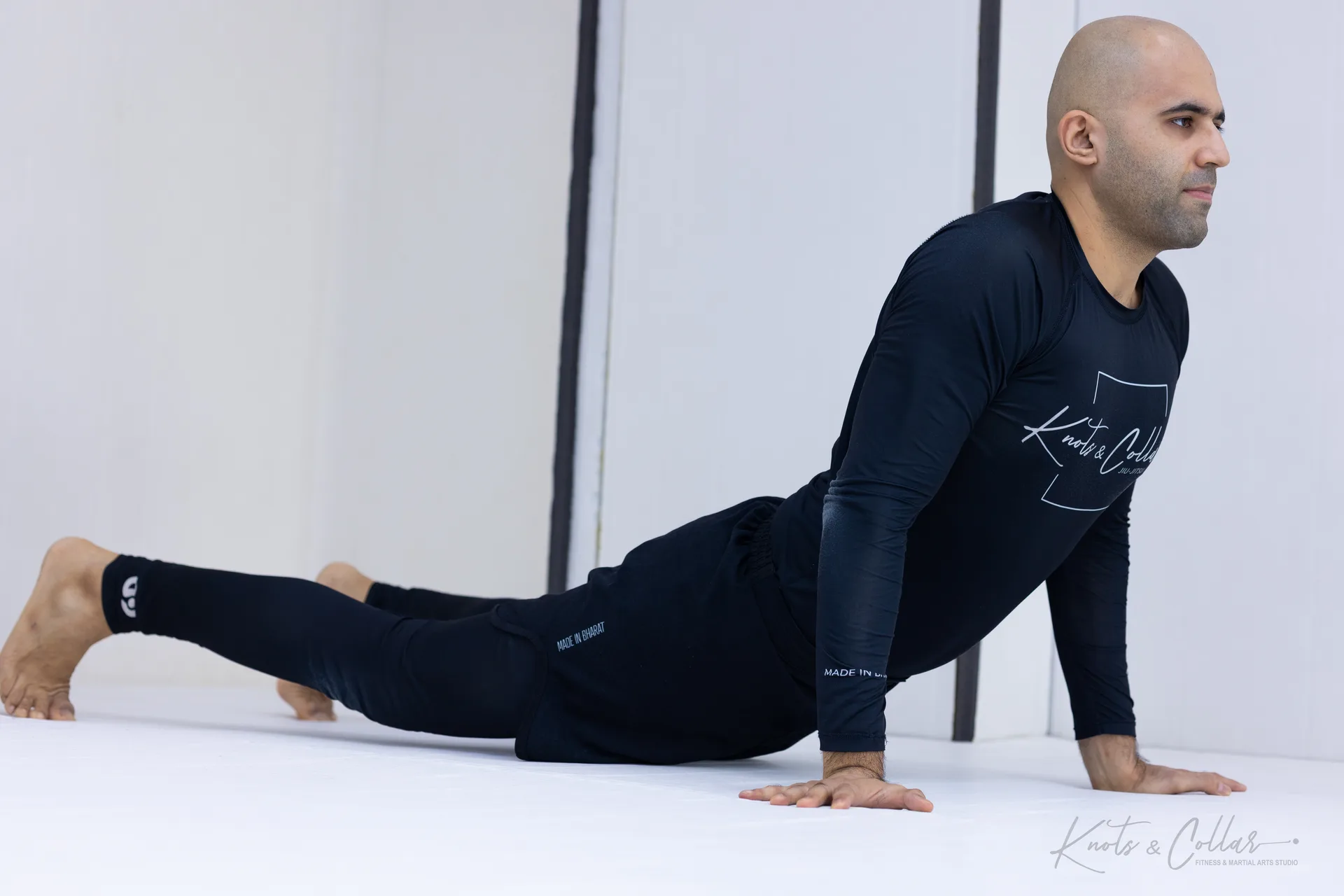
We want to be plain about this, because it stops good people from ever walking in. You do not need to touch your toes. You do not need to hold a deep squat or reach behind your back. Most people who start with us arrive fairly stiff, and that is the ordinary starting point, not a problem to be solved before day one. The mat is where the range is built, alongside everyone else who once felt exactly the same way.
Jiu-jitsu is also self-scaling. On any given day you work within the range you have, and you tap early and reset if something feels tight rather than forcing through it. Over weeks and months, the range quietly grows. This is one reason the art suits people coming to movement later in life — a theme we cover in our guide to starting BJJ over 30. Stiffness at the start is normal, expected, and temporary.
The Areas Grapplers Benefit From Opening
Three regions give a grappler the most return for gentle attention. The hips come first, for all the reasons above — guard, sweeps, escapes, and standing up all flow from them. The shoulders come next: open, mobile shoulders let your arms move and frame safely under pressure, and they help keep the shoulder comfortable when a partner is controlling an arm. A little regular shoulder movement — slow circles, reaching overhead, opening the chest — goes a long way.
The third area is the spine, meaning the ability to bend, extend, and rotate through your back and mid-section. Shrimping, bridging off the floor, and turning to face a partner all ask the spine to move segment by segment. You are not aiming for a backbend; you are aiming for a spine that can round, arch gently, and twist with control. Working these three areas — hips, shoulders, spine — with light, regular movement builds exactly the kind of body that handles a roll well. Building this alongside your technique also sits comfortably with our approach to training BJJ without getting injured, since a body that moves well tends to protect itself better.
Gentle Daily Habits That Add Up
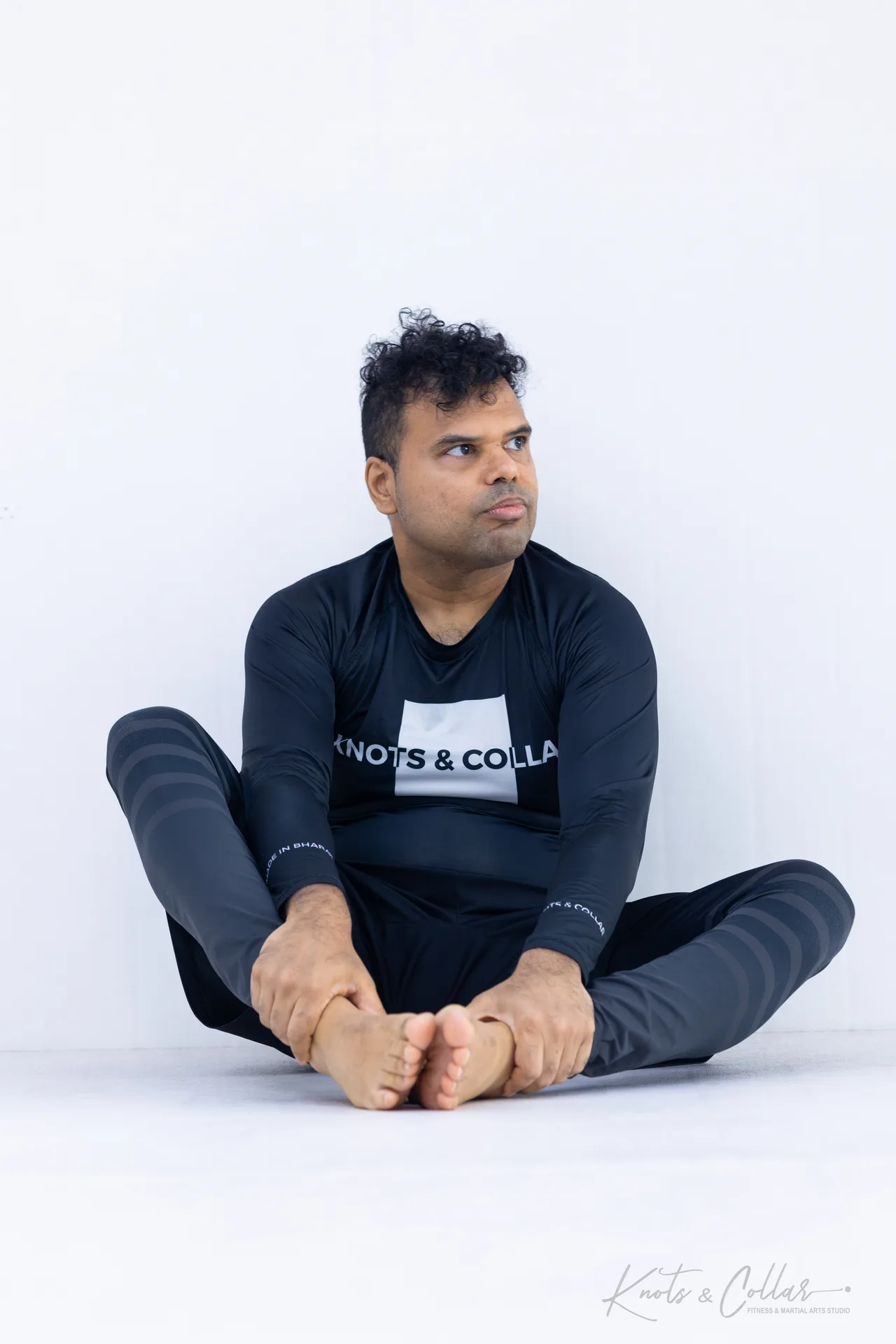
Mobility responds to little and often far better than to the occasional heroic session. A few minutes most days does more than a long, forced stretch once a week. A simple routine might be some slow hip circles and gentle rocking in a comfortable squat, a few shoulder rolls and reaches overhead, and some soft spinal rotations seated or on all fours. None of it needs to be intense. If a movement feels sharp or painful, that is your signal to ease back — the aim is to move to the edge of a comfortable range, not to fight your way past it.
The best time to open up is when you are already warm. Some of this belongs naturally at the start of class, and our warm-up movements for beginners double as mobility work — shrimps, bridges, and rolls all take your joints through range while getting your body ready to train. Doing a little of the same at home on rest days keeps things ticking over. Consistency, breathing steadily, and staying relaxed matter more than how far you reach on any single day.
India's Yoga Heritage Sits Naturally With Jiu-Jitsu
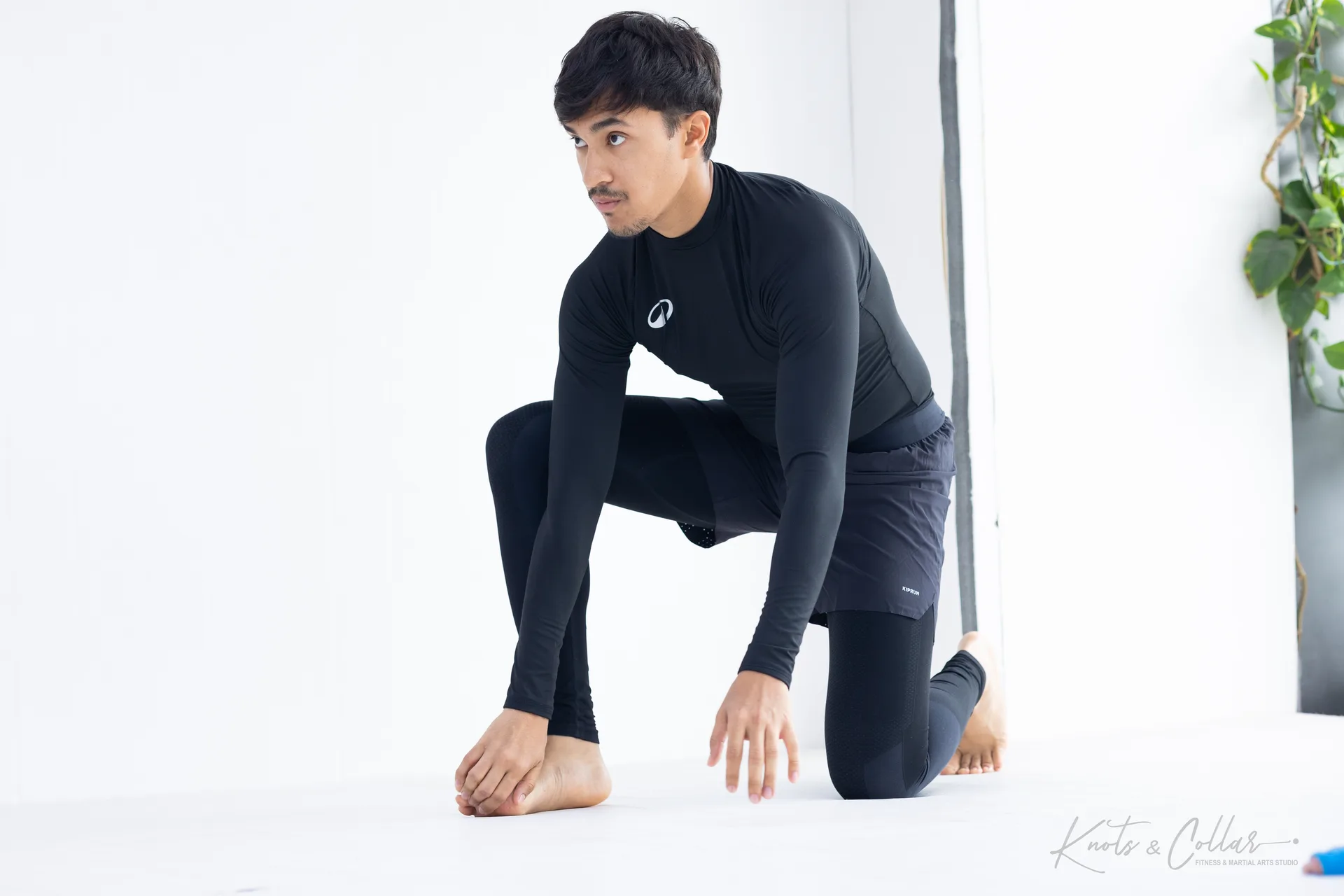
There is something fitting about training grappling here in India, because the country already holds one of the world's great traditions of controlled movement and breath: yoga. The qualities a good yoga practice builds — controlled range through the hips and spine, steady breathing, patience, and body awareness — are the very same qualities that reward a grappler. A gentle practice a few times a week complements jiu-jitsu well, opening the hips and shoulders without adding heavy strain, and teaching a calm breath that helps you stay relaxed when a roll gets busy. You do not need to make it complicated; even a short, regular practice supports what you do on the mat. This natural fit is one of the small pleasures of the art growing here, something we touch on in our complete guide to BJJ in India.
Moving Within Your Range, Safely
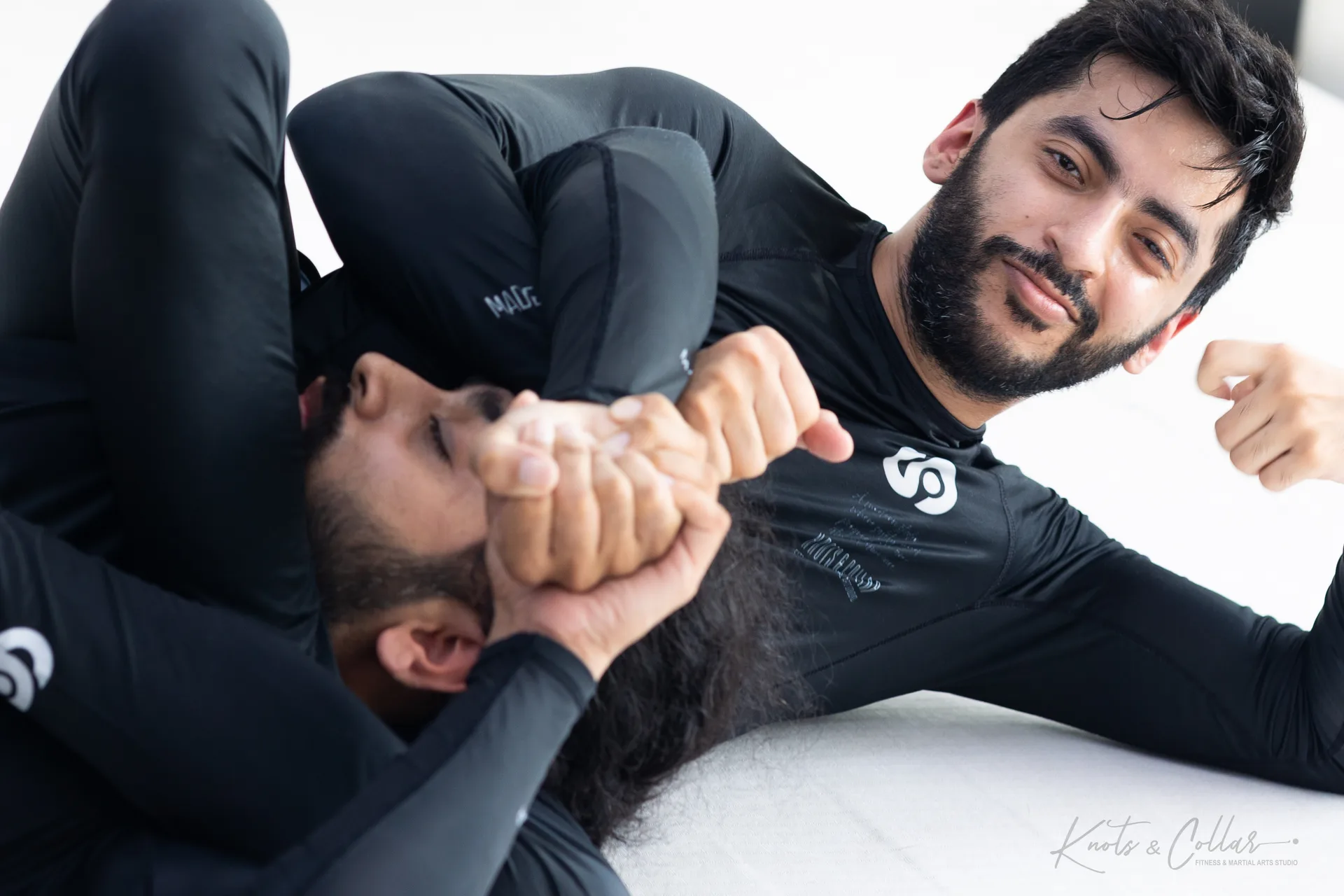
The last principle ties the rest together: work within your own range and let it grow at its own pace. Jiu-jitsu is a partner activity, so kindness towards your body and your partner's is part of the practice. Tap early when a position tightens, ease off if a stretch turns sharp, and treat mobility as a slow, steady project rather than a race. Range built patiently stays with you; range forced in a hurry tends to come with a niggle attached.
This is where our whole approach shows through. Kindness Over Toughness is not only how we treat each other on the mat — it is also how we treat our own bodies. Move well, move within yourself, and the flexibility and mobility that BJJ asks for will build on their own, class by class. If you have been holding back because you think you are too stiff to start, we would gently encourage you to come and see for yourself. Your first class is free, and you will be moving alongside people who once stood exactly where you are now — schedule a visit and we will see you on the mats.
FAQs
Do I need to be flexible to start BJJ?
No. You do not need to touch your toes or hold the splits to begin. Most beginners at Knots & Collar arrive fairly stiff, and their range improves naturally through training. Flexibility is something jiu-jitsu builds, not something you need beforehand.
What is the difference between flexibility and mobility for BJJ?
Flexibility is how far a muscle can lengthen when you are relaxed. Mobility is how much control you have through a joint's range while you are moving. In BJJ, mobility matters more — being able to move your hips with control does more for your guard and escapes than passive flexibility on its own.
Which areas should a grappler work on opening up?
The hips first, then the shoulders and the spine. Hip mobility drives guard, sweeps, and getting up; open shoulders keep your arms safe under pressure; a mobile spine helps you shrimp, bridge, and turn. Gentle, regular work on these three areas pays off quickly on the mat.
Can yoga help my jiu-jitsu?
Yes. Yoga, which comes from here in India, builds exactly the kind of controlled range, breathing, and body awareness that grappling rewards. A short, gentle practice a few times a week complements BJJ well without adding heavy strain.