
How to Build Your Own BJJ Game, One Position at a Time

Sooner or later every student stops just surviving on the mats and starts to play a way that feels like their own — here is a plain, friendly guide to building your BJJ game, from learning broadly as a beginner to growing a game plan that fits your body and temperament.
When people who train talk about someone's "game", they mean something quite specific. Your BJJ game is the small set of positions, sweeps, passes and submissions you know deeply and keep returning to when you roll. It is your handwriting on the mats. Two people can learn the same syllabus and end up rolling in completely different ways, because a game grows out of who you are — your build, your temperament, and the techniques you happen to love. This guide is about how that game forms, and how to help it along without rushing it.
At Knots & Collar in Defence Colony, New Delhi, we teach in the De La Riva lineage, in both Gi and No-Gi, seven days a week. Over the years the same steady path shows up again and again: learn broadly first, then specialise, then connect the pieces into sequences that feel like yours. That is the path we will walk through here.
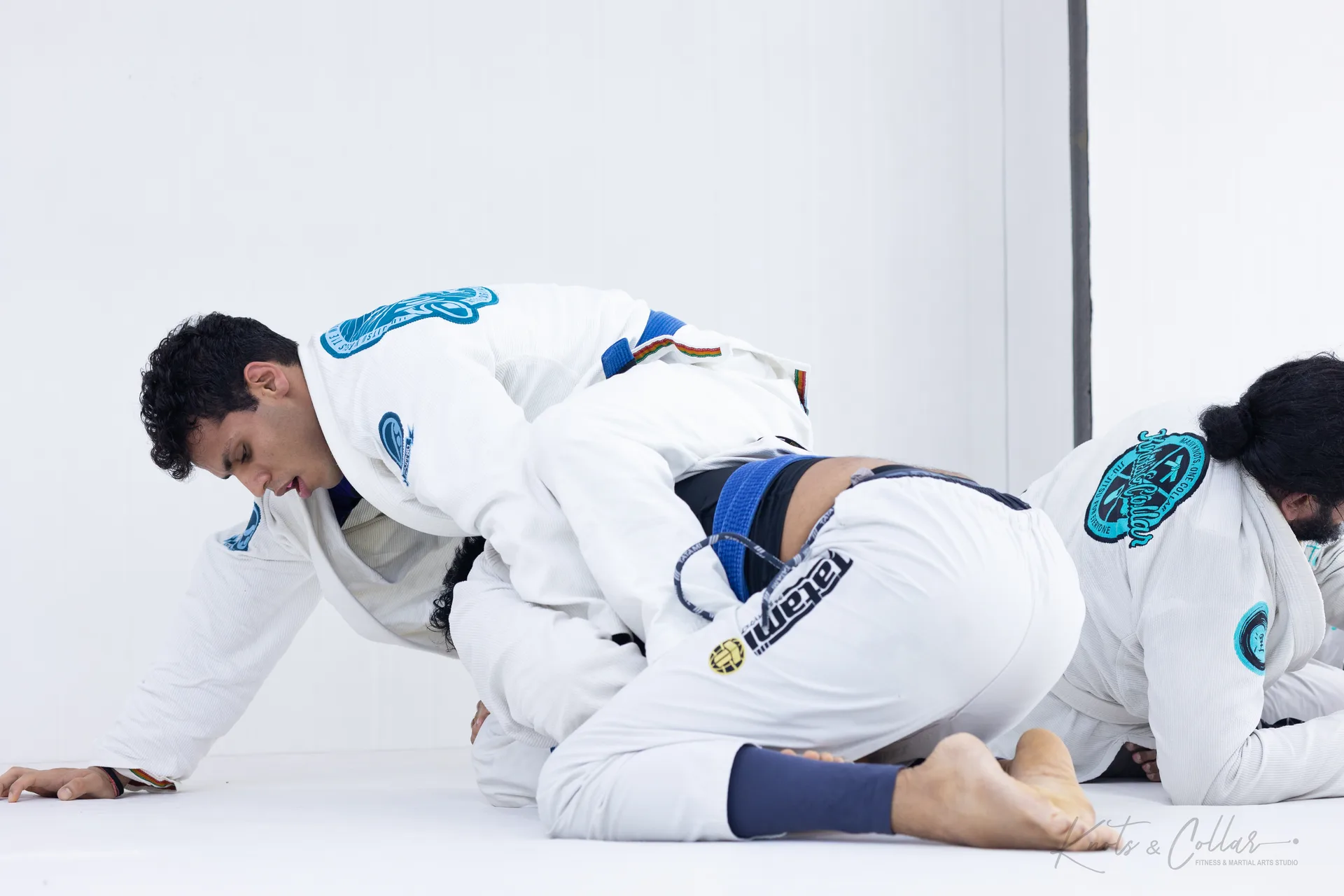
What a "game" really means in BJJ
Think of Brazilian Jiu-Jitsu as a large map with many regions: guard, passing, pins, escapes, back control, submissions, takedowns. Nobody lives everywhere on that map. Instead, over time, each of us settles into a few favourite neighbourhoods and learns them street by street. That collection of favourite places, and the well-worn paths between them, is your game.
A game is not a rigid script. It is more like a set of tendencies — the positions you steer towards, the sweep you reach for when a partner leans a certain way, the submission you already have half-set-up before your partner realises. Good games are deep rather than wide: a handful of techniques understood so thoroughly that you can find them under pressure, with a calm mind, against someone who is genuinely resisting.
Why beginners should learn broadly first
It is tempting, in your first months, to fall in love with one flashy technique and drill only that. We gently steer new students away from this. Before you can choose a favourite region of the map, you need to have visited most of it. If you specialise too early, you build a game with large blind spots, and those gaps get exposed the moment you meet someone who plays where you have never been.
So the first several months are for breadth. Learn to escape side control and mount. Learn to hold a pin. Learn the main guards, at least one honest pass, and a few reliable submissions. Get comfortable being in every position, including the uncomfortable ones. Our guide to your first six months as a white belt lays this groundwork out in more detail, and it is the season of training where patience pays the most. You are not building a game yet — you are drawing the map so that later you can choose wisely.
Choosing a favourite guard and a favourite pass
Somewhere after that broad start — often around blue belt — you will notice yourself drifting. You keep ending up in a particular guard and it keeps feeling right. A certain pass keeps working for you. Those pulls are worth listening to, because a game plan built around positions you genuinely enjoy is a game plan you will actually practise.
A simple, sturdy way to begin is to pick one favourite guard to attack from and one favourite pass to advance with. Bottom and top, one each. If you are not sure which guard suits you, our overview of the main BJJ guard types is a good place to compare them. Choose based on two honest clues: which positions you enjoy, and which ones keep succeeding in rolling. More often than not, those two clues point at the same door. Then learn that guard and that pass properly — not one entry and one finish, but the common reactions, the counters, the details that make them hold up against resistance.
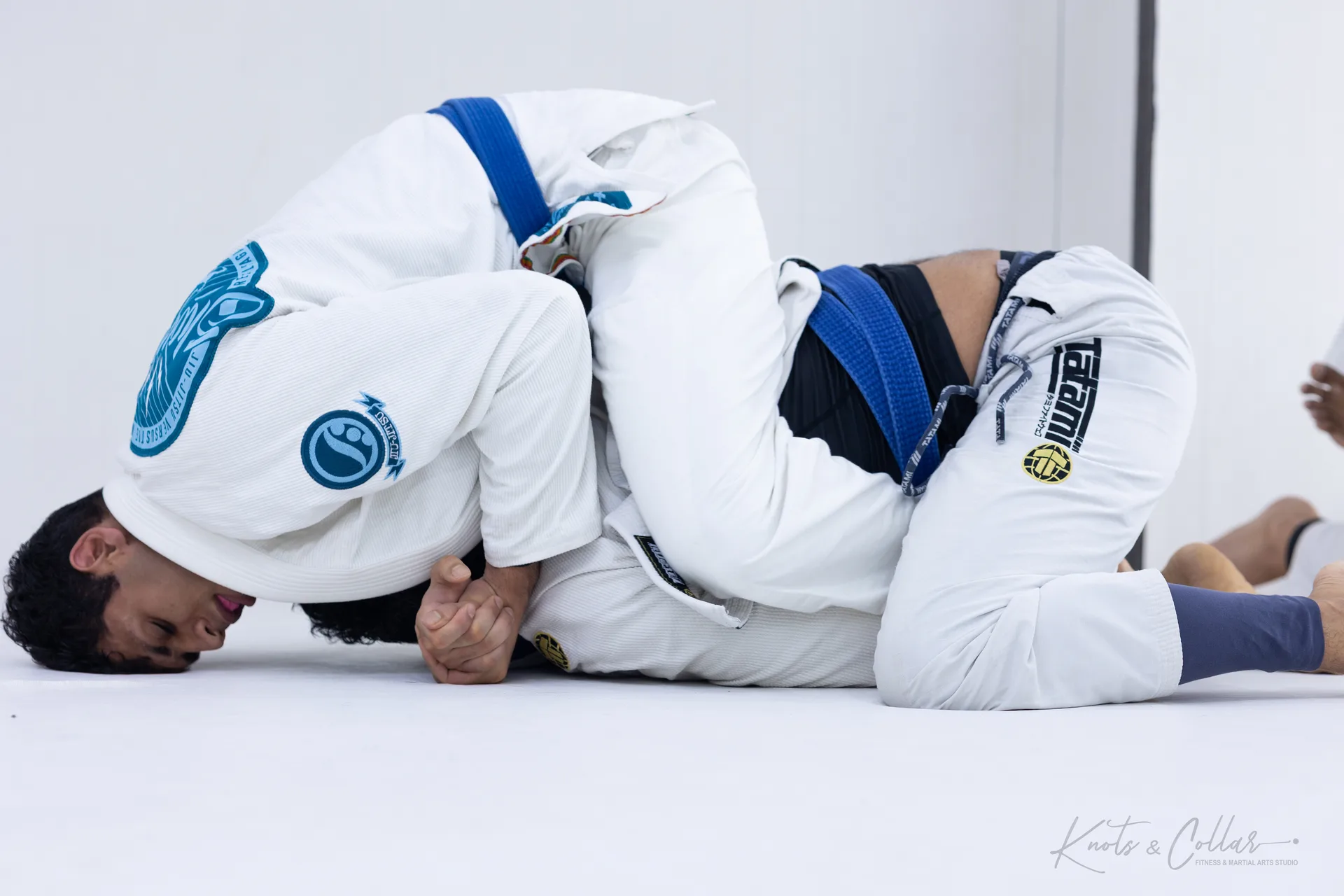
Connecting positions into sequences
A single technique is a word. A game is a sentence. The real work of building your BJJ game is joining your favourite positions together so that when one thing fails, the next is already waiting. Your partner defends the sweep — good, that same defence opens the submission. They escape the submission — fine, that escape hands you the back. Each move flows into a second and a third, so you are never stranded with a plan that ended one step ago.
Build these chains slowly, two links at a time. Take your favourite guard and add the single most common thing partners do to defend your best sweep, then learn the answer to it. Drill that pair until it is smooth, then add one more. Over months these small connections knit into sequences, and a sequence is what lets a calm, technical player stay a step ahead of a stronger, more anxious one. This is also, quietly, one of the fastest ways to improve, a theme we come back to in our notes on how to improve at BJJ faster.
Keeping a training notebook
Memory is a poor place to store a game plan. Classes come thick and fast, and a detail that felt obvious on Tuesday is gone by Friday. The remedy is humble and effective: keep a training notebook. After class, write a few honest lines — what you drilled, what worked in rolling, what caught you out, one thing to try next time. That is all it needs to be.

The magic is not in any single entry but in the pages seen together. After a couple of months you can read back and spot your own patterns — the same guard keeps appearing, the same problem keeps costing you the position. Those patterns are precisely the raw material of a game plan, made visible. A notebook turns scattered lessons into a map of your own tendencies, and once you can see your tendencies, you can build on them on purpose rather than by accident.
Letting your game grow with your body and temperament
A game is a living thing, and it should be allowed to change. The guard that suited you in your twenties may give way to something that asks less of your knees a decade later. A busy season at work might reward a simpler, lower-effort game plan for a while. A naturally patient person often builds a calm, positional game; a livelier one may lean into pace and scrambles. None of these is more correct than another — the best game is the one that fits the person playing it, today.
So hold your game loosely. Keep the core that works, but stay curious, revisit the broad map now and then, and let your plan mature as you do. Building your BJJ game is not a task you finish; it is a conversation you keep having with the sport, and it is one of the quiet pleasures of a long life on the mats. If you would like to start that journey with us — whether you are brand new or returning after a break — you are welcome to schedule a visit and watch or try a class. For a wider view of the sport in this country, our complete guide to BJJ in India is a good companion read.
FAQs
What does it mean to have a game in BJJ?
Your game is the small set of positions, sweeps, passes and submissions you know well and return to again and again. It is the way you tend to play when you roll. Everyone's game looks a little different, because it grows out of your body, your temperament and the techniques you enjoy.
When should a beginner start building a BJJ game plan?
Spend your first several months learning broadly across guard, passing, escapes and submissions, so you understand the whole map. A game plan usually starts to form naturally after that, often around blue belt, once you notice which positions you keep drifting towards. At Knots & Collar we teach that broad base first, in the De La Riva lineage, seven days a week.
How do I choose which guard or pass to build around?
Pay attention to the positions you enjoy and the ones that keep working for you in rolling. Those two clues usually point to the same place. Pick one favourite guard and one favourite pass to start, learn them deeply, and let the rest of your game connect outward from there.
Does keeping a training notebook really help?
Yes. Writing a few honest lines after class — what you drilled, what worked, what caught you out — turns scattered lessons into a plan you can see. Over weeks the pages show you your own patterns, which is exactly the information you need to build your BJJ game with intent.