
Jiu-Jitsu for Women in India: Confidence, Capability and Community
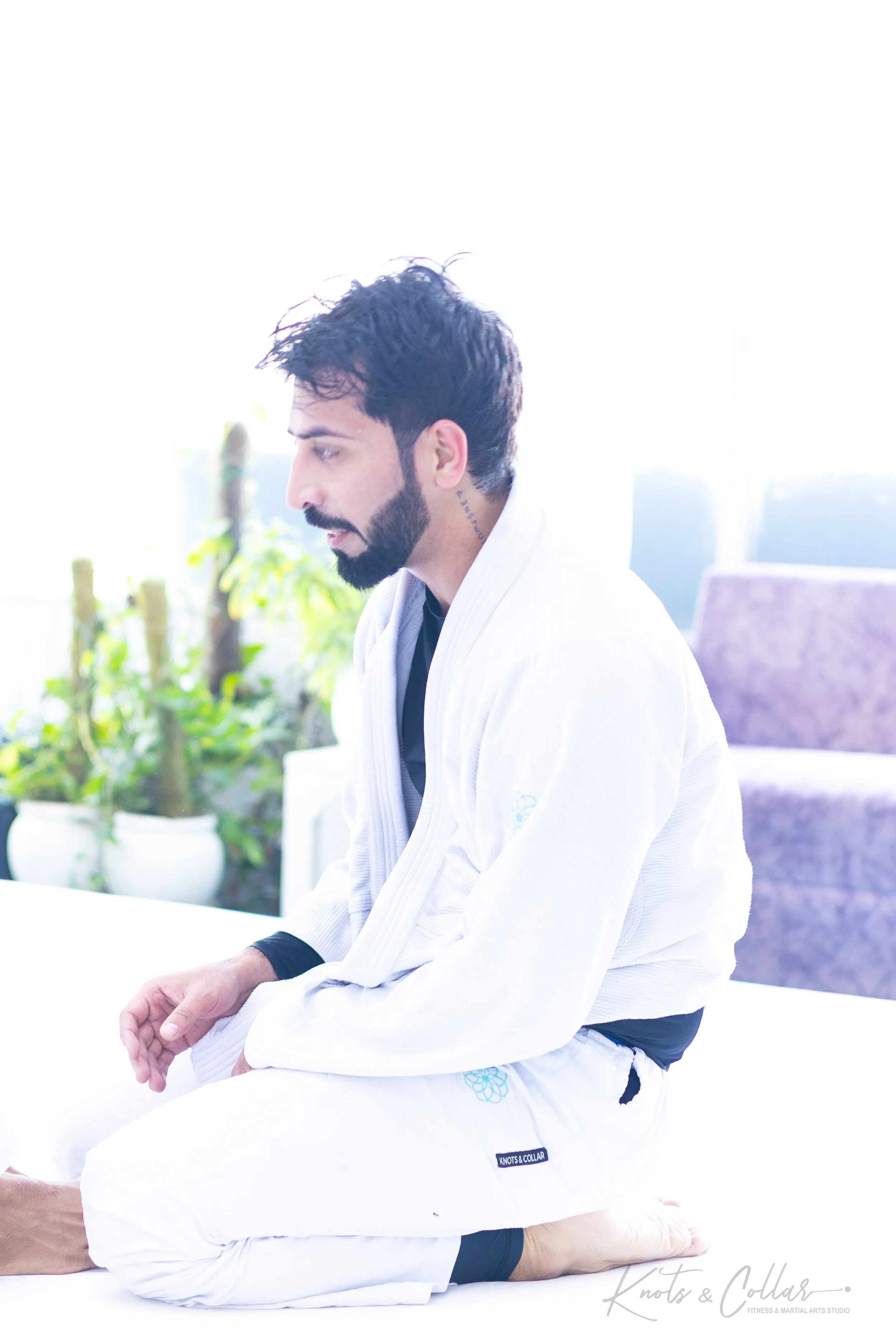
Across India, more women are stepping onto jiu-jitsu mats than ever before — in Delhi, Mumbai, Bangalore, Pune and dozens of smaller cities. They come for different reasons, but they tend to stay for the same ones: the quiet, earned confidence that grows with every class, a kind of fitness that actually holds your interest, and a community that feels like a second home. This is a guide to jiu-jitsu for women in India — what it offers, why the art suits every body, and how to find a mat where you will be welcomed exactly as you are.
Why more women in India are taking up jiu-jitsu
Something is shifting in India's martial arts rooms. Where a women's section on the mat was once a rarity, it is now a normal, growing part of the scene. Word travels — a friend mentions how much stronger she feels, a colleague talks about sleeping better, a cousin shows up to a family gathering carrying herself differently — and curiosity does the rest.
Part of the appeal is that jiu-jitsu asks nothing of you at the door except that you arrive. You do not need to already be fit, sporty or coordinated. You do not need to have been the athletic one at school. The art meets you where you are and builds from there. For many women that is a relief, because so much of fitness culture starts by telling you what you lack. Jiu-jitsu starts by handing you something to learn.
The other part is what it gives back. The women who train describe a change that reaches well beyond the mat — into how they hold a difficult conversation, walk into an unfamiliar room, or simply move through an ordinary day. That is the heart of jiu-jitsu for women in India, and it is worth looking at piece by piece.
Real, earned confidence — not the kind you fake
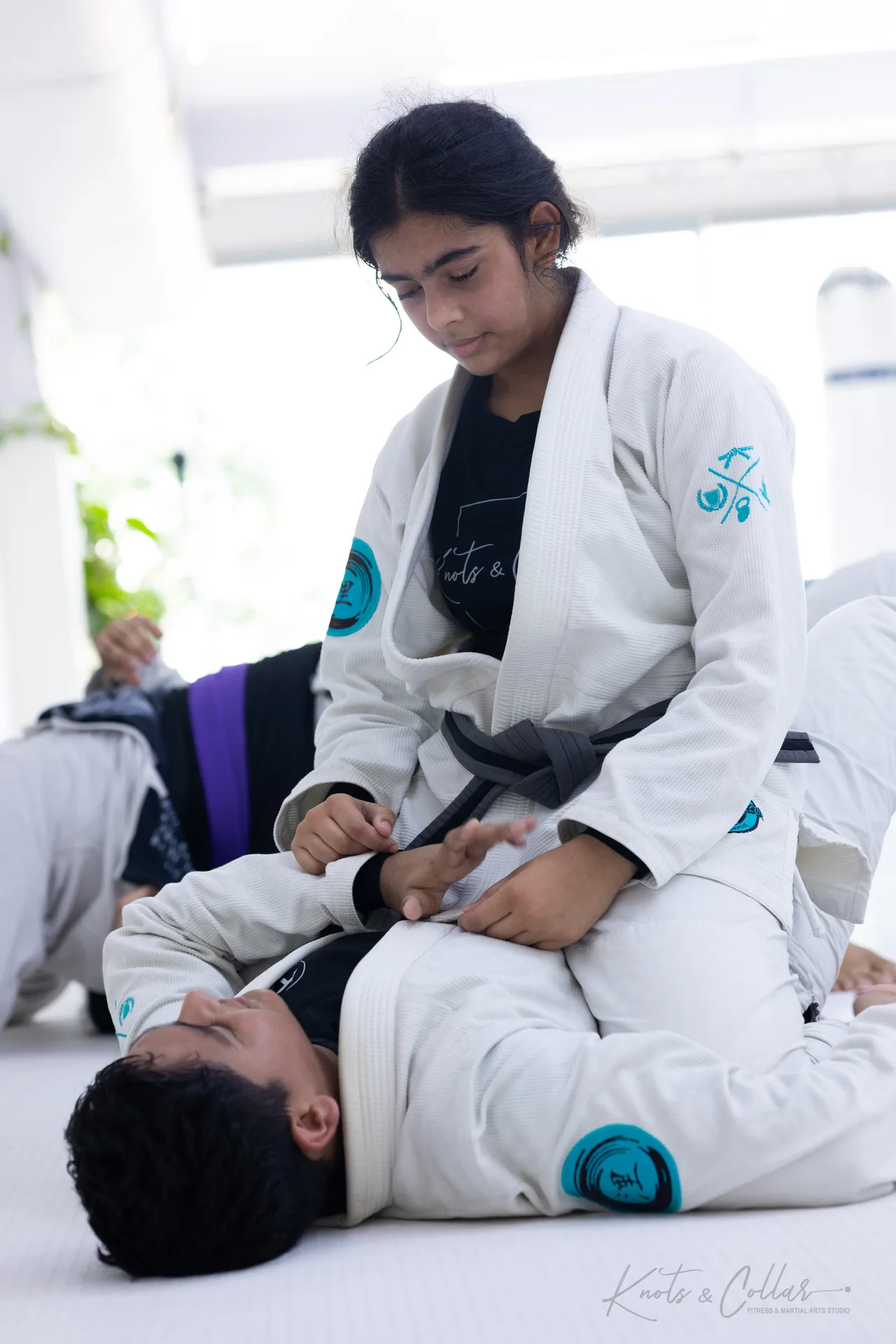
There is a difference between being told you are capable and knowing it because you have proved it to yourself. Jiu-jitsu deals only in the second kind. Every class puts a small, honest problem in front of you — a grip to break, a position to escape, a partner to move — and every time you solve one, you have evidence that you can. That evidence stacks up quietly, week after week, until confidence stops being something you perform and becomes something you simply carry.
This is why so many women say the deepest change happens off the mat. When you have spent months learning to stay calm while a training partner works to control you, an awkward meeting or a crowded platform loses some of its charge. You have practised keeping your head. We have written more about how jiu-jitsu builds confidence that follows you off the mat, and for women in particular that carry-over tends to be the reason they stay for years rather than weeks.
Fitness that keeps you interested
Plenty of people begin an exercise routine in January and drift away by March, not because they are lazy but because repetition is dull. Jiu-jitsu solves the boredom problem by accident. You are not counting reps or watching a clock; you are absorbed in a puzzle with a living, thinking partner, and the fitness arrives while your attention is elsewhere.
The training builds strength you can use — a strong grip, a stable core, good hips, real stamina — rather than strength that only exists in a mirror. It is a full-body workout that improves mobility, balance and breath control at the same time. And because progress is measured in skill rather than kilograms or dress sizes, the goalposts never move to somewhere discouraging. You are chasing understanding, and there is always more of it to chase.
Calm under pressure, and how leverage suits every body
Jiu-jitsu is often called the gentle art, and the name is earned. There is no striking. The entire system is built to let a smaller, lighter person control and neutralise a larger one through leverage, timing and technique rather than force. That single design principle is why the art fits every body — tall or short, light or strong, brand new or long retired from any other sport.
For women this matters enormously. You are never asked to out-muscle anyone. You are taught to use angles, grips and the mechanics of the human body so that size stops being the deciding factor. Learning this is also how you learn to stay calm under pressure. When a partner has more weight or reach than you, panic is useless and technique is everything, so you practise breathing slowly, thinking clearly and problem-solving while uncomfortable. That composure is a skill, and it transfers to every high-pressure moment in life. If you want the deeper philosophy behind it, what "the gentle art" really means is a good companion read.
What a welcoming, respectful mat looks like — and how to find one
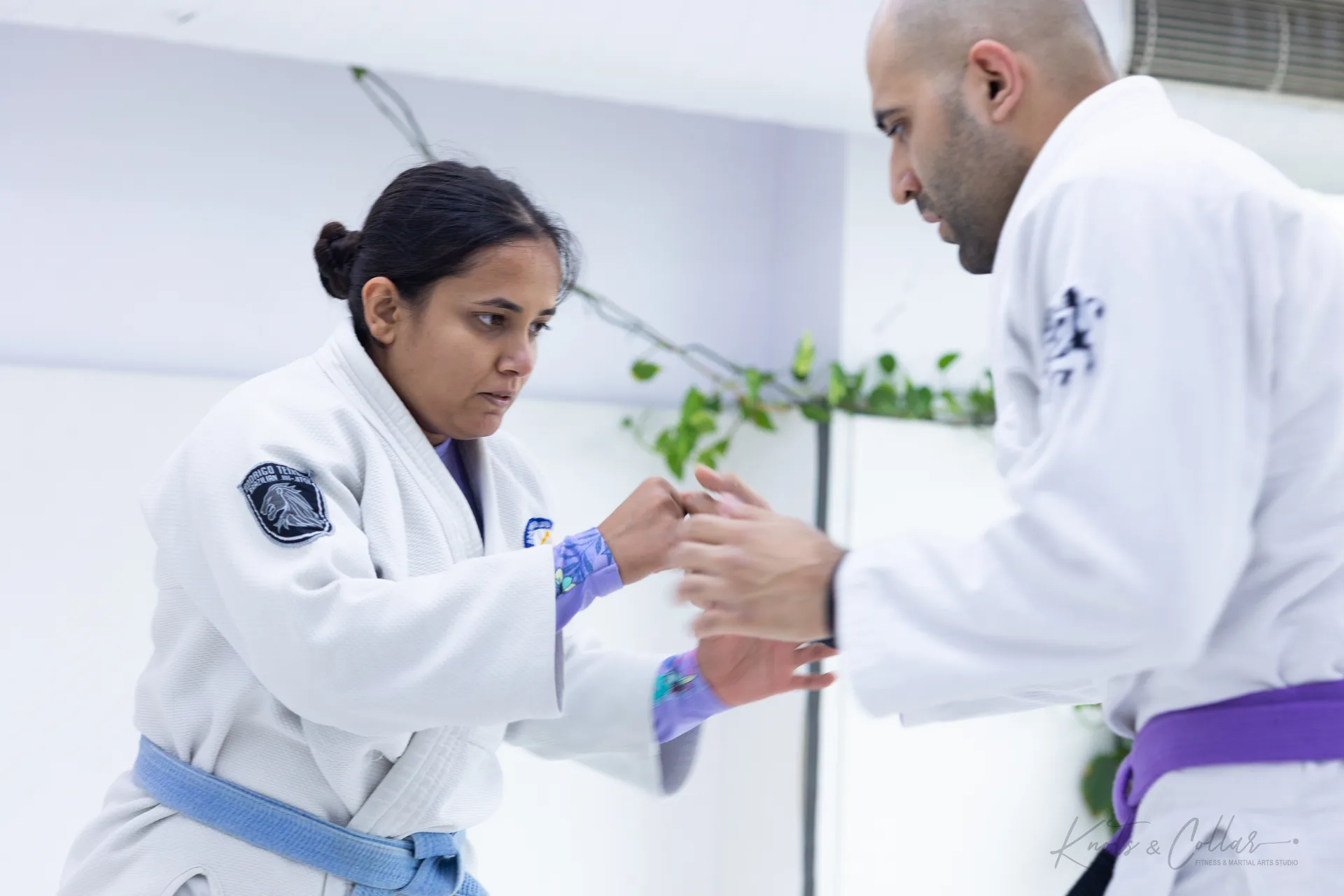
The single most important choice you will make is not which style to learn but which room to learn it in. A good mat has a particular feel, and it is easy to recognise once you know what to look for. Control comes first: partners apply techniques with enough pressure to make you tap, never to hurt you, and they let go the instant you signal. Tapping — a simple tap on your partner or the mat — ends any position immediately and is honoured without exception or ego.
A welcoming mat also takes visible care of newer and smaller members. Experienced students match their intensity to yours, give you room to try things and fail safely, and treat teaching a beginner as part of their own training rather than a chore. Instructors are transparent about their lineage — who promoted them, and under which recognised black belt — and answer such questions gladly. At our studio that lineage is De La Riva, and we hold ourselves to being verified, always.
When you visit a prospective academy, watch a class before you commit. Notice how the coaches speak to students, whether beginners look at ease, and whether the women already training seem to belong there rather than tolerated at the edges. Trust your read of the room. If you would like a fuller checklist, our guide on jiu-jitsu for women in Delhi walks through what to look for and what a first month feels like.
What to expect and what to wear at your first class
For a first class, keep it simple. Comfortable, close-fitting workout clothes are ideal — leggings and a fitted top, or a rash guard if you have one. Avoid loose clothing with pockets, zips or drawstrings, since fingers and toes can catch in them. Trim your nails, tie back long hair, and leave jewellery at home. Bring water and an open mind; that is genuinely all you need to begin.
A typical session opens with a warm-up, moves into technique the coach demonstrates and you drill slowly with a partner, and finishes with light rolling if you are ready — always at a pace you agree on. You will feel clumsy, and that is not a sign you are behind; it is the universal first experience of every person who has ever started, black belts included. Once you decide to train regularly, you will want a gi for gi classes and a rash guard with shorts or leggings for no-gi, and we are always happy to advise on sizing and fit.
The growing place of women in India's jiu-jitsu community
India's jiu-jitsu scene is young, and being early has a real gift: it is still small enough to feel personal, and it is being shaped right now by the women choosing to be part of it. Every woman who walks in and stays makes the next woman's first step a little easier. Women's classes are filling out, more female practitioners are earning their belts through genuine, tested ability, and mixed rooms across the country are becoming places where women plainly belong rather than places they merely visit.
That belonging is the quiet engine of the whole thing. You cannot roll with people for months and stay strangers; you have trusted them with your safety and they with theirs, and friendship follows almost without effort. Many women arrive looking for fitness or confidence and are surprised to find the community was the part they needed most. At Knots & Collar in Defence Colony, New Delhi we train seven days a week with a mixed community of all levels, and looking after every partner — newer, smaller, or simply nervous on their first day — is built into how we train.
If any of this speaks to you, the next step is smaller than it looks: come and see a class, meet a few of the people, and feel the room for yourself. You are welcome to schedule a visit whenever you are ready — no rush and no pressure, just a mat and the people on it. And if you would like the wider picture first, our complete guide to jiu-jitsu in India maps out how the art is growing across the country.
FAQs
Is jiu-jitsu suitable for women who have never done a sport?
Yes. You do not need fitness, flexibility or any martial arts background to begin. Jiu-jitsu is built on leverage and timing rather than strength, so it is learnable by anyone willing to show up. Fitness arrives as a result of training, not as a requirement to start.
What should a woman wear to her first jiu-jitsu class?
For a first class, comfortable, close-fitting workout clothes are perfect — leggings and a fitted top or rash guard. Avoid anything loose that fingers or toes can catch in. Once you begin training regularly you will want a gi for gi classes and a rash guard and shorts or leggings for no-gi. We are glad to advise on sizing.
Do women train with men in jiu-jitsu?
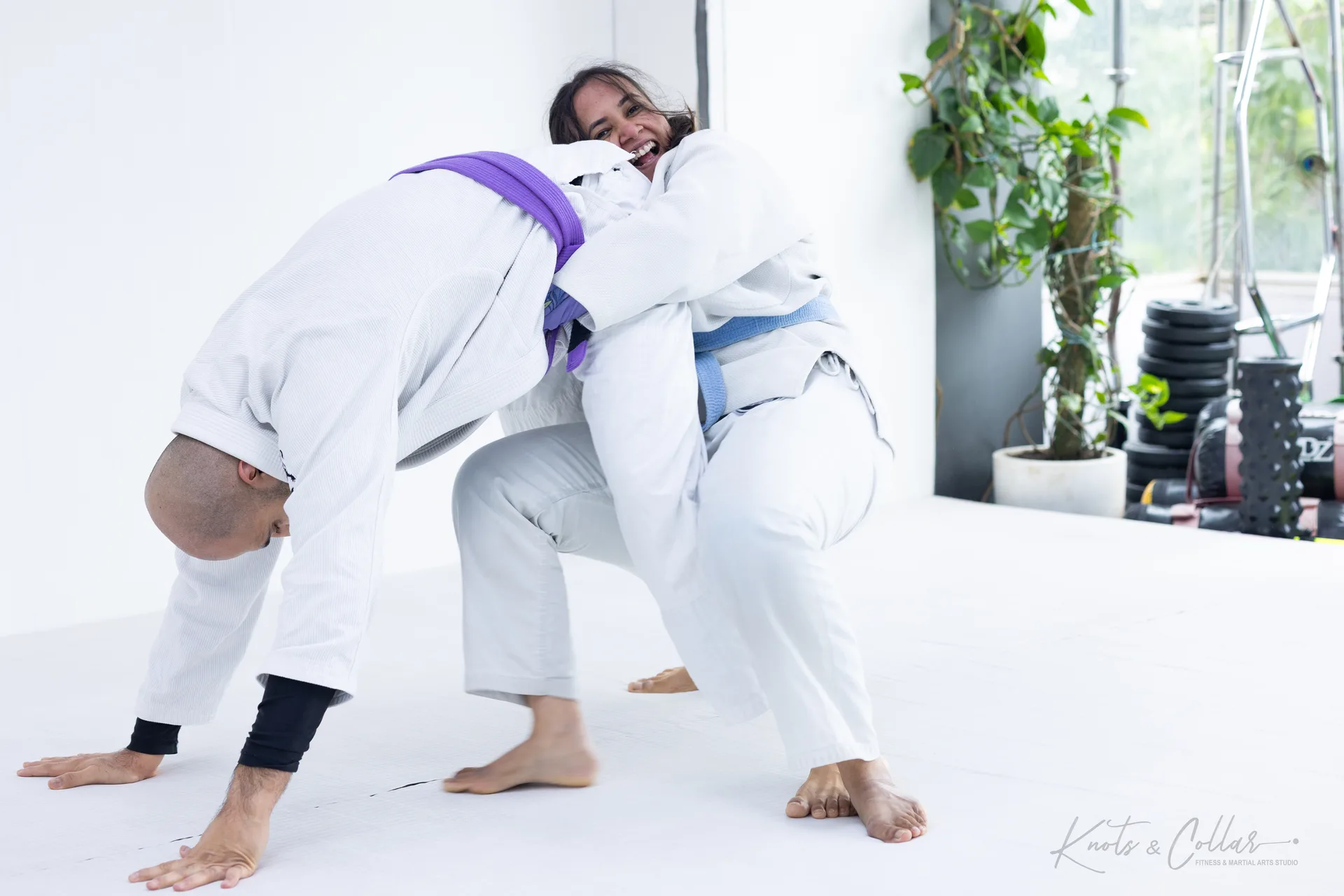
In a mixed class, yes, and it is a genuine advantage. Training with partners of different sizes teaches technique that works across body types. On a well-run mat every roll is controlled, tapping is respected instantly, and partners look after one another. You are never obliged to train at an intensity you are not ready for.
How often should a woman train to feel real progress?
Two or three sessions a week is enough to build steady, visible progress and to start feeling at home in the room. Consistency matters far more than intensity. The people who improve most are usually the ones who kept turning up, not the ones who trained hardest for a fortnight.