
Nutrition for Jiu-Jitsu: How to Fuel Your Training and Recovery

You can train Brazilian Jiu-Jitsu hard, several times a week, for years — but only if you feed the effort. Good nutrition for jiu-jitsu is not a secret diet or an expensive shelf of supplements. It is regular, balanced food, sensible hydration, and a few simple habits repeated over time. This is a plain guide for beginners and improving grapplers at Knots & Collar in Defence Colony, New Delhi, built around everyday Indian food. It is general information, not dietary or medical advice: for anything specific to your own body, please see a doctor or a qualified nutritionist.
Why fuelling well helps your training and recovery
Jiu-Jitsu asks a lot of you. A single round of rolling works your whole body, and a full class strings several of those rounds together with drilling in between. That energy has to come from somewhere. When you eat well across the day, you arrive on the mat with the fuel to move, think, and problem-solve, which is what Jiu-Jitsu really is — a puzzle you solve with your body. When you turn up under-fed or running on nothing, your technique is the first thing to fade.
Recovery matters just as much as the session itself. Every time you train, you create small amounts of wear that your body repairs and rebuilds a little stronger. Food is the raw material for that repair. Protein helps rebuild tissue, carbohydrate refills the energy your muscles burned, and the vitamins and minerals in vegetables and fruit keep the whole system running. Good nutrition for jiu-jitsu is really just giving your body what it needs to come back to the next class fresh rather than flat.
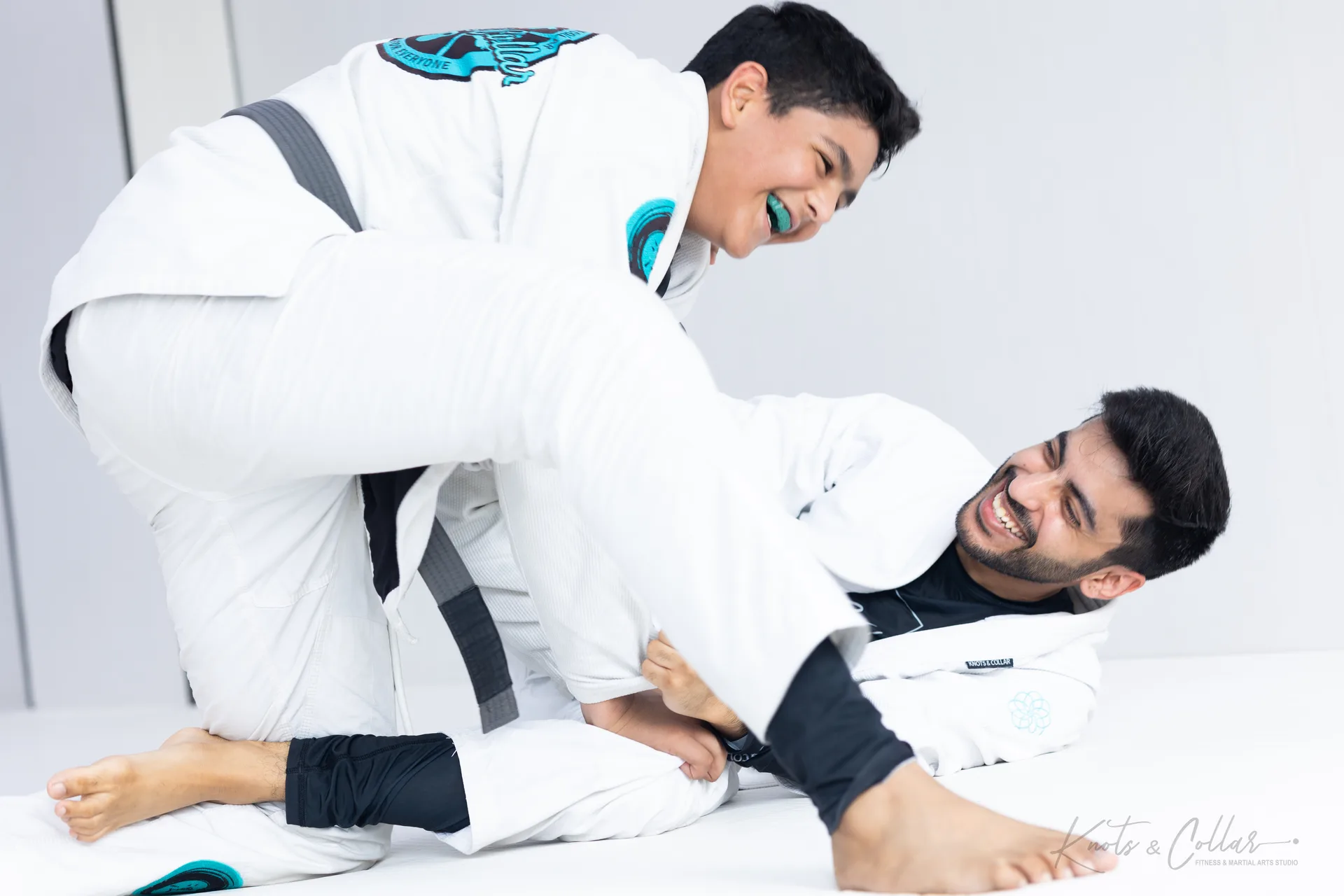
Eating around class: before and after
The two meals that matter most for training are the one before class and the one after. Before class, you want energy without heaviness. A balanced meal two to three hours ahead gives your food time to settle, so you feel light when you roll rather than weighed down. If you are coming straight from work or school with less time, a small, simple snack about an hour before does the job — a banana, a little curd, a handful of nuts, or a small bowl of poha. The goal is some carbohydrate for energy and a little protein, in a portion that lets you move comfortably.
After class is when your body is most ready to rebuild, so try not to leave it empty for hours. A normal, balanced meal within a couple of hours of training does the work: some protein to help repair, some carbohydrate to refill your energy, and plenty of water. This is where a sensible BJJ diet quietly pays off. You do not need anything fancy — a plate of dal, rice, a vegetable, and some curd after an evening class is a genuinely good recovery meal. Consistency around these two moments matters far more than any single perfect meal.
Hydration, especially in the Indian heat
Hydration deserves its own place, because it is easy to underrate and important in our climate. Delhi's heat and humidity mean you sweat heavily on the mat, and even a mild shortfall in fluid will make you feel slow, foggy, and tired long before your skill runs out. The fix is simple: drink through the whole day, not only when you arrive at class. If you are already well hydrated when you step on, you are starting from a much better place.
Around training itself, top up before you begin, sip during the breaks between rounds, and drink again afterwards to replace what you lost. Because you lose salts as well as water when you sweat, eating normally around your sessions matters too — your food helps restore that balance. On a hot day, or after a session that leaves you genuinely drained, a glass of nimbu pani or a light electrolyte drink helps you feel human again. Listen to your body, keep water close, and do not wait until you are parched to start drinking.
Simple, sustainable habits beat fads
The internet is full of dramatic diets, each promising to transform your training. Most of them share the same flaw: they are hard to keep up. A plan you abandon after three weeks does nothing for a sport you intend to practise for years. The habits that actually help are unglamorous and repeatable. Eat regular, balanced meals. Include some protein at each one. Fill half your plate with vegetables and fruit across the day. Keep water with you. Sleep enough. That is most of nutrition for jiu-jitsu, and none of it requires a special product.
It also helps to think in terms of everyday balance rather than strict rules. You do not need to be perfect, and you do not need to give up the foods you enjoy. Aim to get the basics right most of the time, and let the occasional meal out or family feast be exactly that. This steady, forgiving approach is far kinder to keep going — and Jiu-Jitsu, like good eating, rewards the people who stay consistent over the long haul rather than those who go hard for a fortnight and stop. If you want to see how that same idea shapes our physical training, our guide to strength and conditioning for BJJ follows exactly the same principle.
Weight, competition, and why crash cuts do not serve you
Competition brings weight classes, and with them the temptation to cut weight quickly. We want to be plain about this: crash weight cuts are not something we encourage. Starving yourself, cutting water hard, and dropping several kilos in a few days leaves you weak, light-headed, and unwell on the very day you want to perform. It works against your Jiu-Jitsu and it is not kind to your body.
There is a healthier way to think about it. Compete in a weight class that sits close to your natural walking weight, so you are not fighting your own body to make the number. If you genuinely want to move down a class, do it gently over weeks — eating well, training as normal, and letting small, steady changes add up rather than forcing a crisis at the end. You will arrive strong, clear-headed, and ready to grapple, which is the whole point. For anything to do with real weight change or your individual health, please talk to a doctor or a qualified nutritionist first. If you are getting ready for your first event, our notes on how to prepare for your first BJJ competition cover the wider picture alongside this.
Building a BJJ diet from everyday Indian food
Here is the reassuring part: you can build a complete, effective BJJ diet from the food most Indian kitchens already cook. You do not need imported powders or a foreign meal plan. Dal gives you protein and steady carbohydrate. Roti and rice refill your energy for training. Paneer, curd, eggs, chicken, and fish add more protein for recovery. A generous helping of vegetables — and fruit through the day — covers the vitamins and minerals that keep everything working. Put simply, a balanced Indian thali is already close to a training plate.
A day around an evening class might look like this: a proper breakfast such as poha, upma, or eggs with toast; a lunch of dal, rice or roti, a vegetable, and some curd; a light snack like a banana or a few nuts an hour or so before you train; and a balanced dinner afterwards with a good source of protein, some carbohydrate, and vegetables. Keep water flowing through all of it. None of this is exotic, and that is exactly why it works — it is food you can actually eat every day, for years. Jiu-Jitsu is one of the finest ways to get fit, and eating well is what lets you train often enough to feel it. If you are curious about that side of the art, our piece on BJJ for fitness and our broader complete guide to BJJ in India are good next reads.
None of this is dietary or medical advice. It is the everyday, practical wisdom of a mat, offered so you can fuel your training sensibly and keep coming back. For anything specific to your own body, health, or goals, please speak to a doctor or a qualified nutritionist.
If you would like to see how we train — calm, controlled, beginner-friendly, and built around looking after people for the long haul — you are welcome to come and watch a class or roll with us. Schedule a visit whenever you are ready. There is no rush.
FAQs
What should I eat before a jiu-jitsu class?
Eat a balanced meal two to three hours before class so it has time to settle, or a small, easy snack like a banana or a little curd about an hour before. Aim for some carbohydrate for energy and a little protein, and keep it light enough that you feel comfortable rolling. This is general information, not dietary advice, so adjust to what sits well with your own body.
What is a good BJJ diet for training in India?
A sustainable BJJ diet can be built entirely from everyday Indian food. Dal and rice or roti give you steady carbohydrate and protein, paneer, curd, eggs, and chicken add more protein, and plenty of vegetables and fruit cover the rest. You do not need imported supplements or fad plans. Regular, balanced meals around your training do most of the work.
How much water should I drink for jiu-jitsu in Delhi heat?
Drink through the day, not just at class, and top up before, during, and after training. In Delhi's heat and humidity you lose a lot of fluid on the mat, so sip water across your sessions and eat normally so you replace salts too. If a class leaves you very drained, a glass of nimbu pani or a light electrolyte drink afterwards helps you recover.
Should I cut weight fast before a BJJ competition?
We do not recommend crash weight cuts. Aggressive cutting leaves you weak, slow, and unwell on the day, which is the opposite of what you want. A far healthier approach is to train in a weight class close to your natural walking weight and adjust gently over weeks with steady eating. For any real weight or health question, please speak to a doctor or a qualified nutritionist.