
What Does 'Tapping' Mean in BJJ — and Why It's Safe

In Brazilian Jiu-Jitsu, tapping is how you safely say "that worked, let go." It is the built-in off switch that lets a grappling art be trained hard and often without anyone getting hurt — and it is not the same as losing.
If you are new to jiu-jitsu, the idea of "tapping out" can sound dramatic, even a little frightening. In reality it is the most sensible, everyday thing on the mat, and it is the single feature that makes BJJ safe to practise at full realism. This guide explains exactly what tapping means, how and when to do it, why it protects you, and why the students who tap the most are often the ones who improve the fastest — from the mats at Knots & Collar in Defence Colony, New Delhi.
What Does Tapping Mean in BJJ?
Tapping is how you concede a position safely. When your partner applies a submission — a joint lock such as an armlock, or a strangle — and you cannot escape it, you tap to tell them to release immediately. That single signal ends the exchange with nobody hurt, and the round simply resets so you can start again. Think of it less as surrender and more as a shared agreement: we practise dangerous-looking techniques for real, and the tap is the promise that keeps them from actually being dangerous.
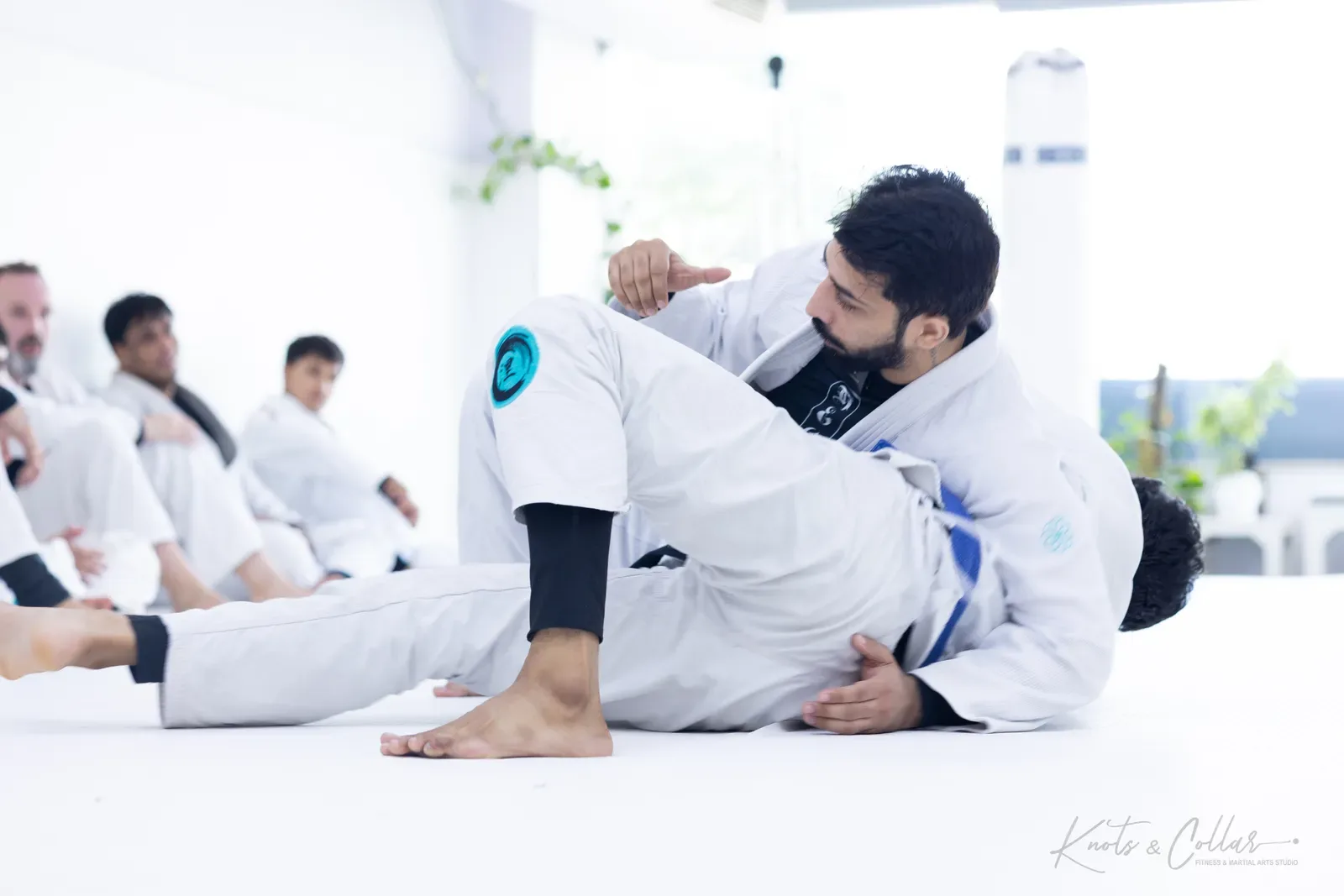
How to Tap
Tapping is deliberately simple, because it has to work in the heat of a scramble. Tap firmly and clearly, two or three times, on your partner's body or arm, or on the mat, so they can feel or hear it. If your hands are trapped, you can tap with your foot, or tap verbally — just say "tap" out loud, and your partner will let go. The one rule worth remembering: if you are in any doubt, tap early and tap loud. A clear tap is never wrong.
When to Tap
Tap before it hurts, not after. The moment you feel a joint lock reaching its limit, or a strangle beginning to take effect, that is your signal. There are no prizes for waiting an extra second, and nothing is proven by enduring pain. Tapping early is not weakness — it is the discipline that protects your joints and keeps you on the mat tomorrow. Learning to recognise that moment is a skill in itself, and it comes quickly with practice.
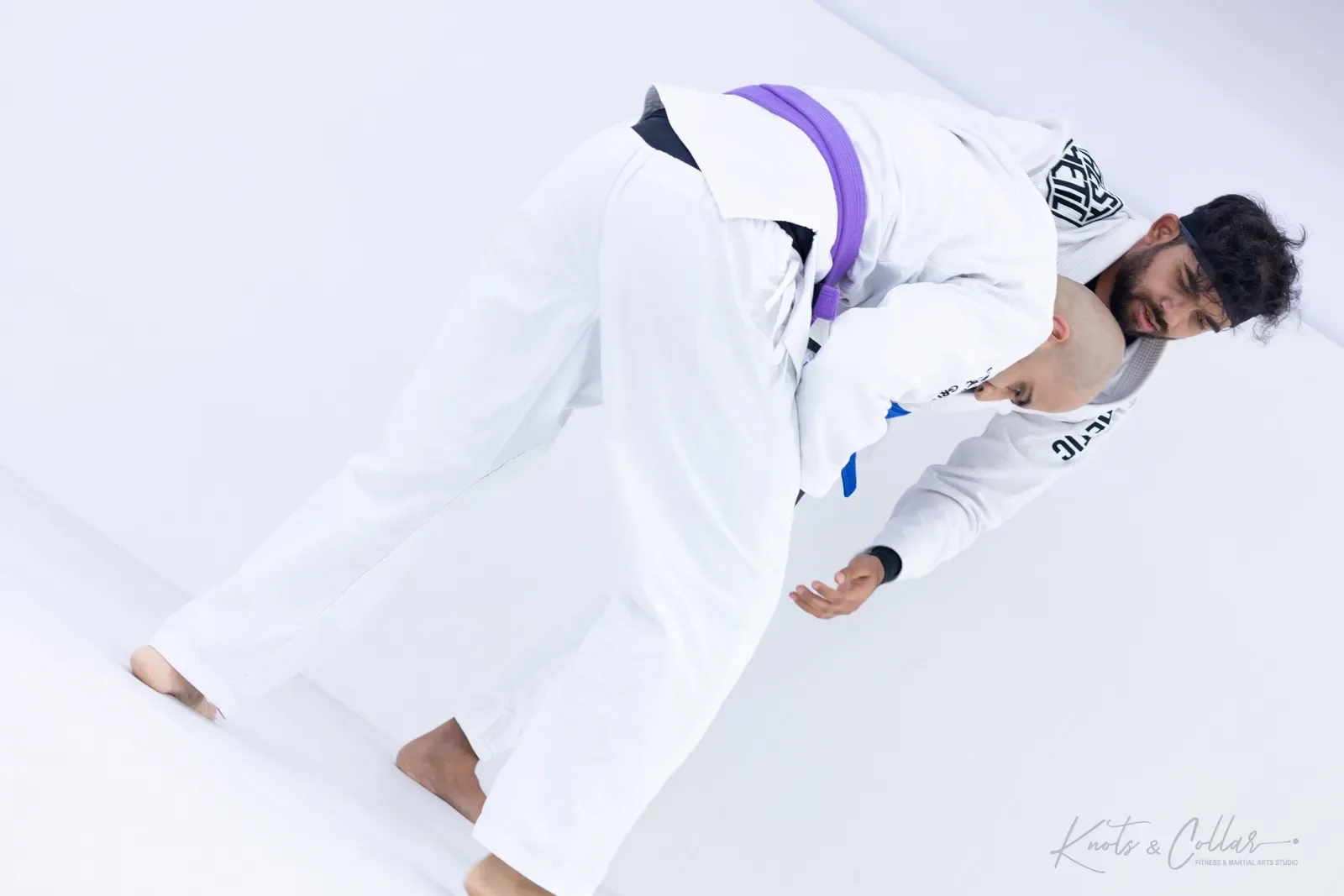
Tapping Is Not Losing
This is the part beginners most need to hear: tapping is a normal, constant part of training, not a defeat. Everyone taps — white belts and black belts alike — because tapping is simply the honest acknowledgement that a technique worked. The student who refuses to tap is not tougher; they are just more likely to get injured and spend weeks off the mat. In our room, a tap is met with a nod and a reset, never a gloat. It is how learning happens. If you would like to understand the finishes that lead to a tap, our guide to common BJJ submissions for beginners is a good next read.
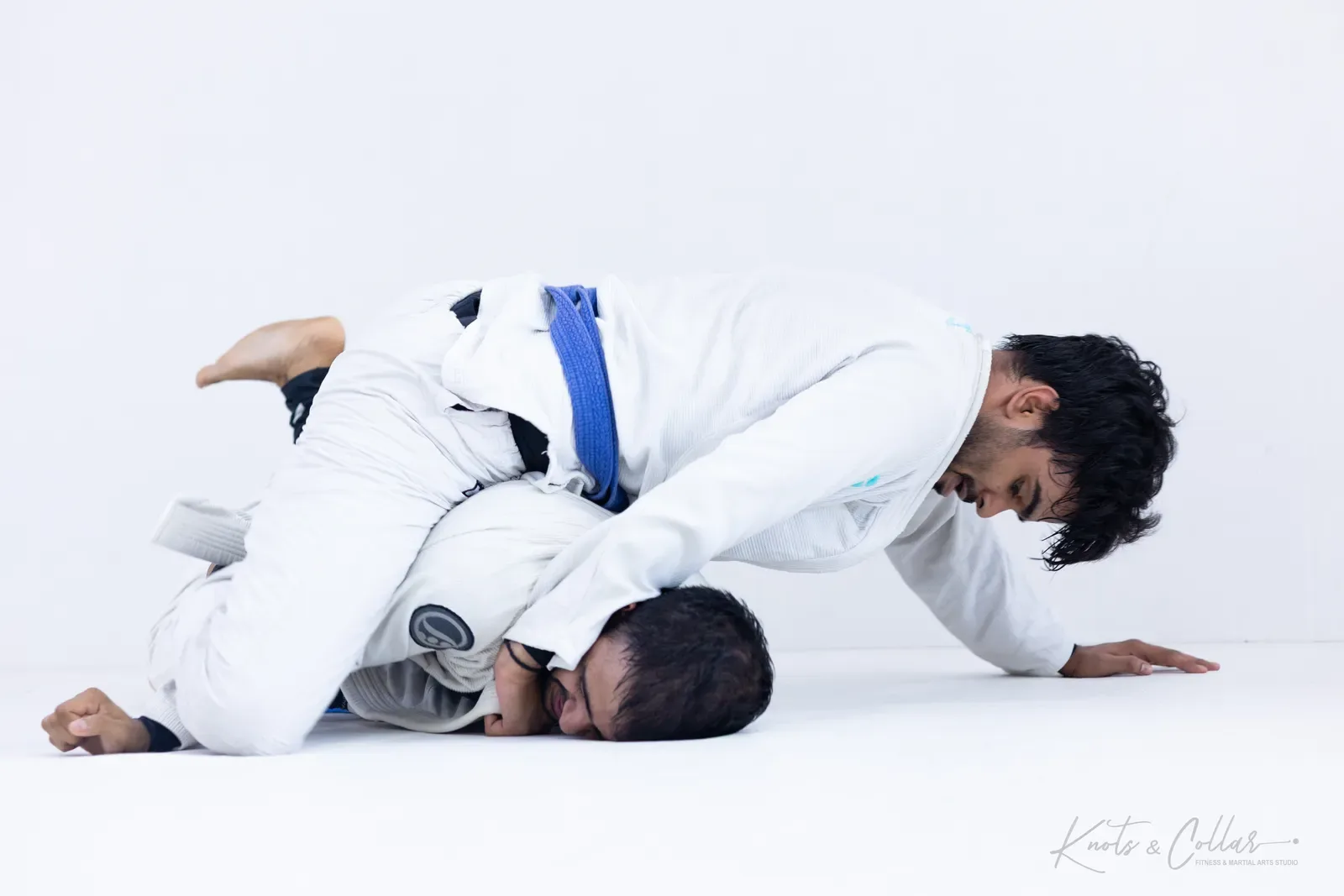
Why the Tap Keeps BJJ Safe
Because every submission has a built-in off switch, techniques can be practised against real resistance without real harm — the person applying the lock releases the instant you tap. This is exactly what allows Brazilian Jiu-Jitsu to be trained hard, often, and by ordinary people rather than only elite athletes. Combined with sensible habits — training with control, choosing partners well, and tapping early — it is why the art has such a strong safety record. Our note on training BJJ without getting injured covers the rest.
FAQs
What does tapping mean in BJJ?
Tapping is how you safely concede a position in Brazilian Jiu-Jitsu. When a submission — a joint lock or a strangle — is applied and you cannot escape, you tap to signal your partner to release immediately. It ends that exchange without anyone getting hurt, and the round simply resets.
How do you tap out in jiu-jitsu?
You tap firmly and clearly, two or three times, on your partner's body or the mat so they can feel or hear it. You can also tap with your foot, or tap verbally by saying 'tap' out loud. The moment your partner feels or hears it, they let go. If in doubt, tap early and tap loud.
Is tapping in BJJ the same as losing?
No. Tapping is a normal, everyday part of training, not a defeat. Everyone taps, including black belts — it is simply the honest acknowledgement that a technique worked. Refusing to tap does not make you tougher; it just risks an injury that keeps you off the mat.
When should you tap in BJJ?
Tap before it hurts, not after. As soon as you feel a joint lock reaching its limit or a strangle taking effect, tap. There are no prizes for waiting. Tapping early protects your joints and keeps you training tomorrow, which is the whole point of practising an art built for the long term.
Why is tapping considered safe?
Because it gives every submission a built-in off switch. The person applying it releases the instant you tap, so techniques can be practised at full realism without real harm. This is exactly what lets BJJ be trained hard and often — the tap is the agreement that keeps everyone safe.
Do you have to tap if you get caught?
If a submission is properly applied and you cannot escape, yes — tapping is the safe and sensible choice. Trying to power out of a locked-in submission is how joints get injured. Tap, reset, and ask your partner or coach how they got there so you can learn to defend it next time.
Tapping is not something to fear — it is the quiet agreement that lets everyone train hard and go home well. Come and feel how safe good training can be. Your first class is free, seven days a week — schedule a visit and we will see you on the mats. Kindness Over Toughness.