
What to Wear to Your First BJJ Class
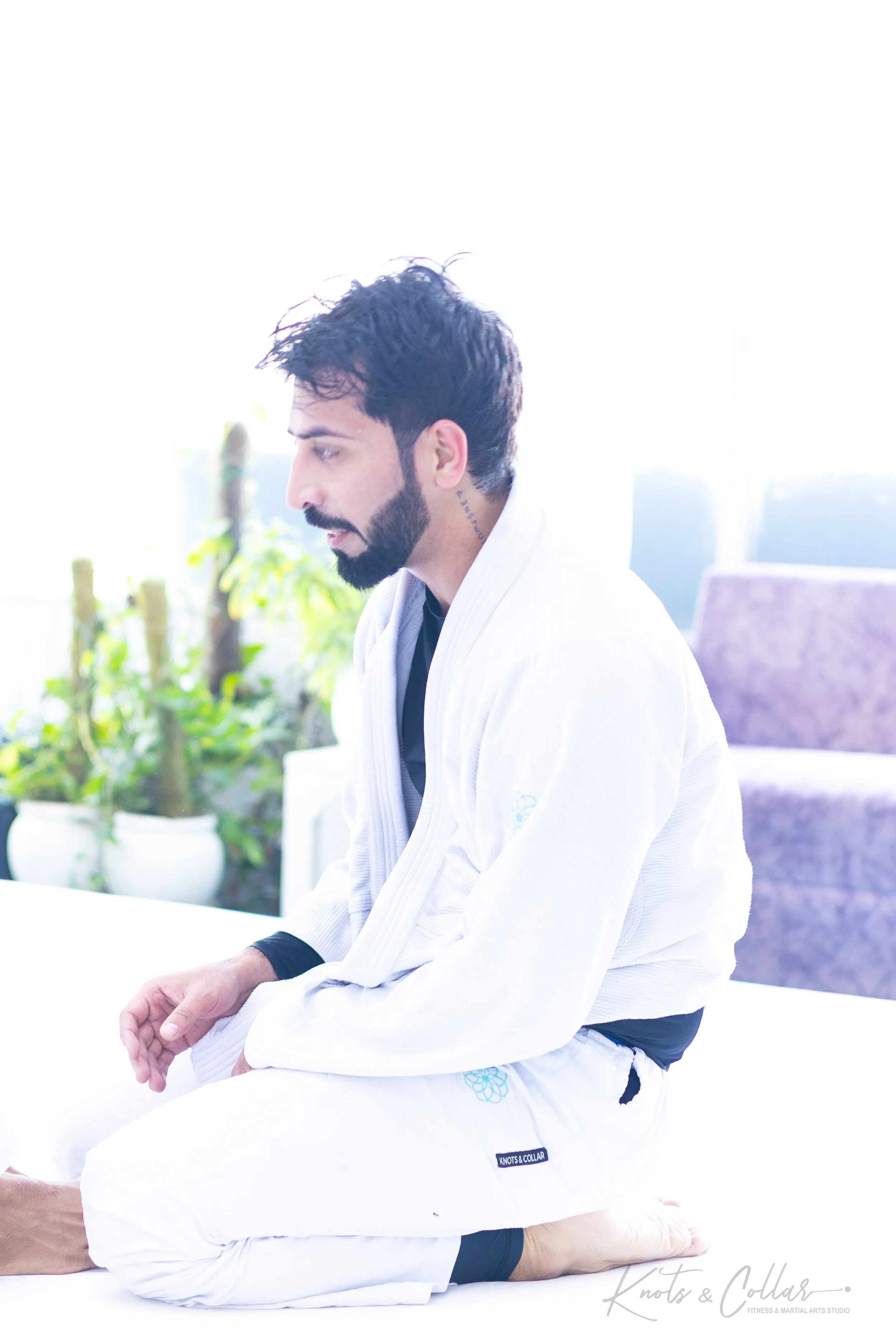
Wondering what to wear to your first BJJ class? The short answer: a clean t-shirt and shorts are enough to begin, and the studio will lend you a gi. This guide covers gi and no-gi kit, what to wear underneath, what to avoid, and what you actually need to buy.
Walking into a Brazilian Jiu-Jitsu class for the first time is exciting, and the last thing that should hold you back is worrying about kit. The good news is that you need almost nothing to start, and much of what you might picture buying can wait. This guide explains exactly what to wear to your first BJJ class, how the gi and no-gi outfits differ, what goes underneath, what to leave at home, and how to avoid the most common beginner overspend — all in plain terms, from our mats at Knots & Collar in Defence Colony, New Delhi.
What to Wear to Your First BJJ Class
For your very first session, keep it simple: a clean t-shirt and a pair of shorts or leggings. That is genuinely all you need to try a class. You do not have to own a gi, and you should not rush out to buy one before you have felt the training. Most studios, including ours, will lend you a gi so you can experience the real thing. Come clean, with short nails, and leave the jewellery at home — and you are ready.
For Gi Classes: The Gi
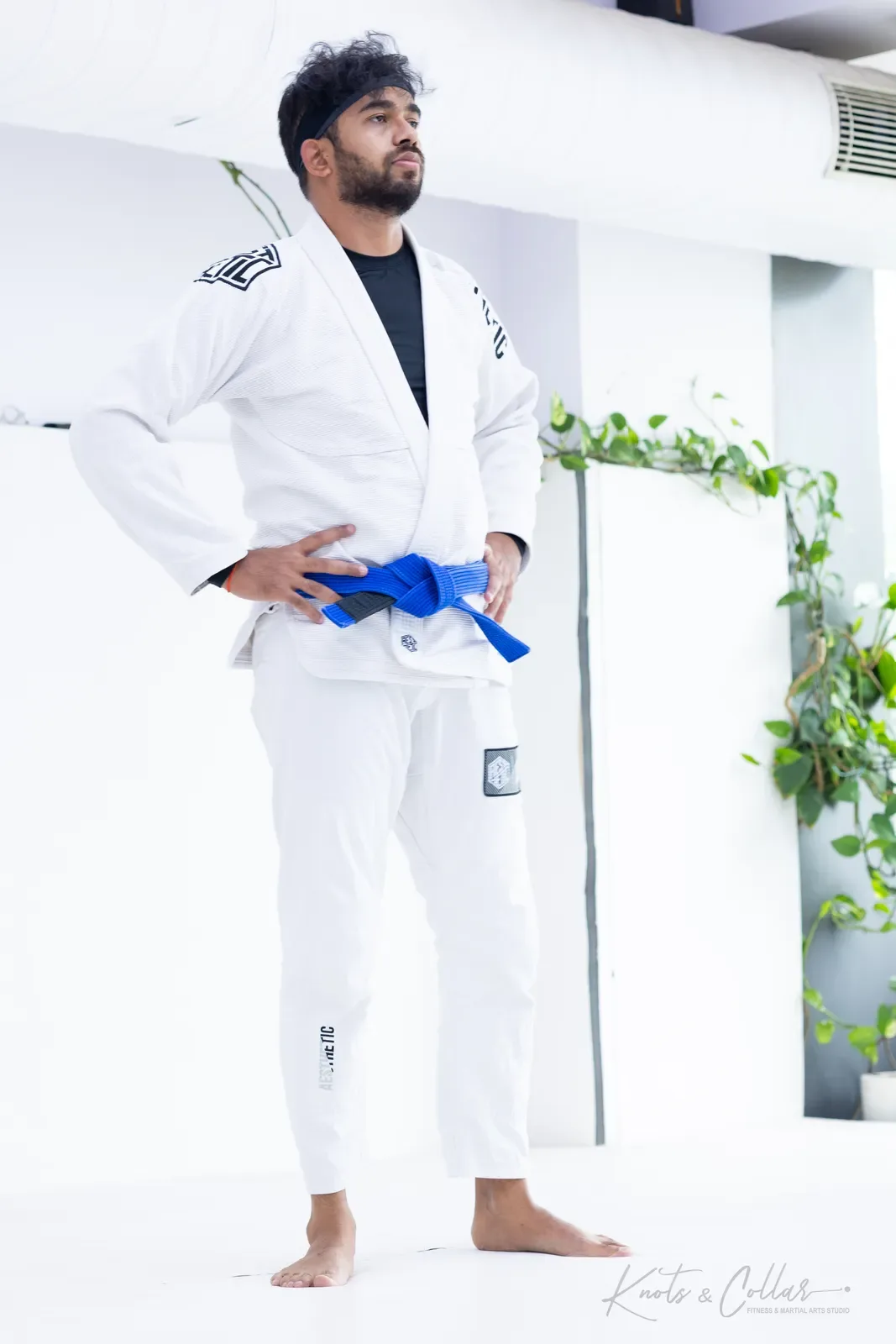
Once you decide to continue, gi classes are trained in the traditional uniform: a heavy cotton jacket, matching trousers, and a belt tied at the waist. A beginner wears a white belt. At Knots & Collar the gi dress code is simple and strict, for uniformity and hygiene: a clean white gi only — no other colours — worn with a full-sleeved rashguard underneath and full-length black spats. The jacket is built to be gripped, which is why it is far sturdier than ordinary clothing. If you are choosing between training styles, our gi versus no-gi guide explains the difference, and our note on the Made in Bharat gi covers why we make ours here in India.
What to Wear Underneath
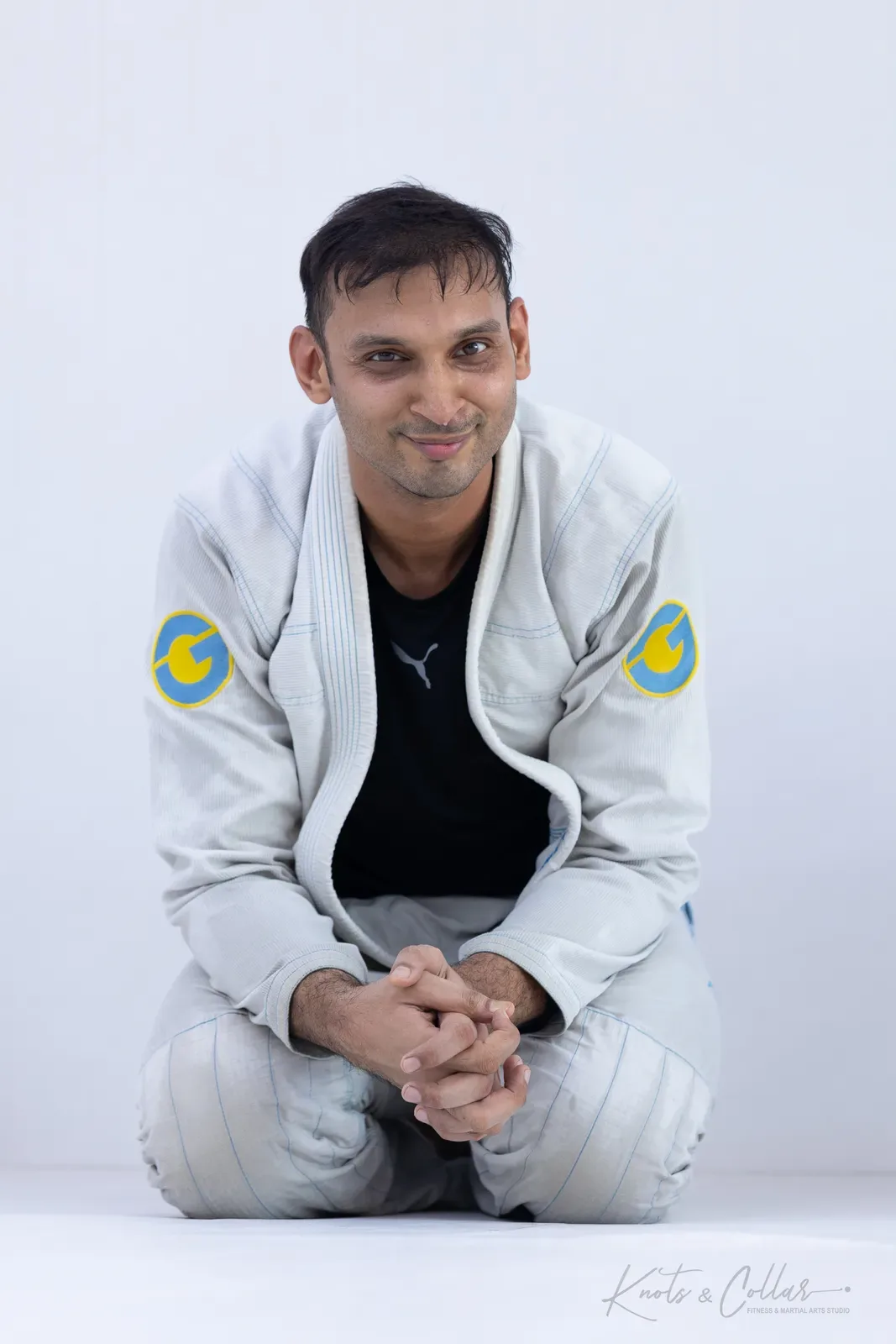
Under the gi, a full-sleeved rashguard on top and full-length black spats underneath — worn beneath the jacket and the trousers. At Knots & Collar this is the rule, a rashguard and spats rather than a loose t-shirt, both for hygiene and so nothing bunches or catches during grappling. Women wear a sports bra together with the rashguard. Fitted technical layers stay in place, wick away sweat, and wash easily, whereas loose cotton rides up and holds sweat. Close-fitting is the rule for anything worn on the mat, in the gi or out of it.
For No-Gi Classes: Rashguard & Spats
No-gi is trained without the jacket. At Knots & Collar the no-gi kit is solid black — our ten-per-cent rule allows up to 10% of other colours, with the rest black — and it means a full-sleeved rashguard (full sleeves keep skin off skin), ankle-length black spats, and grappling shorts with no pockets or chains. Spats worn beneath the shorts are compulsory, both for hygiene and so that loose fabric cannot catch fingers or toes. Everything is close-fitting on purpose; there is nothing loose for a grip, or an accident, to find.
What NOT to Wear
A few things simply do not belong on the mat. Avoid any clothing with pockets, zips, buttons, or hooks — a toe or finger caught in a pocket is a genuine injury risk to you and your partner. Take off rings, chains, and watches before you step on. Do not wear baggy, loose clothing, and never train in dirty kit; grappling is close-contact, and clean gear is a courtesy to everyone you roll with. Most important of all, trim your finger and toe nails before class. Long nails are the single most common cause of small cuts and scratches in training.
A Few Practical Tips
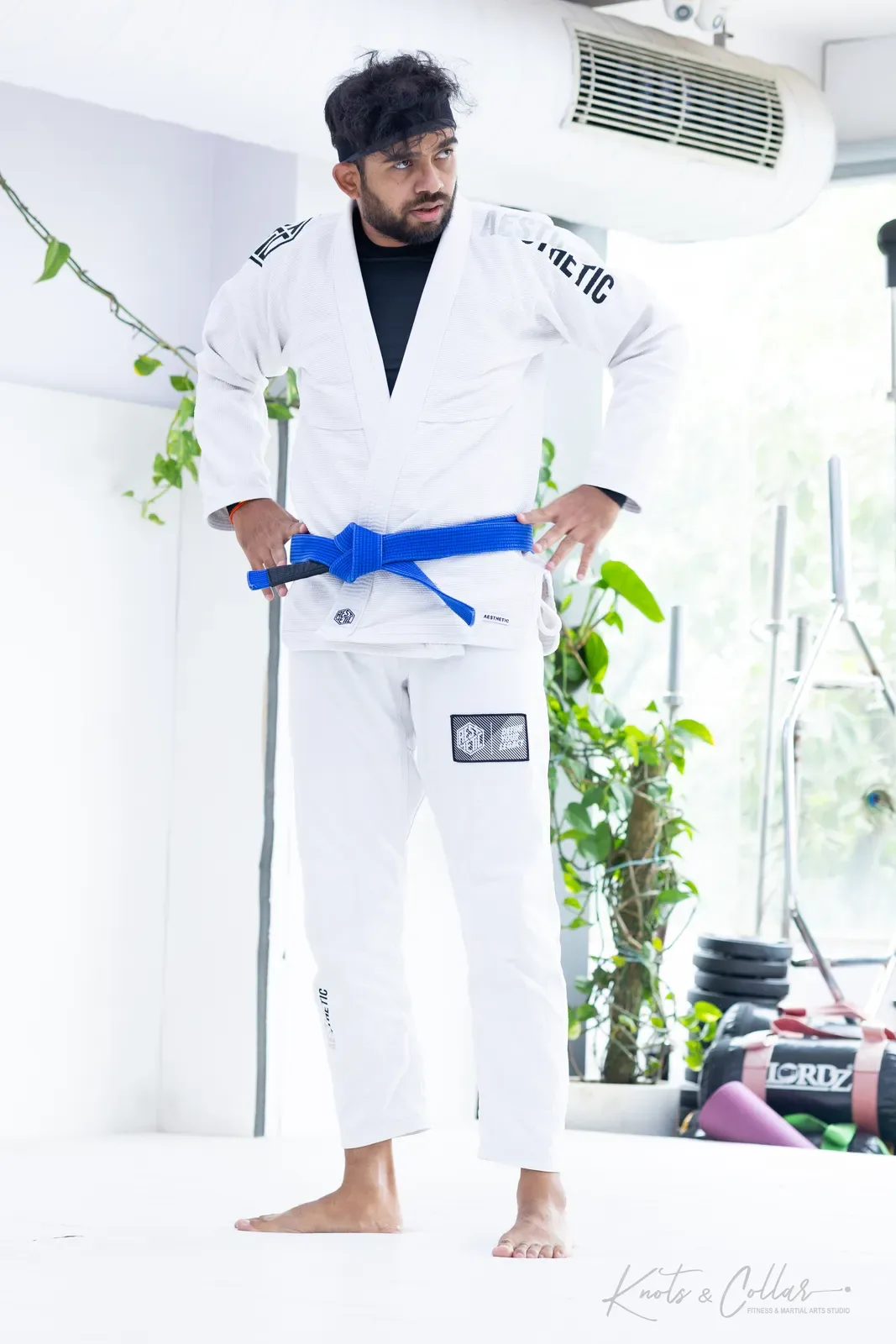
Arrive a few minutes early, bring a bottle of water, and carry a pair of flip-flops or slides for walking off the mat — bare feet stay on the mat, footwear for everywhere else, which keeps the training area clean. If you sweat heavily, a spare rashguard is handy. None of this is essential for a first class, but it makes life easier once you are training regularly. For the wider picture of a first session, our guide to what to expect in your first class walks through the rest.
Do I Need to Buy a Gi Before My First Class?
No — and this is the most common way beginners overspend. Kit is something you buy once you have decided to keep training, not before you have set foot on the mat. Borrow a gi, wear a t-shirt and shorts, and see how it feels first. Because your first class at Knots & Collar is free, you can experience a proper session before spending a rupee. If you want the full beginner's checklist in order, our how to start BJJ in Delhi checklist covers it.
FAQs
What should I wear to my first BJJ class?
For your very first class, a clean t-shirt and shorts or leggings are all you need. You do not have to buy a gi to try BJJ — most studios, including Knots & Collar, will lend you one so you can experience a real class before spending anything. Come clean, with short nails, and leave jewellery at home.
Do I need to buy a gi before my first BJJ class?
No. A gi is something you buy once you decide to continue, not before you have tried a class. For a trial you can borrow a gi from the studio, or simply wear a t-shirt and shorts. Buying kit before your first session is the most common way beginners overspend.
What do you wear under a BJJ gi?
At Knots & Collar, a full-sleeved rashguard on top and full-length black spats underneath, worn beneath the jacket and trousers — not a loose t-shirt, for hygiene and so nothing bunches or catches. Women wear a sports bra with the rashguard. Fitted technical layers stay put, wick sweat, and wash easily.
Can I wear a coloured gi at Knots & Collar?
No. The Knots & Collar gi dress code is a clean white gi only — no other colours — worn with a full-sleeved rashguard and full-length black spats. A single white uniform keeps sessions tidy, uniform, and hygienic. Belt colour, of course, reflects your rank, not the gi.
What do I wear for a no-gi class?
At Knots & Collar, no-gi kit is solid black — our ten-per-cent rule allows up to 10% of other colours, the rest black. That means a full-sleeved rashguard (full sleeves keep skin off skin), ankle-length black spats, and grappling shorts with no pockets or chains. Spats under the shorts are compulsory, for hygiene and so loose fabric cannot catch fingers or toes.
What should you NOT wear to BJJ?
Avoid anything with pockets, zips, buttons, or hooks — they catch fingers and toes and can injure a partner. Leave rings, chains, and watches off the mat. Do not wear loose baggy clothing, and never train in dirty kit. Trim your finger and toe nails before class; long nails are the most common cause of small cuts and scratches.
Is it okay to be a complete beginner in a borrowed gi?
Completely. Everyone starts as a white belt, and no one on the mat is judging your kit. Borrow a gi, wear whatever clean, comfortable clothing you have for a first class, and focus on the experience. Your first class at Knots & Collar is free, so you can feel it before buying anything.
That is everything you need to know about what to wear — and the reassuring truth is that you can start with almost nothing. Come as you are, borrow a gi, and feel a class. Your first one is free, seven days a week — schedule a visit and we will see you on the mats. Kindness Over Toughness.