
BJJ Takedowns for Beginners: Where the Match Really Starts
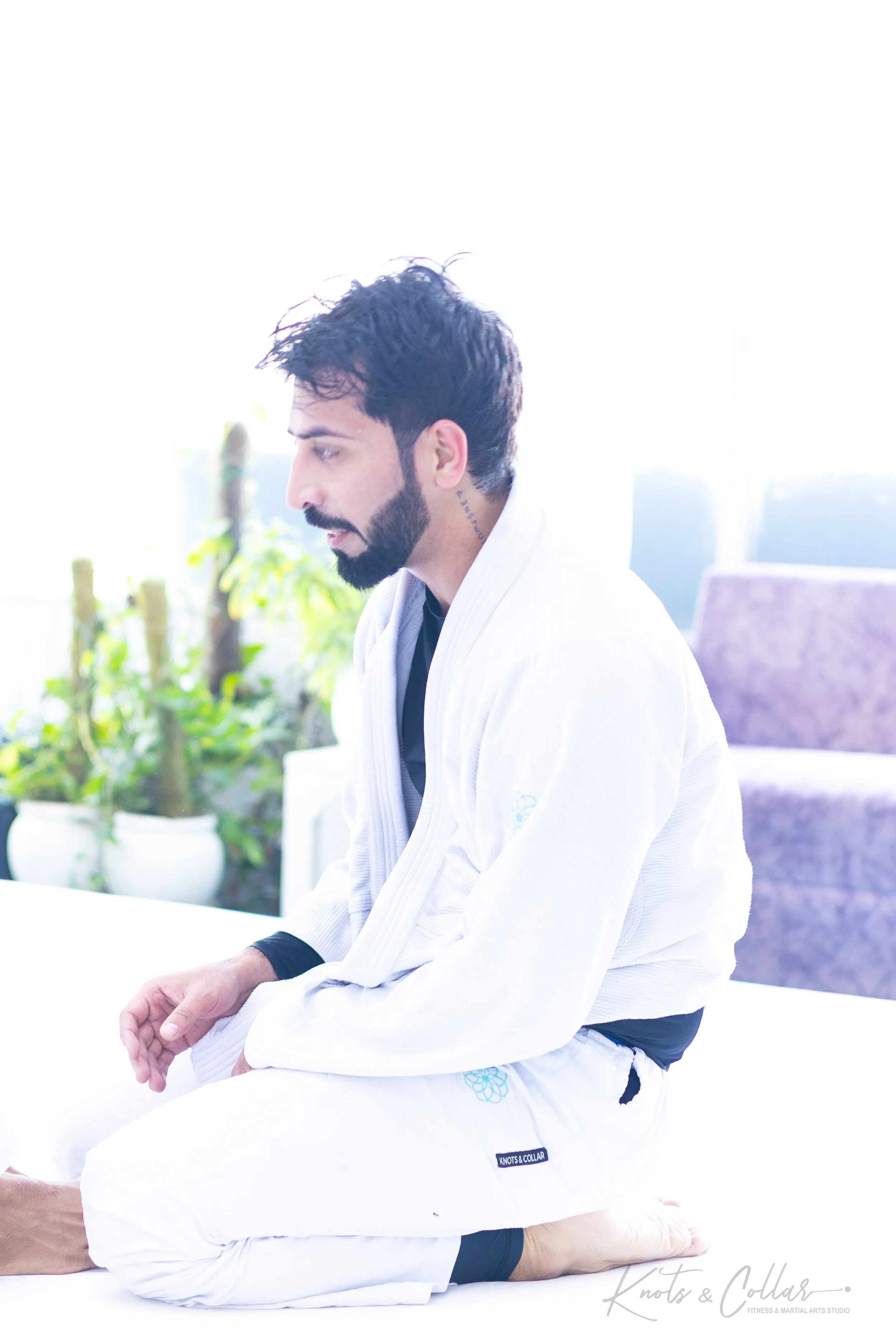
In Brazilian Jiu-Jitsu we spend a great deal of time on the ground, so it is easy to forget that every roll, every match and every self-defence situation begins on the feet. Takedowns are how the fight gets from standing to the mat, and learning a few of them early gives a beginner confidence and choice. Here is a plain, honest guide to BJJ takedowns for beginners, written from the mats at Knots & Collar in Defence Colony, New Delhi.
Why takedowns matter even in a ground-focused art
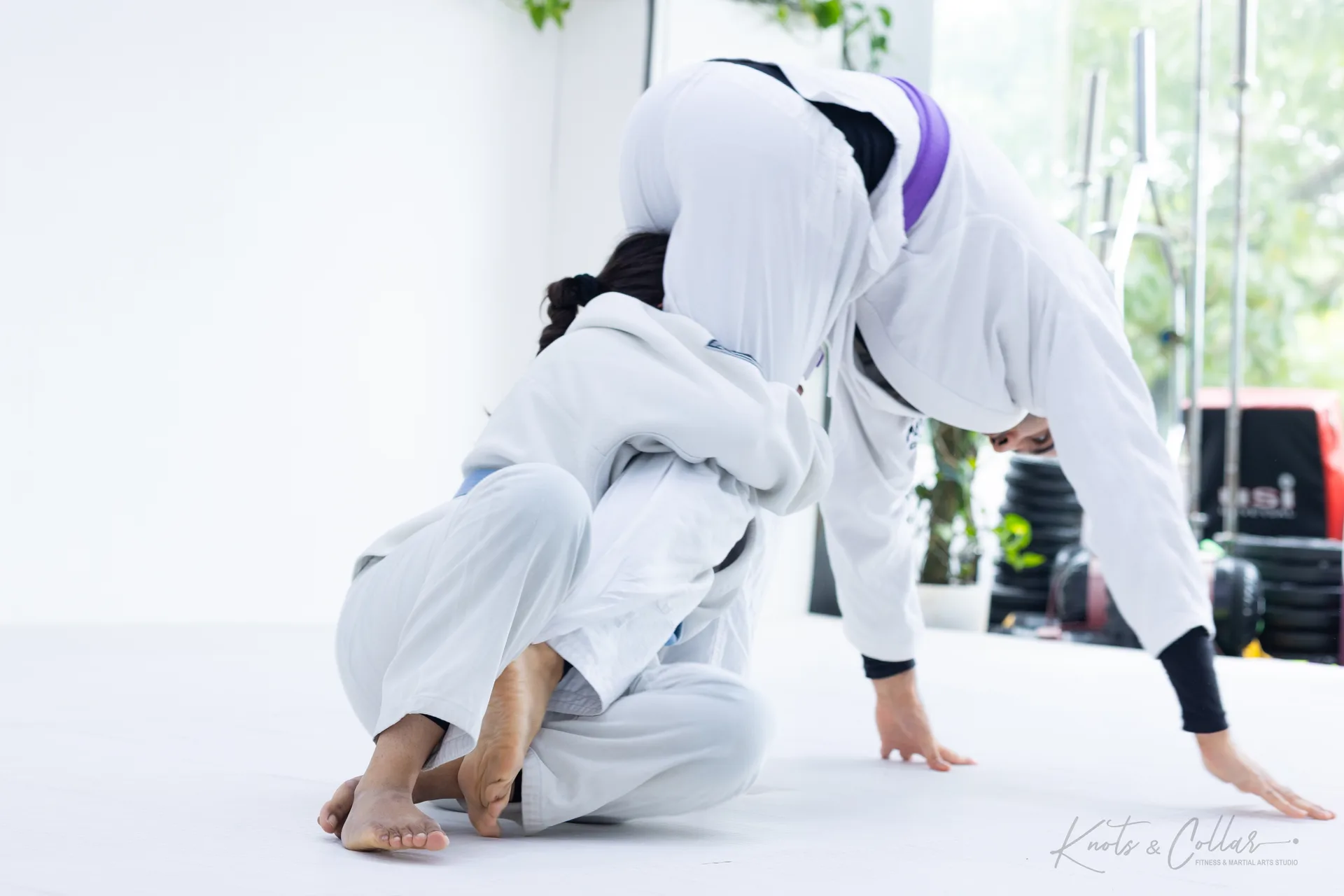
Brazilian Jiu-Jitsu is famous for what happens on the ground: the guard, the sweeps, the submissions. That reputation is well earned, and most beginners fall in love with the puzzle of ground fighting. But the ground is a destination, and takedowns are how you arrive. Someone has to bring the match down. If it is not you, then it is the other person, on their terms.
Knowing a handful of BJJ takedowns changes the way you stand. Instead of waiting to be moved, you have a say in how the exchange begins. In a self-defence context that matters even more, because the standing phase is often where a situation is decided. And in friendly rolling with training partners, a steady stand-up game simply makes you a more complete grappler. You do not need many techniques. You need a few that you trust.
The double-leg: closing distance and lifting
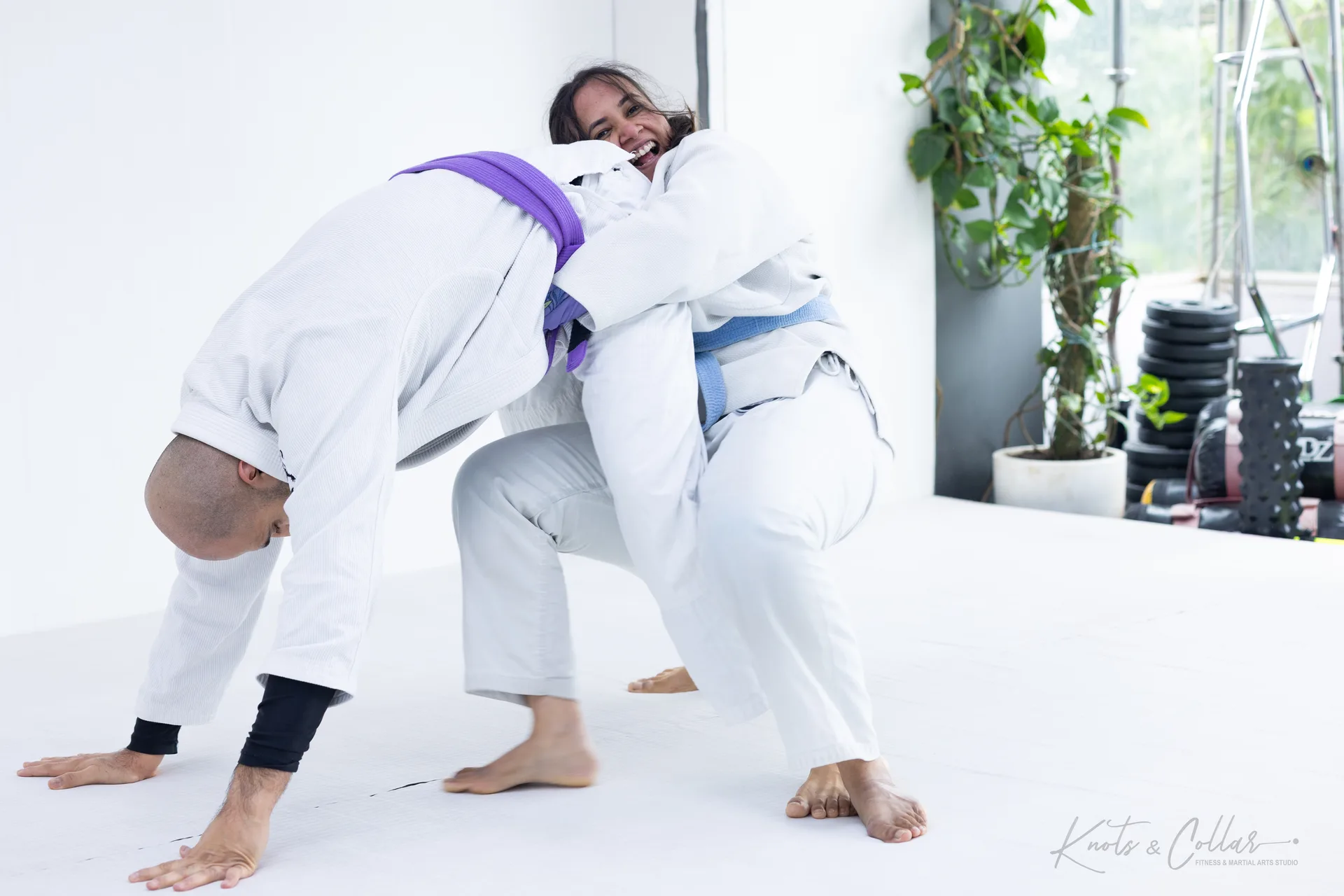
The double-leg is one of the first takedowns most beginners meet, and for good reason. The idea is simple to picture: you change your level by bending your knees, step in close, wrap both of your partner's legs, and drive them off balance so they sit or fall to the mat. The details take time, but the concept is friendly to a newcomer.
What makes the double-leg work is not brute strength. It is the level change and the timing. You lower yourself so your shoulders are below your partner's hips, close the gap, and use your legs and your forward drive rather than your arms. Beginners often reach with the hands and stay tall, which is the hard way to do it. We teach it slowly, one piece at a time, so the movement becomes natural before any speed is added.
The single-leg: a beginner-friendly first choice
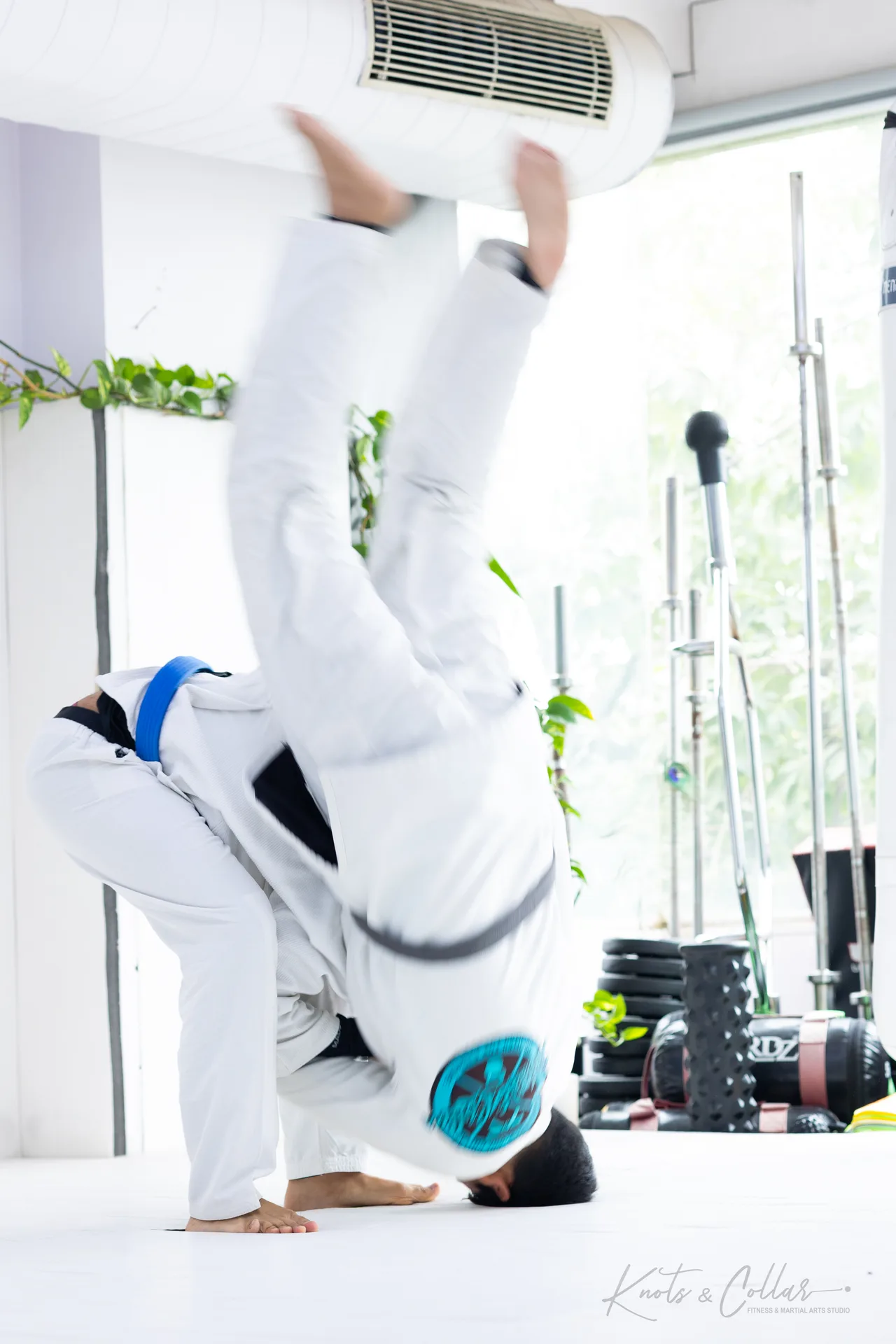
The single-leg takes just one of your partner's legs instead of both, and many coaches consider it the gentler entry point for a beginner. You capture a leg, lift or trap it, and then off-balance your partner in one of several directions until they come down. Because you are dealing with one limb rather than committing your whole body forward, it can feel more controlled and less all-or-nothing.
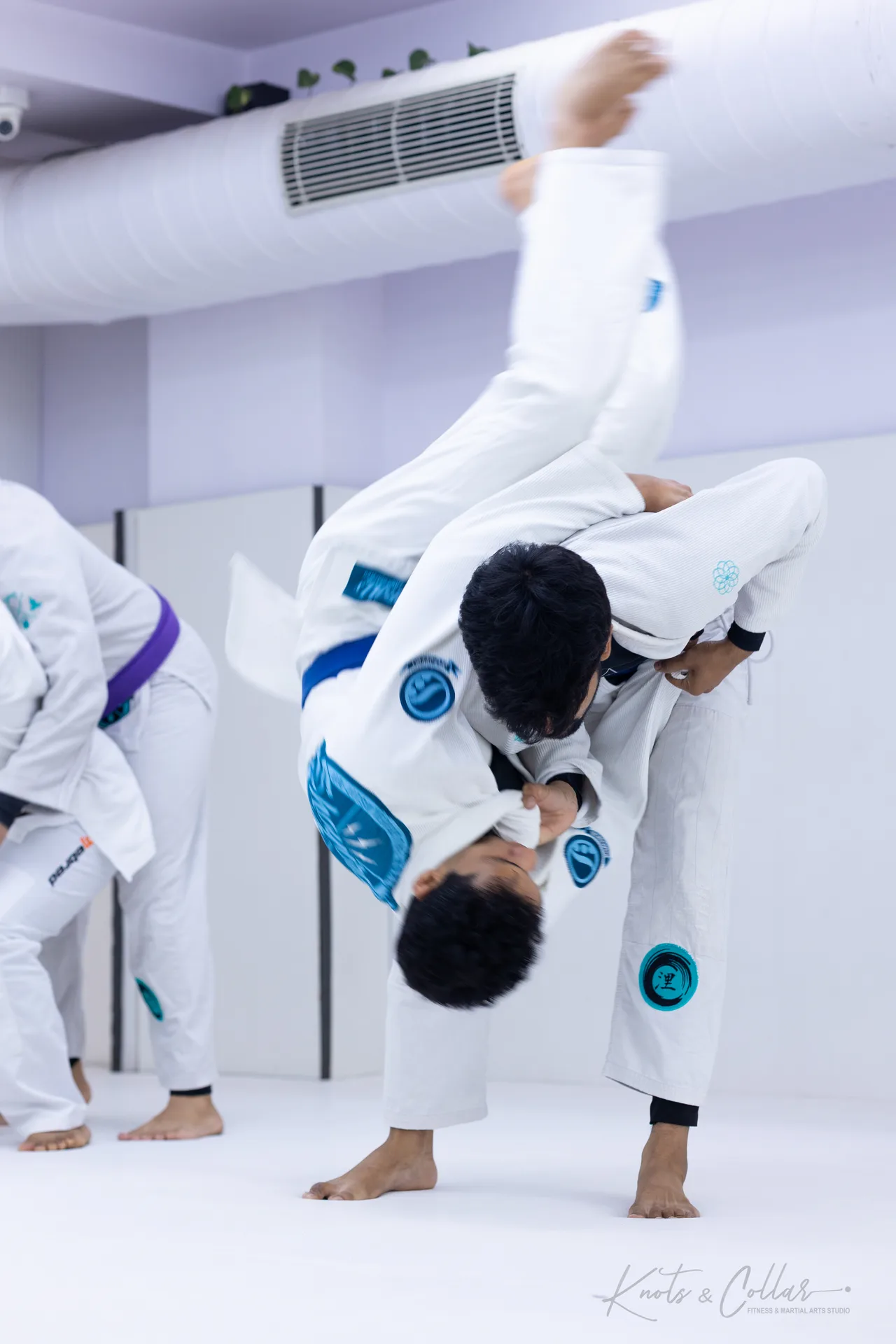
The single-leg also teaches a lesson that carries through all of jiu-jitsu: takedowns are about balance, not speed. Once you have the leg, the finish comes from steering your partner off their base, corner by corner, until gravity does the rest. Learn the single-leg and the double-leg together and you already have a wrestling-style answer whether you train in the gi or without it.
Gi grip trips from judo
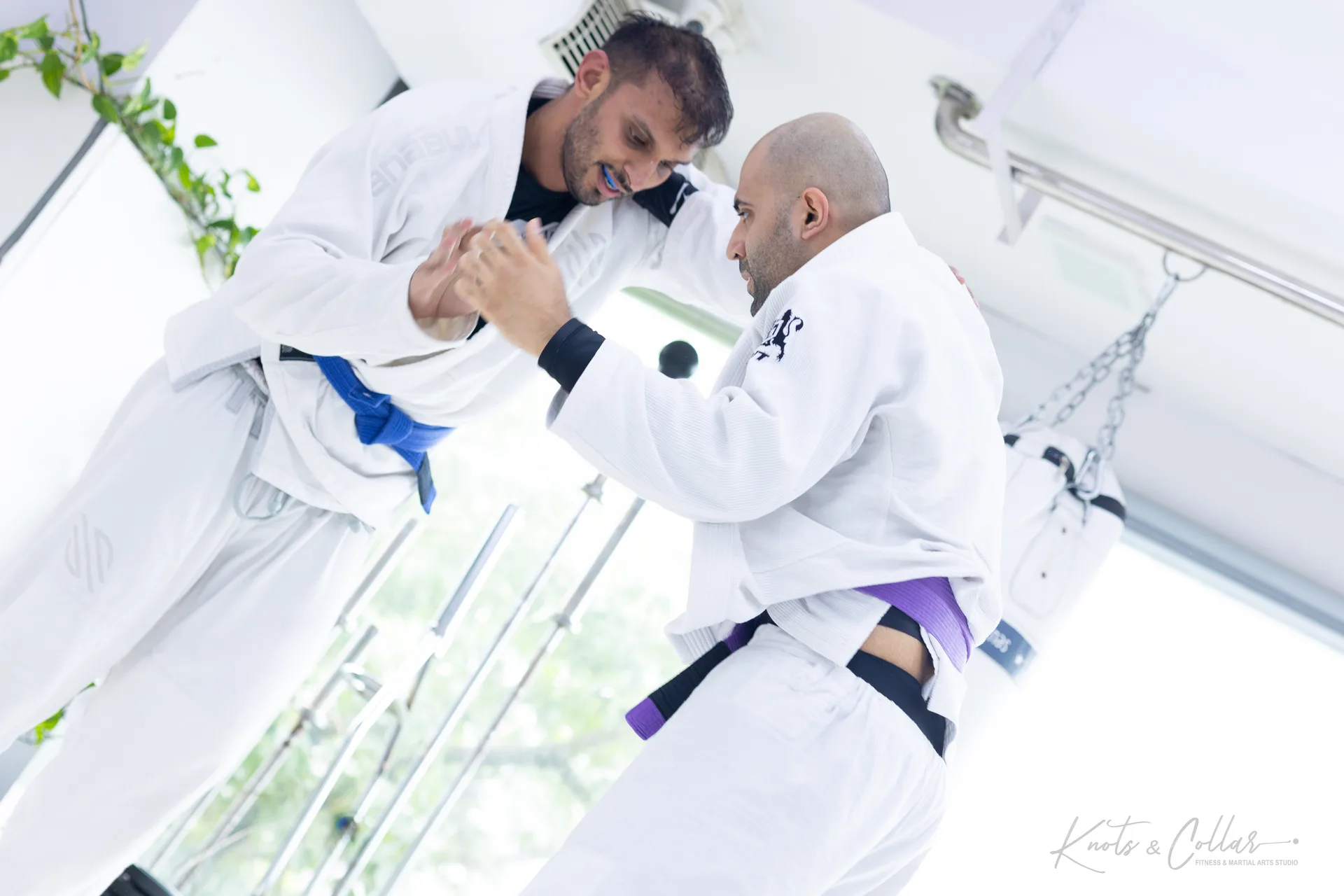
Brazilian Jiu-Jitsu grew from judo, and judo brings a whole family of throws that use the gi as a set of handles. When you can grip a collar and a sleeve, you can break your partner's balance and add a trip or a foot sweep to send them down. These gi grip trips are a lovely thing for a beginner to learn, because the jacket gives you control that a bare grip cannot.
At a concept level, the pattern is: take your grips, feel where your partner's weight is sitting, move them so their balance is compromised, and place a leg or foot in the path they are falling towards. A small trip at the right moment does far more than a big pull at the wrong one. Because these throws can put a partner down firmly, they are exactly the techniques we drill with the most care, which brings us to the next point.
Landing safely and taking care of your partner
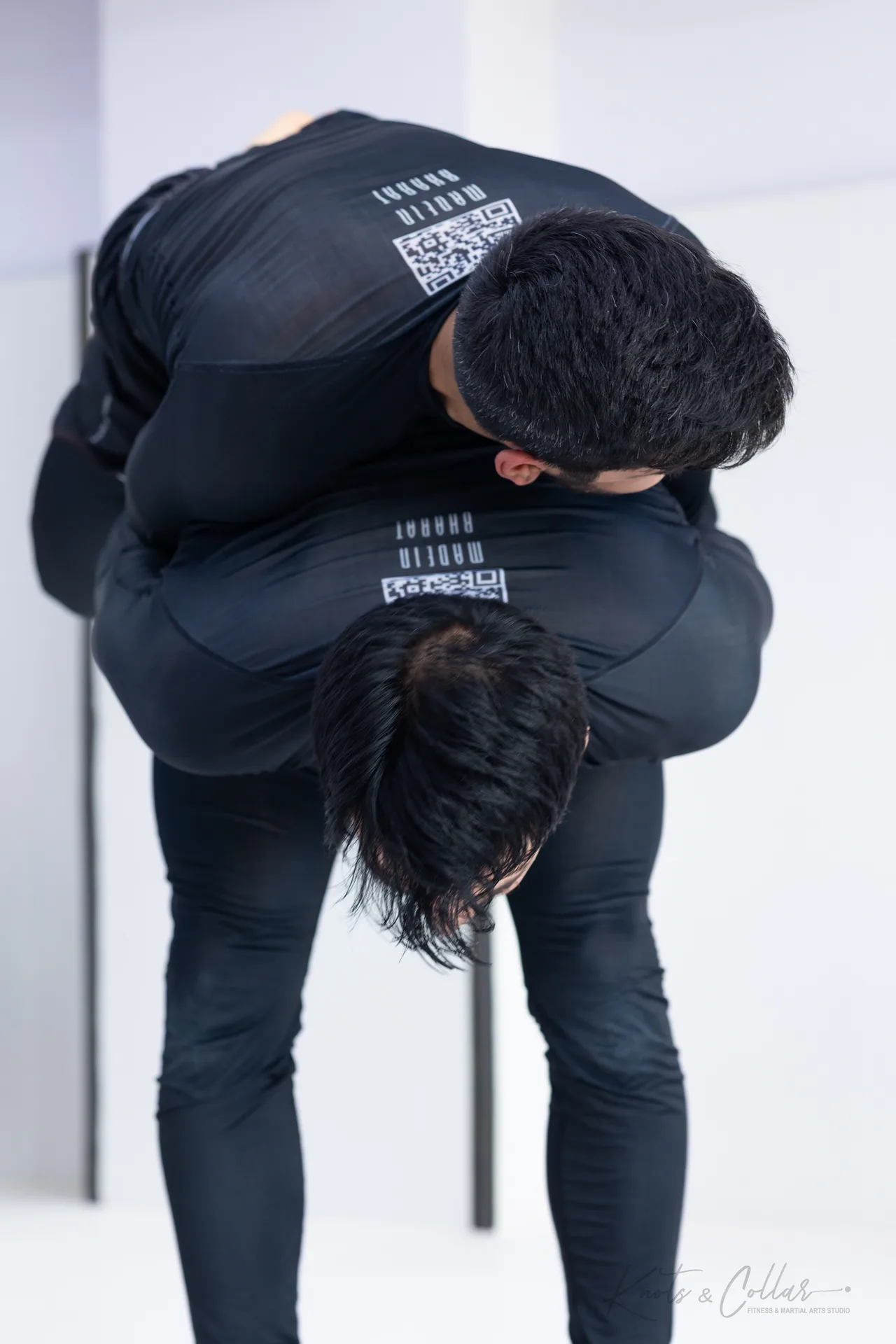
Before we teach anyone to throw, we teach them to fall. Breakfalls, the art of landing safely, are the foundation that makes every takedown practice sensible. Learning to spread the impact, tuck the chin and slap the mat means you can drill throws without fear, and it means the person being thrown is looked after.
This is where Kindness Over Toughness stops being a slogan and becomes a way of training. Taking care of your partner is part of the technique, not a nicety added on top. When we drill throws we slow everything down, we control the descent, and we place our partner rather than dump them. Your training partners are the reason you improve, so their safety is your responsibility every single round. That is a habit we build from the first class, verified and repeated until it is simply how you move.
India's wrestling heritage is a gift here
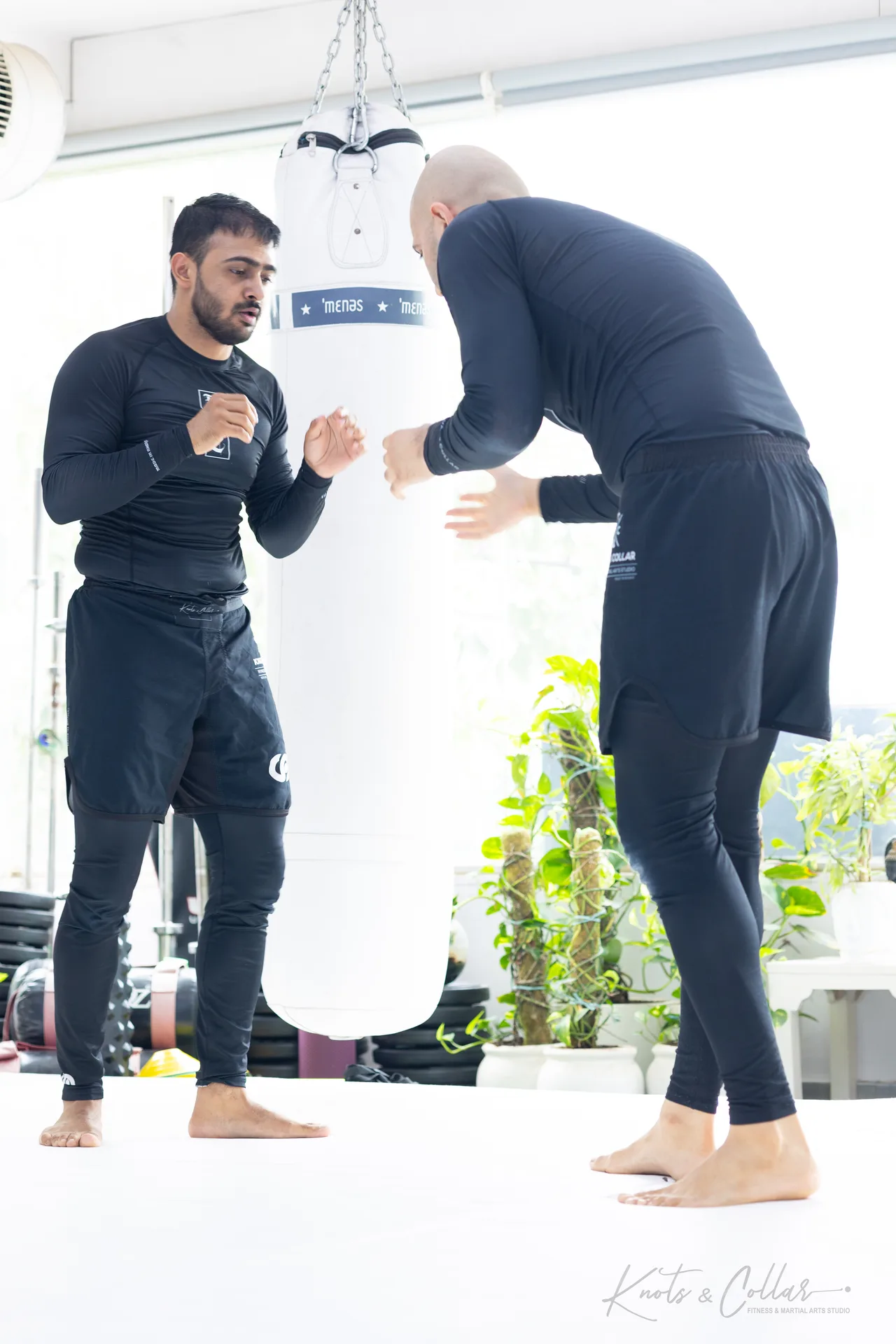
There is something we want every beginner in India to hear clearly: your background may already be an advantage. Wrestling runs deep in this country, from kushti in the akhadas to the freestyle wrestlers who have carried India onto the world stage. That heritage gives many people an instinct for level changes, grips, base and off-balancing, which are the very building blocks of BJJ takedowns.
If you have ever grappled a friend, played kabaddi, or grown up around wrestling, you will likely find the stand-up phase of jiu-jitsu familiar in a warm way. And if you have none of that, it does not matter in the slightest, because we start everyone from the beginning. What we love is that the wrestling culture of India and the ground craft of BJJ fit together so naturally. You can read more about how the two arts meet in our guide to BJJ and wrestling, and about the judo connection in our piece comparing these grappling arts.
Pulling guard: the other honest option
There is one more thing a beginner should know, and it surprises people: in Brazilian Jiu-Jitsu you are allowed to sit down on purpose. Pulling guard means choosing to bring the match to the ground yourself, from standing, by sitting or dropping while keeping a grip and placing your partner in your guard. It is a legitimate, widely used approach, not a shortcut.
For many beginners, and for anyone who wants to protect their knees or take the standing exchange out of the equation, pulling guard is a sensible choice. It plays to the ground game that jiu-jitsu is built around. Our honest view is that you should learn both: a few real takedowns and a clean guard pull. Then, in any given moment, you are choosing your path rather than defaulting to the only thing you know. Learning to stand your ground first is what makes pulling guard a decision instead of a retreat.
However you get to the mat, do it in a way that keeps you and your partner well. If you are training hard, look after your body along the way; our guide on training without getting injured covers this in detail, and our broader guide to BJJ in India puts all of it in context.
If you would like to feel this out on the mat, under the guidance of Professor Binish Sukhija and our team in Defence Colony, you are welcome to come and watch or take part. Schedule a visit whenever you are ready, and we will start you from the beginning, at your pace.
FAQs
Do I need takedowns if Brazilian Jiu-Jitsu is mostly on the ground?
Yes, because every match begins standing. Someone has to bring the fight to the mat, and knowing a few reliable BJJ takedowns means you decide how you get there rather than being put there. Even if you often choose to pull guard, learning to stand your ground first makes that choice a real one.
Which takedown should a beginner learn first?
Most people start with a basic double-leg or single-leg, plus a simple gi grip trip borrowed from judo. These give you a wrestling option and a gripping option, so you have an answer whether you train in the gi or without it. We introduce them slowly, with control, once your base and balance feel steady.
Is it safe to drill throws and takedowns?
It is when you learn to fall first and drill with care. At Knots & Collar we teach breakfalls before we teach throws, and we slow everything down when we practise. Taking care of your partner is part of the technique, not an afterthought. This is Kindness Over Toughness on the mat.
Can I train takedowns if I have no wrestling or judo background?
Absolutely. Many people in India already carry a feel for wrestling from kushti and akhada culture, but no background is required at all. We start everyone from the beginning, verified and step by step, and build your standing game at a pace that suits your body.