
A Beginner's Glossary of BJJ Terms: The Words You Hear in Your First Weeks
Walk into your first few Brazilian Jiu-Jitsu classes and you will hear a stream of unfamiliar words — guard, mount, sweep, shrimp, roll, oss. None of it is meant to exclude you; it is simply the shared shorthand of a craft, and you pick it up faster than you would expect. This is a plain, friendly jiu-jitsu glossary of the BJJ terms a beginner meets in their first weeks. Read it once and the language of the mat will feel a good deal warmer. You do not need to memorise any of it before you start — a good coach explains each word as it comes up.
Positions
Most BJJ terms in your first weeks describe positions — where two people are in relation to each other on the ground. Learning to name them is the first step to understanding them.
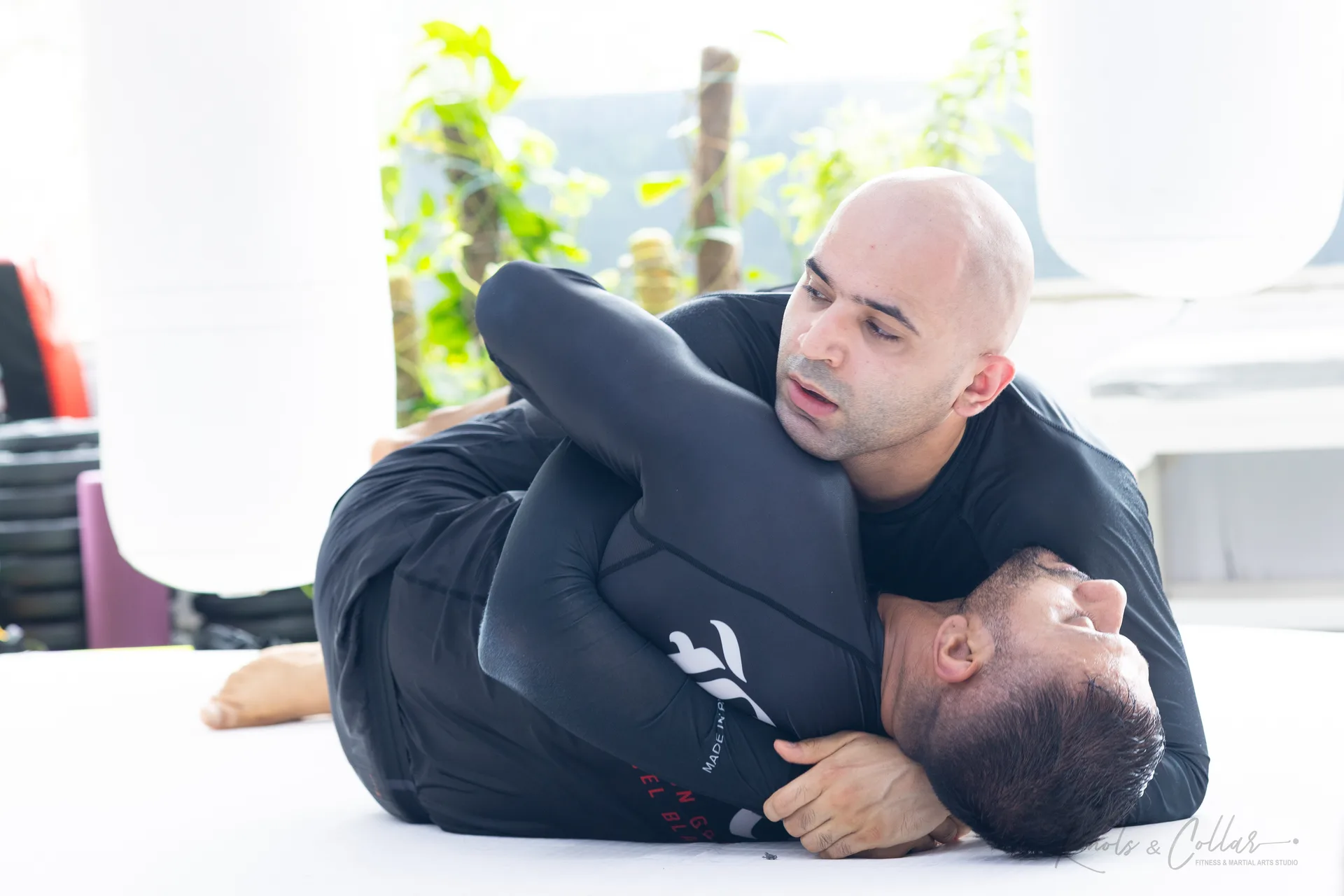
Guard — the position where you are on your back or seated with your legs between you and your partner, using them to control the distance. It sounds defensive, and it is protective, but it is also one of the most active positions in the art. You can attack and defend from the guard, which is why beginners spend so much time here. If you would like to go deeper, our guide to the types of guard in BJJ takes it one step further.
Mount — sitting on top of your partner's torso, knees on the mat either side of them. It is a strong, controlling top position, and holding it calmly is a real early milestone.
Side control — pinning your partner from the side, chest to chest, without your legs wrapped. It is a steady, pressuring position that beginners learn both to hold and to escape from.
Back control — being behind your partner with your chest to their back, usually with your heels hooked in front of their thighs. It is widely regarded as one of the most advantageous positions in jiu-jitsu.
Base — your stability and balance. A coach who says "keep your base" means stay grounded and hard to tip over. Good base underlies almost everything else.
Submissions
These BJJ terms describe the controlled holds that end a round, and the etiquette around them. In a well-run room they are nothing to fear.
Submission — a controlled position that, if held, would become uncomfortable enough that continuing makes no sense. Long before that point, the person caught taps and both partners reset. That is the whole loop.
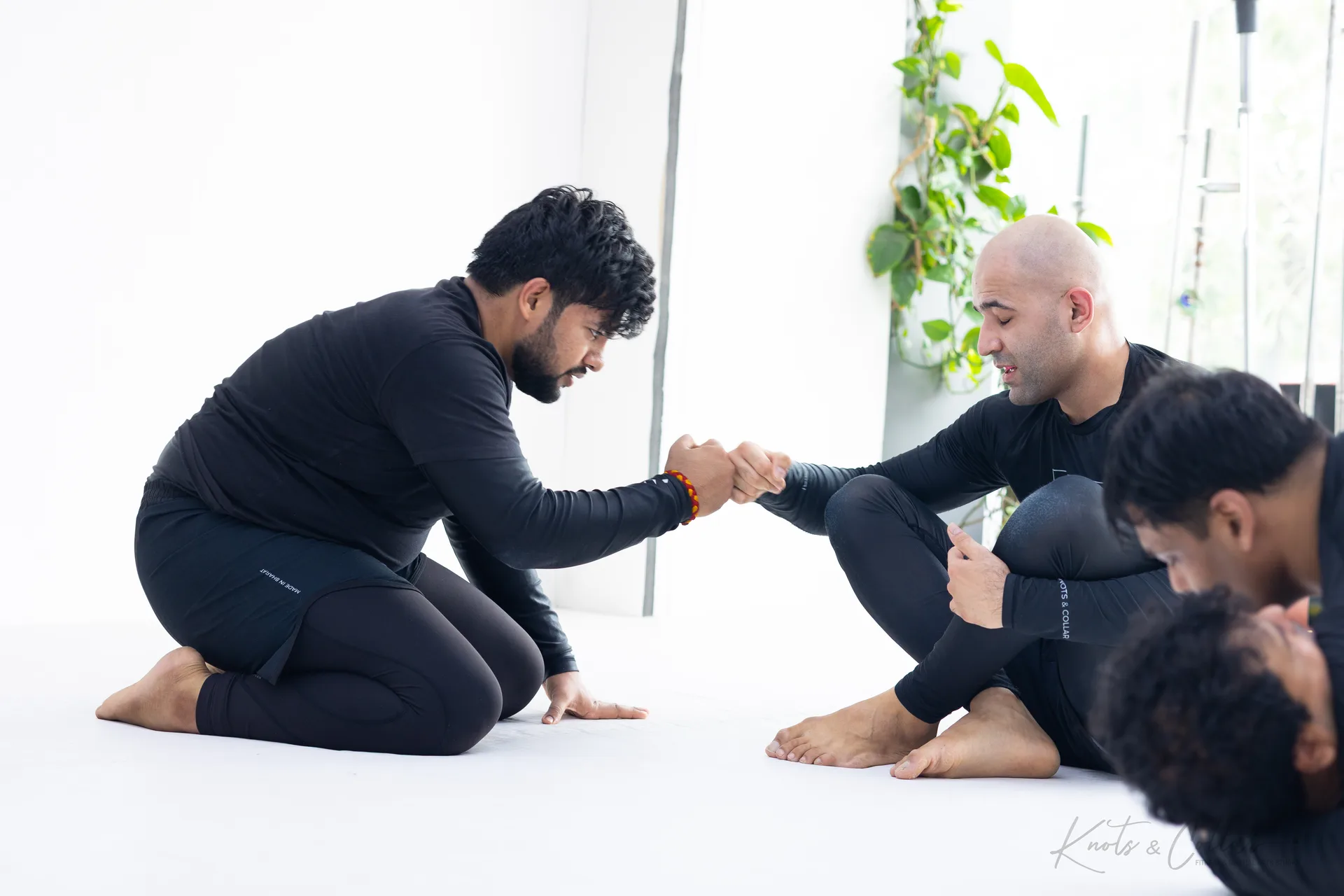
Tap — the signal to stop. A few firm taps on your partner or the mat, or a spoken "tap" if your hands are trapped. Tapping is normal, expected, and how everyone stays healthy. Nobody in a good room thinks less of a tap; everybody taps, every week.
Sweep — reversing the position from underneath so that you end up on top. If you are in guard and you sweep your partner, you have turned a bottom position into a top one. It is one of the most satisfying moments a beginner learns to create.
Pass — getting past your partner's legs, from facing their guard to a controlling position like side control or mount. Passing the guard is a whole craft of its own, and much of early top-game learning is about it.
Escape — getting out of a difficult position, such as from under side control or mount, back to safety or to guard. If you want the wider picture of your early journey, our guide to common BJJ submissions for beginners sits neatly alongside this glossary.
Movements & slang
Beyond positions, a set of BJJ terms describes the small movements and the everyday slang of training. These are the words a coach calls out mid-drill.
Shrimp — a hip-escape movement where you push off the mat and slide your hips away, tracing a shape a little like a shrimp. It is one of the first movements you learn in the warm-up and one of the most useful for the rest of your training life.
Frame — using your arms or legs as a rigid structure to create space between you and your partner. A frame is a fence, not a push; it holds space so you can move. Beginners who learn to frame early escape difficult positions far more calmly.
Roll — light, live sparring, where both partners move freely and try their techniques against real, resisting movement. "Do you want to roll?" is simply an invitation to spar at a controlled pace. Rolling is where drilling turns into understanding.
Drill — repeating a technique slowly and cooperatively with a partner to build the movement into your body. Drilling and rolling are the two halves of a class, and both matter.
Grip — how you hold your partner, whether on the fabric of the gi or on the body in no-gi. Grips are where much of the game begins, and learning to make and break them is a quiet skill of its own.
Hooks — using your feet and lower legs to hold onto your partner, most often from back control. When a coach says "get your hooks in", they mean secure that connection with your legs.
Mat culture
The last group of BJJ terms is about the clothing, the setting, and the warm culture of the room. These are the words that describe how we train together.
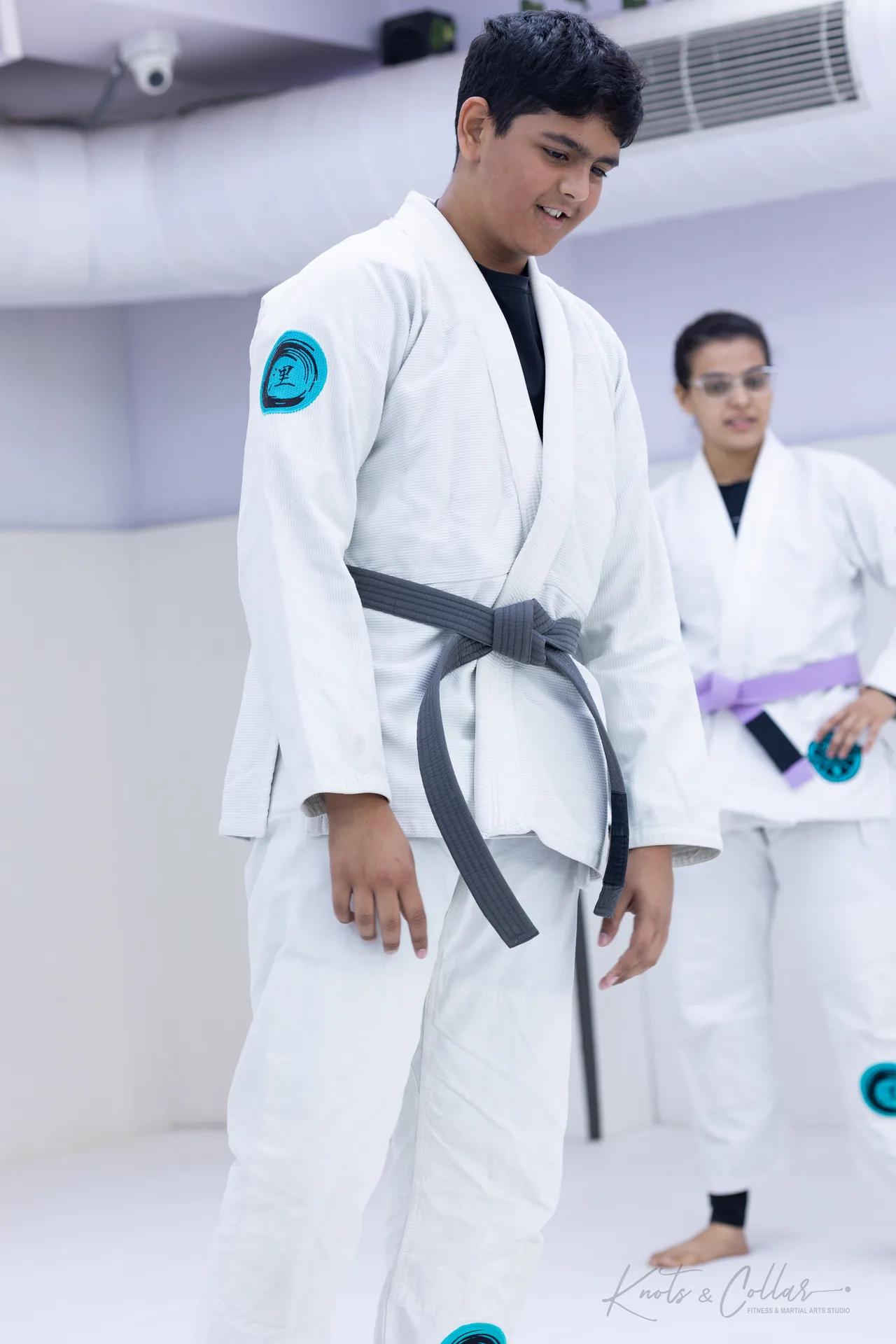
Gi — the traditional jiu-jitsu uniform of jacket, trousers and belt. In gi training you are allowed to grip the fabric, which shapes the whole style. If you are weighing the two styles, our gi versus no-gi guide for beginners explains the difference plainly.
No-gi — training in a rash guard and shorts, without the jacket. With no fabric to hold, grips are made on the body instead, and the pace often feels a little quicker. Many students train both.
Oss — a friendly, all-purpose word you will hear often. Depending on the moment it can mean yes, understood, thank you, or simply a nod of respect to a partner. There is no need to use it if it does not feel natural; plenty of people train happily without it.
Open mat — a less structured session where students come to drill and roll freely, at their own pace. It is a lovely part of the week and a good place to put your new vocabulary to use.
Professor — the respectful title given to a black belt instructor. You will hear students address their coach this way; it is a mark of the lineage and care behind the teaching.
How the vocabulary settles in
Reading a jiu-jitsu glossary is a friendly head start, but the words truly land when you hear them used in the room, with a partner in front of you. Within a month or two of steady training, the terms above stop feeling like a foreign language and become simply how you think about the art.
The kindest thing about learning these BJJ terms is that nobody expects you to know any of them on day one. At Knots & Collar in Defence Colony, New Delhi, Professor Binish Sukhija and the coaches explain each word the first time it comes up, and your training partners are glad to help. That patience is the practical shape of kindness over toughness, and it is what makes the early weeks feel welcoming rather than daunting. If you would like the fuller picture of what those first months look like, our white belt first six months guide walks through the journey, and the complete guide to BJJ in India for 2026 is a good place to begin if you are still deciding.
The best way to learn this language is to hear it spoken. If you would like to see how we teach beginners at Knots & Collar, you are warmly welcome to schedule a visit and watch a class — no vocabulary required. This article is general information; the art itself is always learned in person, under qualified supervision.
FAQs
Do I need to learn BJJ terms before my first class?
Not at all. You will pick up the common BJJ terms simply by hearing them used, class after class, and a good coach explains each word the first time it comes up. This jiu-jitsu glossary is here to make the early weeks feel a little more familiar, not to give you homework. Come as you are, listen, and the vocabulary settles in on its own within a month or two.
What does "oss" mean in jiu-jitsu?
Oss is a friendly, all-purpose word you will hear on the mat. Depending on the moment it can mean yes, understood, thank you, or simply a nod of respect and encouragement to a training partner. There is no need to use it if it does not feel natural to you — plenty of people train happily without it. It is part of the warm culture of the room rather than a rule.
What is the difference between gi and no-gi in BJJ?
Gi jiu-jitsu is trained in the traditional jacket, trousers and belt, and you are allowed to grip the fabric. No-gi is trained in a rash guard and shorts, with no jacket to hold, so grips are made on the body instead. Both are the same art with a slightly different feel. Many students at Knots & Collar train both, and beginners are welcome in either.
Why do people say "tap" and is tapping a bad thing?
Tapping is how you safely tell your partner to stop and reset — a few firm taps on your partner or the mat, or a spoken "tap". It is not losing and nobody thinks less of you for it. Everyone taps, every week, from the newest beginner to the most experienced black belt. It is simply how the room keeps everyone healthy enough to train again tomorrow.