
How to Break Through a BJJ Plateau: A Calm, Practical Guide
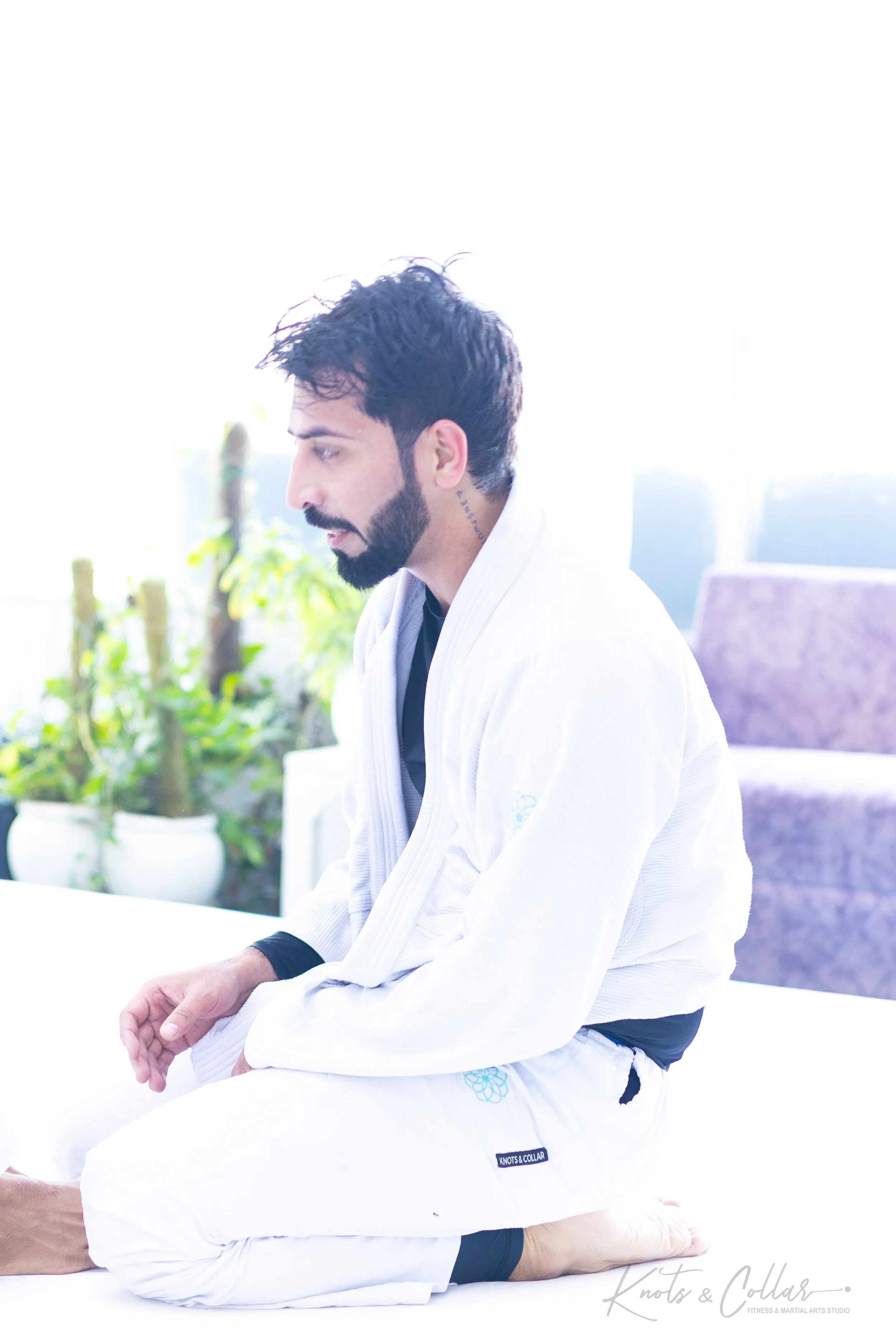
A BJJ plateau is not a wall you have hit — it is a normal, hopeful stage of learning. Here is why it happens and how to move through it calmly.
Almost every student who trains long enough meets the same experience. The early months bring quick, obvious improvement — you learn to survive, to hold a position, to escape a bad spot — and then, one day, the progress seems to slow to nothing. You train the same, you show up the same, but the rolls feel stuck. This is what people mean by a BJJ plateau, and if you are in one right now, the first thing worth saying is that it is completely normal. It happens to beginners and to experienced grapplers alike. This guide explains why plateaus happen, why they are actually a sign of progress, and the steady, practical habits that help you break through a plateau without forcing it.
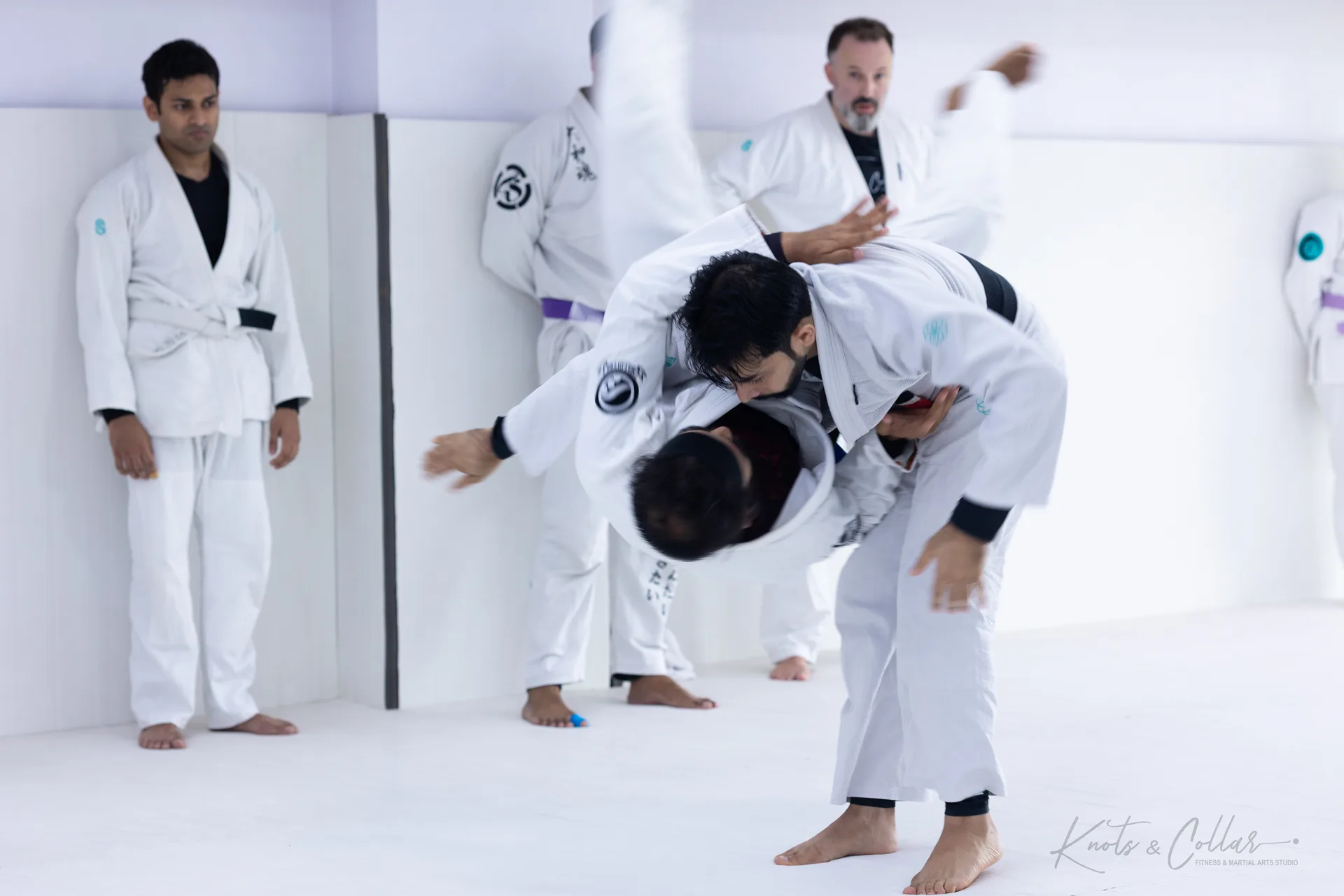
Why Plateaus Happen — & Why They Are Progress
When you start jiu-jitsu, everything is new, so everything improves at once. You go from knowing nothing to knowing something, and that gap is enormous, which is why the early gains feel so fast. A plateau arrives when that first rush of obvious learning settles. You now know a great deal compared with your first week, so each new piece is a smaller share of what you already hold. The improvement has not stopped — it has simply become harder to see, because you are refining and connecting skills rather than adding brand-new ones.
This is why a plateau is genuinely a sign of progress rather than a failure. It usually means your brain is consolidating: taking the separate techniques you have drilled and weaving them into one game that flows under pressure. That integration is quiet work. It does not announce itself the way a first successful escape does, but it is exactly what turns a collection of moves into real jiu-jitsu. Understood this way, a plateau is not the end of the road — it is the ground settling before the next climb. Our note on how to improve at BJJ faster covers the same idea from the other direction.
Narrow Your Focus
One of the most common reasons progress stalls is that we try to work on everything at once. When your whole game feels like it needs fixing, attention scatters, and nothing gets deep enough to change. The way through a plateau is usually to narrow, not to broaden. Pick one position or one problem — guard retention, escaping mount, a single sweep — and give it your attention for a few weeks rather than a single class.
Depth is what a plateau responds to. A student who spends a month genuinely understanding one guard pass — the grips, the weight, the timing, the common mistakes — will often feel their whole game shift, because that one solid piece connects to everything around it. Trying to improve thirty things at once tends to move none of them. If you are still building the shape of your game, our guide on how to build your BJJ game walks through choosing what to focus on and in what order.
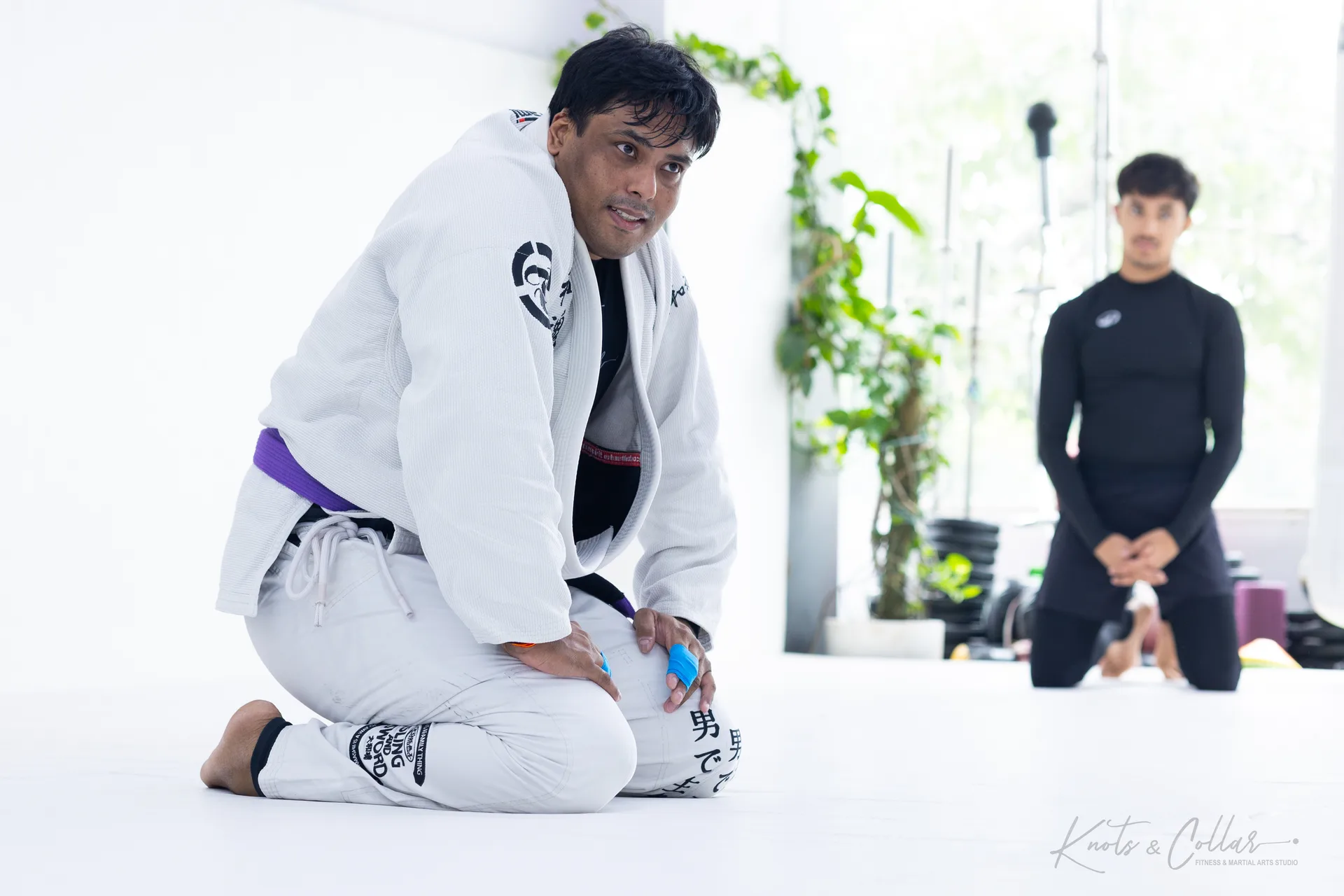
Roll With Intention
It is easy to roll on autopilot. You slip into your best positions, use your strongest grips, and repeat the same round you have rolled a hundred times. That is comfortable, and comfort is often what keeps a plateau in place. Rolling with intention means deciding before the round what you are working on, and holding to it even when the easy path is available. If you are working guard retention, you play guard and try to keep it, rather than pulling out your favourite submission the moment it appears.
This changes what a roll is for. You are no longer only trying to win the exchange — you are gathering information about the one thing you chose to study. Some rounds you will get swept or passed more than usual, and that is fine, because you are trading a comfortable result for real learning. A student who rolls with a clear intention for a few weeks usually finds the plateau lifting, because their training has stopped being repetition and started being practice again. For more on getting the most from live training, see our guide to improving at BJJ.
Ask Better Questions & Keep a Notebook
When you are stuck, the quality of your questions matters more than the quantity. "How do I get better?" is hard for anyone to answer. "When you passed my guard just now, what were you doing with your grip before I could react?" gives your coach or training partner something specific to explain, and gives you something specific to work on. The students who move through plateaus fastest tend to be the ones who ask precise questions about the exact moment things went wrong. We welcome these questions during and after every class.
A simple training notebook makes those questions add up. After class, write down two or three things — the position that caught you, the detail your coach gave you, the one thing you want to try next time. Over a few weeks the pages reveal patterns you cannot see inside a single roll: the same escape failing, the same pass working against you. That written record turns scattered sessions into a clear picture of what to work on, which is often the missing piece when progress feels invisible.
Play Your Weaknesses, Not Only Your Strengths
Most of us drift toward what we are already good at. It feels better to win with your strong side than to struggle with your weak one, so we quietly avoid the positions where we are least comfortable. Over time this builds a lopsided game — a sharp strength sitting beside gaps we never face. A plateau is often the sound of those gaps holding you back, and the way through is to walk straight into them.
In practice this means starting rolls in your worst positions. If you struggle from bottom mount, ask a partner to start there and work your escape. If your guard gets passed easily, begin with a partner already passing and defend. It is uncomfortable, and you will tap more while you do it, but this is the fastest, most honest way to close a gap. Our guide on escaping bad positions gives you a place to begin, and for newer students the white belt first six months guide sets sensible expectations for what should feel hard at this stage.
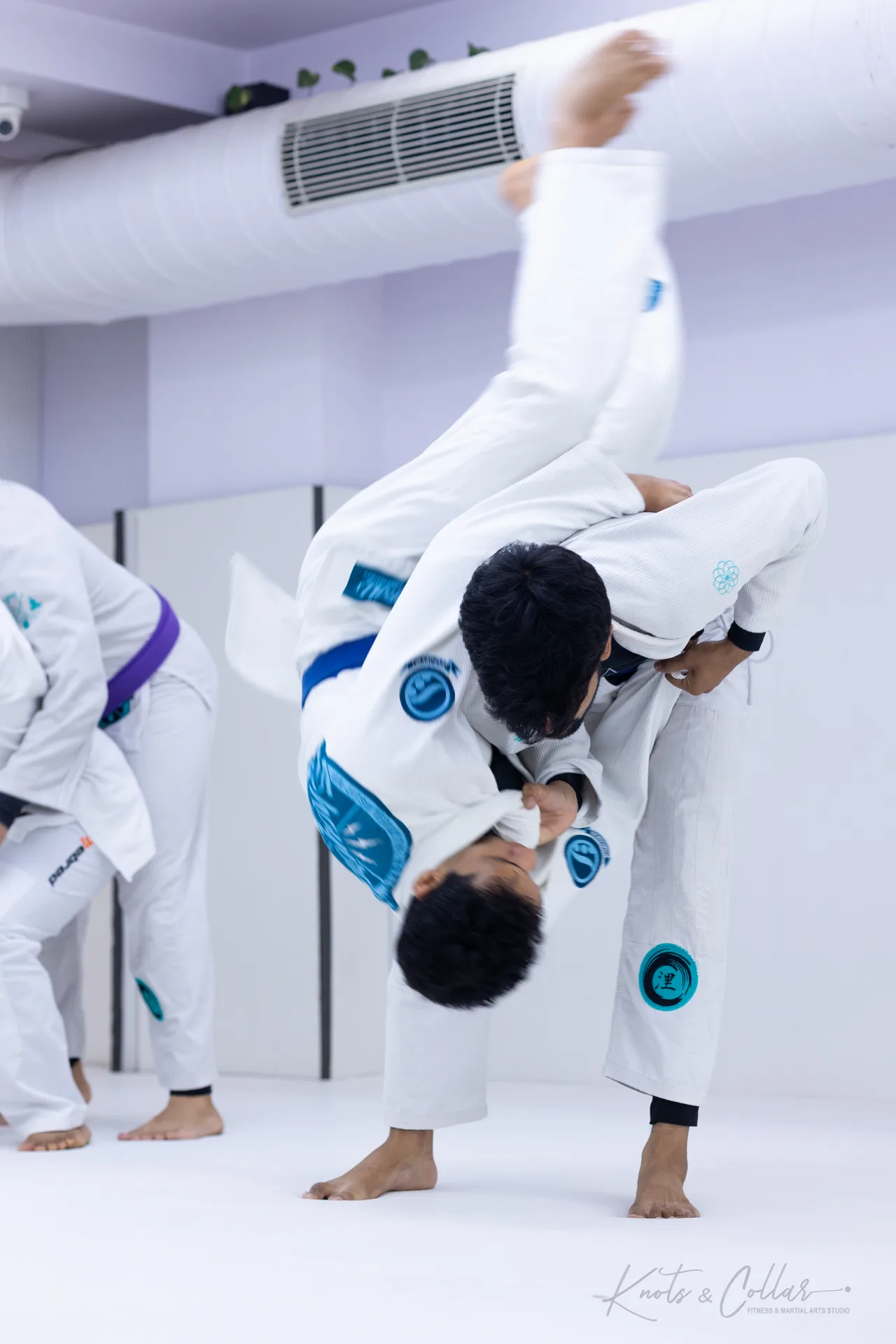
Rest — & Let the Learning Settle
Sometimes a plateau is not a technical problem at all. It is tiredness. If you are training hard several times a week while sleeping poorly, working long hours, and never taking a proper break, your rolls will feel flat no matter how good your intentions are. Skill is built partly during training and partly during recovery, when the body and brain settle what you have practised. Take that recovery away and the learning has nowhere to go.
If you feel stuck and also run-down, the answer may be less training rather than more — a lighter week, more sleep, a couple of days off the mats. Many students return from a short rest to find that positions which felt impossible suddenly click, because their body had the room to absorb what they had already learned. Resting well is part of the work, not a break from it, and it protects the consistency that carries you through a plateau in the first place.
Be Patient — The Plateau Is the Path
The last thing to say is the most important, and it is the hardest to feel while you are in it. Plateaus pass. The students who make it to blue belt, to purple, and beyond are not the ones who never plateaued — they are the ones who kept turning up while it was quiet. Progress in jiu-jitsu is not a straight line; it is a series of climbs and long, flat stretches where the real consolidation happens out of sight. Each flat stretch is preparing you for the next step, even when it does not feel like it.
So be patient with yourself. Narrow your focus, roll with intention, ask better questions, walk into your weak spots, rest properly, and keep showing up. Do those things and the plateau does the rest — it lifts, usually when you have stopped waiting for it. That is the quiet promise of this art, and it is why we train the way we do at Knots & Collar. Kindness Over Toughness, verified, always. If you want a wider picture of the journey, our complete guide to BJJ in India for 2026 puts it all in context.
FAQs
How long does a BJJ plateau usually last?
There is no fixed length, and it varies from person to person. For many students a plateau lasts a few weeks to a few months while the brain consolidates what it has already learned. It tends to lift on its own once you narrow your focus, work your weaker positions, and keep training consistently rather than waiting for it to pass.
Is a BJJ plateau a sign I have stopped improving?
No. A plateau usually means the fast, visible gains of the early stage have settled into quieter, deeper learning. Your body is integrating many separate skills into one game rather than adding obvious new techniques. The progress is still happening — it is simply harder to see week to week.
Should I train more or rest more to break through a plateau?
Often the answer is smarter training rather than simply more of it, paired with genuine rest. If you are tired, sore, or flat, more hard rounds rarely help. Narrowing your focus, rolling with intention, and taking proper recovery usually restart progress better than adding volume on top of fatigue.
Can beginners hit a plateau, or only advanced students?
Plateaus happen at every level, from white belt onwards. Beginners often feel one after the rapid first few months, when everything stops being brand new. It is a normal, hopeful stage of learning at any belt, not something only advanced students face.
If you are working through a plateau, the best thing you can do is keep training with a bit of direction — and we are happy to help you find it. Come and roll with us seven days a week, and your first class is free. Schedule a visit and we will see you on the mats. Kindness Over Toughness.