
Judo for jiu-jitsu, taught by Professor Jad Strutzel
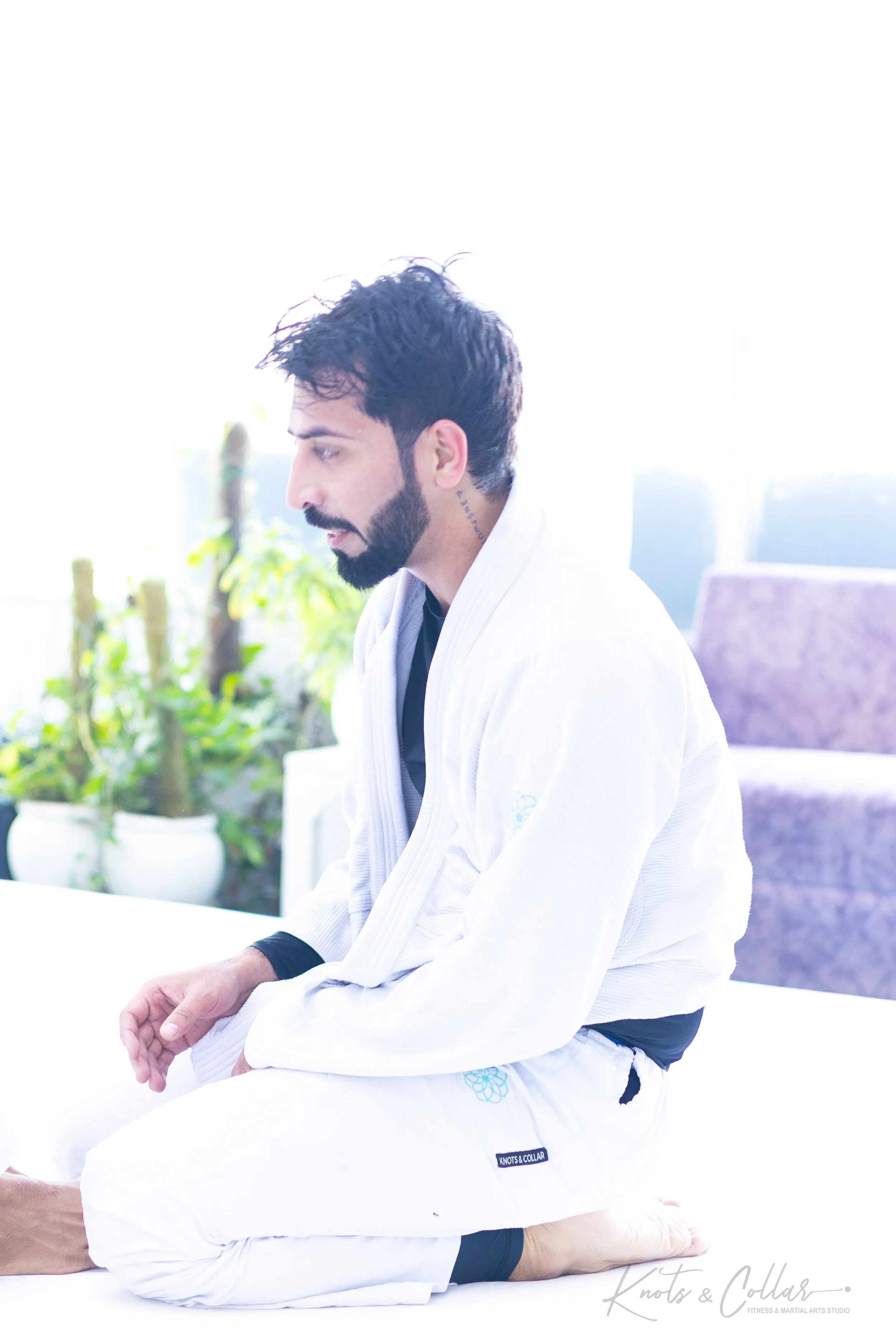
Nobody planned this class. Professor Jad Strutzel came to train, and by the end of the warm-up he was teaching the room.
Jad is a black belt in jiu-jitsu under Master Erik Paulson of CSW — Combat Submission Wrestling — and a first-degree black belt in Judo under Mike Verdugo, a former member of the USA team. He arrived from California expecting an ordinary session. What the room got instead was the Judo that actually works for jiu-jitsu players, which is a much smaller and much more specific thing than “Judo”.
His plan, in his own words, was short: “Tachi-waza, Judo; ne-waza, Jiu-Jitsu. Put it all together.” Throws that land you straight in side control, and the finishes already waiting for you when you get there.
Breakfalls before anyone throws anyone
The class began on the floor. Sit down, fall to the right, fall to the left, everyone together with enough room that nobody catches a partner on the way down. It took four minutes and it set the terms for everything after it.
“I always take care of my partner,” Jad said. “I never want to put him on his head. It’s trust.”
That is the same sentence we say here in different words, so it was a good place to start. A throw is the one technique in grappling where your partner has no say in how he lands.
Osoto gari, and the three parts of every throw
Jad breaks every throw into the three pieces Judo is built on, and he will not let you skip the first one.
- Kuzushi — the off-balance. Not a heave. Just enough that he is not ready to throw you. “If he’s on balance, he can throw me like I can throw him. Kuzushi is the difference.”
- Tsukuri — getting in. Shoulder connected to his chest, one hand shooting up as the other pulls down. Room for the foot to come in, but not an inch more.
- Kake — the throw. For osoto gari, the step over: one, two, three.
He drills it with uchikomi — repetitions without the throw. Four or five, sometimes ten, and on the last one he says “going” and finishes it, so the partner always knows. His advice on speed is the opposite of what most rooms do: “People like to go fast. I say it’s better to go slow and do it right, then speed up. I like to treat it almost like Tai Chi.”
Keep the arm: osoto gari to the armbar
This is the half most jiu-jitsu players never get taught, because in Judo the throw is the score and the arm is let go on the way down.
“I want to keep the arm. There’s no need to give it up.” You already have it when you throw. Hold it as he lands, come up, and the armbar is simply there — no transition, no scramble, no re-grip.
He talked about how he trains while he showed it: “I’m always hunting my weaknesses. The slower you go, the easier it is to find where you are weak.” And the reason slow works at all: “We have to have good geometry all the time.” Structure does the work that strength would otherwise have to.
Yoko wakare, the sacrifice throw
This one is his favourite, and his reason for liking it is honest: he is shorter than many of the people he faces, and a sacrifice throw gets easier the taller your opponent is. “It always surprises, even wrestlers.”
- Get to the T. You are at the top of the T, arm over his back.
- Wait for the frame. Once someone has felt a couple of leg attacks, he starts holding you out at distance. “Now he’s afraid of me getting his leg, which is exactly the posture I need.”
- Fall onto your hip and pull. Slow version: knee down first. Fast version: just fall.
- Keep a hand on his hip. It is a frame, so if the throw goes wrong he does not land on top of you. “You pull and you push at the same time.”
- Come up into side control.
The error that showed up in drilling was falling straight backwards. The throw dies there. Fall to the side you are throwing towards and let the arc keep going.
He showed the no-gi version too, so it survives without the sleeve and collar.
Kesa gatame, and five finishes
You land in side control still holding the arm, and Jad switches to kesa gatame, the scarf hold. The detail he says people miss constantly is the foot. Put it in the wrong place and your partner takes it with both hands and rolls you over. Put the top of your head on the mat with your weight through it, and go lower still if he is fighting hard.
“It’s a very strong position. The escape is very easy if you don’t have this pressure.”
From there, five finishes, all off the arm he never gave up:
- Americana
- Straight armbar
- Kimura — and the detail that makes it work: “Not just the arm, we have to shift the hip,” so your leg comes right under his elbow
- Head and arm
- Chicken wing
“Judo is my heart”
Before the rounds he thanked the team and told them why he still trains it.
“Judo is my heart. It really teaches a lot of resilience, and always to take care of each other, and to always get back up in life when you’re getting blasted.”
He still drills uchikomi on his own, at the beach, with rubber bands — hundreds of them, to make the movement more precise and more powerful. A black belt doing solo repetitions on sand is a more useful thing for a white belt to see than any technique in the class.
Then we rolled
The video keeps about twenty-five minutes of live rounds uncut, with Jad rolling through the team — white belts to black, gi, nothing edited out. If you only watch one part, watch how little changes in his posture between teaching and rolling.
Breath work, pranayama, and a thank you to India
He closed the day on something he said does not get talked about enough in jiu-jitsu: the breath.
“It’s very special because I’m in India, and we hear about pranayama. In the West it’s like, what is that? But here, you were born with it. It’s ancient.”
He learned the jiu-jitsu application of it from Rickson Gracie’s book Breathing, and he uses it to find his strength under somebody else’s pressure. “When we are crushed and feeling like giving up, it’s time to breathe.” For him it is not only physical strength and emotional control but spiritual growth as well, “because spiritual power and physical power are very related.”
Then he thanked India, on behalf of what the West is still learning from here. Standing on a mat in Defence Colony, that landed in a particular way.
What a surprise visit gives a room
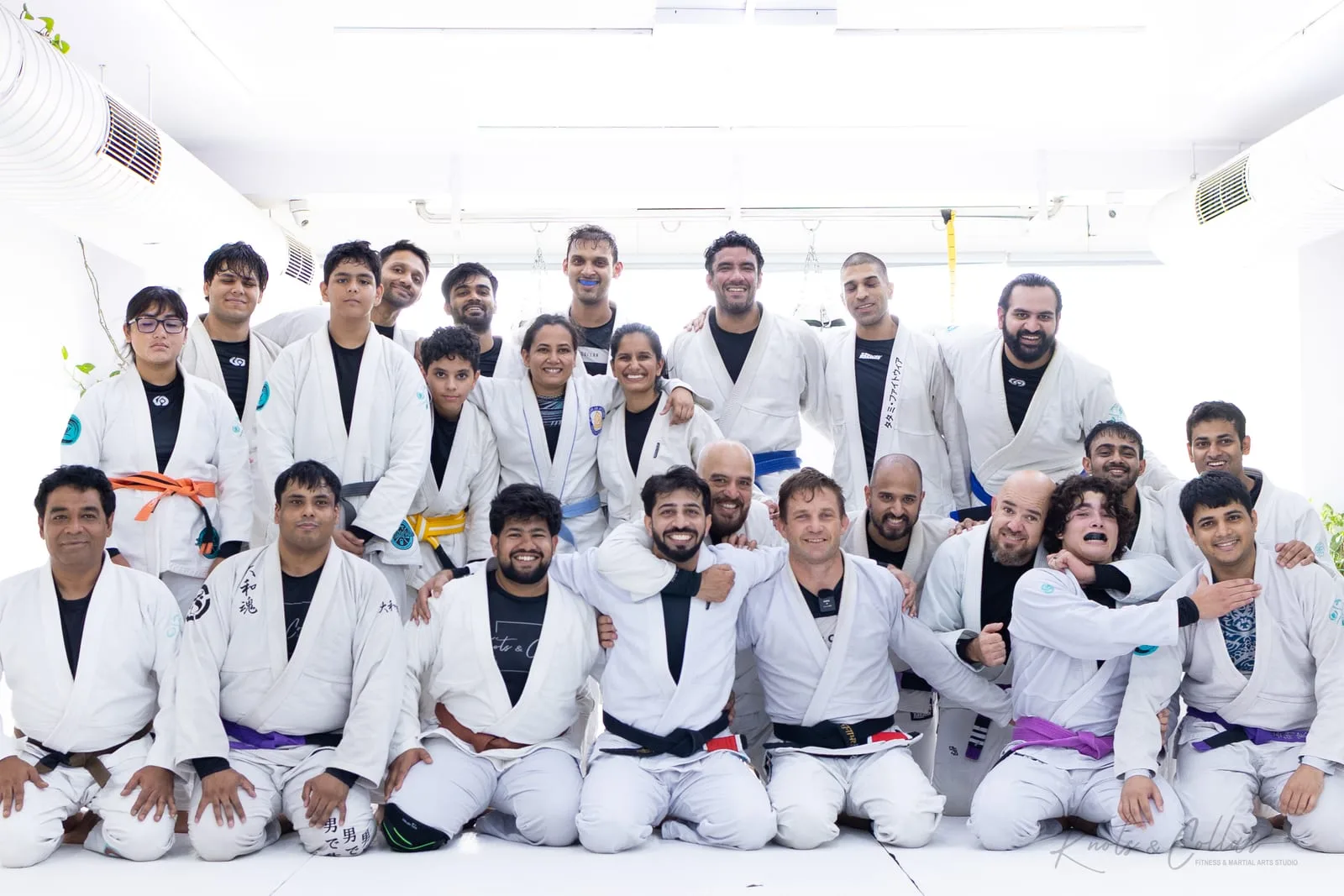
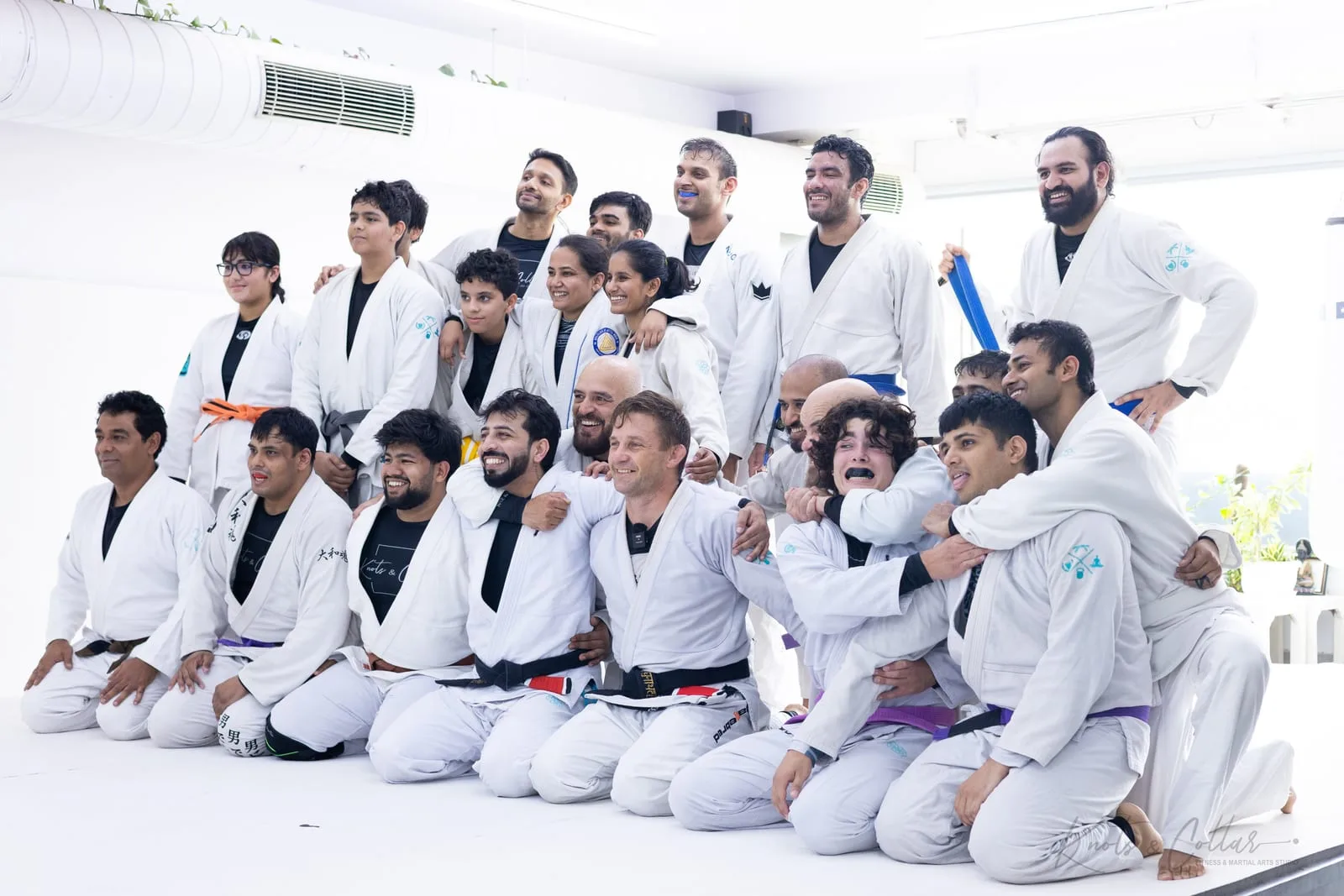
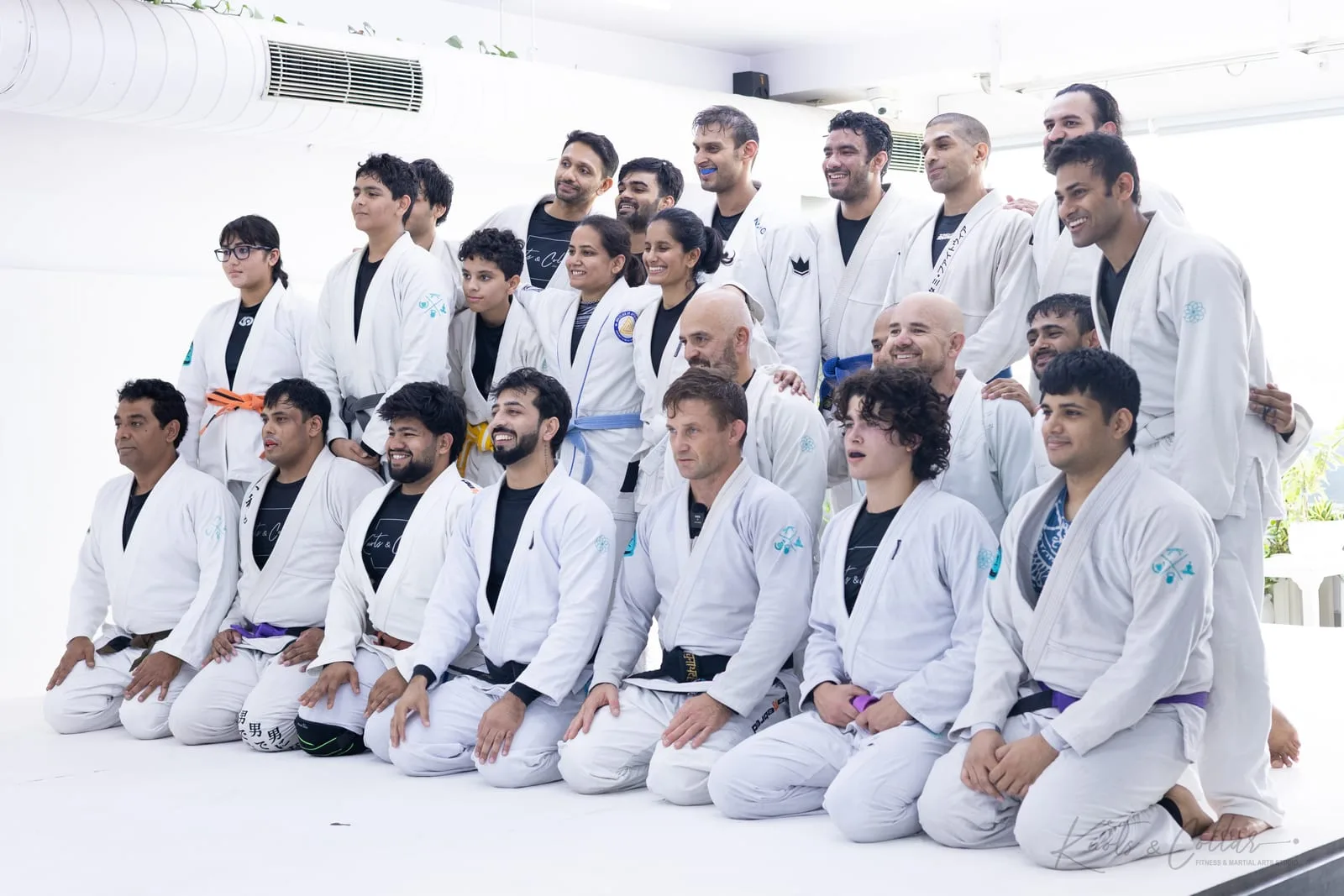
There was no poster for this, no sign-up sheet and no fee. Somebody walked in, the room was already warm, and an afternoon in Delhi turned into a Judo class from California that nobody will train the same way after.
That is the argument for keeping the door open. People who train travel, and jiu-jitsu moves between languages without being translated. Our mats have had visitors from Denver, Moscow, Belfast, São Paulo, Kazakhstan and Kathmandu, and each of them leaves something behind in how the room moves afterwards.
Thank you, Professor Jad, for the class, the rounds and the kind words. You have a home here in Delhi. And a thank you to Shri Shyamdas for training with us and for the energy he brought with him. You can follow Jad at @j.struts, and CSW at @cswassociation.
FAQs
Is Judo useful for Brazilian jiu-jitsu?
Yes, and the useful part is narrower than it looks. What transfers is the Judo that finishes where jiu-jitsu lives: throws that land you in side control with a grip you can keep, rather than throws scored for the landing alone. Professor Jad Strutzel put it as tachi-waza from Judo, ne-waza from jiu-jitsu, and the two joined at the moment of the landing.
What are the three parts of a Judo throw?
Kuzushi, tsukuri and kake. Kuzushi is the off-balance — not a big pull, only enough that your partner cannot throw you back. Tsukuri is getting into position, shoulder connected to his chest, with room for the foot to come in. Kake is the throw itself. Miss the first one and the other two become a wrestling match.
What is yoko wakare in Judo?
A sacrifice throw. From the T position with your arm over your partner’s back, you fall onto your hip and pull while keeping a hand framed on his hip, so he travels over you instead of landing on you. It works well against a taller opponent, and against someone already posturing away from your leg attacks.
How do you hold kesa gatame so it cannot be escaped?
Mostly by where the foot goes. Put it in the wrong place and your partner takes it with both hands and rolls you straight over. Put the top of your head down with your weight on it, keep the arm you threw with, and get lower when he becomes active. The hold is strong; the escape is easy the moment the pressure is missing.
Can a visiting black belt drop in and train at Knots & Collar in Delhi?
Yes. Our mats have had visitors from California, Denver, Moscow, Belfast, São Paulo, Kazakhstan and Kathmandu, and several of them have ended up teaching. Message the studio before you come and we will tell you which class suits the day you are in Delhi.
Come and train
We teach gi and no-gi seven days a week in Defence Colony, South Delhi, and the first class is free. Book a visit, or message us before you arrive if you are passing through the city and you train.
More from the same room: how jiu-jitsu and Judo actually differ, takedowns for beginners, the smash pass with Professor Aaron White, and ten no-gi rounds with a visiting black belt from Russia.
Kindness Over Toughness.