
Knee on Belly Escape: Survive First, Then Escape
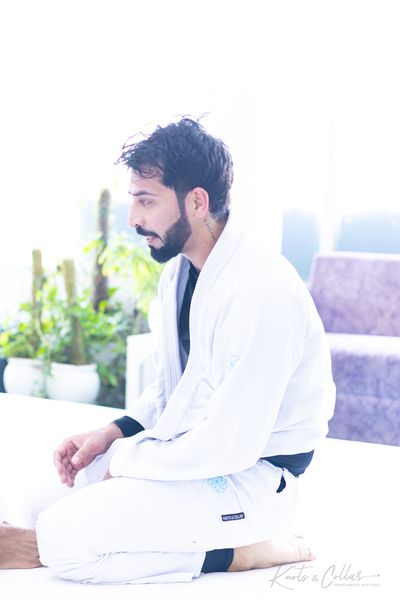
You were escaping side control and your partner jumped to knee on belly. Most people try to get out at once. In this No-Gi class from our mats in New Delhi, Professor Binish Sukhija, a Brazilian Jiu-Jitsu black belt in the De La Riva lineage, puts it in a different order: “Before we work the escape, let’s understand the threat, the survival parts, and then the escape would happen.”
Part 1: The warm-up is for the top person
The class works the bottom person, but the warm-up belongs to the top. From side control, left arm under the head, right arm through the armpit, on the balls of the feet: press up and jump to knee on belly. Shin over the belly, flat-footed, weight off the chest, hands posted as if you are doing a push-up.
Then the bottom person bench presses you, and you land in the same posture: flat-footed, not too close. “The top should be able to create that panic with the timing.”
Part 2: Side control bottom comes first
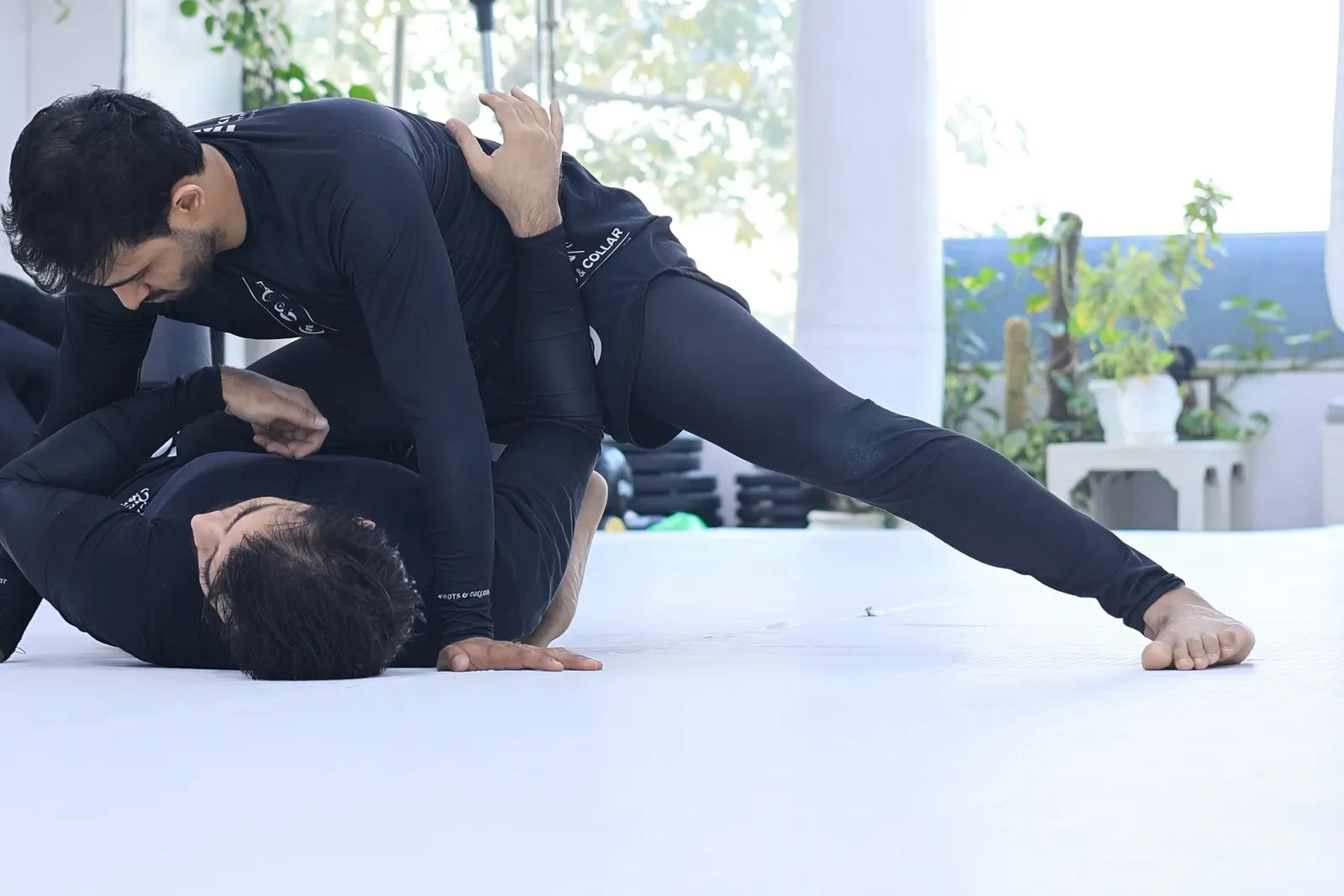
Before any escape, the posture underneath:
- Right forearm against his pocket. “It’s not your wrist, not your fingers.” A wrist there is an immediate wrist lock.
- Left hand over his back, not in front. In front, it messes up your own shoulder and you cannot turn sideways.
- Walk away rather than one big hip escape. Stay tight with the right hand, walk away, and work your hip and your pocket.
“Side control, proper control. Always start with this. This be your first thing for survival. Rest everything can happen a second later.”
Part 3: When he goes knee on belly, check the kneecap
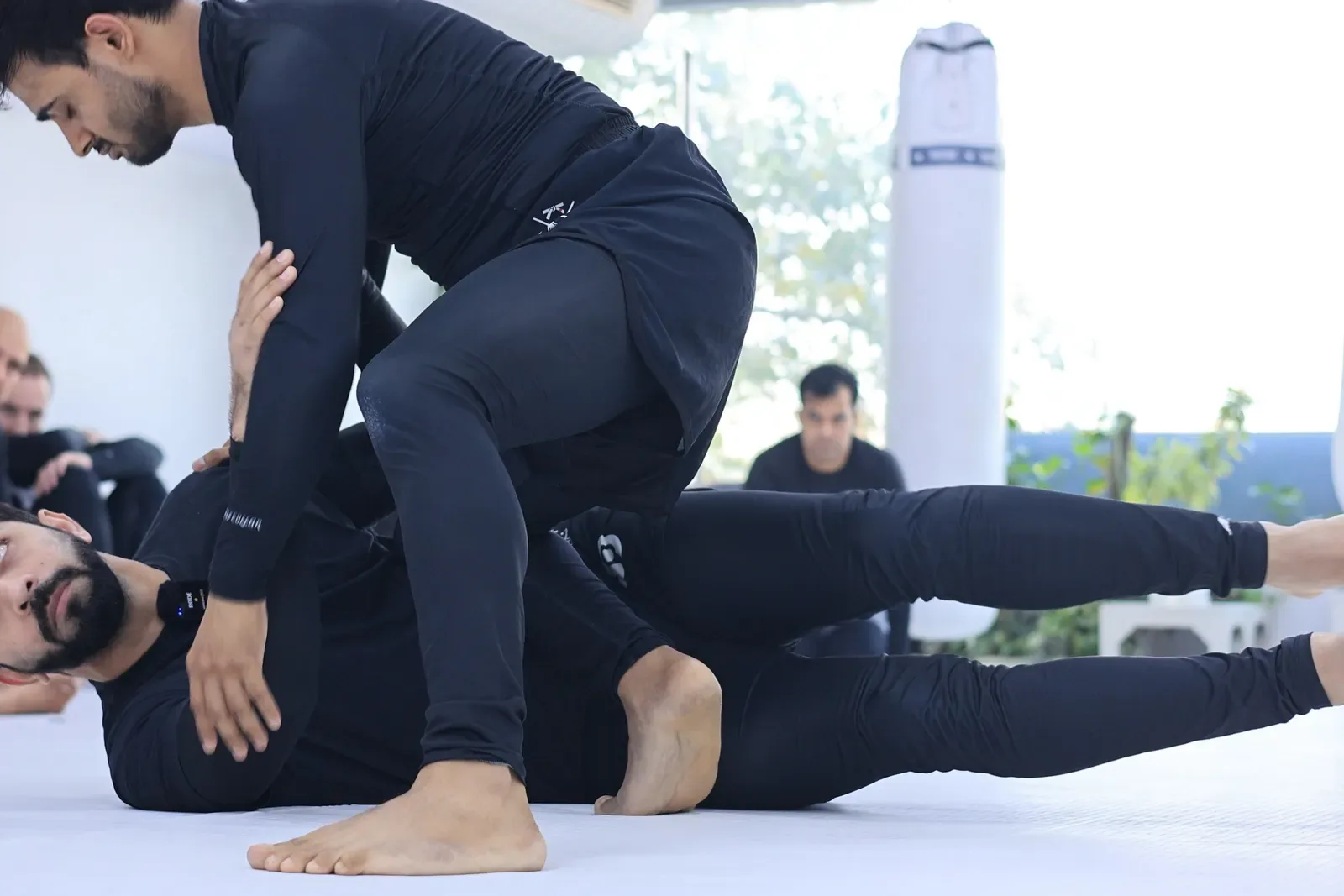
As you bring your knee in, he answers with knee on belly. Your arm shifts: rather than the armpit, keep a check on his kneecap with your forearm. At the same time kick both feet forward, off the mat, the way you stay sideways in half guard, rotate, and claim your armpit space.
“No mount, no spinning armbar.” Your hand on his knee or armpit lets him mount directly. Keep your palm up, which keeps his knee in check, and keep the feet in the air so you can keep twisting the hip instead of sticking to the mat. This is not the escape yet. “Escape would happen after this.”
Shut the armpit completely. “It’s like we are boxing, and if I can see your nose, I will punch the nose.” If he can see the space, he will claim it.
Part 4: Know what can happen
From knee on belly, the threats come as a list:
- The mount, the easiest one for him.
- The back, if you run away from him.
- Side control again, if you simply turn into him.
- North-south, with the north-south choke and the kimura.
- Chokes on the neck when both your arms are busy: baseball bat chokes, bread cutter variations.
- The spinning armbar, if your elbow comes out from your hip and gives him that triangle space.
Whether you win those positions back is the aftermath. You keep all of them in mind while you escape.
Part 5: Whichever limb comes first
Watch whichever limb moves towards your face first: for head control, for a grip, or for north-south. You cannot travel with your legs and leave the arm behind. “Arm has to win the north-south first.” If he goes for the neck, protect one side and give up the other. If he cannot grab your arm, there is no armbar.
Part 6: Hip escape sideways, bicep punch and kick
Feet on the ground and a hip escape sideways, not diagonally back, which only pulls your partner onto you more aggressively. As you move, bicep punch his knee to the ground so it is not looking into you. If his knee is not pointing at you, you have one extra step: he has to turn it back first.
The bicep punch comes with a kick from your top foot to his butt, and you go belly bottom. You can lead with the kick. “All you want is no weight on you or lesser weight on you.”
Part 7: His foot is far: bottom knee in, quarter guard
Sometimes his foot is far away and he already has a good base. Going belly bottom there is tough and messes up your own rib cage. Hip escape, bring your bottom knee inside and claim quarter guard: your knees pinch his ankle while your feet stay free. Check his arm so he cannot post straight away, kick your feet through and rotate your hip.
When he does the real knee on belly and keeps the foot away from the mat, you do not even need the hip escape. Use your bottom arm to push the ankle in.
Part 8: Head past the shoulder
If his head has crossed your shoulder and there is no weight on you, you do not need the kick at all. “See my ankle, it’s dead and you can mechanically push it.” Then bicep punch his knee back to the ground.
A competition note from the class: a reversal straight from knee on belly gives you the top position but no points. Find the ankle first, hold that guard for three seconds, and the same reversal counts as a sweep, with points. Sometimes you can borrow time by getting that guard posture.
Drilling it safely
Start mechanically, with no pressure. Then keep it dynamic, switching between side control and knee on belly, so your partner gets used to the frame. Neck chokes and the spinning armbar live in this position, so tap early and let your partner finish slowly; our guide to what tapping means explains why.
The same morning’s 9am class carried on from quarter guard: what to do when he steps back. For the side control escapes this builds on, see side control escapes, part 1 and part 2. For the wider picture of how we train without the gi, read No-Gi BJJ in India.
Train with us
We teach Brazilian Jiu-Jitsu, Gi and No-Gi, at Knots & Collar in Defence Colony, New Delhi, seven days a week, for complete beginners and experienced grapplers alike. No-Gi is on Saturdays at 8am and 9am. Wear a rash guard, spats and shorts. See the class schedule, book a free trial class, or message us on WhatsApp. Hindi mein baat karni ho? WhatsApp par message kijiye, hum aapko class ke baare mein sab bata denge.
FAQs
How do you escape knee on belly in BJJ?
Survive first. Check their kneecap with your forearm, kick both feet off the mat so you can turn sideways, and shut your armpit. Then hip escape sideways, not diagonally back, and bicep punch their knee to the mat as you kick, so you can go belly bottom or bring your bottom knee in for quarter guard.
Where should your arms be when you are under side control?
Your near forearm goes against their pocket, never your wrist or fingers, which invites a wrist lock. Your other hand goes over their back rather than in front, because in front it ties up your own shoulder and you cannot turn sideways.
What are the dangers of being under knee on belly?
The mount, the back if you run away, side control again if you simply turn in, north-south with its choke and kimura, chokes on the neck when both your arms are busy, and the spinning armbar if your elbow leaves your hip.
Why hip escape sideways and not backwards from knee on belly?
Moving diagonally back only pulls your partner onto you harder. A sideways hip escape takes you away from the pressure, and the bicep punch on their knee stops it turning back into you.
Does a reversal from knee on belly score points?
In the class, Professor Binish Sukhija explained that a reversal straight from knee on belly gives you the top position but no points. Find a guard first, trap the ankle for three seconds, and the same reversal counts as a sweep.
What do you wear to a No-Gi class at Knots & Collar?
A rash guard, spats and shorts. Your first class at our studio in Defence Colony, New Delhi is a free trial, and you can book it on our schedule a visit page.
Book a free No-Gi class at Knots & Collar, Defence Colony. Kindness Over Toughness.