
No-Gi BJJ in India: the sessions, the people, and what comes next

No-Gi is how many people in India first step on a jiu-jitsu mat: a rash guard, spats and shorts, and the same art of control and submissions. This is No-Gi BJJ in India as we see it from our own mat in Delhi: what the sessions are like, who you train with, recent classes you can watch, and what is being built for No-Gi in 2027.
Why No-Gi is how so many people in India find jiu-jitsu
Brazilian Jiu-Jitsu came to India in small groups: a few people training in rented halls, learning from visiting instructors, travelling abroad to grade. Our guide to the history of BJJ in India tells that story. No-Gi has grown alongside it, for simple reasons.
It looks familiar. Many people arrive from MMA, wrestling, kushti or the gym. Grappling in a rash guard, spats and shorts feels close to something they already know.
It suits the weather. A heavy cotton gi in a Delhi June is a commitment. A rash guard is not, and that keeps people training through the summer.
It costs less to start. A rash guard, spats and shorts cost far less than a gi, and you may already own some of them. Our guide to what BJJ costs in India covers the rest.
No-Gi and the gi are two ways of training one art, and most of our students train both. Our Gi vs No-Gi guide explains how each helps the other.
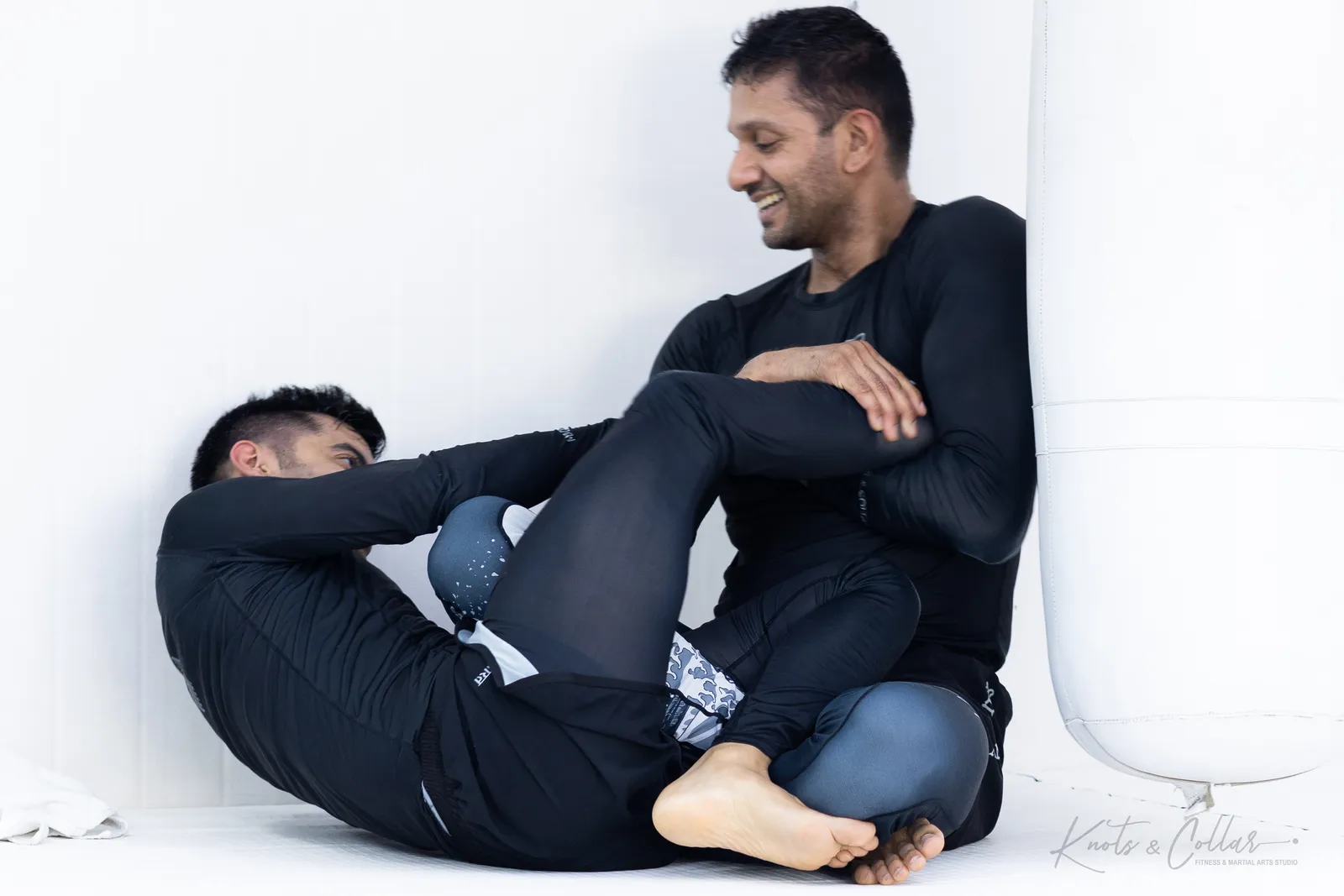
What a No-Gi session is like
Every No-Gi class at Knots & Collar follows the same rhythm, so a first-timer always knows what comes next.
Warm-up. Movement that is also jiu-jitsu: shrimping, bridging, technical stand-ups, rolling over a shoulder. It loosens you up and teaches the hip movement everything else depends on.
Technique. Professor Binish Sukhija, a Brazilian Jiu-Jitsu black belt in the De La Riva lineage, shows one idea, such as an escape, a sweep or a back take, and breaks it into small steps. You drill it slowly with a partner, swap, and repeat. Nobody resists yet; the aim is to get the shape right.
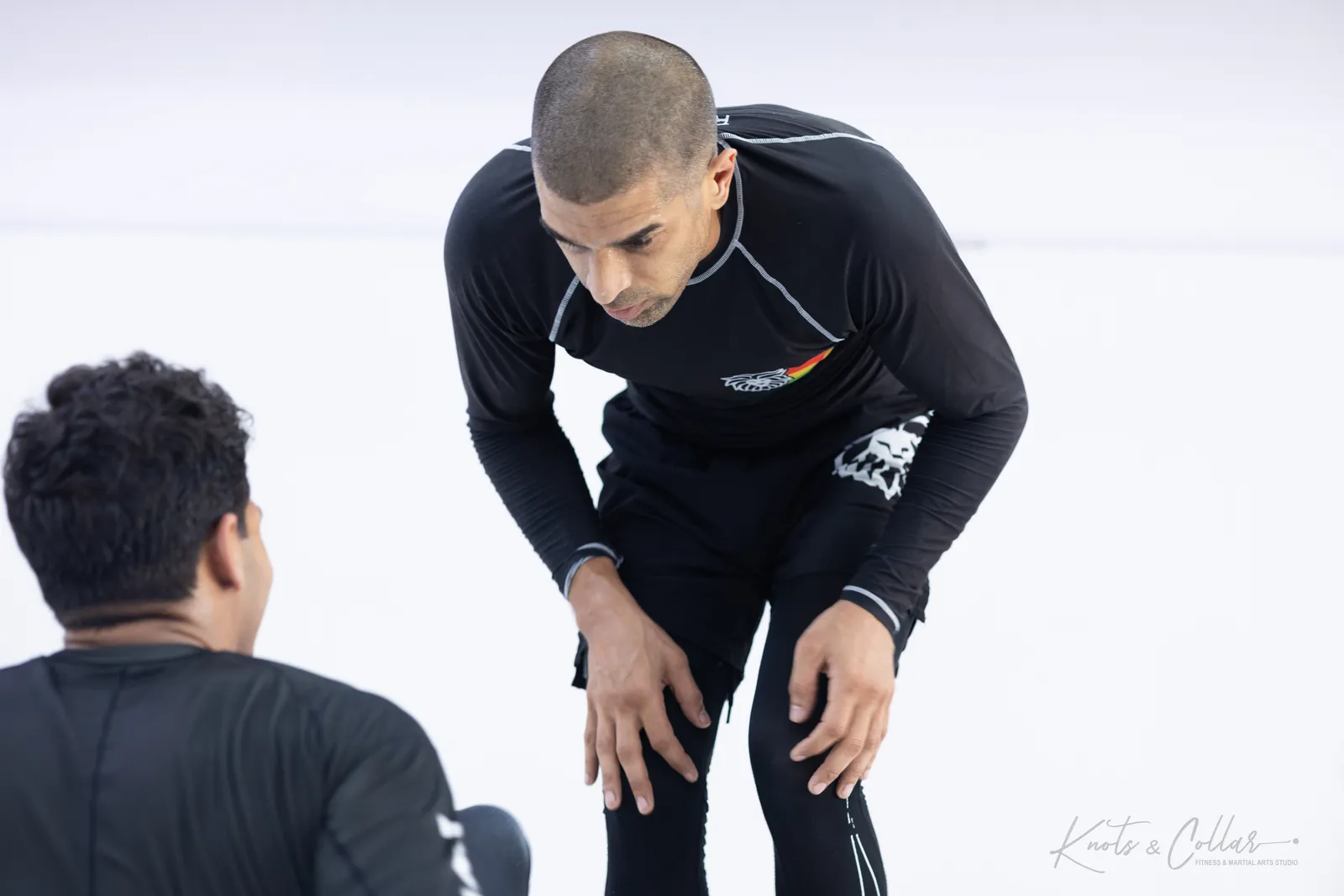
Positional work. You start in the position you just learned and work against light resistance. This is where the technique starts to feel real.
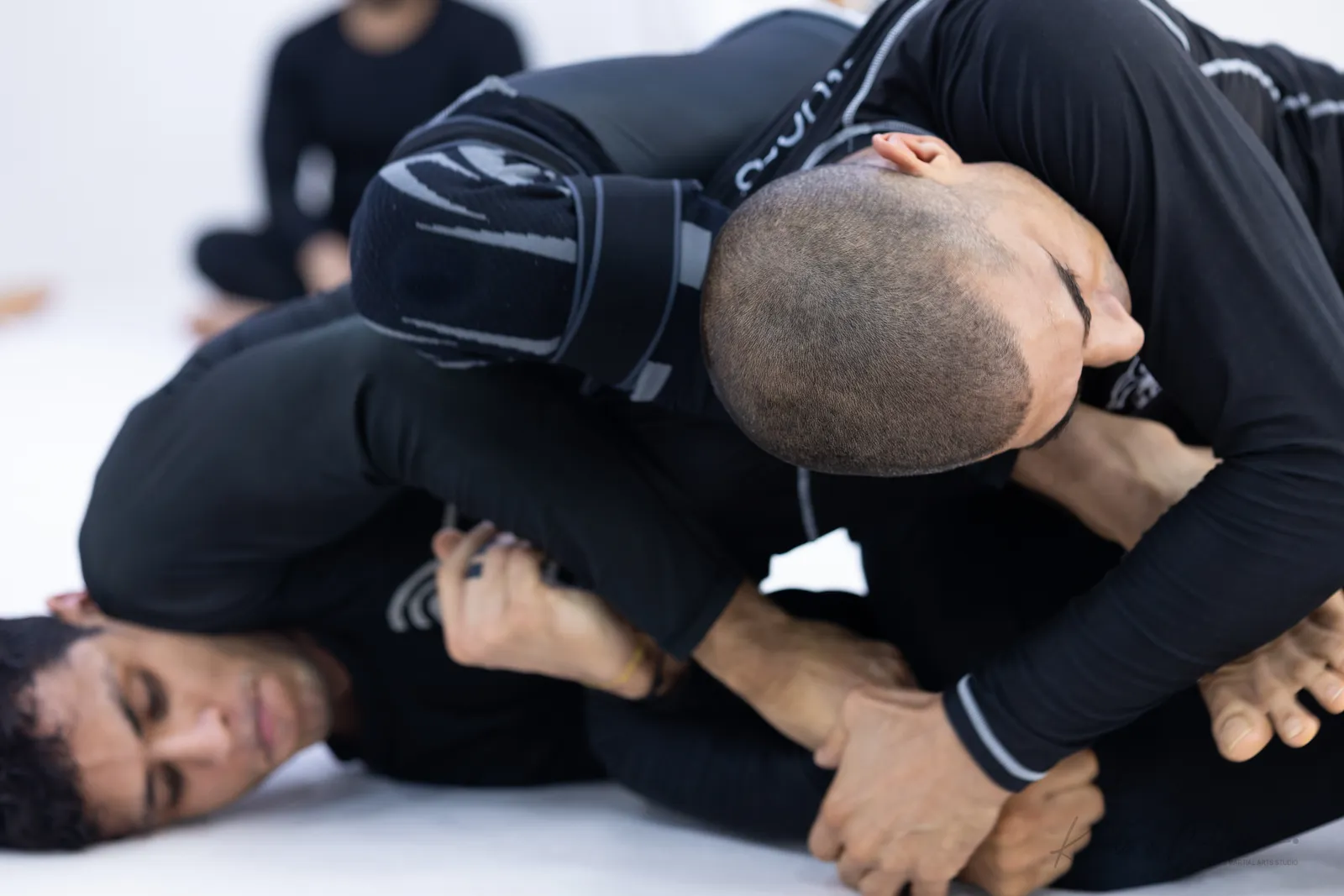
Rolling. Short rounds of live sparring at the end. Beginners are paired with care, the pace is controlled, and anyone can tap at any time. In your first weeks you can sit a round out or roll only positionally. That is normal, and nobody minds.
No-Gi runs four times a week at our studio in Defence Colony: Wednesday 7pm, Thursday 6:30am, Saturday 8am (Essentials 1.0, the foundations) and Saturday 9am (Essentials 2.0, the next layer), with open rolling after the Saturday class.
Who teaches. No-Gi at Knots & Collar is taught by Professor Binish Sukhija, a Brazilian Jiu-Jitsu black belt in the De La Riva lineage. He founded Knots & Collar in Defence Colony and ABJJF India, and he teaches every class the same way: one clear idea at a time, explained until it makes sense, then tested with a partner. Beginners and black belts learn the same details; only the pace changes.
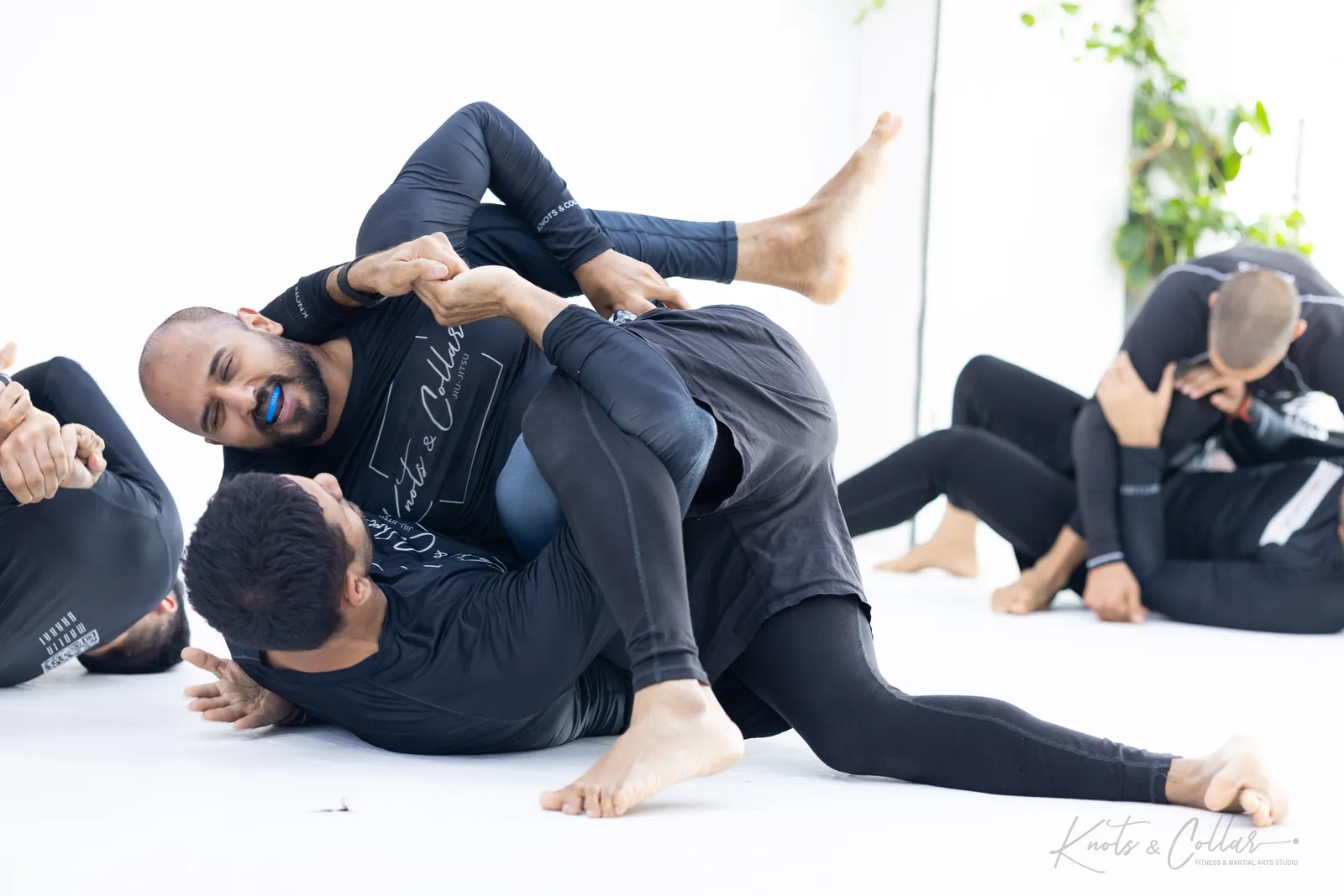
That is a recent No-Gi class from our mat, taking the back from half guard: the back step, the butterfly hook and how to save the berimbolo. It is a fair picture of an ordinary session, technique first, then live rounds.
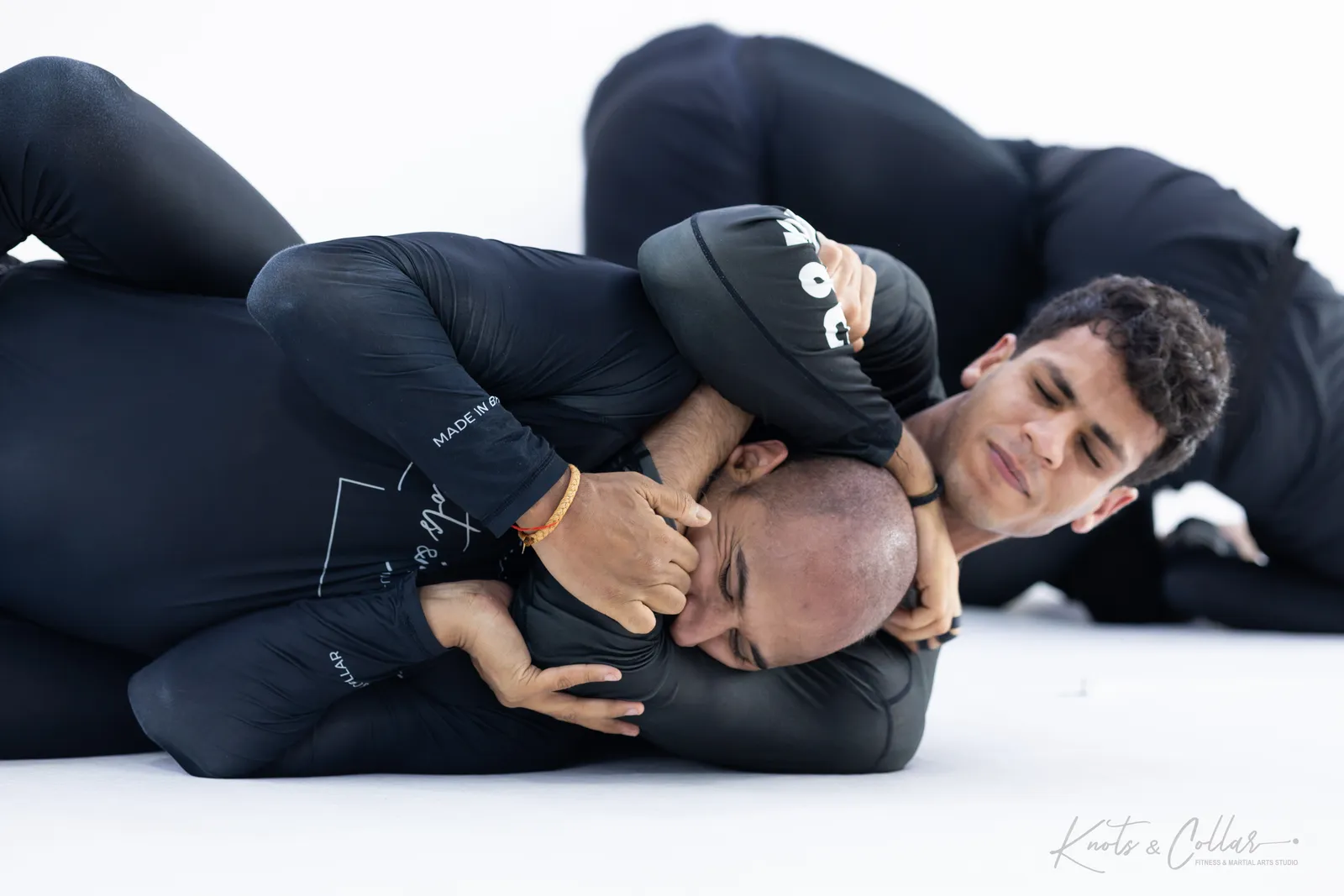
The people you train with
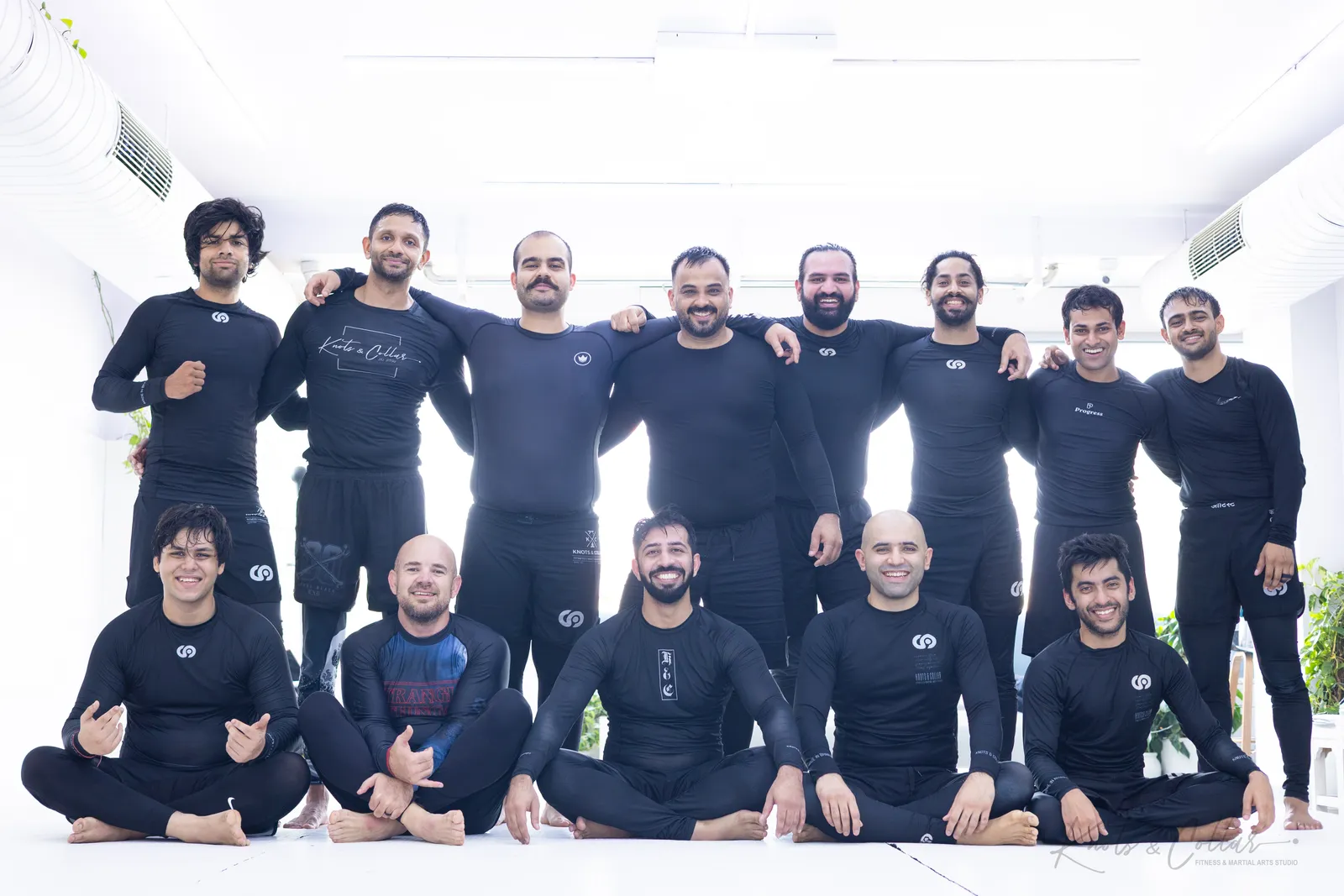
A No-Gi room is only as good as the people in it. Ours is a mix: students who started with us as complete beginners, people who came from wrestling, MMA or the gym, professionals who train before work on a Thursday morning, and university students who come in on Saturdays.
The idea that holds it together is the studio’s own: Kindness Over Toughness. The higher belts look after the newer ones. Partners tap early and let go straight away. When someone gets something right for the first time, the room notices.
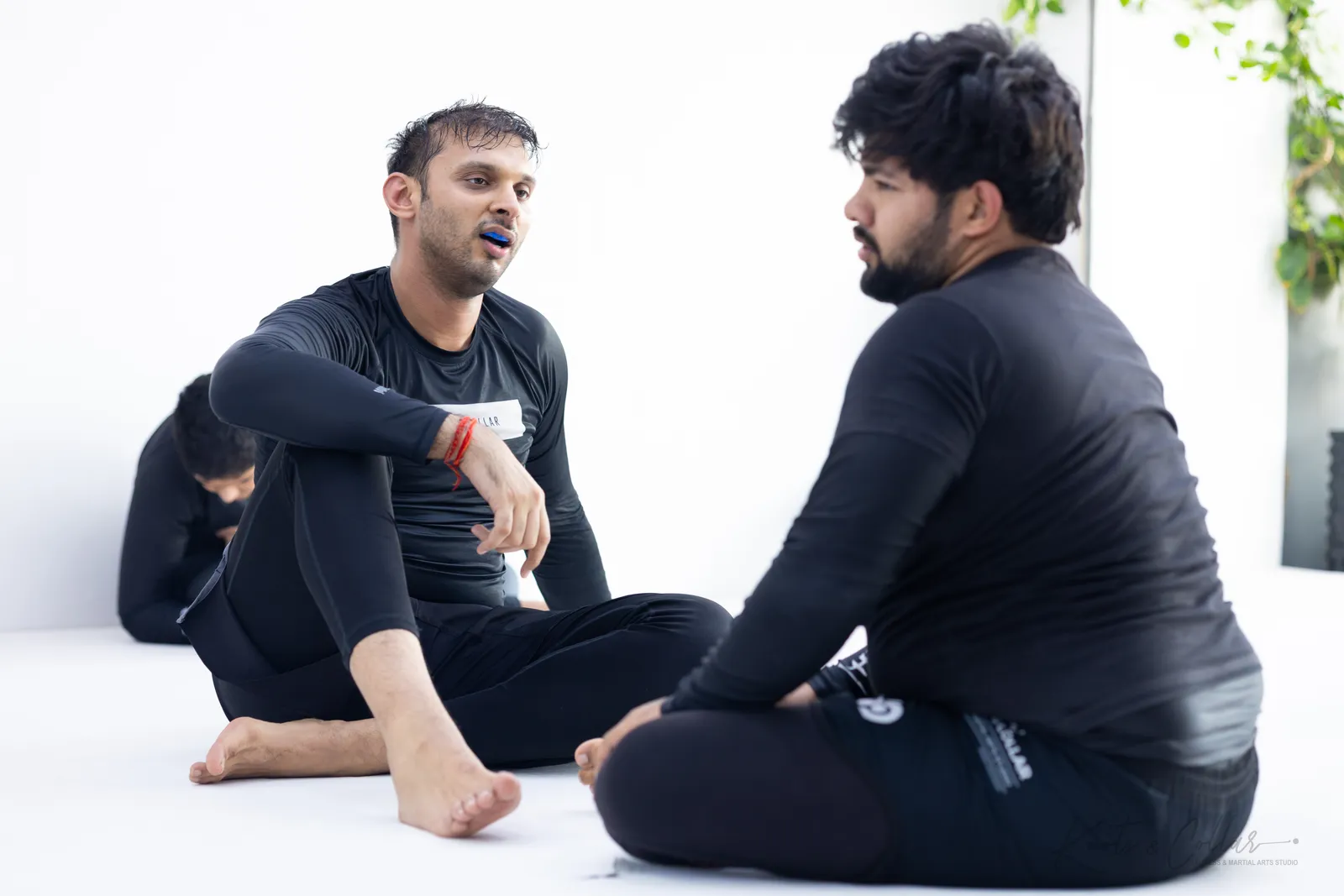
Visitors are part of it. Jiu-jitsu travels well, and people passing through Delhi often train with us: students from other academies in India, people working in the city for a few months, travellers from abroad. They bring their own game, we share ours, and everyone leaves with something new. Some of them appear in the classes on this page.
Visiting black belts teach and roll here too. When Professor Igor Lunyakov came from Russia, he spent his time rolling No-Gi with our team, and the room learned a great deal from it. You can read about those rounds and what the team took from them.
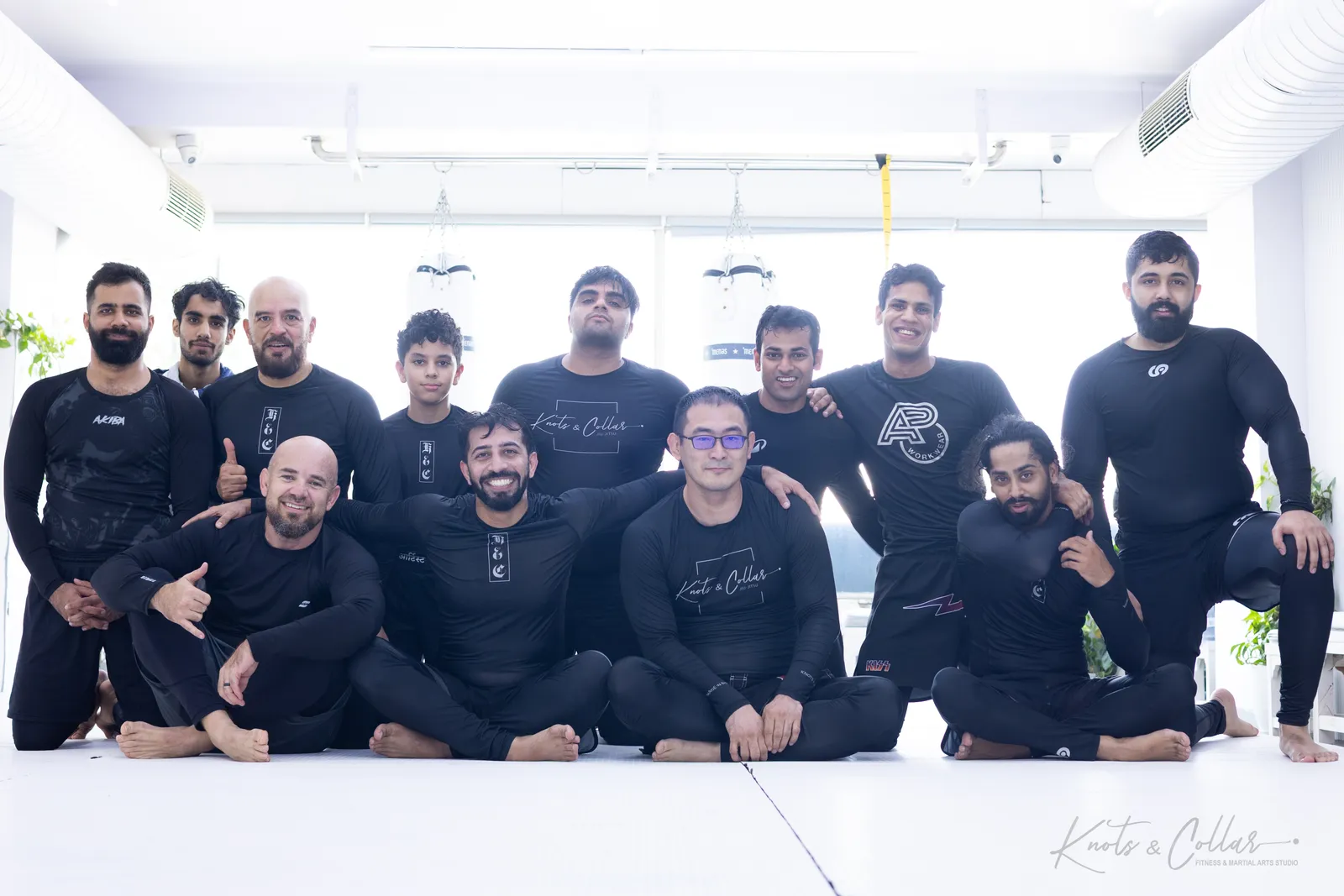
Saturday mornings are the heart of the week. The 8am and 9am classes run back to back, and most people stay on to roll afterwards. It is where beginners meet the rest of the team, where visitors usually join, and where the group photos are taken.
Recent No-Gi classes
We film many of our classes and put them online in full, so you can see exactly how we teach before you visit. These are some of the most recent No-Gi sessions.
X-guard entry. Intercepting, kicking up, the sweep and the half get-up, built step by step.
Knee bar from half guard and the electric chair sweep. One position, two outcomes, and how to choose between them.
Mount escape under pressure. Hip up, walk the shoulders, flip. The kind of escape every beginner learns first and every black belt keeps working on.
For more, our No-Gi complete guide covers the key positions.
How No-Gi competition works
No-Gi matches follow the same idea as gi matches: win by submission, or by points for controlling positions. Takedowns, sweeps, guard passes, mount and the back all score. Our guide to BJJ points and scoring walks through every score.
Without collars and sleeves to grip, matches move faster, and grips shift to wrists, the neck and underhooks. Rule sets differ on which leg locks are allowed at which belt, which is why clear, consistent rules matter; our guide to leg locks explains why.
In India, No-Gi competition is still young and events are occasional. That is normal for a sport in its early years, and it is what a national structure is for. Our guide to BJJ competitions in India covers how to prepare when you are ready.
No-Gi in 2027: what ABJJF India is working towards
ABJJF India (Agrya Brazilian Jiu-Jitsu Federation of India), a Section 8 non-profit founded by Professor Binish Sukhija, is building the national federation for Brazilian Jiu-Jitsu in India. Its work on rank verification, tournaments and inclusion covers the gi and No-Gi alike. For No-Gi, these are its plans for 2027.
A clear No-Gi rulebook. One published set of No-Gi rules, covering scoring, legal techniques by belt and age, and leg-lock rules that protect beginners, written in plain English and Hindi.
No-Gi events with beginner divisions. Tournaments where a white belt’s first match is safe, well refereed and worth remembering, with divisions by belt, age and weight, and a place for juniors.
Referee and coach clinics. Training on the No-Gi rules, so that matches are judged the same way across the country.
Verified ranks, Gi and No-Gi. A registry where a student’s promotions can be looked up, so a competitor’s division reflects their real experience.
No-Gi for everyone. Women’s instructor certification, adaptive jiu-jitsu and scholarships, so that No-Gi grows in every part of the country.
It will take the whole community, every academy and every student. A sport puts down roots when it has fair rules, honest ranks and events that welcome beginners, and that is what 2027 is about.
How to start No-Gi anywhere in India
- Visit a class first if you can. Watch how beginners are paired and how the coach explains.
- Wear a rash guard, spats and shorts. That is the No-Gi dress code: a fitted rash guard on top, spats (compression leggings) underneath, and grappling shorts over them, with no zips or pockets. Spats matter: they protect your knees and legs from mat burn and give your partner nothing loose to catch. Nails trimmed, no jewellery. Our what to wear guide has the detail.
- Expect to be a beginner for a while. The first months are about escapes and staying calm underneath someone. That is where everyone starts.
- Train both if you can. The gi teaches patience and grips; No-Gi teaches speed and body control.
If you are in Delhi, our complete guide to BJJ in Delhi covers everything about training in the city. For the national picture, start with our complete guide to BJJ in India and is BJJ growing in India?
FAQs
Is No-Gi BJJ popular in India?
It is growing. Many people in India come to Brazilian Jiu-Jitsu through MMA, wrestling, kushti or the gym, and No-Gi, trained in a rash guard, spats and shorts, feels familiar to them. Many academies in India now run No-Gi classes alongside the gi.
What is a No-Gi BJJ class like?
At Knots & Collar a No-Gi class has four parts: a warm-up built from jiu-jitsu movements, one technique taught in small steps, positional work against light resistance, and a few rounds of rolling. Beginners are paired with care and anyone can tap or sit a round out at any time.
Can visitors train No-Gi at Knots & Collar?
Yes. Students from other academies, other cities and other countries train with us when they are in Delhi. Message us before you come and bring a rash guard, spats and shorts.
What do you wear for No-Gi BJJ?
A rash guard, spats and shorts. The rash guard is a fitted training top, spats are compression leggings that protect your legs from mat burn, and grappling shorts go over the spats. No zips, pockets or jewellery, and nails trimmed short.
Who teaches No-Gi at Knots & Collar?
Professor Binish Sukhija, a Brazilian Jiu-Jitsu black belt in the De La Riva lineage and the founder of Knots & Collar and ABJJF India.
Are there No-Gi competitions in India?
No-Gi competition in India is still young and events are occasional. ABJJF India, which is building the national federation for Brazilian Jiu-Jitsu in India, is working on consistent rules, verified ranks and beginner-friendly divisions so that No-Gi events can run regularly across the country.
Do I need a gi belt to train No-Gi?
No. Your BJJ rank is the same whether you train in a gi or not. You can start No-Gi with no belt and no experience.
Where can I try No-Gi BJJ in Delhi?
Knots & Collar in Defence Colony, New Delhi, runs No-Gi four times a week: Wednesday 7pm, Thursday 6:30am, and Saturday 8am and 9am, with open rolling after the Saturday class. The first class is free.
Book a free No-Gi class at Knots & Collar, Defence Colony. Kindness Over Toughness.