
He Steps Back? Take the Back from Quarter Guard
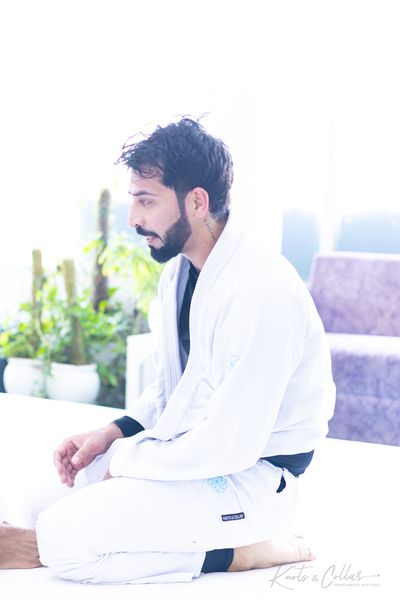
You are on the bottom in quarter guard, you have the underhook, and you are threatening the back. Your partner’s answer is to step back. In this No-Gi class from our mats in New Delhi, Professor Binish Sukhija, a Brazilian Jiu-Jitsu black belt in the De La Riva lineage, shows how to feel that step coming, turn it into the back take, and what to do when you are too late.
Part 1: Find the underhook first
The class carried on from the 8am knee on belly escape. Underneath knee on belly you do not have the underhook yet, so you cannot work from the outside. Bring the arm from the back and swim in with the palm.
His foot position matters. Too far, and it is easy to work. Too far forward, and it is easy to work. The centre is the problem, the toughest to fight, whether you go belly bottom or hip escape into quarter guard.
Part 2: Why does he step back?
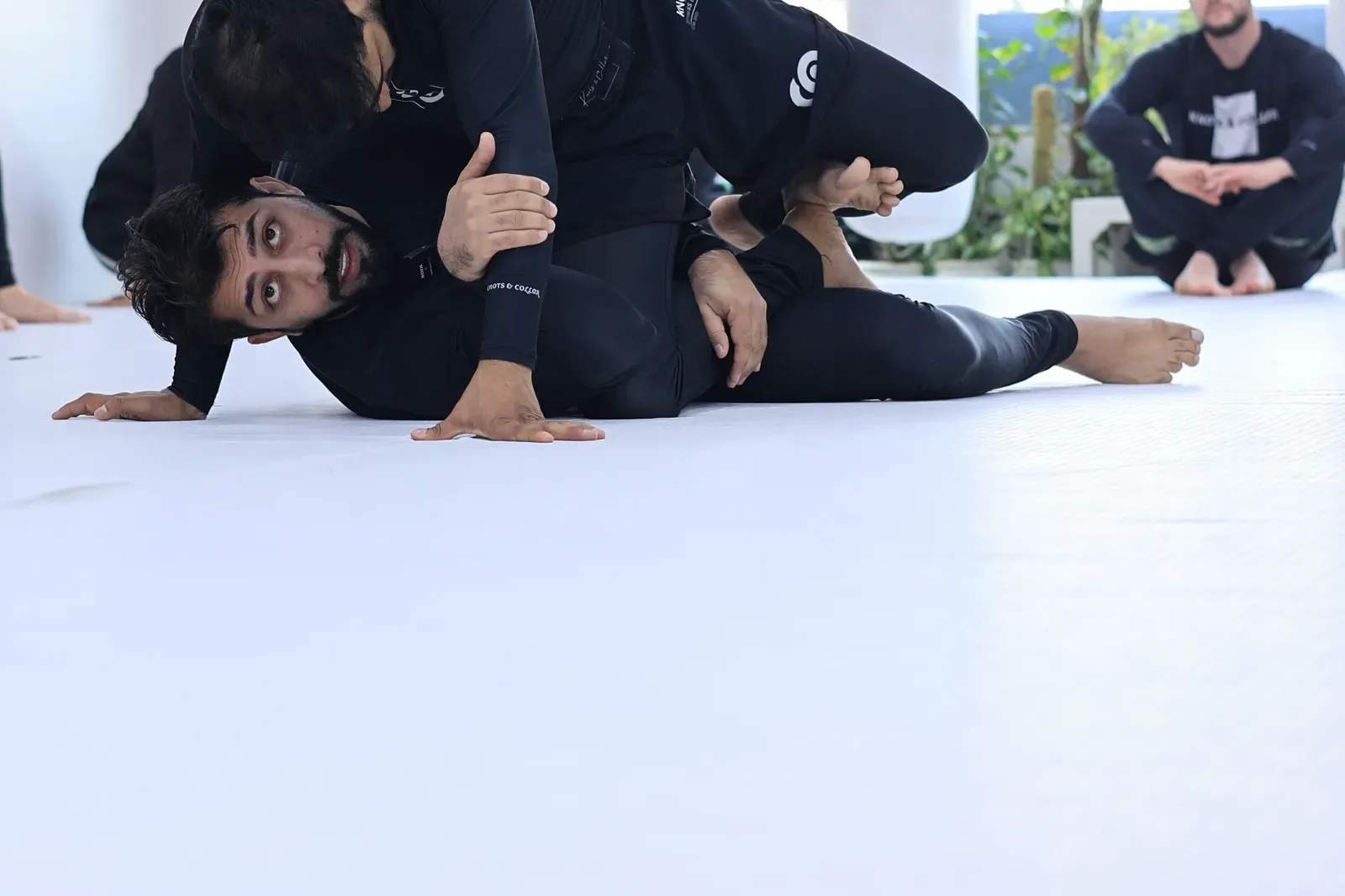
Once you are in quarter guard with the underhook, there is nothing stopping you from taking his back. He has two ways to stop it: turn his whole body and fight for the underhook, or step back. While he is looking the other way, without turning his shoulder, he steps back, and now you cannot claim the back. If he then moves away, he finds his underhook again.
If you are new to this, help your partner learn it. As the top person, put your pocket on theirs, lean more, and take a big step back, not a small one.
Part 3: Sense the step
“Underhook gives you the steering but kills your base.” So the person who still has the underhook will not step back. “It’s people who have lost the under hook.” They have a good base with their free hand, wherever they want to place it.
How do you sense it? Before he steps, he gets heavy on one side. Without shifting his weight towards you, nobody steps back. The moment you feel it:
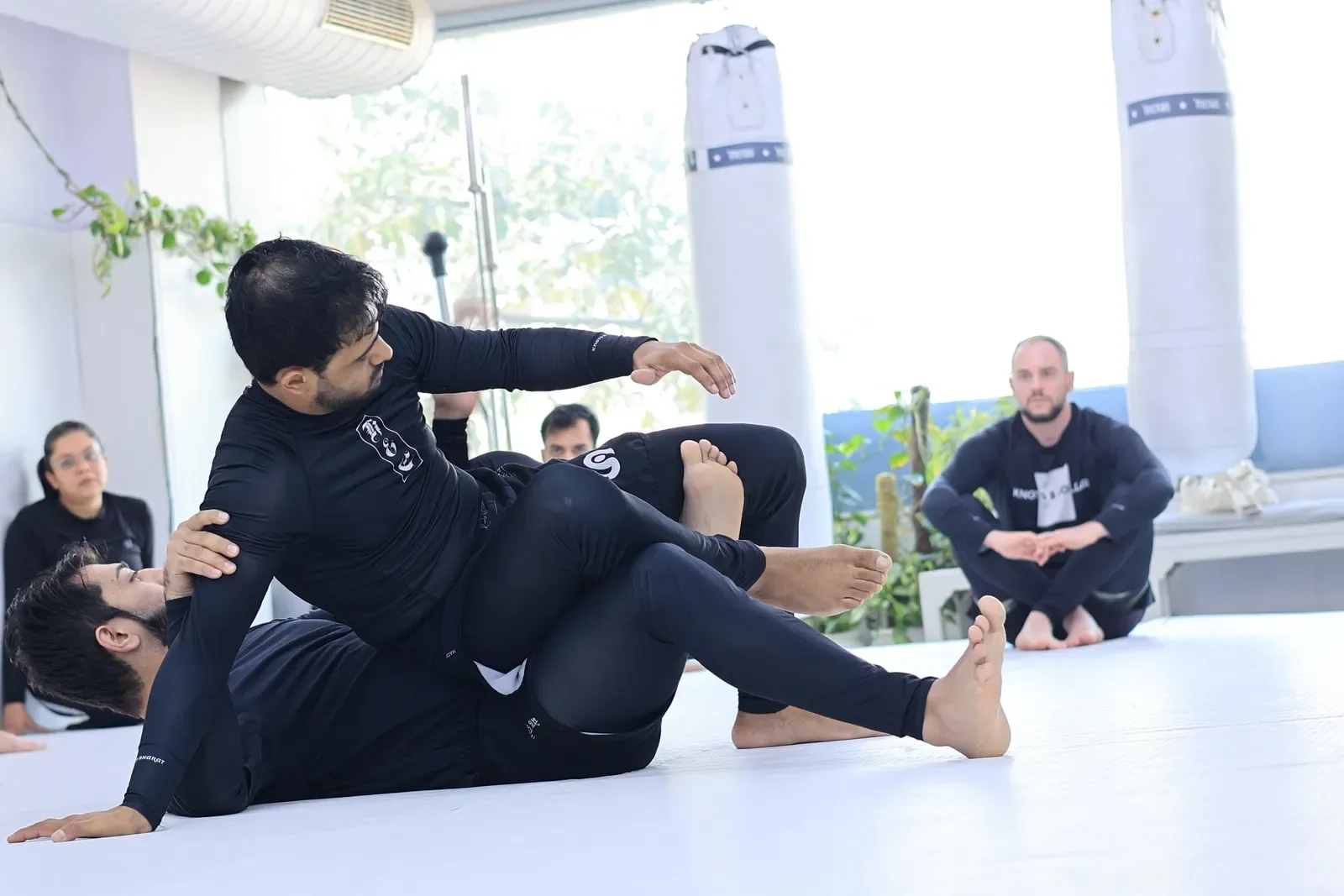
- Bring your knee to your chest, so your shin is on his hamstring or butt cheek.
- Clear the arm near your head and pull your head out.
- Send your other hand to his hip. He might step forward again, and this lets you chase him.
It happens fast. He will be snappy and explosive with it, so expect it.
Part 4: Knee outside, ankle inside
As he steps back, keep your knee outside and find your ankle inside his thigh. Not the knee inside and the ankle out. Left hand to the pocket, right hand clears the head, and move out first.
When you pull him towards you or fall back, his knee goes light. Win the right side first, let him slide, then win the left. And remember: “it’s not considered a back position till the time you get both of your feet in.”
Part 5: Kick first: how to drill it
You cannot simply get up, because your partner is fighting you, so you kick first. “We are not sparring but we are feeding each other that response.” The top person is not rushing either: one step at a time, and only when there is an opportunity or a mistake.
Don’t let your partner get used to one scenario. Go extremely sideways, run, step back in between: anything that puts them in a little panic, so they have to think of the right step at that moment.
Part 6: Too late? The old age berimbolo
He stepped back and you were late, maybe because you were tired. Take your arm to his back, keep your knees pinched, toes on the ground, and come up. His arm decides how hard this is. Under your head, he is already struggling. On his palm and keeping his base, it is tougher. The worst is when the arm crosses to the other side of your head, or goes into your armpit.
When that arm is the problem, use your free foot to go under his ankle, and keep one foot over so he cannot simply step over. Then:
- Kick his foot up, so he becomes lighter.
- Shin behind his knee.
- Hold the toes, not the ankle. Holding the ankle, he can kick forward.
- Other hand anywhere on his upper body, and a bow and arrow stretch.
“Most likely you will have the back.” “It’s a very mechanical method, no need to invert or do things.” As you finish, stay flat and push him down. Sideways, with no hooks in yet, he slides over and you lose the back.
If it feels like a lot
For those new to jiu-jitsu, the Professor was plain about it: if this feels like too much information, keep revising the ones you have already done; there is no need to adopt the new ones yet. “If you are struggling, it’s okay.”
The next morning’s Gi class joined this to the mount escape: from mount escape to back take. For related work from the same position, see half guard back takes and the false reap from half guard. Joint locks and back takes call for early taps; our guide to what tapping means explains why. For the wider picture, read No-Gi BJJ in India.
Train with us
We teach Brazilian Jiu-Jitsu, Gi and No-Gi, at Knots & Collar in Defence Colony, New Delhi, seven days a week, for complete beginners and experienced grapplers alike. No-Gi is on Saturdays at 8am and 9am. Wear a rash guard, spats and shorts. See the class schedule, book a free trial class, or message us on WhatsApp. Hindi mein baat karni ho? WhatsApp par message kijiye, hum aapko class ke baare mein sab bata denge.
FAQs
Why does the top player step back in quarter guard?
Because you are threatening the back. With your underhook in quarter guard, nothing stops the back take unless they turn their whole body to fight for the underhook, or step back. Stepping back denies the back for a moment and gives them a chance to reset.
How can you tell your partner is about to step back?
They get heavy on one side first. Nobody steps back without shifting their weight towards you. It is also usually the person who has lost the underhook, because the underhook gives you the steering but kills your base.
What do you do when you feel the step back?
Bring your knee to your chest so your shin lands on their hamstring or butt cheek. Clear the arm near your head with one hand and send the other to their hip, so you can chase them if they step forward again. Keep your knee outside and your ankle inside their thigh.
What is the old age berimbolo?
A mechanical back take for when you are late. Kick their foot up, put your shin behind their knee, hold the toes rather than the ankle, and take your other hand anywhere on their upper body for a bow and arrow stretch. There is no inversion.
Why hold the toes and not the ankle?
Holding the ankle, your partner can still kick forward and free the leg. Holding the toes keeps control of the foot.
What do you wear to a No-Gi class at Knots & Collar?
A rash guard, spats and shorts. Your first class at our studio in Defence Colony, New Delhi is a free trial, and you can book it on our schedule a visit page.
Book a free No-Gi class at Knots & Collar, Defence Colony. Kindness Over Toughness.