
The False Reap from Half Guard: Ankle Lock or Back Take

You’re on your side in half guard with the underhook. You kick, you punch, and your partner doesn’t move. “Somehow he is a very solid, big guy.” In this No-Gi class from our mats in New Delhi, Professor Binish Sukhija, a Brazilian Jiu-Jitsu black belt in the De La Riva lineage, shows what comes next: the false reap, and the two finishes it opens, the ankle lock and the back take.
The name comes from the shape. Your foot crosses into the far knee pit the way a reap would. From there the same position gives you two options: the ankle lock, or a guard in front of you while you go round to the back.
Watch the class first, then use the notes underneath when you drill it.
Class chapters
- 0:00 Intro
- 0:40 The false reap: knee, foot, dive, RNC the thigh
- 4:45 Guard behind, guard in front: hop out
- 7:28 Head on the free foot? Dive inside
- 9:11 Both hands to the armpits, invert
- 11:31 Keep the foot active, jump over
- 13:28 Drilling
Part 1: The false reap: knee, foot, dive
First, a reminder. People will fight you for the underhook, and “if you don’t have the underhook, none of that thing works.” With it, the entry is three steps:
- Bring your left knee forward.
- Bring that knee to your chest and replace the knee with your foot.
- Dive the foot in, for his far knee pit, not the near one.
Keep the underhook the whole time. Without it, your partner runs to your back and “this is a mess.” If half guard itself is new to you, our guide to guard types sets out where it sits among the other guards.
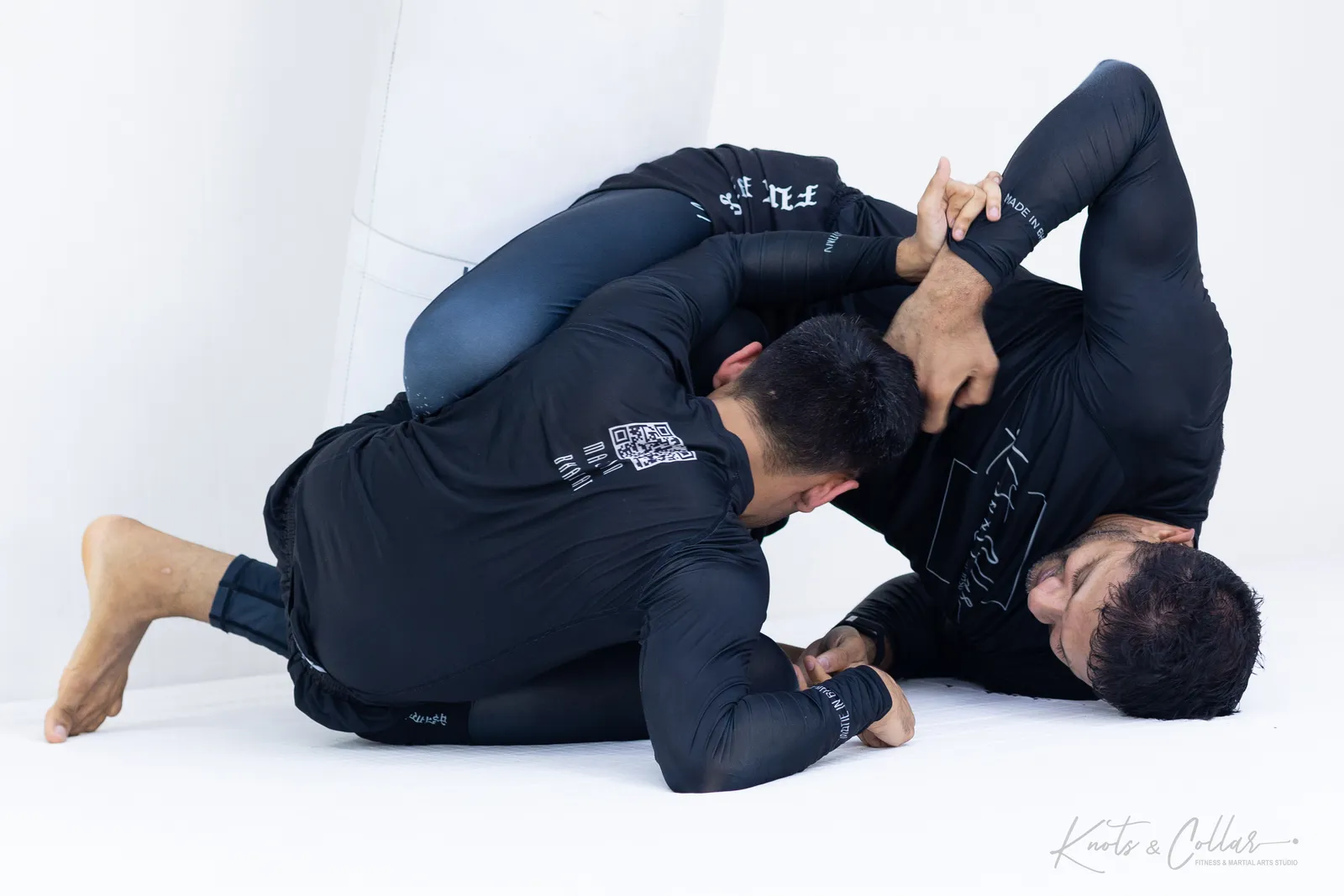
RNC the thigh
Now the underhook does something new: you rear naked choke his thigh with it. Your arm wraps his leg the way it would wrap a neck.
From quarter guard, where only his ankle is trapped, the same entry works: knee, foot, foot, kick, and raise your hip. You end up on your knees and toes, hip off the ground, on your shoulder.
Part 2: Guard behind, guard in front: hop out
Back to the idea of guards. Your feet are the primary guard and your arms the secondary one.
- The RNC on his thigh is a guard behind. Your arm stops him stepping back with his right foot.
- The reaping foot is a guard in front. It stops him running forward.
From here you’re in half a turtle, which keeps his weight heavy on his arm. Then you free your trapped foot:
- Hop out. Move away, move forward, jump, and bring both knees together.
- Leave his ankle free. Don’t touch it and don’t put weight on it.
- Sit back, free foot into your armpit.
There is a beginner-friendly version too: let go with the left hand, keep only the right arm over, and post the left hand on the mat to push yourself back.
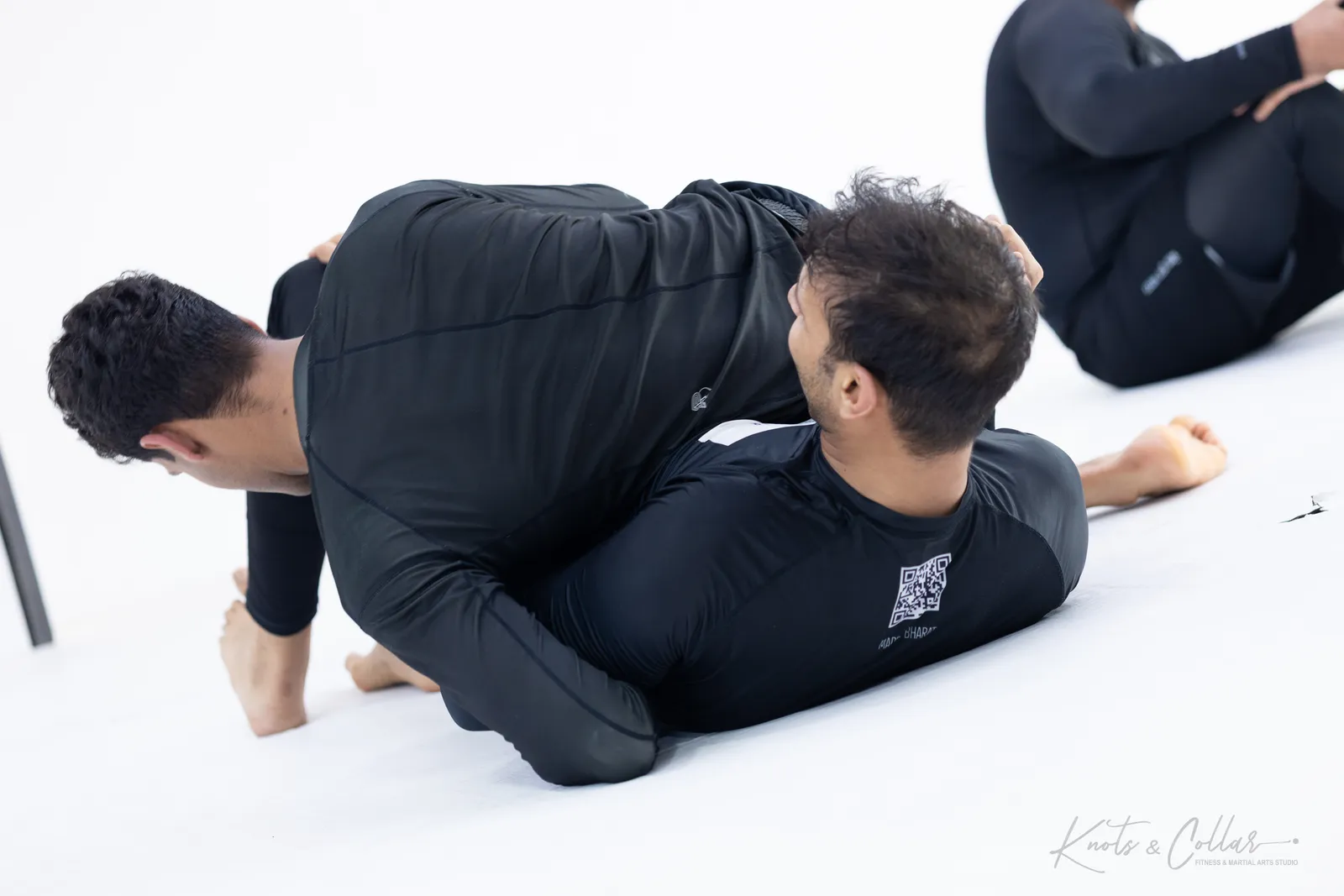
Once you are behind your partner, the job changes from taking the back to keeping it. Our guide to back control covers the hooks, the seat belt and the finishes from there.
Part 3: Head on the free foot? Dive inside
Sometimes his head, where most of his weight is, sits over your free foot. Fighting that is “a big strength battle.” Instead, dive inside: head goes in, hip goes up, and use your hands to push him away.
It’s the same inversion used in 50-50 leg locks. If that position is new to you, our explainer on leg locks in BJJ sets out where 50-50 sits.
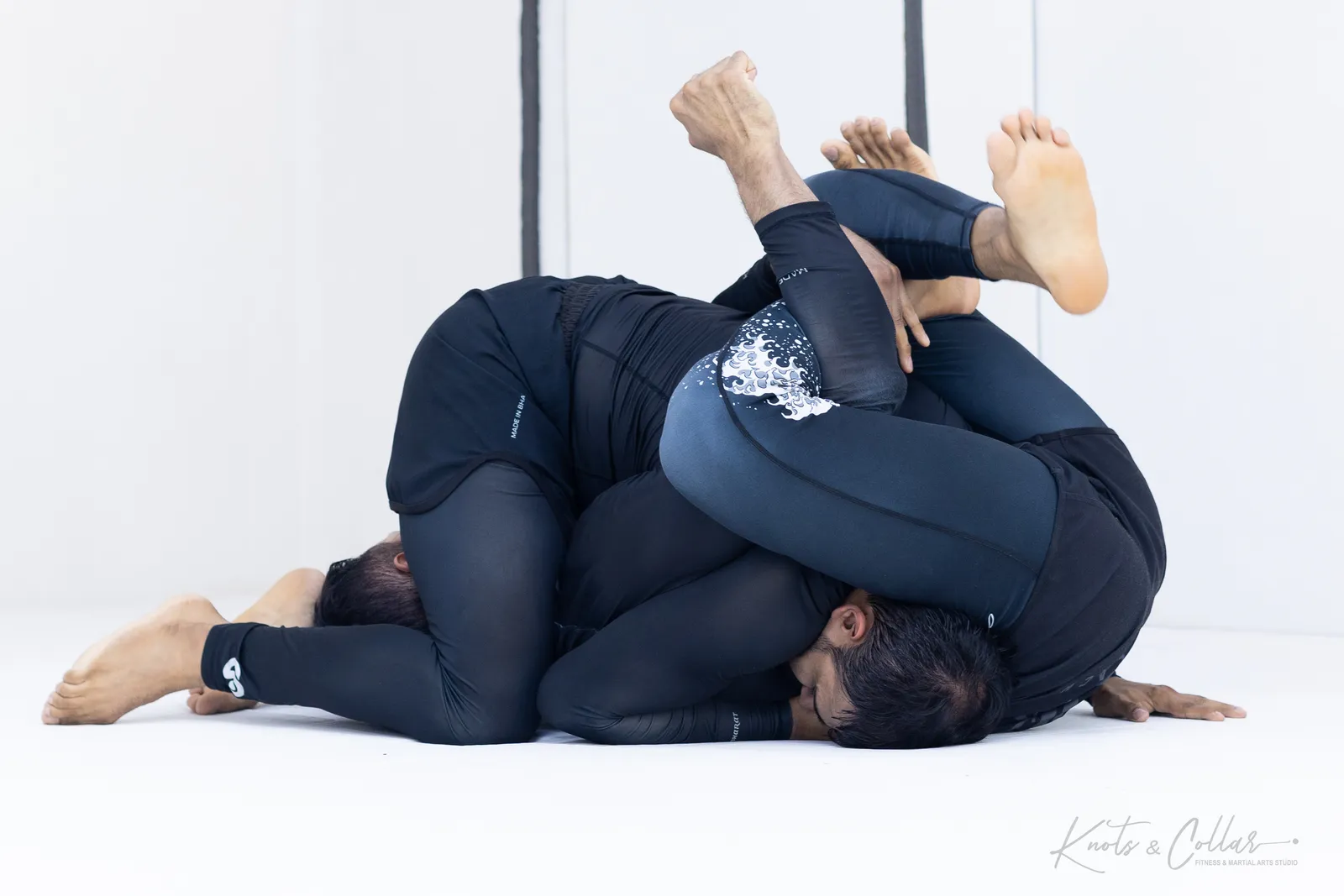
Part 4: Both hands to the armpits, invert
To help the inversion, both hands find his armpits and pull him to your side. The more he comes, the better; his weight becomes your feedback.
- Head in.
- Hip up.
- Sit up.
Once you can invert on your own, you won’t need the push. Until then, “attributes first, then strategies.”
Part 5: Keep the foot active, jump over
Turn into turtle and keep kicking the free foot, so you don’t fall immediately. Tripod, free the foot, walk in and jump your knee over.
Partners can help when the inversion is new by lifting the hip a little, but only if the bottom person’s neck is comfortable.
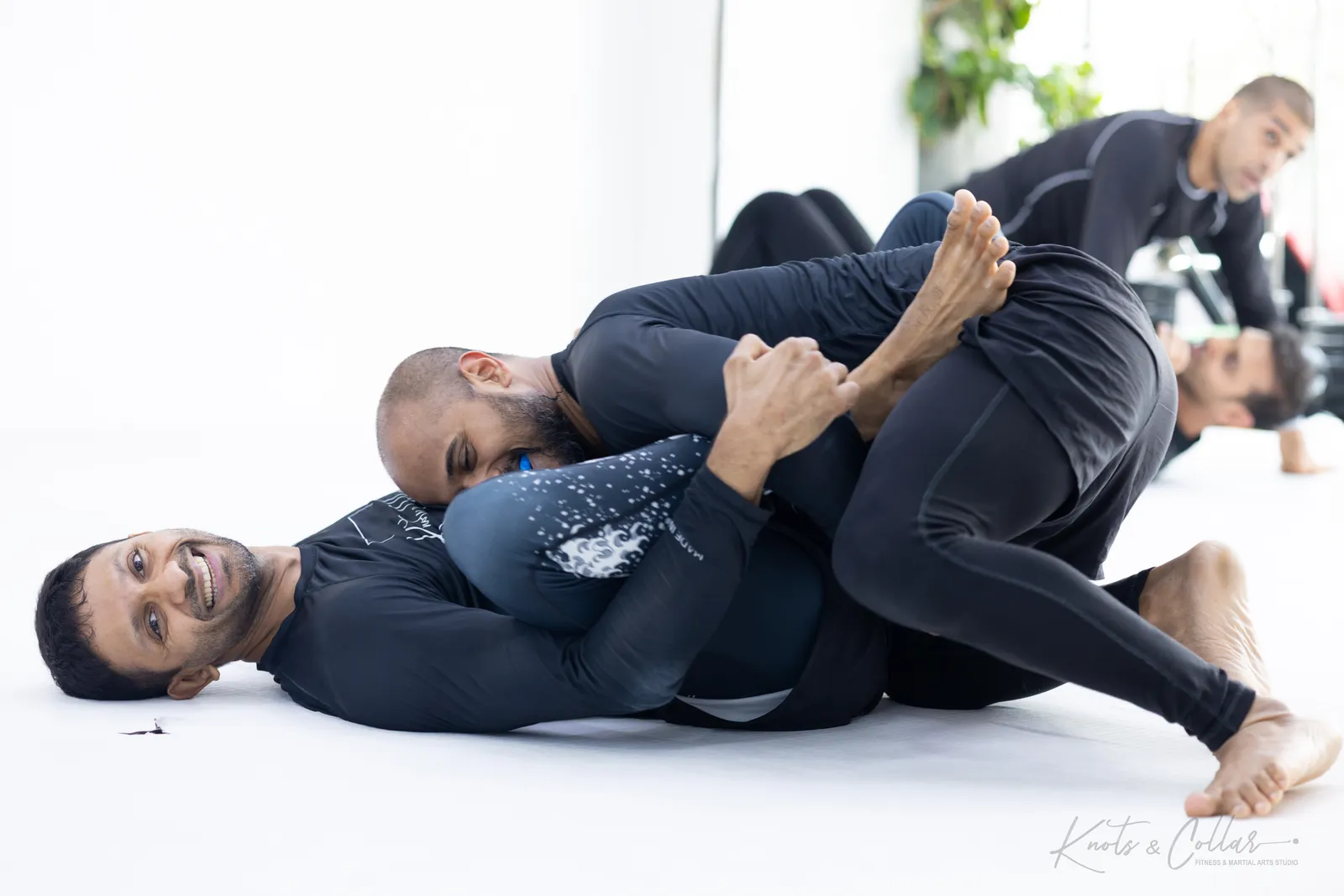
Drilling it safely
Drill each step at a controlled pace with a cooperative partner before you try it in a round. Keep the inversion slow: it puts weight on the neck and shoulders, and a partner should only lift the hip when the bottom person is comfortable. Tap or call stop at any point; our guide to what tapping means covers the habit that keeps everyone training.
More back takes from the same position: our earlier class on half guard back takes covers the back step, the butterfly hook and saving the berimbolo, and the knee bar and electric chair sweep work from the same underhook. For the wider picture of how we train without the gi, see No-Gi BJJ in India.
Train with us
We teach Brazilian Jiu-Jitsu, No-Gi and Gi, at Knots & Collar in Defence Colony, New Delhi, seven days a week, for complete beginners and experienced grapplers alike. For No-Gi, bring a rash guard, spats and shorts. See the class schedule, book a free trial class, or message us on WhatsApp. Hindi mein baat karni ho? WhatsApp par message kijiye, hum aapko class ke baare mein sab bata denge.
FAQs
What is the false reap in BJJ?
In this class it is an entry from the bottom of half guard. You bring your knee forward, bring it to your chest, replace the knee with your foot and dive that foot in for your partner’s far knee pit, not the near one. The reaping foot then works as a guard in front, stopping your partner running forward, while you set up the back take.
How do you take the back with the false reap?
Keep the underhook and use it to wrap your partner’s thigh the way you would wrap a neck for a rear naked choke. That is your guard behind. With the reaping foot as your guard in front, hop out to free your trapped foot, leave their ankle free, sit back, and come round to the back.
Why do you need the underhook for the false reap?
Because without it none of the entry works. Professor Binish Sukhija’s warning in class is that if you lose the underhook, your partner runs to your back and the position becomes a mess. Keep it from the first step to the last.
Does the false reap work from quarter guard?
Yes. In quarter guard only your partner’s ankle is trapped, and the same entry still works: knee, foot, foot, kick, and raise your hip. You end up on your knees and toes, hip off the ground, on your shoulder, ready to free your foot.
What if their head is heavy on your free foot?
Do not fight it, because that becomes a strength battle. Dive inside instead: put both hands to their armpits and pull them to your side, head in, hip up, and invert, the same inversion used in 50-50 leg locks. Their weight becomes your feedback.
Is the false reap safe for beginners?
The entry is beginner-friendly if you drill it slowly. There is a simpler version where you let go with one hand and post it on the mat to push yourself back. The inversion puts weight on the neck, so partners should only help lift the hip if the bottom person’s neck is comfortable, and anyone can tap or stop at any time.
Book a free No-Gi class at Knots & Collar, Defence Colony. Kindness Over Toughness.