
Half Guard Back Takes: the Back Step, the Butterfly Hook and Berimbolo Saves

When the person on top of your half guard steps back, they are handing you their back. In this No-Gi class from our mats in New Delhi, Professor Binish Sukhija starts from regular half guard and builds the back takes that come out of it: on time, late, when your partner turns away, and when the berimbolo doesn’t go the way you planned.
The idea underneath all of it is simple. “Even if you don’t get the back, it’s no longer a threat. You can always get up and wrestle with them.”
Watch the class first, then use the notes underneath when you drill it.
Class chapters
- 0:00 Intro
- 0:42 Regular half guard: bottom knee, check, punch, kick
- 2:02 The back step: knee to the chest, take the back
- 4:47 Late? Butterfly hook, bow and arrow
- 7:48 He faces your back: stretch, swing, butterfly
- 9:59 When the berimbolo slides: free the bottom hook
- 13:58 Knee to the chest, take him to the other side
- 14:55 The over-40s berimbolo
- 15:20 Rolling
Part 1: Regular half guard: bottom knee, check, punch, kick
The class starts with the basics. In regular half guard the focus is the bottom knee: towards your chest, against your partner’s hip bone, and you don’t give it up. “If you can’t find this hip bone, you will find the other hip bone.”
- Check the bicep, the same way as in the lockdown.
- Punch, kick, and use your knee to hit the hamstring.
- Pull your bottom arm out and come up on top.
“This is our bread and butter.” Deep half, the lockdown, coyote: everything else is supplementary, in case this doesn’t work. If half guard is new to you, our guide to guard types sets out where it sits among the other guards.
Part 2: The back step: knee to the chest, take the back
The back step happens when you have the underhook. If the top person has the underhook and steps back, they have no base and you come up with them, so they won’t. When the underhook is yours, they have a clear reason to step back: to play reverse half guard, or to go for leg locks.
The trigger is weight. To step back, your partner first has to push into you and get heavy on that side, so their back foot goes light. “The moment that he becomes heavy here, be ready.”
- As they step back, bring your knee to the chest. They land on your shin.
- Hold them tight and clear the arm.
- Go flat and take the back.
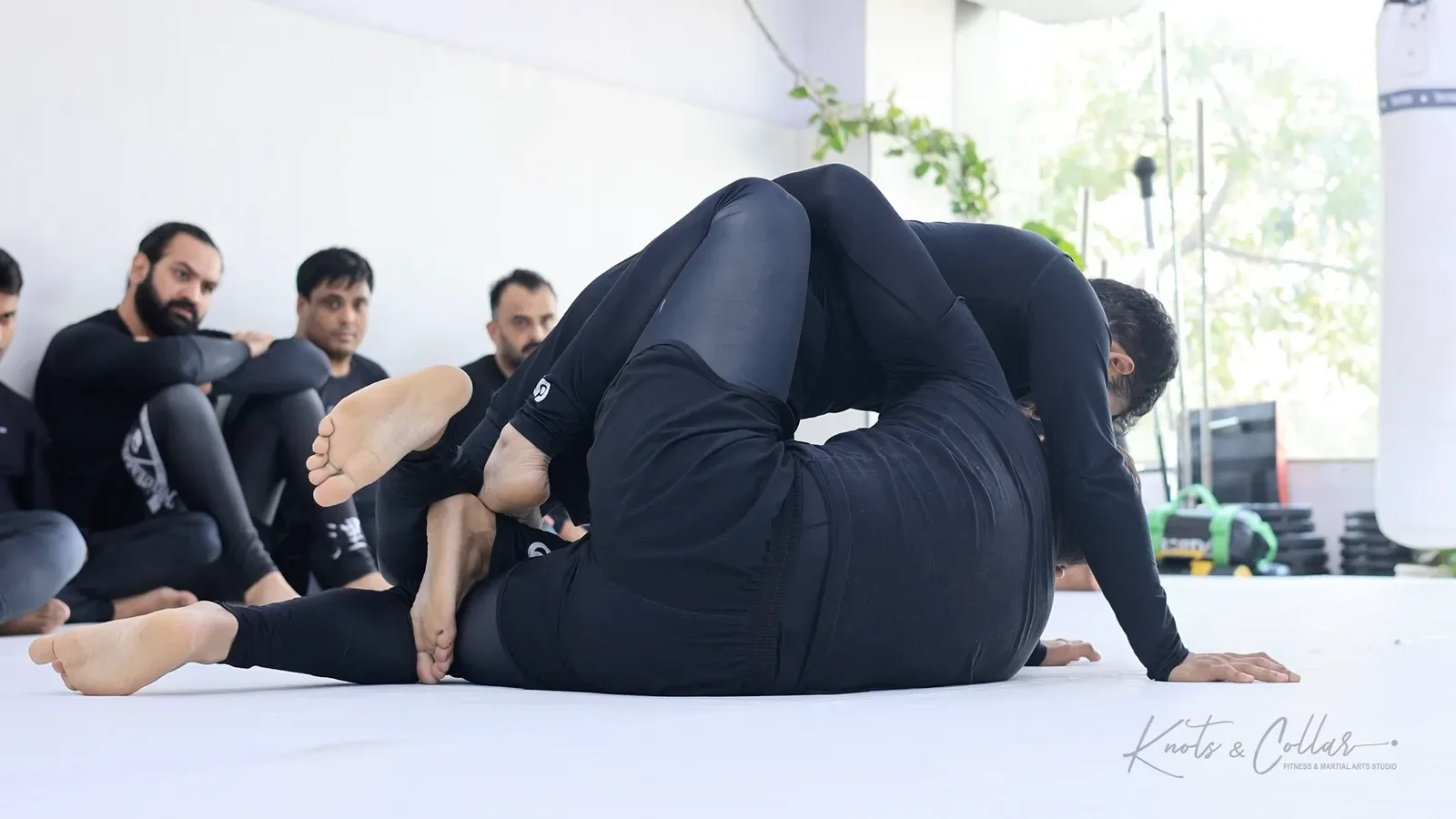
Once you are behind your partner, the job changes from taking the back to keeping it. Our guide to back control covers the hooks, the seat belt and the finishes from there.
Part 3: Late? Butterfly hook, bow and arrow
Sometimes you miss it. Your partner has already stepped back, they are still posting on their foot, and they are playing that reverse half guard. You’re late, but it isn’t over.
- Check, clear the arm, and go flat. You won’t fall, because they are still posting.
- Take a butterfly hook on their foot. “I am not just taking the butterfly hook for a check.” You want to lift and fight for the control.
- Kick, stretch, swing. Replace the hook with your hand, and let your shin fit against them.
“All you want to do is imagine you are doing a bow and arrow, you are shooting an arrow.” Stretch, and change your base at the same time: you were heavy on the left, now you’re heavy on the right.
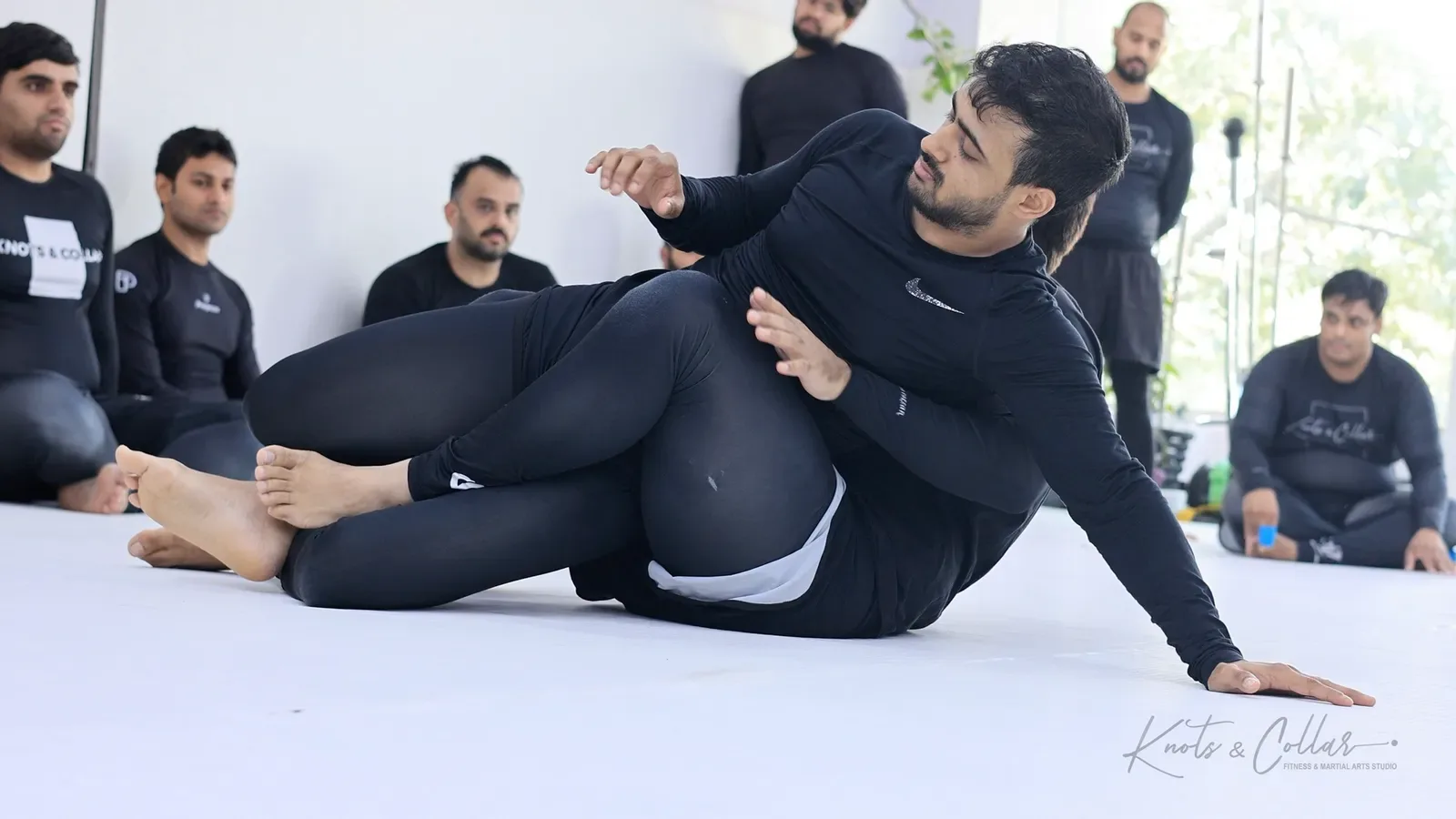
Part 4: Your partner faces your back: stretch, swing, butterfly
Now your partner has turned and is facing your back. Take the belt and get the near-side foot. You can sit on your backside, or come up on the balls of your feet for a better base.
- Keep your far side folded. You can’t take the butterfly from there directly.
- Stretch your foot and swing to the other side. “You have the butterfly already.”
- Kick up, keep your posture, and stay on top.
- Kick forward, stretch your knee forward, bring your knee inside, swing, and finish.
And if at any point your partner decides to fall back, you don’t need the back at all. Just get up.
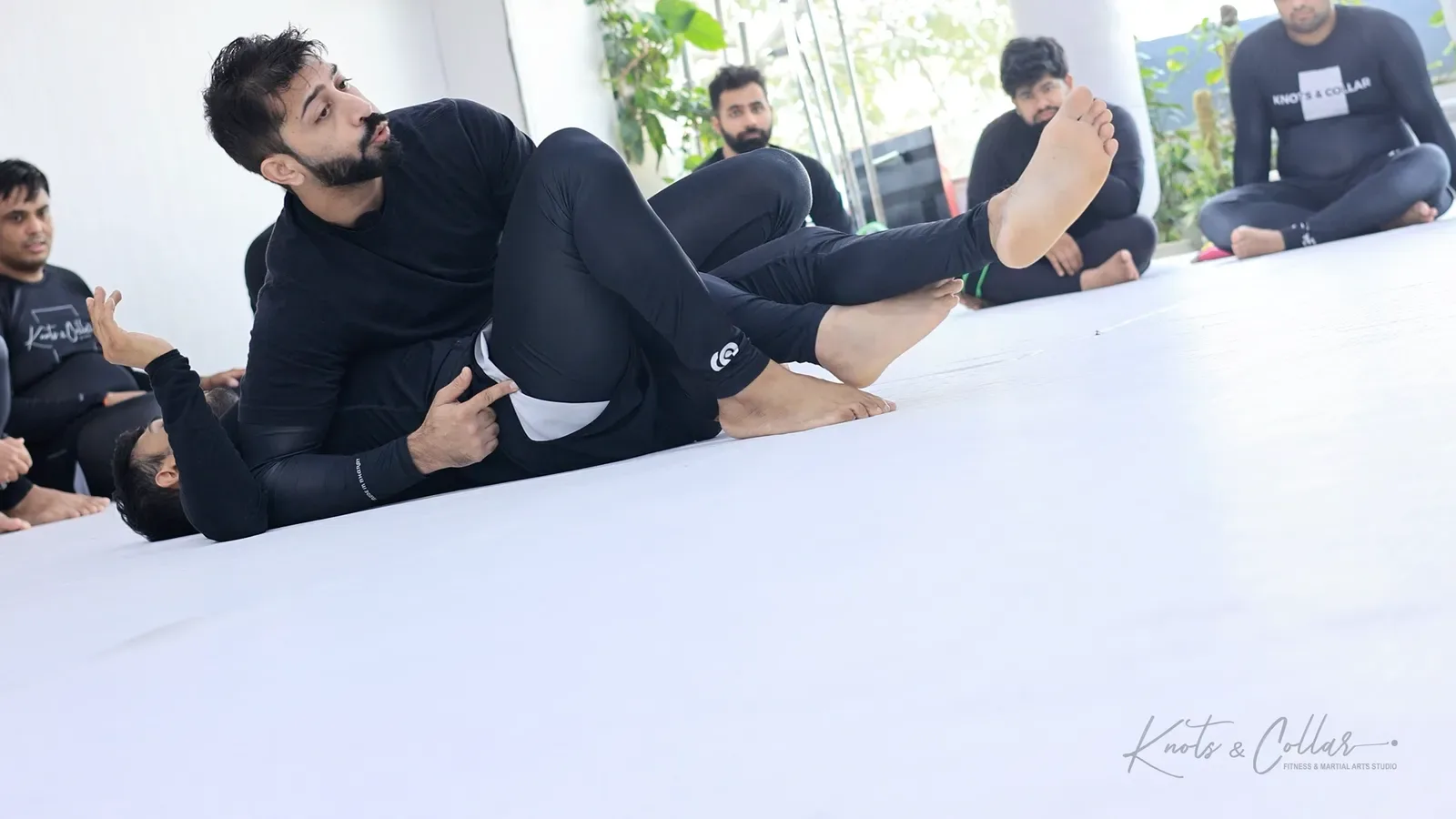
Part 5: When the berimbolo slides: free the bottom hook
You’re inverting for the berimbolo and your partner slides: their knee goes down, their hip lands on the mat, and all you have left is their knee and their ankle. This happens all the time. “These are the same unsuccessful cases where you are doing the berimbolo and they happen to slide.”
- Load the foot as high as you can so it turns sideways. “The higher you can load the foot, the more effective it is.”
- Connect to their upper body: in the gi, the collar works better; in No-Gi, the shoulder or the neck.
- Make them fall to the other side. That frees your foot.
- Get your bottom hook back. Then you can let go and go again.
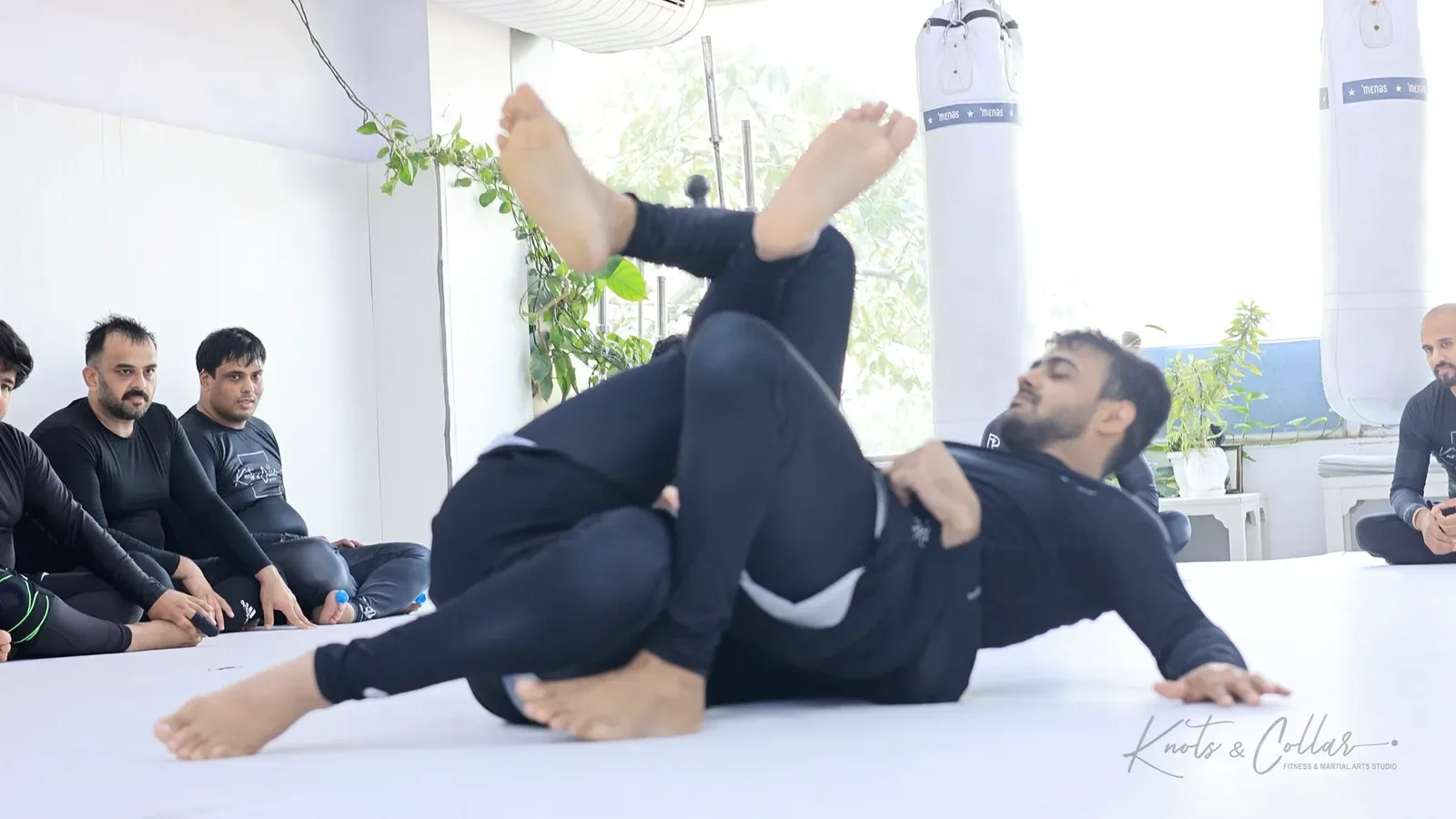
The berimbolo itself, and the worm guard entries that lead to it, are the subject of our Gi class on the worm guard, the lapel and the berimbolo.
Part 6: Knee to the chest, take them to the other side
When you move inside, your partner can’t turn towards you; they can only move away, and that’s what you want. Find a neck or collar control and keep pulling them up. Your bottom foot being down still isn’t enough for the back control, so: “Knee to the chest and take him to the other side.”
Part 7: The over-40s berimbolo
The class ends with what Professor Binish calls the “over-40s berimbolo”: kick, stretch your knee forward, and pull it as much as you can. The video closes on the live rounds that followed.
Drilling it safely
Drill each part at a controlled pace with a cooperative partner before you try it in a round, and keep the berimbolo work slow: inverting puts weight on the neck and shoulders. Tap or call stop at any point. New to grappling without the jacket? Our No-Gi jiu-jitsu beginner’s guide is the place to start, and what tapping means covers the habit that keeps everyone training.
More half guard from the same mats: the knee bar from half guard and the electric chair sweep works from the same underhook, and the half guard pressure pass shows the position from the top.
Train with us
We teach Brazilian Jiu-Jitsu, No-Gi and Gi, at Knots & Collar in Defence Colony, New Delhi, seven days a week, for complete beginners and experienced grapplers alike. See the class schedule, book a free trial class, or message us on WhatsApp. Hindi mein baat karni ho? WhatsApp par message kijiye, hum aapko class ke baare mein sab bata denge. If you are choosing where to start, our guide to choosing a BJJ academy in India sets out what to look for, and BJJ in India: the complete guide gives the wider picture.
FAQs
How do you take the back when your partner steps back from half guard?
Watch for the weight. To step back, your partner first has to lean into you and get heavy on that side, so the back foot goes light. The moment you feel them get heavy, be ready: as they step back, bring your knee to your chest so they land on your shin. Hold them tight, clear the arm, go flat and take the back.
When does the back step happen in half guard?
When the bottom person has the underhook. If the top person has the underhook and steps back, they have no base and the bottom person simply comes up with them, so they will not do it. With the underhook on the bottom, the top person has a reason to step back: to play reverse half guard or to go for leg locks.
What if you are too late for the back step?
If your partner has already stepped back and is still posting on their foot, check, clear the arm and go flat. You will not fall, because they are posting. Take a butterfly hook on their foot, not just as a check but to lift and fight for control, then kick, stretch and swing, replacing the hook with your hand so your shin fits against them.
What is the bow and arrow movement in this back take?
It is the stretch you make when you are late. Imagine you are shooting a bow and arrow: you stretch, and at the same time you change your base. If you were heavy on the left side, you finish the stretch heavy on the right.
What do you do when a berimbolo slides?
If your partner’s knee goes down and their hip lands on the mat, and all you have left is the knee and the ankle, load their foot as high as you can so it turns sideways. Connect to their upper body, with the collar in the gi or the shoulder or neck in No-Gi, make them fall to the other side to free your foot, and get your bottom hook back.
What if you do not get the back from half guard?
Then it is no longer a threat. Once your partner has stepped back or fallen away, you do not need the back at all: you can always get up and wrestle.
Where can I learn No-Gi BJJ in India?
We teach No-Gi and Gi Brazilian Jiu-Jitsu at Knots & Collar in Defence Colony, New Delhi, seven days a week, for complete beginners and experienced grapplers. The class schedule is on our programs page, and you can book a free trial class or message us on WhatsApp.
Kindness Over Toughness.