
How to Pass Half Guard with Pressure: Pin the Arm, Not the Legs
Most people lose the half guard pass by trying to beat every guard their partner offers. This lesson from our mats in New Delhi takes a quieter route: pin one arm with your chest, stay flat and heavy, and let patience do the passing.
Half guard is one of the positions you will meet most often in Brazilian Jiu-Jitsu, whether you train in the Gi or No-Gi, in Delhi or anywhere else in India. From the top it can feel like a puzzle with no end: you clear one hook and a knee shield appears, you deal with that and a butterfly hook lifts you. The pass below changes the question. Rather than answering each guard, you take away the one thing nearly all of them need — your partner's near arm.
Watch the full lesson first, then use the step-by-step notes underneath when you drill it.
Lesson chapters
- 0:00 Guard pass highlights
- 0:20 In this lesson
- 0:40 The grip: belt grip, elbow up
- 1:40 Head away, pin the arm
- 2:37 Stay heavy: sprawl on the instep
- 3:21 When your partner resists: roll-over and butterfly
- 4:05 Variations: underhook, double over, over-under
- 4:55 Beat the butterfly: flex the foot
- 5:38 The entry: passing the knee shield
- 6:29 Patience: hold the arm, don't give space
The idea: you only have to fight for one thing
Think about what your partner needs to escape or sweep from half guard. To come up onto their side, they post an elbow. To hip escape and recover guard, they need that arm free to frame. To take your back, they want an underhook and room to move into it. Pin the near arm to the mat — from the shoulder all the way to the elbow — and every one of those options goes quiet at once.
That is the whole pass in a sentence: you don't have to fight these guards; the only thing you have to fight for is holding that arm. Everything else in the lesson exists to keep that pin in place.
Step 1: the grip — belt grip, elbow up
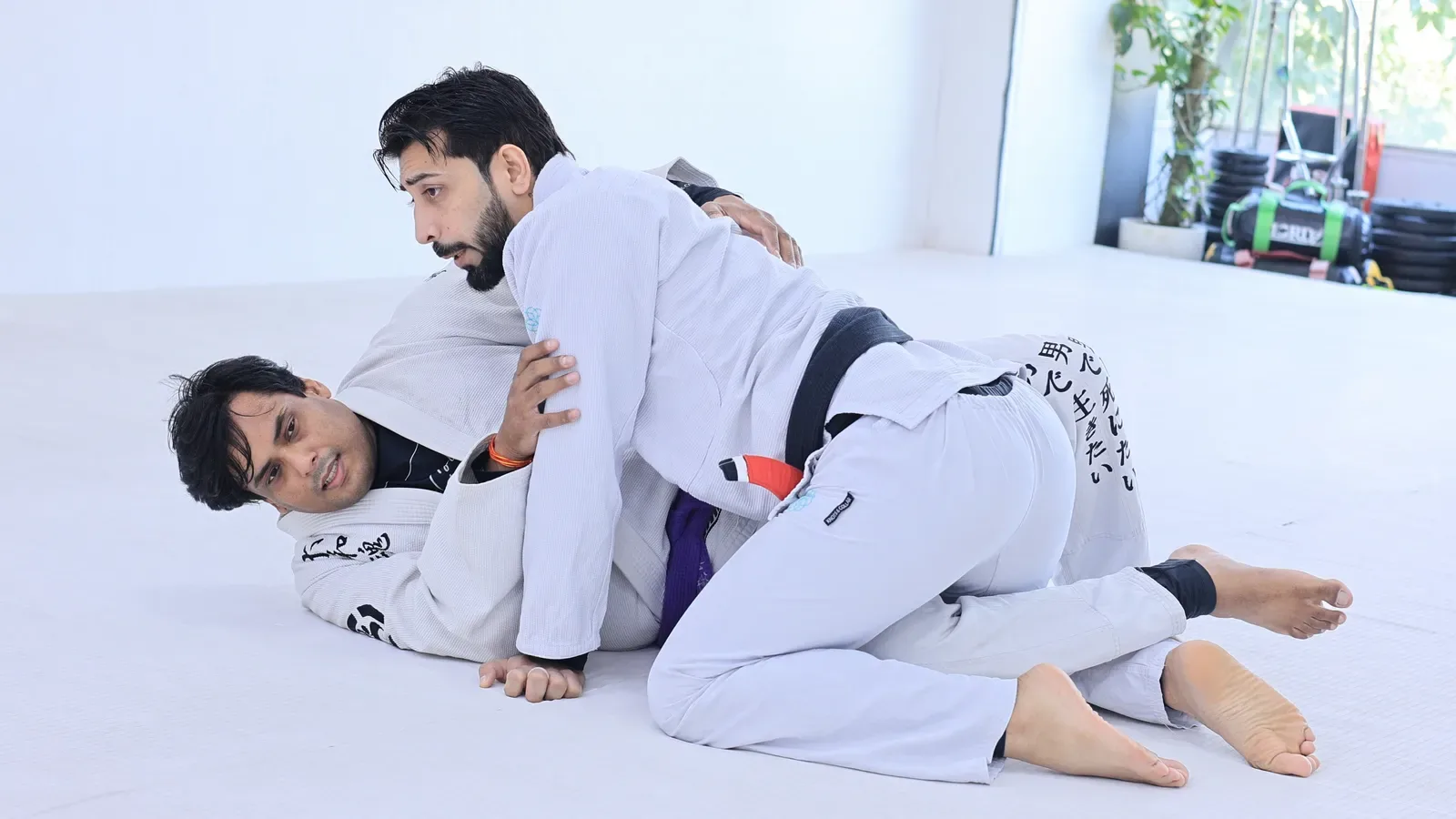
From the top of half guard, look for a grip on your partner's belt. Your thumb points down, your shoulder stays engaged and — the detail that matters most — your elbow stays up. A dropped elbow gives your partner a gap to slip an underhook through.
With your other arm, work their free arm either over or under, whichever is available. To go over, work behind the triceps and hold on to something: in the Gi that can be the jacket; without a Gi, hold on to whatever is there. Keep the belt grip and keep that elbow up.
Step 2: head away, chest on the arm
Now let your chest drop onto their arm. You are sandwiching it between the mat, your arm and your chest, and pinning the whole length of it, shoulder to elbow. The reason is simple: you don't want their elbow to reach the mat, because an elbow on the mat is how they sit up.
At the same time, turn your head away from your partner. It is natural to look at the person you are passing, but if you face into them, their free hand will push on your face — and every push you react to gives them space. Head away, chest heavy, elbow up.
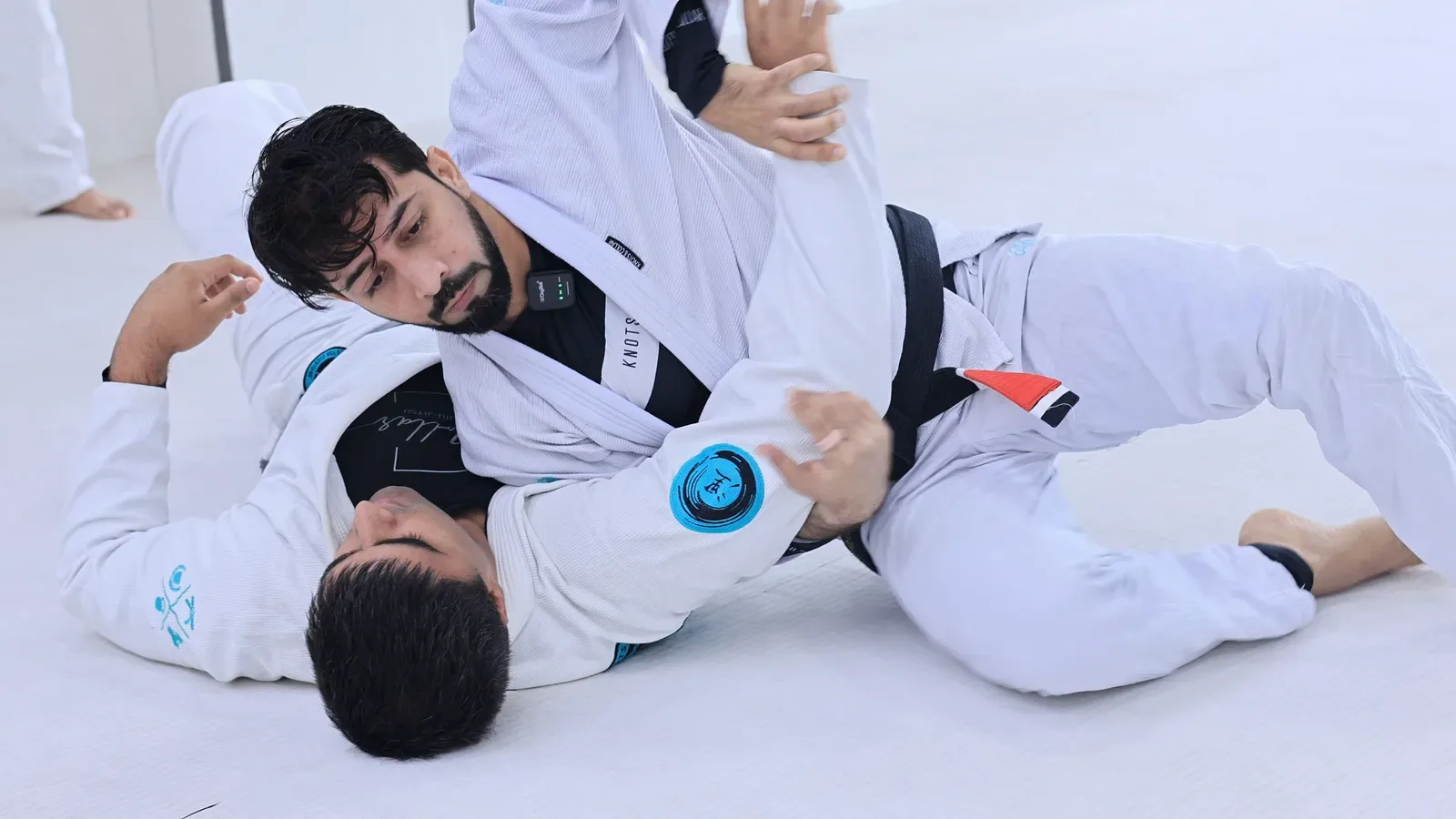
From here your partner is largely stuck. They can still hip escape, but the further they move away, the more of their half guard they give up. And even if they find an underhook, they can't take your back while that arm is pinned.
Step 3: stay heavy — flat on your instep
Your legs are in a sprawl, but not the tip-toe kind. You are not on the balls of your feet and your hips are not lifted. You are completely flat on your insteps, hips down, feet wide.
- Hips down, on the instep — so your partner cannot bring their knee back to their chest and rebuild their guard.
- Feet wide — so a push to one side doesn't roll you straight over.
- No hips in the air — lifting your hips opens room for a shin or knee shield to come in, for your partner to dive underneath into deep half guard, or for other guards and leg entries to appear.
Here is the part that feels backwards at first: the more your partner moves, tries to recover guard or reaches for a butterfly hook, the easier your pass becomes — as long as you keep this sprawl.
Step 4: when your partner resists
A partner on the bottom will usually try one of two things.
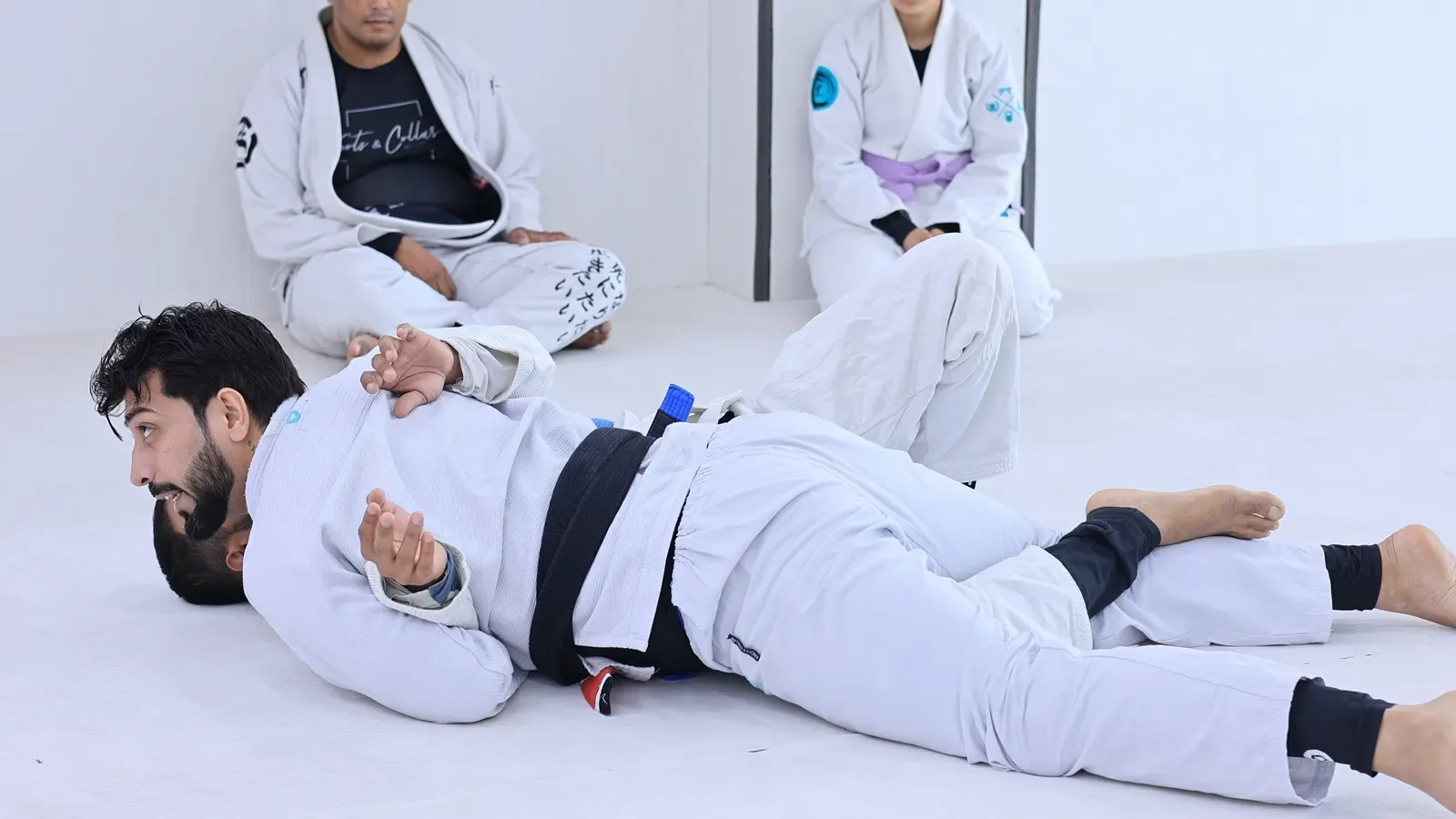
They try to roll you over to the other side. Don't respond by pushing back, and don't move towards them or away from them. Go downwards instead — more and more grounded — so your body is completely dead weight. The rolling motion arrives and simply has nothing to move.
They take a butterfly hook and try to lift you. Accept it. Stay flat as you go, turn your palm up as you land, and take side control. Because your chest never left their arm, the sweep delivers you straight into the position you were passing towards.
Step 5: variations — underhook, double over, over-under
You can also pass with a very high underhook. "High" means you are punching your shoulder over rather than holding on with your hand, so there is no space left for your partner's own underhook. Everything else remains the same: chest pinning the arm, head away, hips down. Because your shoulders aren't stretched out diagonally, it is often the more comfortable version to hold.
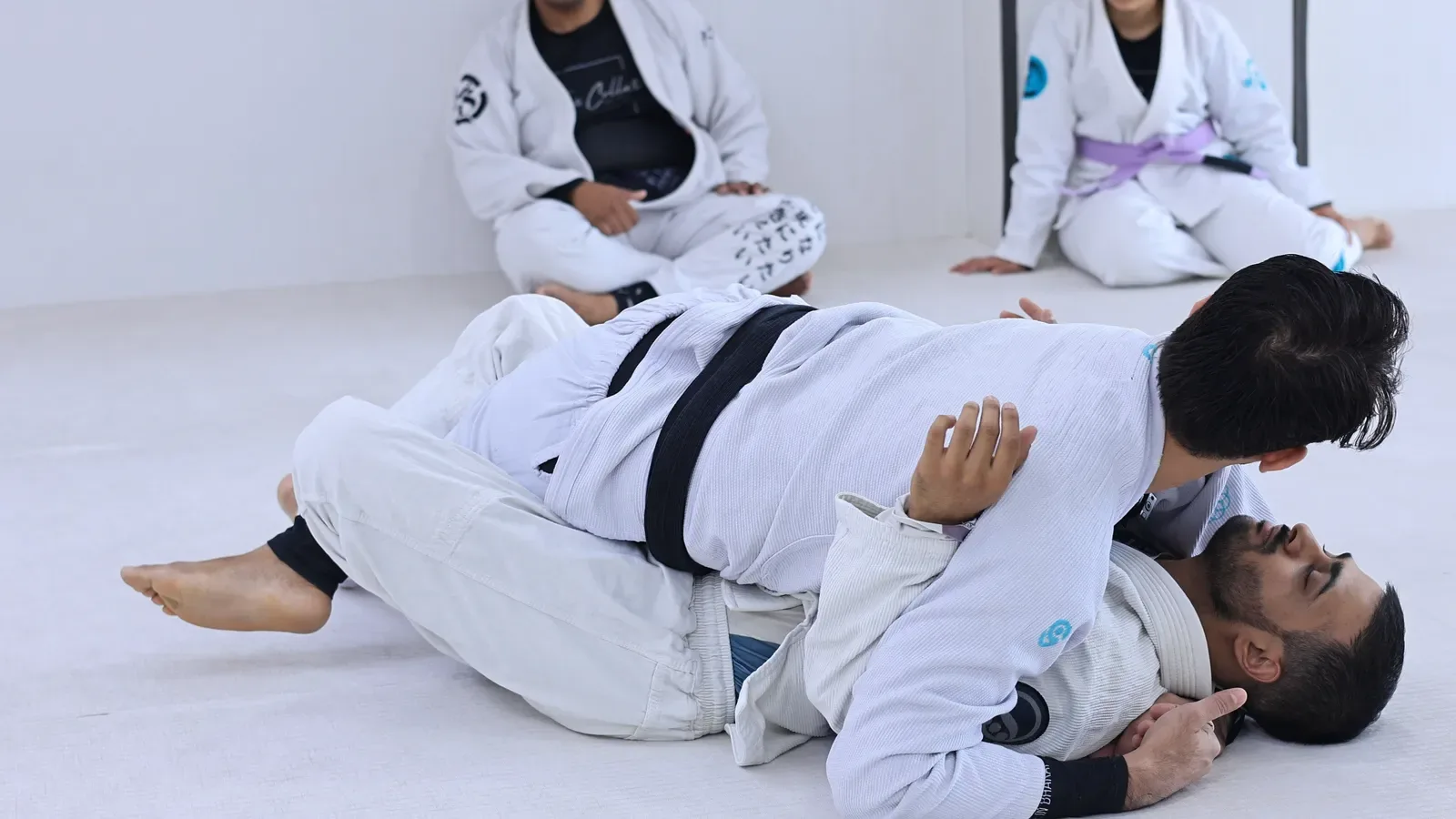
Play with both arm combinations:
- Double over — both arms over.
- Over-under — one arm over, one under.
What we avoid is both arms under. With their chest and hips flat on the mat, your partner can always pull an arm free from a double underhook.
Step 6: beat the butterfly — flex the foot
The butterfly hook needs something solid to lift. If your trapped foot is relaxed and bent, your partner can work their butterfly nicely. So pull your toes up, kick the foot back and keep it flexed while you hold your grips. A bent foot gives the hook your whole foot to lift against; a flexed one leaves it working against your toes, and toes alone are never strong enough to carry you.
If butterfly guard is a position you meet often, our butterfly guard roadmap lays out the escapes, transitions and submissions around it.
Step 7: the entry — passing the knee shield
Many half guard players use a knee shield during rolling: a shin across your body, holding you at a distance. The instinct is to reach in and take grips, but the more grips you take from out there — especially with your far-side hand — the more you set yourself up for a scissor sweep.
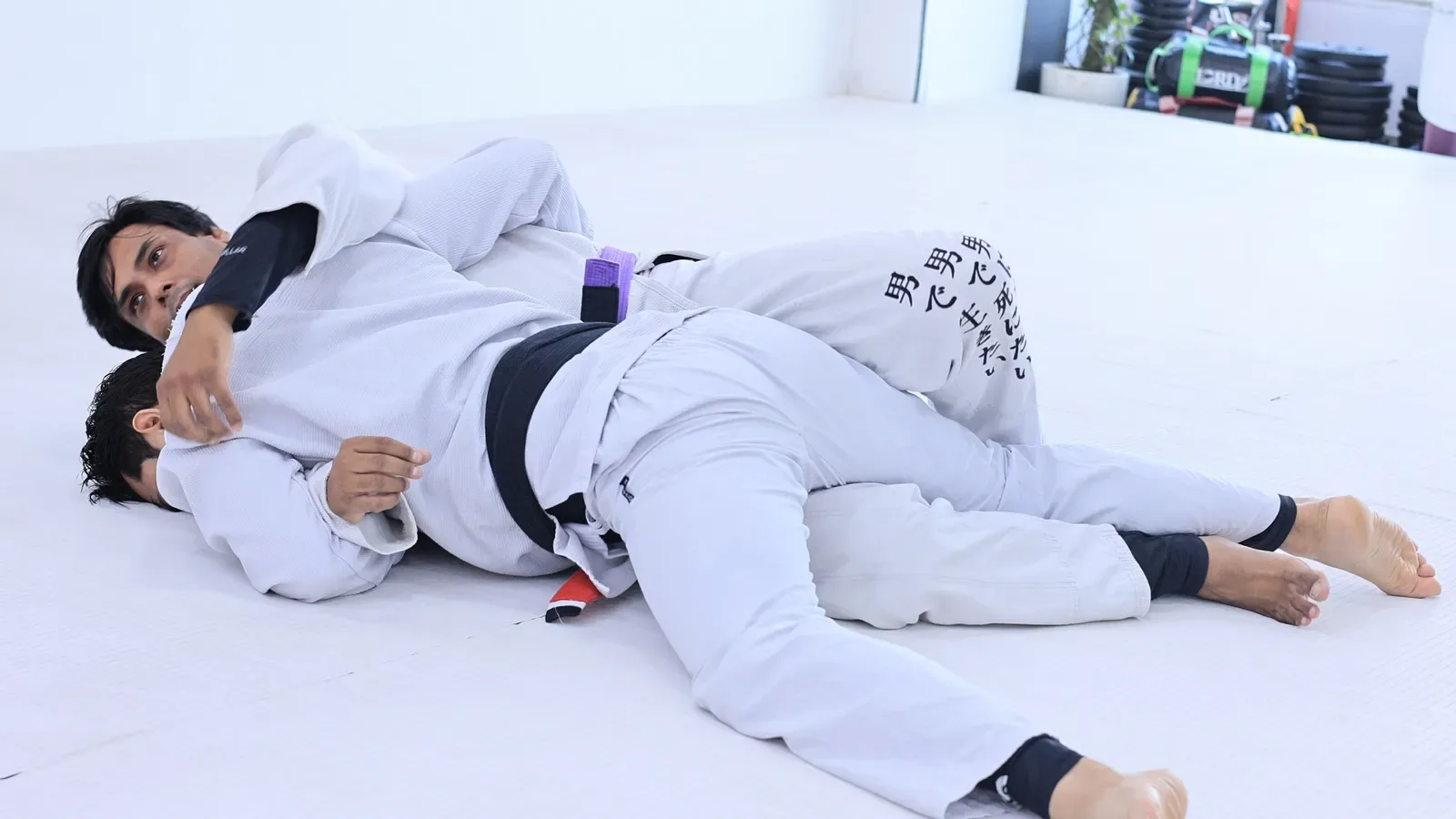
Instead:
- Take a step up.
- Post that knee on the mat, which flattens your partner.
- Once they are flat, bring in your hips and head, and use your chest to pin their arm at the biceps.
You are now back in the same pressure pass, having denied several guards on the way in — and with far less chance of them recovering.
Step 8: the game of patience
The only thing you really have to work on here is patience. There will be rounds where the pass doesn't come. When that happens, don't rush and hand your partner space to escape. Hold your ground. Even if you can't win the position yet, just hold.
The lesson puts it well: behave like an old person who is simply staying there, rather than turning it into a conditioning battle. Holding someone down this way costs you very little energy, which is exactly why it works across a long roll — and why it suits people of every age and fitness level.
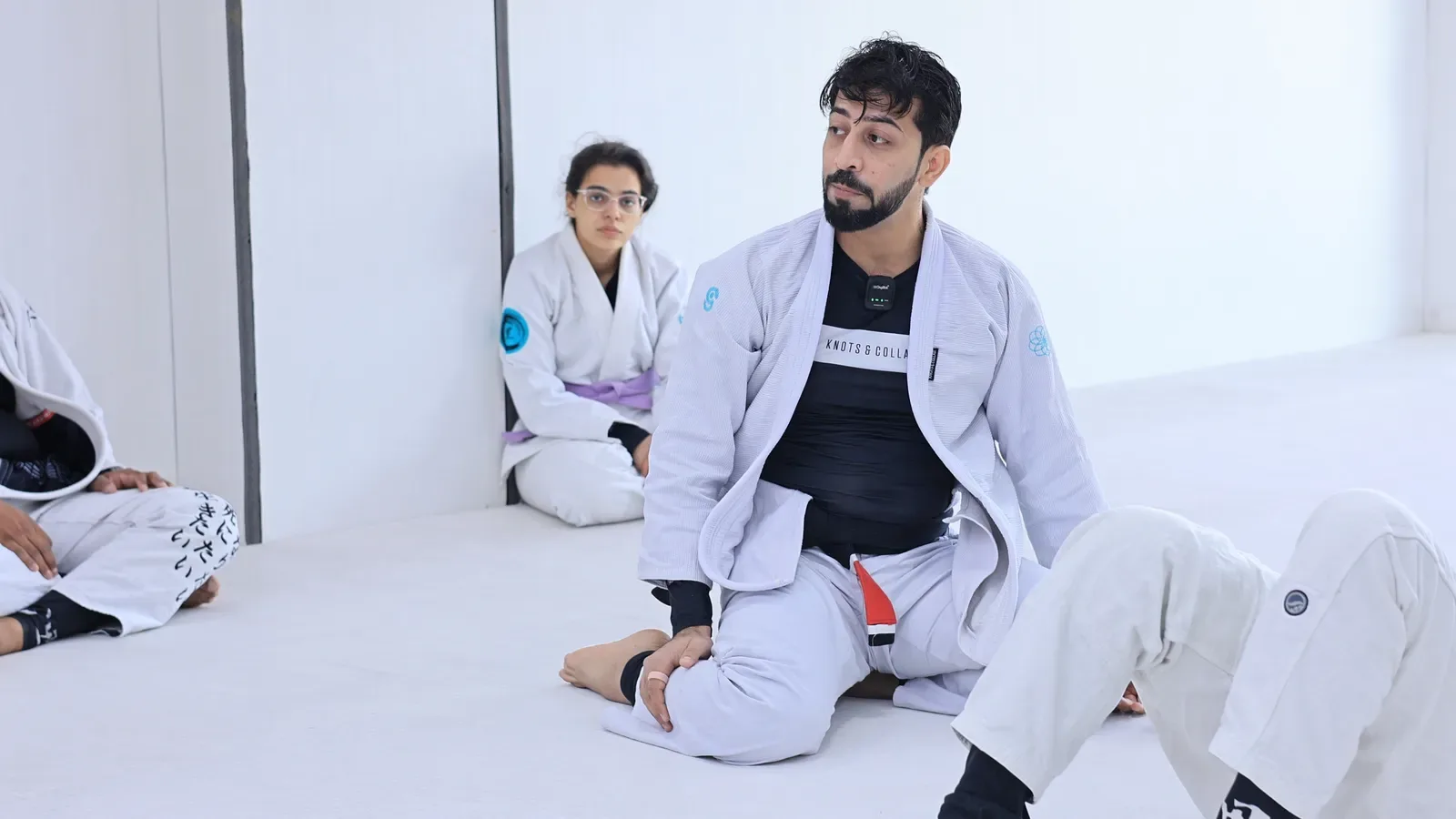
How to drill it
Start in half guard with your partner on the bottom. Give them only two kinds of resistance: try to roll you over, or take a butterfly hook and sweep. The top person's job is to stay flat, relaxed and heavy, with the chest on the arm. Switch roles every round.
Keep the resistance honest but gentle — the point is to feel the pin working, not to win. When it feels steady, add the knee shield entry, and later bring it into your rolls. Our guides to drilling versus rolling and how to roll well cover how to move a technique from drilling into live training, and the half guard roadmap shows where this pass sits among the other half guard skills.
Where this fits in your BJJ game
If you are still learning the names of the positions, start with our guide to BJJ guard types, which explains half guard, butterfly and the knee shield from the bottom player's side. For the bigger picture of training here — classes, belts and how to begin — read BJJ in India: the complete guide.
FAQs
What is a half guard pressure pass in BJJ?
It is a way of passing half guard from the top by keeping your weight on your partner rather than moving around them. You pin their near arm to the mat with your chest, stay flat and heavy on your insteps, and wait for them to run out of options before you pass to side control.
Why pin the arm instead of fighting the legs?
Most half guard escapes and sweeps need the bottom player to post an elbow, come up onto their side, or take your back. If their arm is pinned from shoulder to elbow under your chest, none of those are available. You stop fighting each guard in turn and fight for one thing: holding that arm.
How do I stop the butterfly sweep when passing half guard?
Stay flat and low, with your feet wide, so there is no height for the hook to lift. Keep the trapped foot flexed, toes pulled up, so the hook is working against your toes rather than your whole foot. If they do tip you, land flat, turn your palm up and take side control.
How do I pass the knee shield half guard?
Taking grips from in front of a knee shield invites a scissor sweep. Instead, step up and post your knee on the mat to flatten your partner, then bring your hips, head and chest in to pin the arm, and continue the same pressure pass.
Is pressure passing suitable for beginners?
Yes. The ideas are simple enough to start drilling with a cooperative partner in your first months: pin the arm, stay flat, be patient. They keep paying off as you move up the belts. Drill it gently, and let your partner tap or call stop whenever they need to.
Does this half guard pass work in No-Gi?
Yes. In the Gi you can hold the belt or the jacket; without a Gi you hold on to whatever is there. The parts that do the work stay the same: elbow up, chest on the arm, head away and hips down.
Train it with us
We teach Brazilian Jiu-Jitsu in the Gi and No-Gi at Knots & Collar in Defence Colony, New Delhi, for complete beginners and experienced grapplers alike. See the class schedule, or book a free trial class and drill this pass with a partner on the mat.
Kindness Over Toughness.