Knee Bar from Half Guard and the Electric Chair Sweep
Most people use half guard with an underhook for one thing: getting to deep half. In this No-Gi class from our mats in New Delhi, Professor Binish Sukhija shows what else is sitting right there. Get the underhook, pull your partner up, and their knee is already caught.
From the same grip you get two weapons: a knee bar that comes on fast, and, if you lock their legs up instead, the electric chair sweep. The rule that ties them together is simple: keep the lockdown until you get up, and finish the knee bar slowly.
Watch the class first, then use the notes underneath when you drill it.
Class chapters
- 0:00 Intro
- 0:39 Warm-up
- 0:54 Underhook, pull up, the knee bar
- 5:40 Sector 2 lockdown: sit up, the electric chair sweep
- 10:21 Keep the lockdown until you get up
- 11:28 Half guard rounds
Start right: the underhook, and block the arm
The class starts from half guard, as if you’ve just pushed the knee through from under mount. You have the underhook on one side, and you block their other arm so there’s no immediate head control. They can still fight for it, but not straight away.
One habit to drop: pushing on their hip or pocket. “This is not a good habit. When you get this half guard with the underhook, at least block. Get into this fight.” If half guard itself is new to you, our guide to guard types explains why the underhook turns it from a defensive spot into an attacking one.
Part 1: Underhook, pull up, the knee bar
- Right hand goes under the thigh. For deep half you’d go under the leg you have trapped with your feet. Here it’s the other way round: one leg is controlled by your arm, the other by your feet.
- Pull them up towards you while your shoulder goes flat on the mat. Just a small forward movement, enough to capture the knee.
- Don’t let the knee keep travelling. You want it low, just below your groin, between your thighs. If it slips up towards your belly, the knee bar is gone.
- Grip as tight as you can, and manhandle them a little. They should feel stuck, unable to lead with the hip and turn the knee out.
- Left foot over the heel, as low as possible. Start at the back of the knee, slide down the calf, all the way down. If they can fold their heel up, you’ve lost it.
- Right foot on the ground, ready. Pinch your knees and bridge slowly.
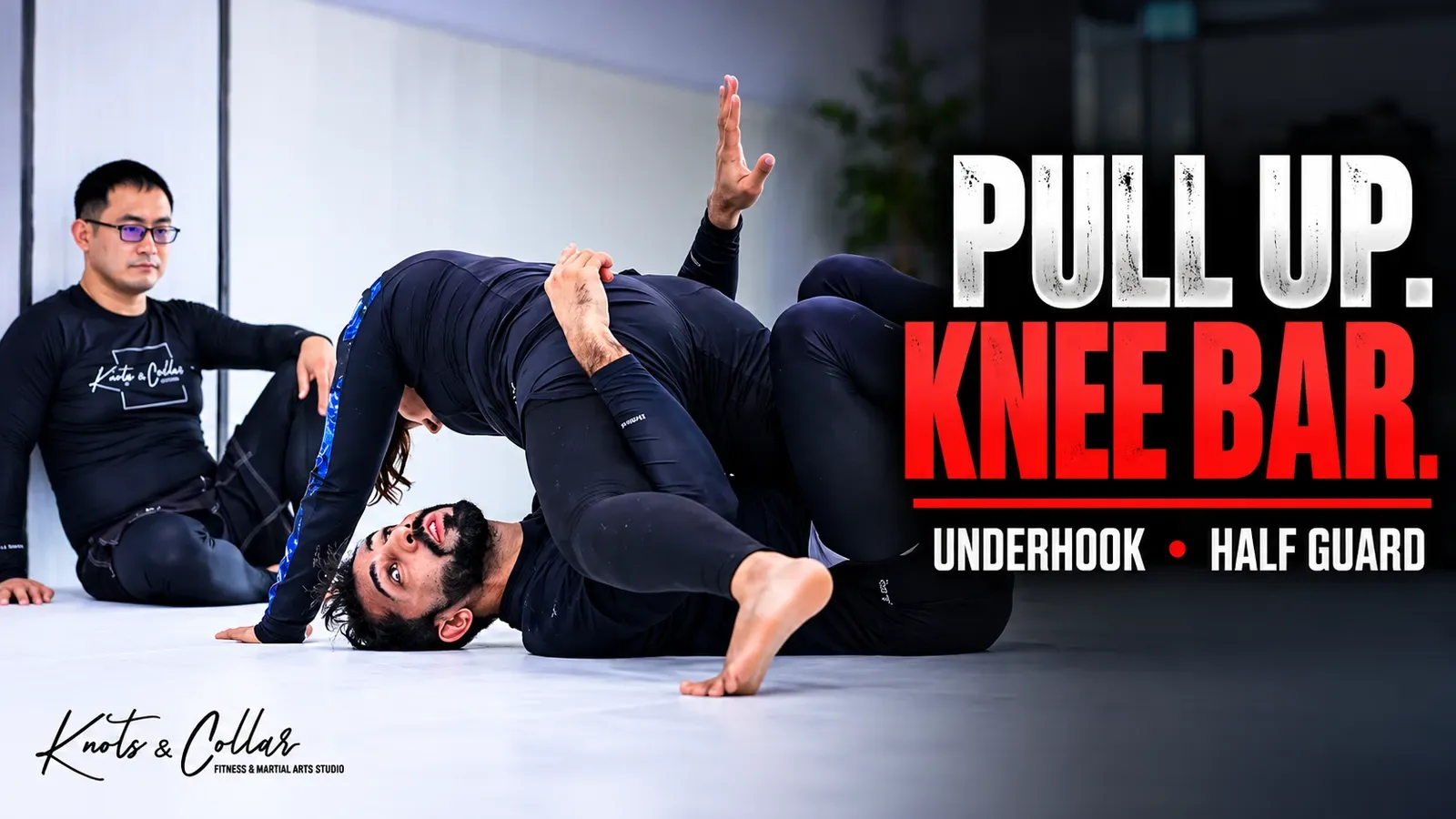
You haven’t gone fully into deep half and you haven’t left half guard: you’re in the transition, which is exactly where the knee bar lives. “Just like an armbar, we break it from the centre. The same thing is happening with the knee.”
The safety note matters more than anything else in this part. The finish is very quick, “like a surprise”, so be very slow with the bridge. “Don’t just bridge. You will mess up their knee.” If leg locks are new to you, our guide to leg locks in BJJ explains why they are introduced gradually, and what tapping means covers the other half of the deal: tap early.
Part 2: Sector 2, sit up, the electric chair sweep
The upper body stays exactly the same. Now the legs change.
If regular half guard is sector 1, sector 2 is both your feet between theirs:
- Right foot catches the ankle. No mobility needed.
- Left foot crosses under, not over, as the reinforcer. That’s your lockdown.
Underhook on the left, right hand under the thigh, pull them up as high as you can. This is where you’d finish the knee bar if you gave up your leg configuration, but this time you keep it.
- Free your left hand and push against their armpit, tricep or elbow, anywhere on the outside. Use that push to start sitting up.
- Come up on your palm (or forearm, whichever works for you).
- Look away, punch their right arm down to the mat, and throw your hips forward.
If they fall straight away, the sweep is done. Most people won’t. To relieve the pressure they’ll go onto their shoulder, and that’s the electric chair sweep. If they stay on their palm, you’ve still come up, and you still haven’t let go.
And for those who’ve done it before: from there, the left foot goes under the heel and you sprawl over. That’s the same knee bar, finished from the top.
Part 3: Keep the lockdown until you get up
The last part is one detail Professor Binish corrected on the mat: when you sit up, don’t give up the legs. “You didn’t have to leave your leg.”
Your partner’s foot is loaded on your shoulder and both their feet are still caught. “Because if I let go, why should he not run? Why should he not fight back?” With the lockdown on, they can’t fight with their feet, and their hands are busy stopping the sweep. If they use them to post, you throw the hips forward and punch down. Either way, you’re winning.
Half guard rounds
The video finishes on the live half guard rounds that followed, with the team trying it under resistance. A move you have only drilled is one you won’t find when someone is fighting you for the underhook, which is why our note on drilling versus rolling matters here, and how to roll covers keeping those rounds safe.
If you spend more time on top of half guard than underneath it, the half guard pressure pass class is the other side of the same position, and the half guard roadmap maps it top and bottom. For the escape that usually comes before half guard, see the No-Gi mount escape class.
How to drill it this week
- The entry, no finish: underhook, block the arm, hand under the thigh, pull up. Check the knee stays low, between your thighs.
- The knee bar, slowly: heel as low as it goes, pinch the knees, and bridge only until your partner feels it. Swap after five on each side.
- Sector 2: same upper body, lock the legs (ankle caught, other foot under), sit up on your palm, look away, punch down, hips forward.
- Keep the lockdown: have your partner try to run as you sit up. If your legs open, start again.
Either of you can tap or call stop at any point. New to grappling without the jacket? Our No-Gi jiu-jitsu beginner’s guide is the place to start, and the Gi vs No-Gi guide covers what changes when the jacket comes off.
Where this class happens
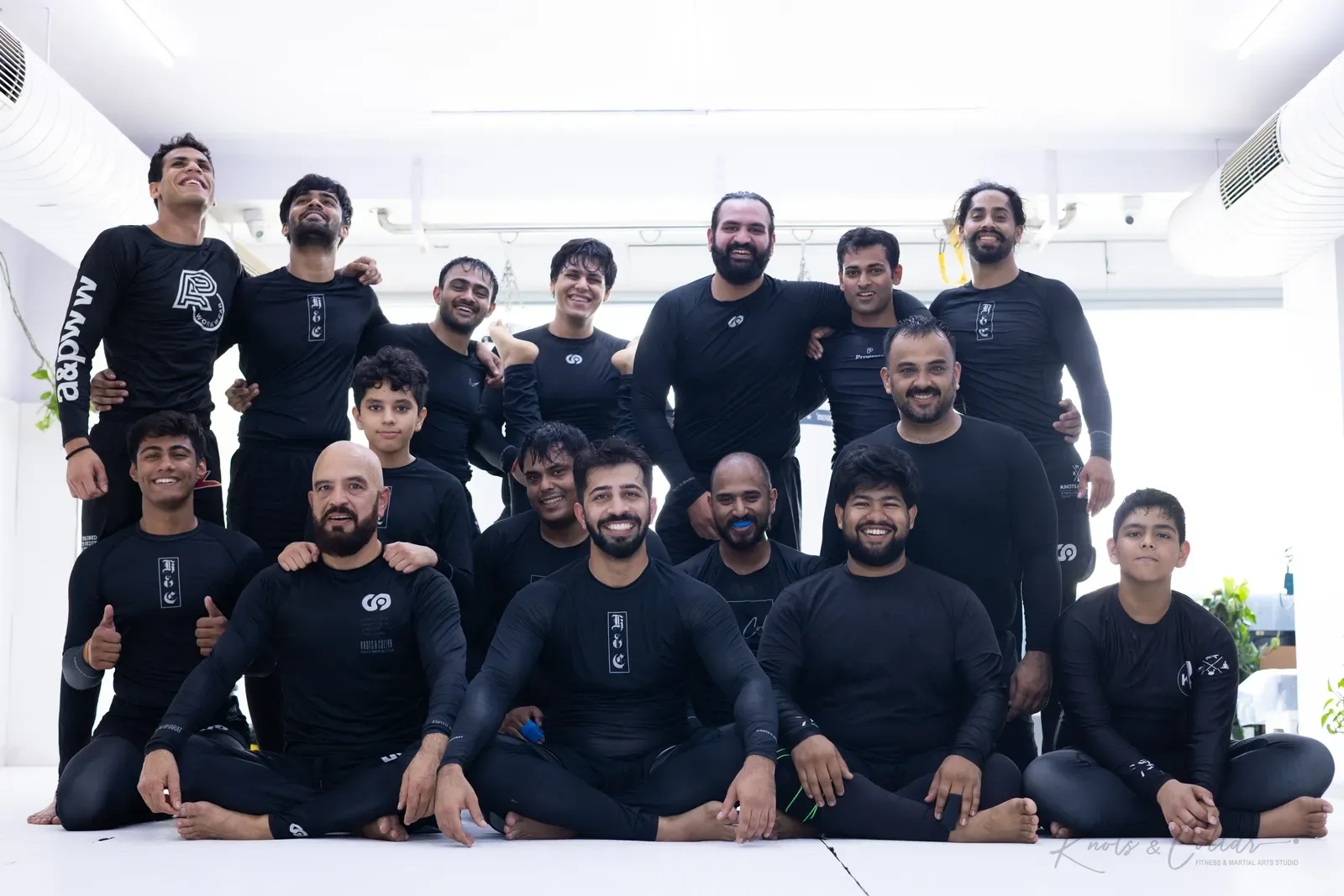
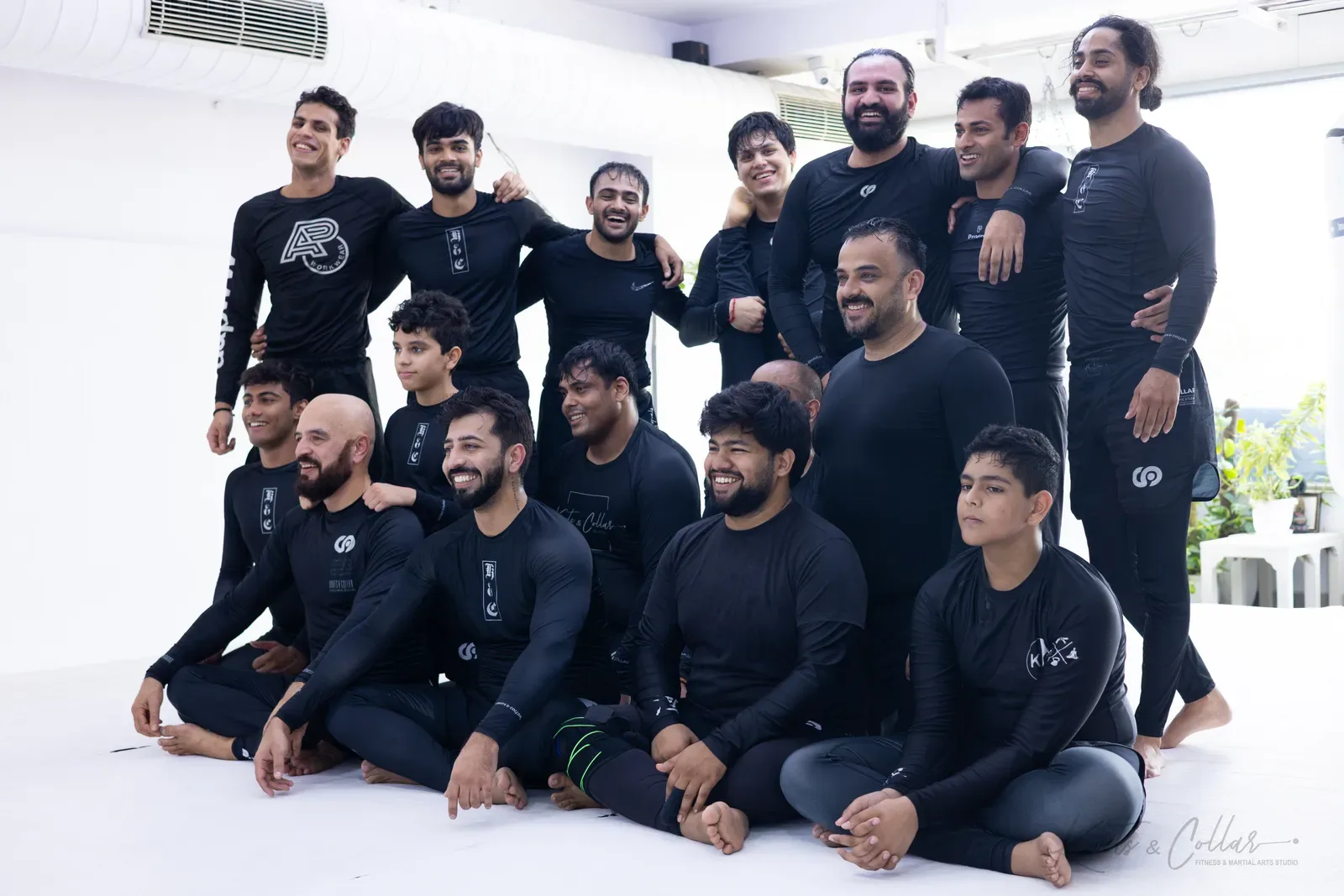
We train No-Gi and Gi through the week at our studio in Defence Colony. If you are choosing where to start, our guide to choosing a BJJ academy in India sets out what to look for on a mat before you sign anything — and then come and stand on ours.
Train with us
We teach Brazilian Jiu-Jitsu, No-Gi and Gi, at Knots & Collar in Defence Colony, New Delhi, seven days a week, for complete beginners and experienced grapplers alike. See the class schedule, book a free trial class, or message us on WhatsApp. Hindi mein baat karni ho? WhatsApp par message kijiye, hum aapko class ke baare mein sab bata denge. For the wider picture of the sport here, read BJJ in India: the complete guide.
FAQs
How do you do a knee bar from half guard?
From half guard with the underhook, put your other hand under your partner’s thigh and pull them up towards you while your shoulder goes flat on the mat. Keep their knee low, just below your groin and between your thighs. Grip tight, put your free foot over their heel as low as it goes, keep the other foot on the ground, pinch your knees and bridge slowly.
Is the knee bar from half guard safe to drill?
Yes, if you bridge slowly. The finish comes on very quickly, like a surprise, so the person applying it should bridge gently and stop the moment their partner taps. Just bridging hard can damage your partner’s knee. The person caught should tap early rather than test it.
What is the electric chair sweep?
With the lockdown on your partner’s leg and your underhook, you free your far hand, push on their armpit, tricep or elbow and sit up onto your palm or forearm. Then look away, punch their arm down to the mat and throw your hips forward. To relieve the pressure on their leg they go onto their shoulder, and that is the electric chair sweep.
What is sector 2, the lockdown, in half guard?
If regular half guard is sector 1, sector 2 is both your feet between your partner’s. One foot catches their ankle and the other crosses under, not over, as the reinforcer. That is the lockdown, and it keeps their leg stretched so they cannot fight with their feet.
Why keep the lockdown when you sit up for the sweep?
If you let go of the legs, your partner can run or fight back. With the lockdown still on, they cannot use their feet, and their hands are busy stopping the sweep. If they use a hand to post, you throw the hips forward and punch down. Either way, you are winning.
How is this different from going to deep half guard?
For deep half you go under the leg you have trapped with your feet. For this knee bar it is the other way round: one leg is controlled by your arm, the other by your feet. You have not gone fully into deep half and you have not left half guard. You are in the transition, which is exactly where the knee bar lives.
Where can I learn No-Gi BJJ in India?
We teach No-Gi and Gi Brazilian Jiu-Jitsu at Knots & Collar in Defence Colony, New Delhi, seven days a week, for complete beginners and experienced grapplers. The class schedule is on our programs page, and you can book a free trial class or message us on WhatsApp.
Kindness Over Toughness.