
The Americana from Mount Against a Stronger Arm: Pin First, Then Finish
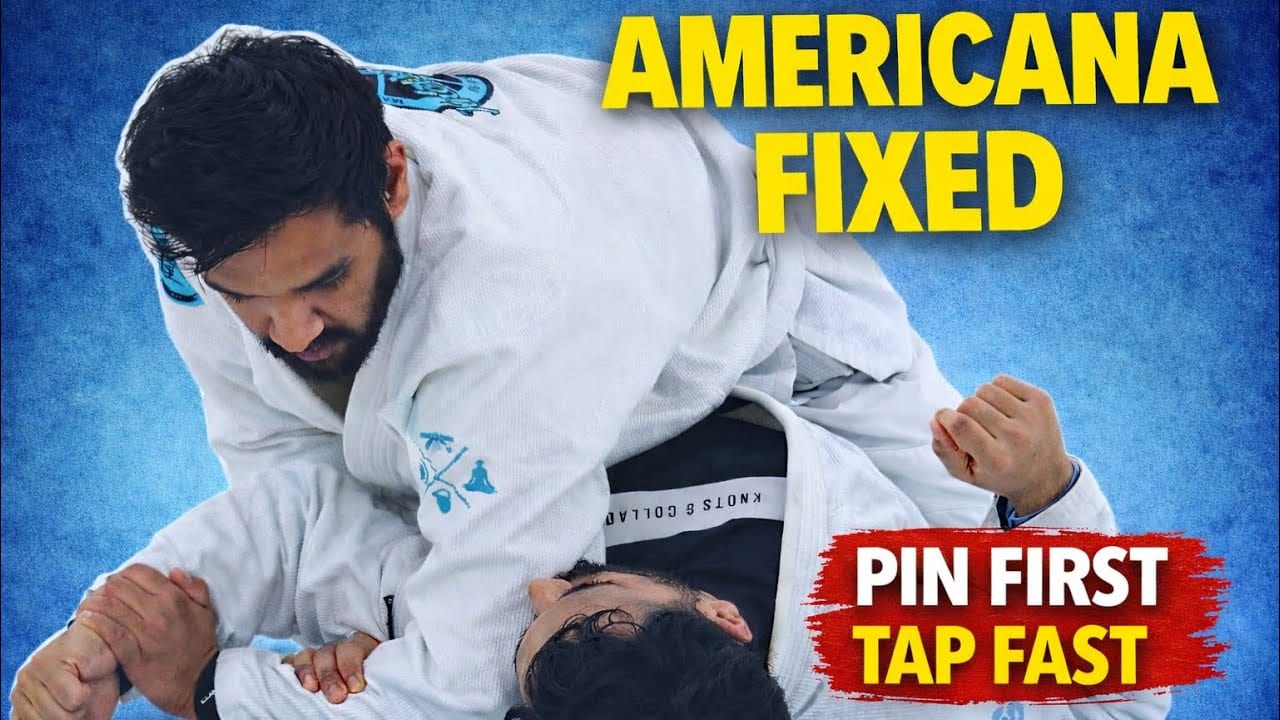
You have the mount and he is keeping his arms tight, like a boxer's guard. You could try to out-muscle him, but against a bigger or stronger partner that is a contest you might lose. This Gi class at Knots & Collar works the Americana from mount a different way: pin the arm with your body weight first, then finish slowly.
Watch the class first, then use the notes when you drill.
Part 1: Where this fits
The class is the third day working as the top person in mount. The first two days covered the armbar, then the armbar together with the triangle choke. Retention usually comes first, but this time the order is reversed: individual submissions first, then sequences, then retention at the end.
The submission today is the Americana, a shoulder lock. The aim is to get his arm pinned to the mat. Right now he is keeping it defensive, the jiu-jitsu version of a boxing guard. For the drill, he is a training partner offering no resistance, a reference point.
Part 2: Two on one, then circle
Choose a side and go two on one.
- One hand on his elbow.
- The other as high as possible on his wrist. Not on the forearm itself: on the wrist.
Now press down on the elbow while you circle, or twist, the wrist. You are not peeling the arm off. You are pressing one point while rotating the other.
Why not just push the arm towards his shoulder with both hands? If he stays strong, that becomes a struggle. You might win because of gravity and a weight difference, but if your partner is bigger or stronger than you, you will relate to that struggle. So you pin and you circle. The circling motion is you dropping your body weight into the arm instead of using your muscles.
Part 3: Elbow to the mat, partner looks away
Once the arm is down, place your elbow on the mat next to his ear. There is a safety detail here: your partner looks away for this part. If he is looking up at you and you accidentally fall, your elbow could hit his face.
Part 4: Make space, namaste with your feet
Right now there is hardly any space for your other arm. Open your knees and stretch them out to make room, bringing the soles of your feet together, a namaste with your feet.
Your right hand goes in palm up, as if lifting his elbow. Dive the arm in and get as close as you can to your own knuckles. Even if you do not take a full grip, being close to the knuckles is enough.
Part 5: Two finishes
- Finish one: pull his elbow towards his pocket or rib cage, then lift the elbow up.
- Finish two: lift the elbow up first, then very slowly pull it towards your own pocket.
With the second, the tap comes a little later.
When he has big bicep energy
If he is putting a lot of strength into his arm, trying to pull him down first can be tough. It can also unbalance you, and he might throw you off the control. So against strength, take away his mobility first, then apply the finish. And be very slow, because this finish can come on all at once.
The sequence, start to finish: pin the elbow, twist the wrist, elbow on the mat, open your knees, namaste with the feet, palm up under the elbow, hold near your knuckles, then lift slowly. How to deal with him keeping his elbows in, and what happens when he tries to escape, are left for later in the series.
How to drill it this week
- Pin and circle: partner holds the arm up with light strength; you press the elbow and twist the wrist. Feel your weight do the work.
- Safety first: partner looks away every time your elbow goes to the mat.
- Make space: open the knees, feet together, palm up under the elbow.
- Two finishes: five slow reps of each. Partner taps early; you release at once.
Shoulder locks come on fast, so go slowly and respect the tap. Our page on what tapping means covers why, and BJJ submissions explained places the Americana among the other joint locks.
For more from the top of mount, read our guide to the mount and the class on the triangle choke from the armbar.
Where this class happens
We train Gi and No-Gi through the week at our studio in Defence Colony. Our guide to Gi BJJ in India covers training in the uniform, and the guide to BJJ in Delhi covers training in the city.
Train with us
We teach Brazilian Jiu-Jitsu, Gi and No-Gi, at Knots & Collar in Defence Colony, New Delhi, seven days a week, for complete beginners and experienced grapplers alike. See the class schedule, book a free trial class, or message us on WhatsApp.
Hindi mein baat karni ho? WhatsApp par message kijiye, hum aapko class ke baare mein sab bata denge.
FAQs
How do you pin a strong arm for the Americana from mount?
Go two-on-one: one hand on his elbow, the other as high as possible on his wrist, not the forearm. Then press the elbow down while you circle or twist the wrist. The circling motion is you dropping your body weight into the arm rather than using your muscles.
Why not just push his arm straight to the mat?
Pushing towards his shoulder with both hands becomes a struggle. Against someone bigger or stronger than you, you may simply lose that contest. Pinning the elbow and circling uses your weight instead.
Why does your partner look away during this drill?
It is a safety detail. When you place your elbow on the mat next to his ear, an accidental fall could become an elbow to his face. Looking away while you set it up prevents that.
Why open your knees in the Americana from mount?
You need space for your arm to dive under his elbow, and with your knees tight there is hardly any. Open your knees and bring the soles of your feet together, like a namaste with your feet, to make that space.
What are the two ways to finish the Americana?
In the first, you pull his elbow towards his pocket or ribs and then lift it. In the second, you lift the elbow first and then slowly pull it towards your own pocket. Against someone using a lot of strength, take away his mobility first, then apply the finish very slowly, because it can come on quickly.
Where can I learn Gi BJJ in Delhi?
We teach Gi and No-Gi Brazilian Jiu-Jitsu at Knots & Collar in Defence Colony, New Delhi, seven days a week, for complete beginners and experienced grapplers. The class schedule is on our programs page, and you can book a free trial class.