
Gi Jiu-Jitsu in India: how we train, who trains with us, and why visitors come

Gi jiu-jitsu is Brazilian Jiu-Jitsu in its traditional form: a white cotton gi, a belt, and a partner holding your collar. At Knots & Collar in Defence Colony, New Delhi, it is the heart of what we do. This is Gi BJJ in India as we live it on our mat: how a class runs, how we keep training clean and safe, who trains with us, from first-day beginners to black belts, and why grapplers from across India and abroad make time to train here when they are in Delhi.
What Gi jiu-jitsu is
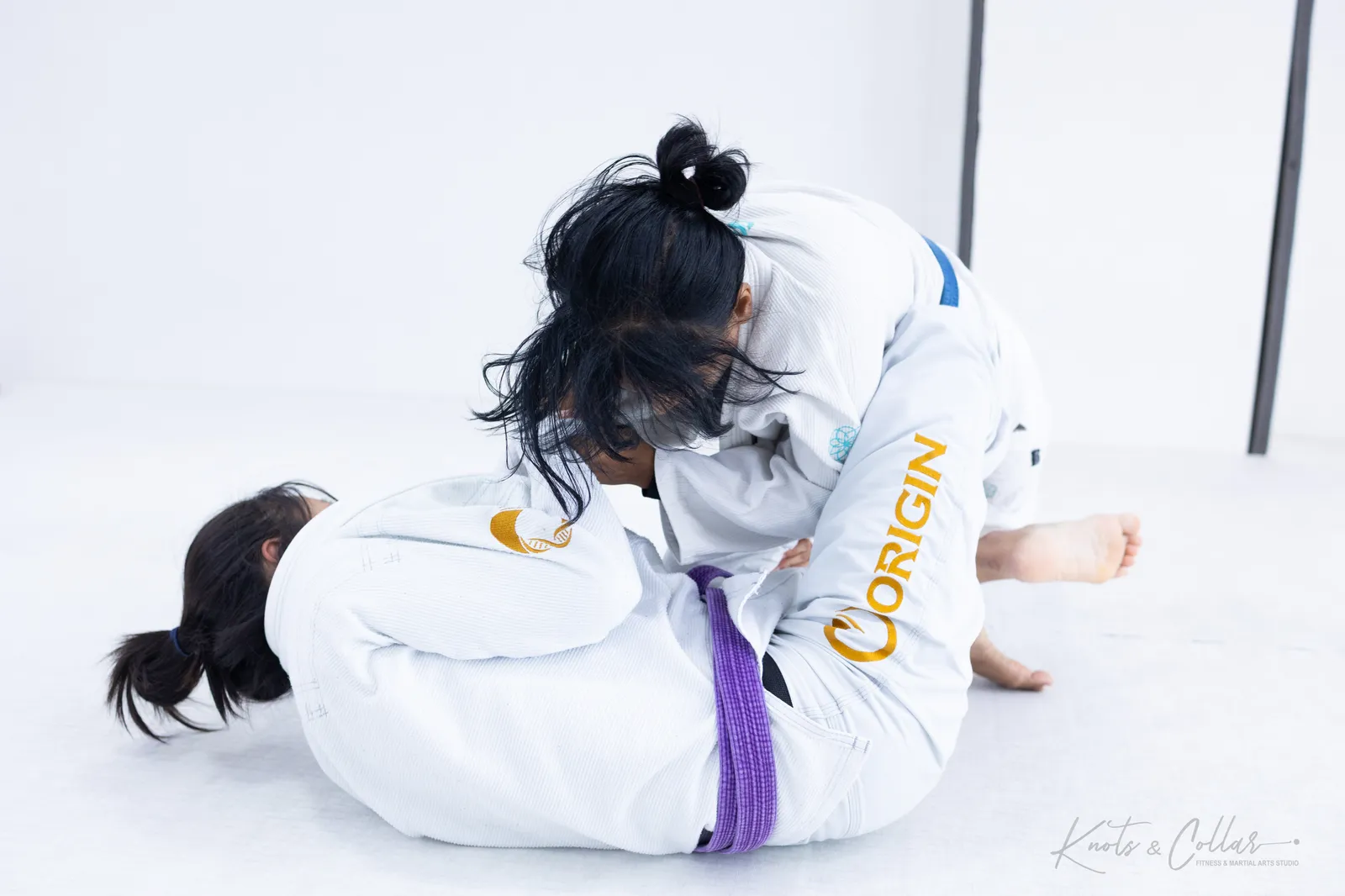
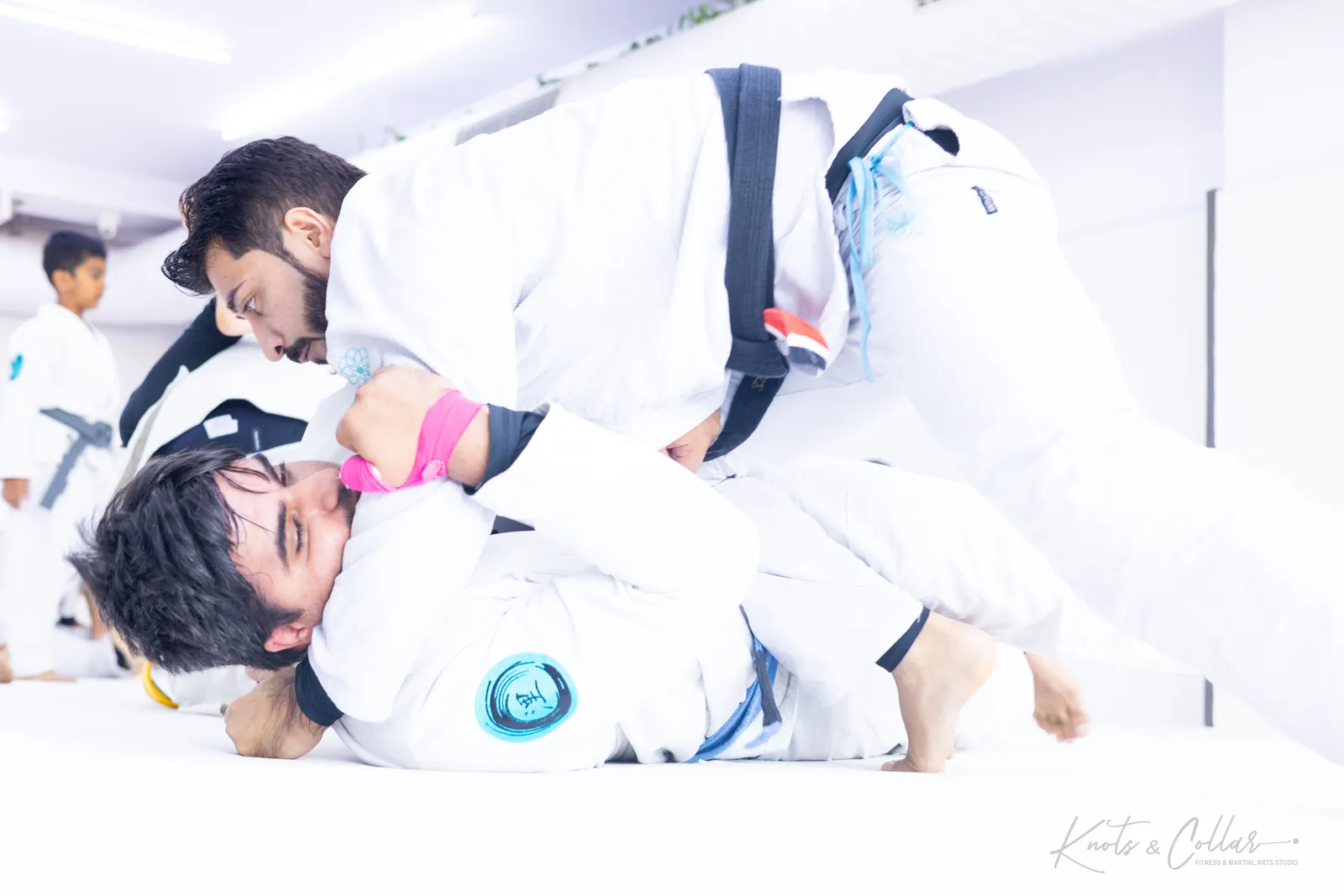
Gi jiu-jitsu is trained in a jacket, trousers and a belt that shows your rank. The jacket is not decoration. The collar, the lapels, the sleeves and the trouser legs are all handles, for you and for your partner. You use them to slow someone down, to hold them in place, to sweep them and to finish a choke.
Those grips change the whole game. Escapes take more care, because your partner can hold on. Guards become more varied, because you can tie someone up with their own sleeve or lapel. And everything slows down enough that you can feel why a technique works, not only that it worked.
The gi and No-Gi are two ways of training one art, and most of our students train both. Our Gi vs No-Gi guide explains how each helps the other, and our No-Gi BJJ in India article covers the other side of the mat. For how jiu-jitsu took root here at all, read the history of BJJ in India.
How a Gi class runs
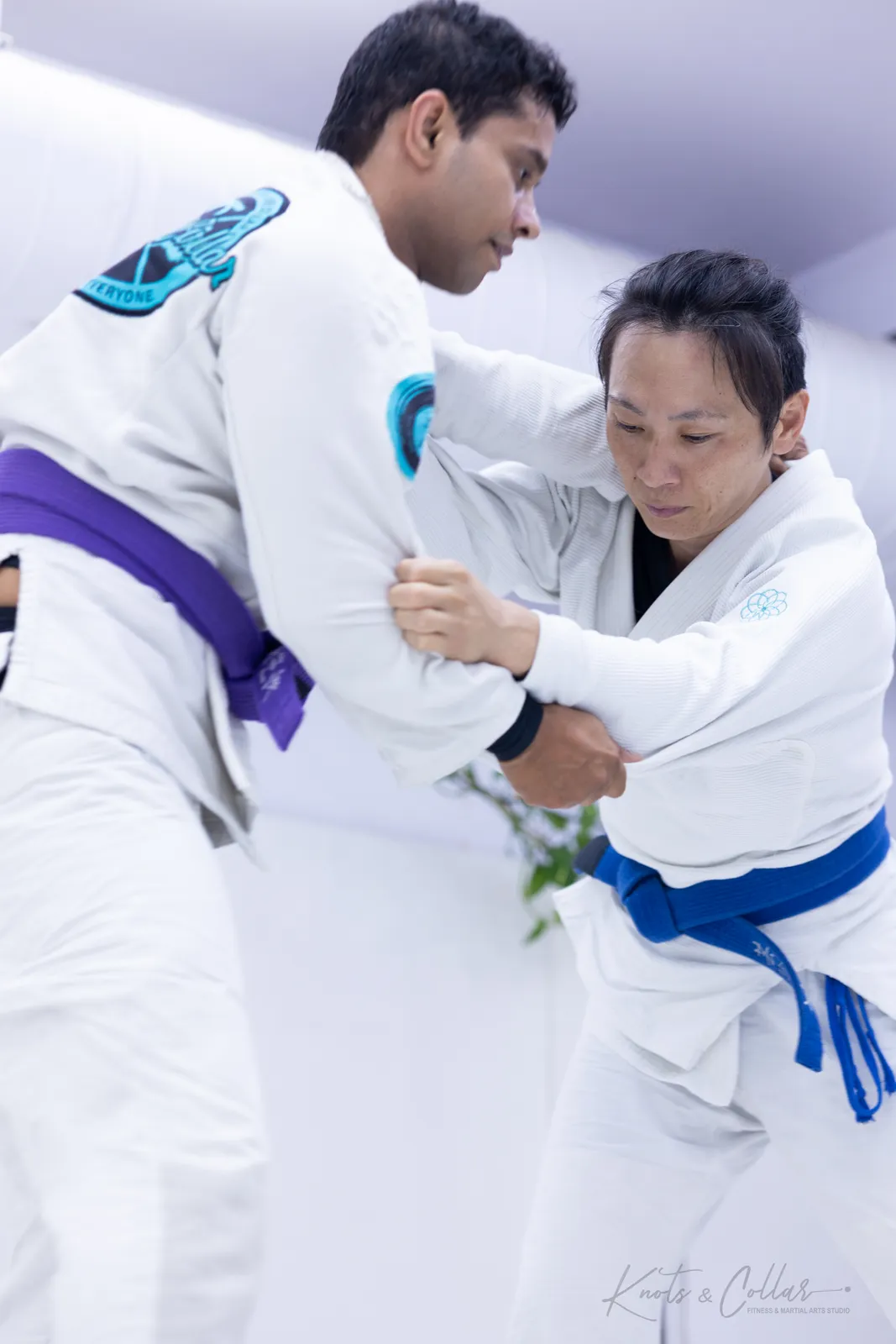
Every Gi class at Knots & Collar follows the same rhythm, so a first-timer always knows what comes next.
Warm-up. Movement that is also jiu-jitsu: shrimping, bridging, technical stand-ups, rolling over a shoulder, and grip work standing up. It loosens you up and teaches the hip movement everything else depends on.
Technique. Professor Binish Sukhija, a Brazilian Jiu-Jitsu black belt in the De La Riva lineage, shows one idea, such as a sweep, a guard pass or a collar choke, and breaks it into small steps. You drill it slowly with a partner, swap, and repeat. Nobody resists yet; the aim is to get the grips and the shape right.
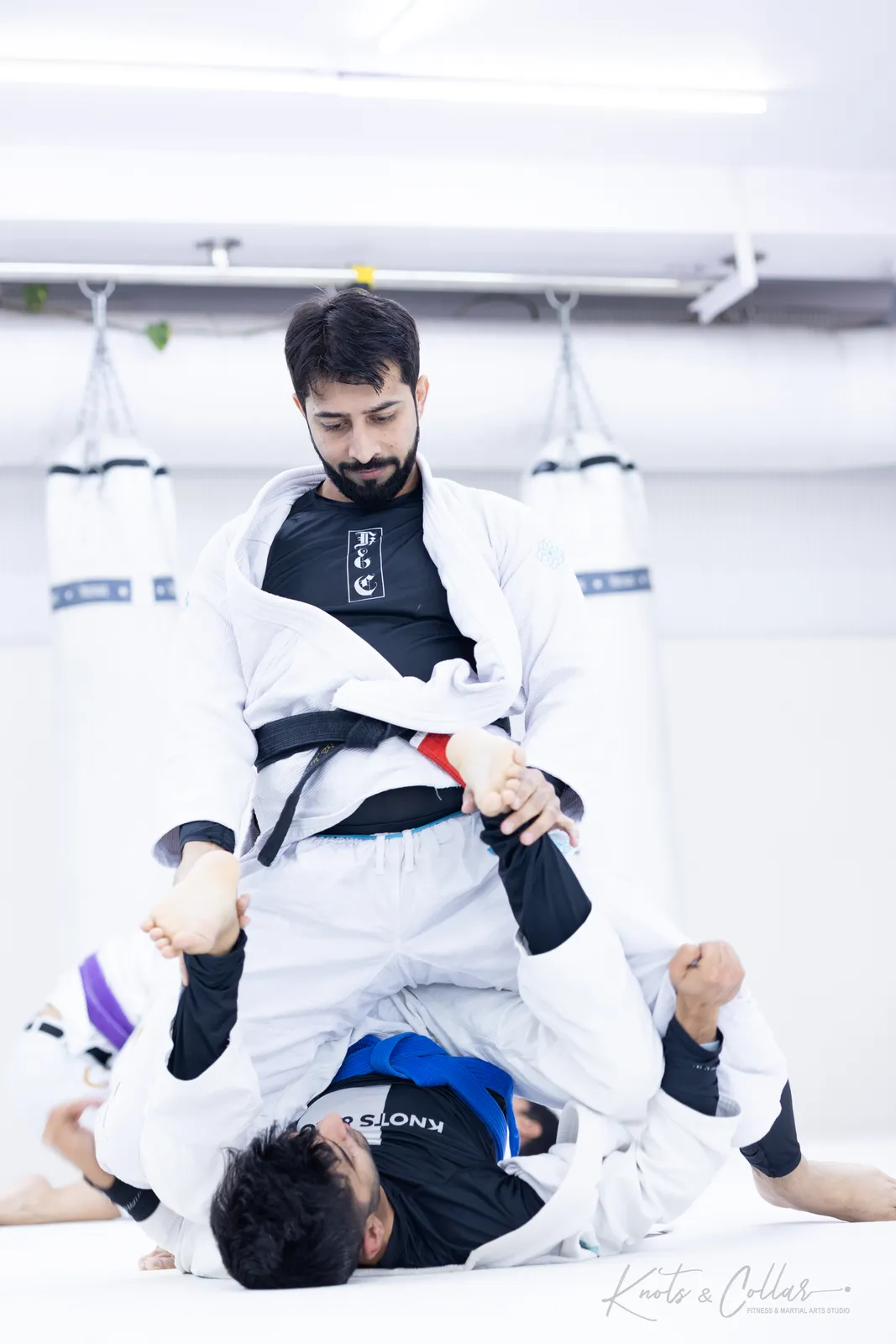
Positional work. You start in the position you just learned and work against light resistance. In the gi this is where you find out how much a good grip is worth, and how much it costs to lose one.
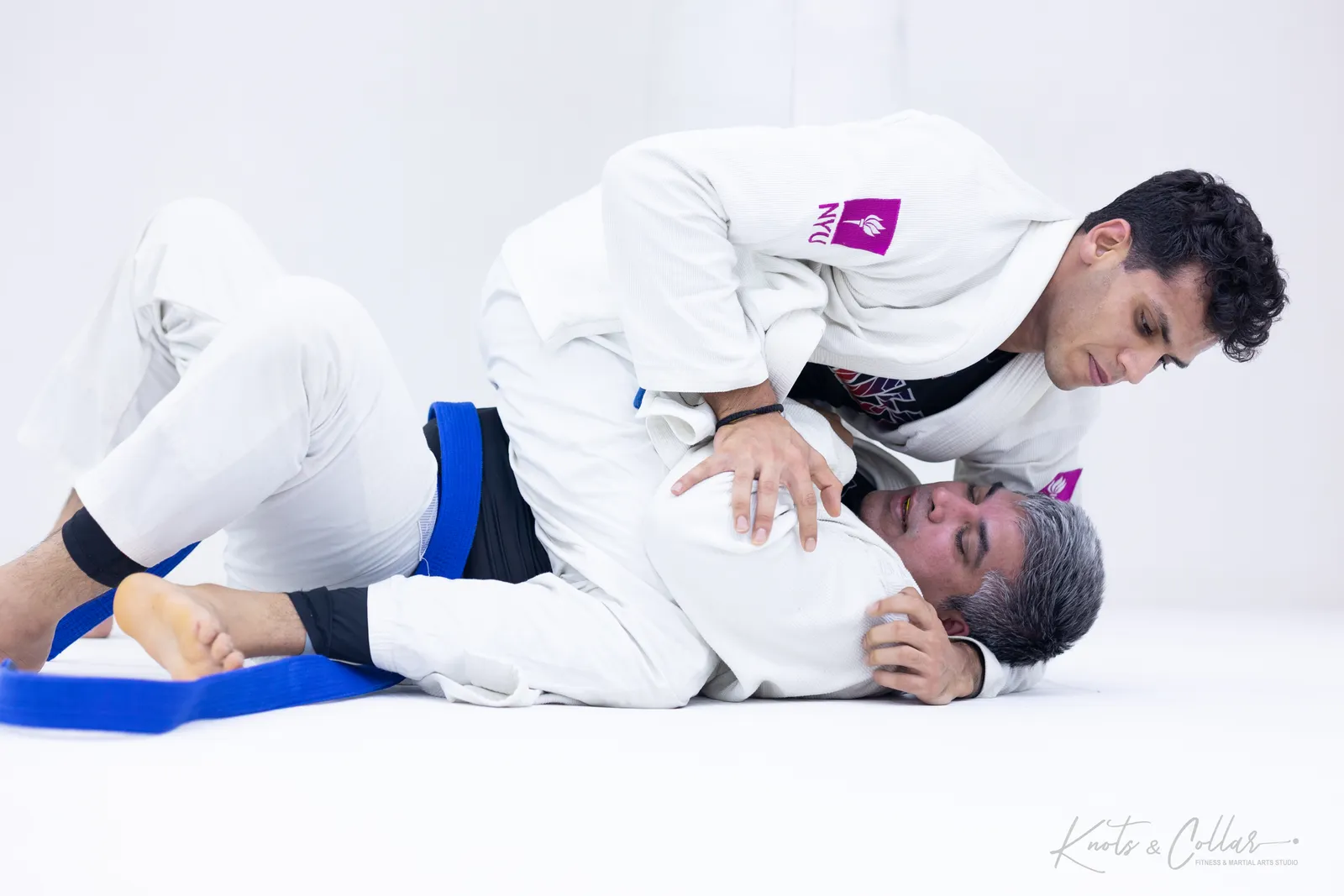
Rolling. Short rounds of live sparring at the end. The pace is controlled, partners are matched with care, and anyone can tap at any time. In your first weeks you can sit a round out or roll only positionally. That is normal, and nobody minds.
That is a recent Gi class from our mat: half a worm guard, keeping the lapel grip through the kick, the technical get-up sweep, and clearing the knee. Technique first, then live rounds; an ordinary session, filmed in full.
One mat for every rank
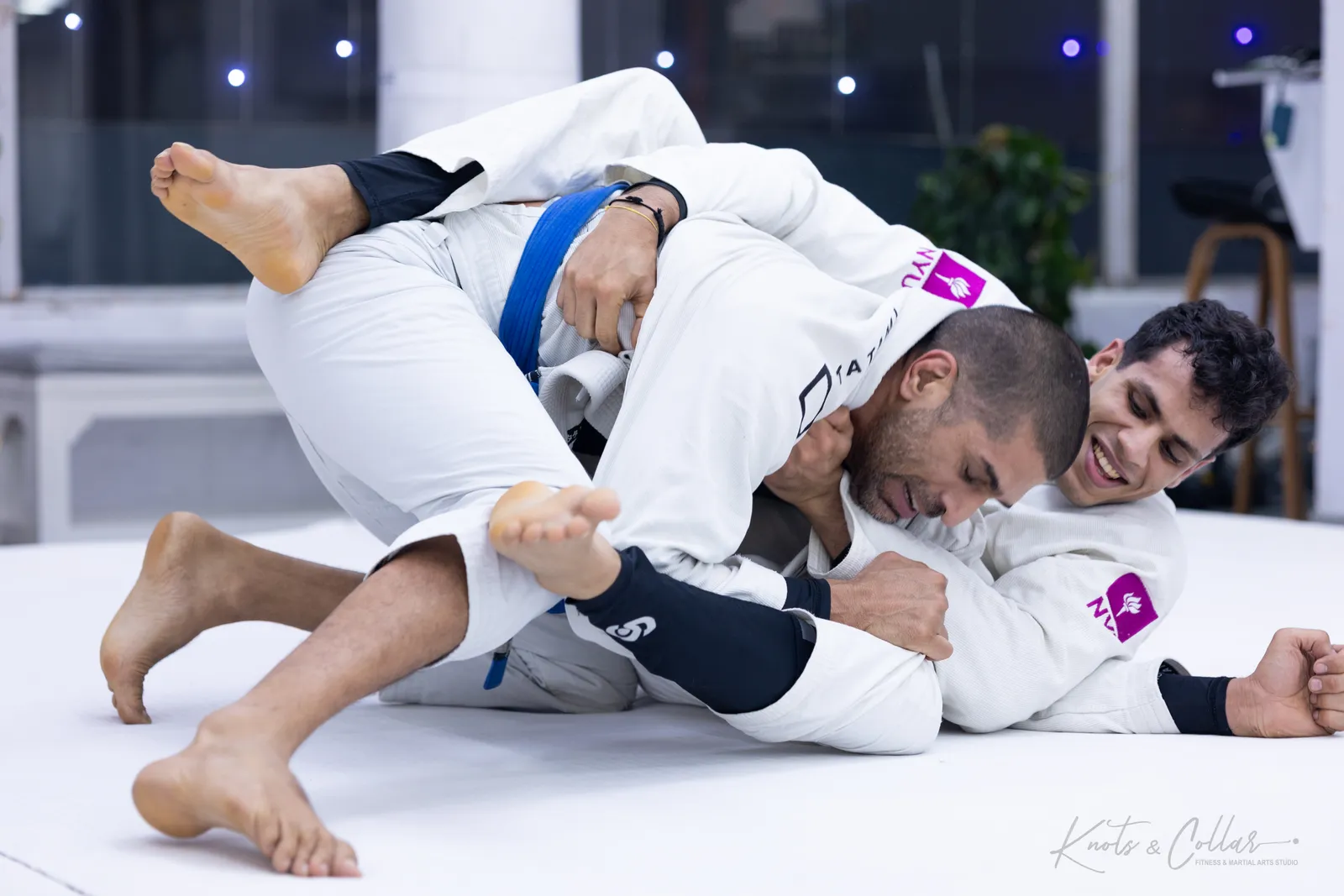
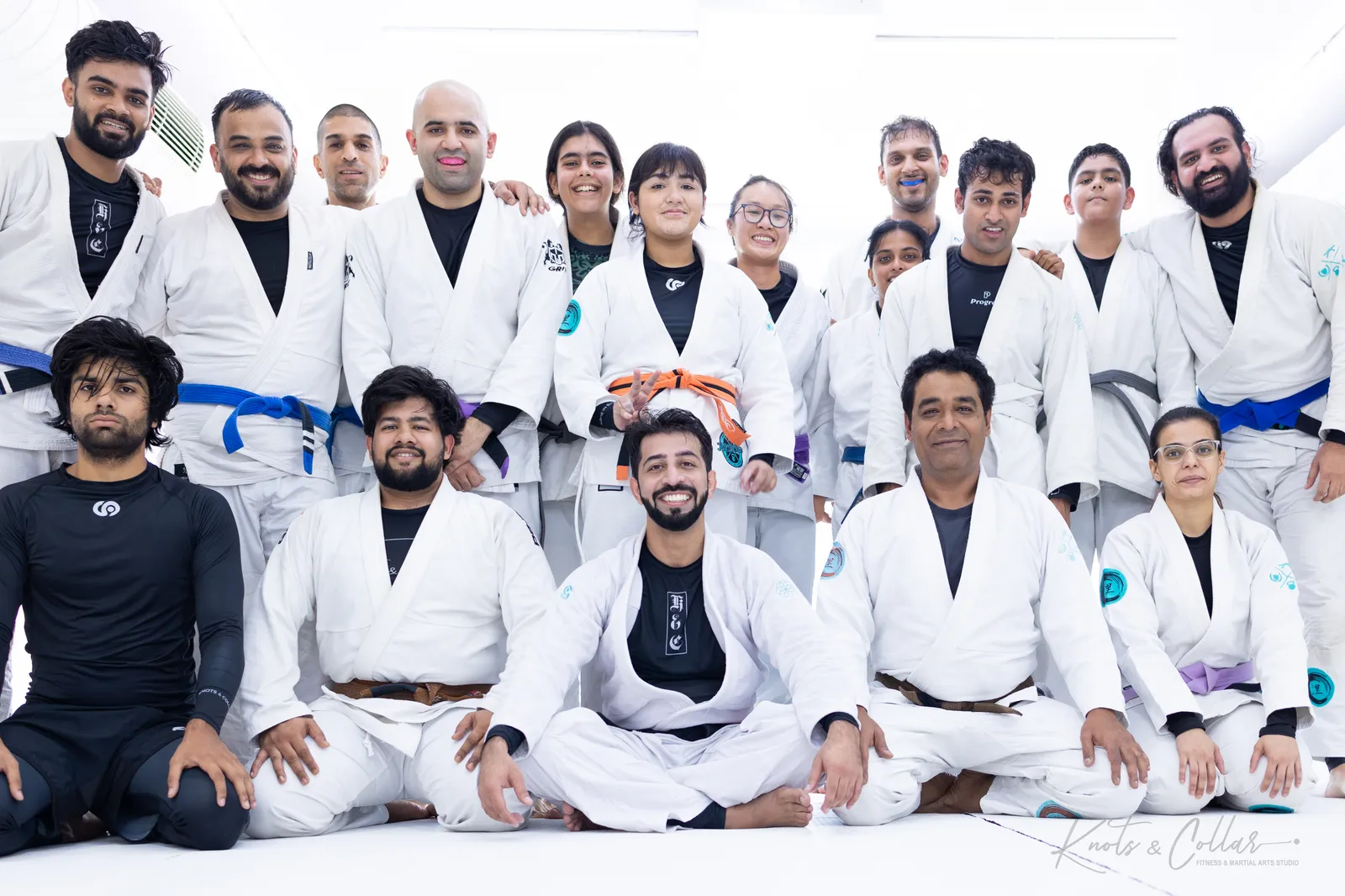
Every Gi class at Knots & Collar has white, blue, purple, brown and black belts training on the same mat, and the class is built so that each of them gets what they came for.
Beginners learn the technique in small steps and are paired with partners who look after them. Nobody is thrown in at the deep end. Our guide to your first jiu-jitsu class in India walks through the hour.
Competitors sharpen their game in positional rounds and live rolls with partners of every size and style, and the finer points of grips and guards are where tournaments are won. When you are ready, our guide to BJJ competitions in India covers how to prepare.
Experienced belts work on the details: the lapel guards, the De La Riva game, the pressure passes, and teaching what they know to the people behind them. That last part matters. Explaining a technique to a white belt is one of the surest ways a purple belt learns it.
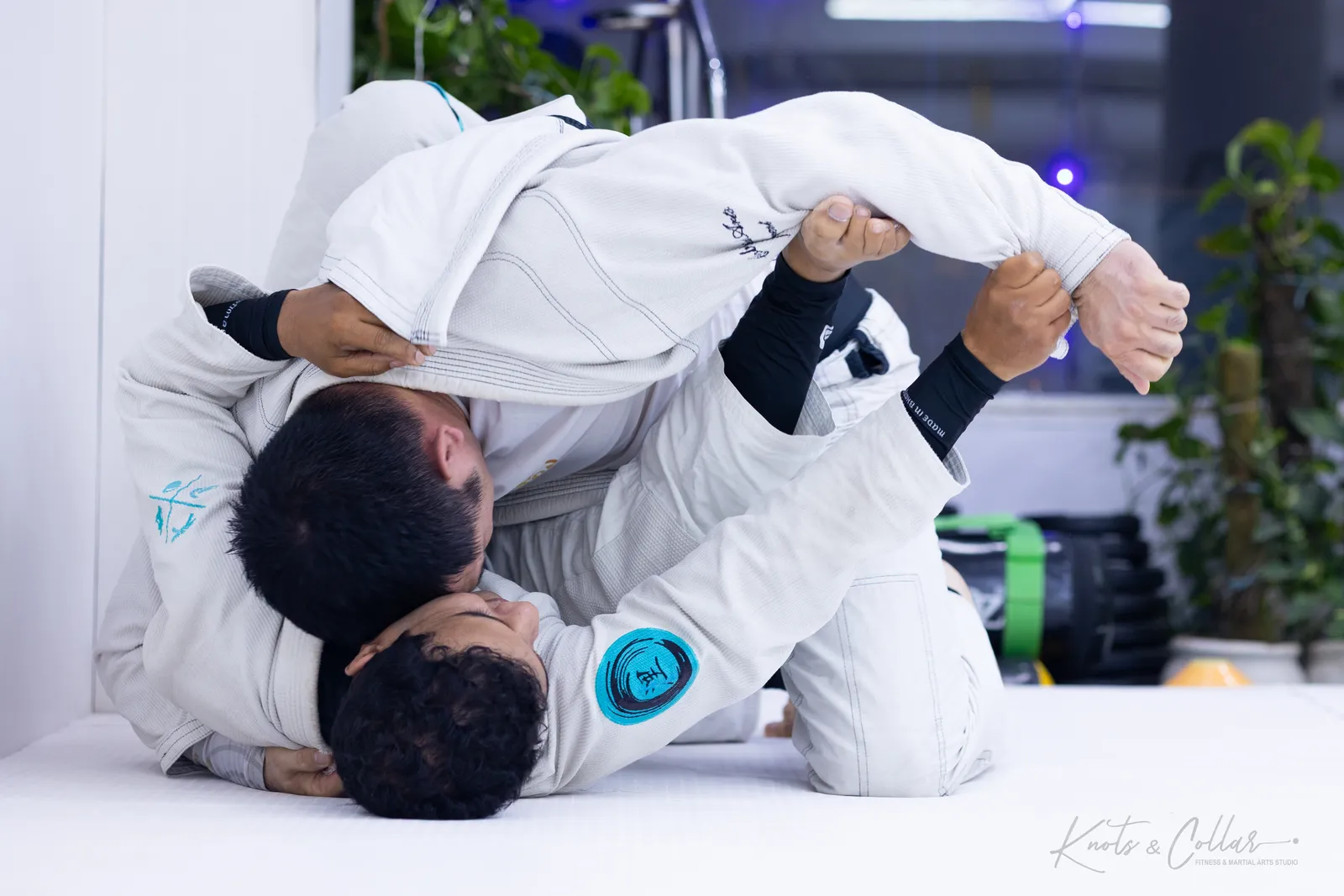
The De La Riva and lapel game. Our lineage runs through De La Riva, and the open guard that carries that name is part of how we teach. So are the guards built on the lapel. The worm guard uses your partner’s own lapel to tie up their leg, and from there you can sweep, get up or take the back. Read worm guard to berimbolo and the worm guard get-up sweep.
The belt path. White, blue, purple, brown and black, with stripes along the way, each one awarded for what you understand and can do on the mat. Our guide to the BJJ belt system explains what each belt means.
Clean, safe training: how we keep the mat
Jiu-jitsu is close contact, so cleanliness is not an extra. It is part of how we train, and it is the first thing many visitors notice.
- A rash guard and spats first. Every Gi student wears a full-sleeved rash guard and full-length black spats under the gi. They protect your skin from mat burn, keep sweat off your partner and stop the gi bunching or catching.
- A white gi over the top, white only. At Knots & Collar the gi is white, for everyone. It keeps the room uniform, and a white gi shows at once whether it has been washed.
- A clean gi every session. Washed after every class and fully dried. Bring a fresh one each time.
- Nails trimmed, no jewellery. Short nails and nothing that can catch or scratch.
- Slippers off the mat, bare feet on it. Footwear never touches the mat.
- Tap early, let go at once. Safety on the mat is a habit, and it is the same for a white belt and a black belt.
Our what to wear guide has the detail. If you do not have a gi yet, rental gis are available at the desk.
Family-friendly weekends: kids and adults on one mat
Our Saturday and Sunday jiu-jitsu sessions are family-friendly, and everyone is invited. You will see kids and teenagers training with their parents and families, in a healthy, welcoming room. Some of the happiest moments on our mat come from a child and an adult working the same technique together.
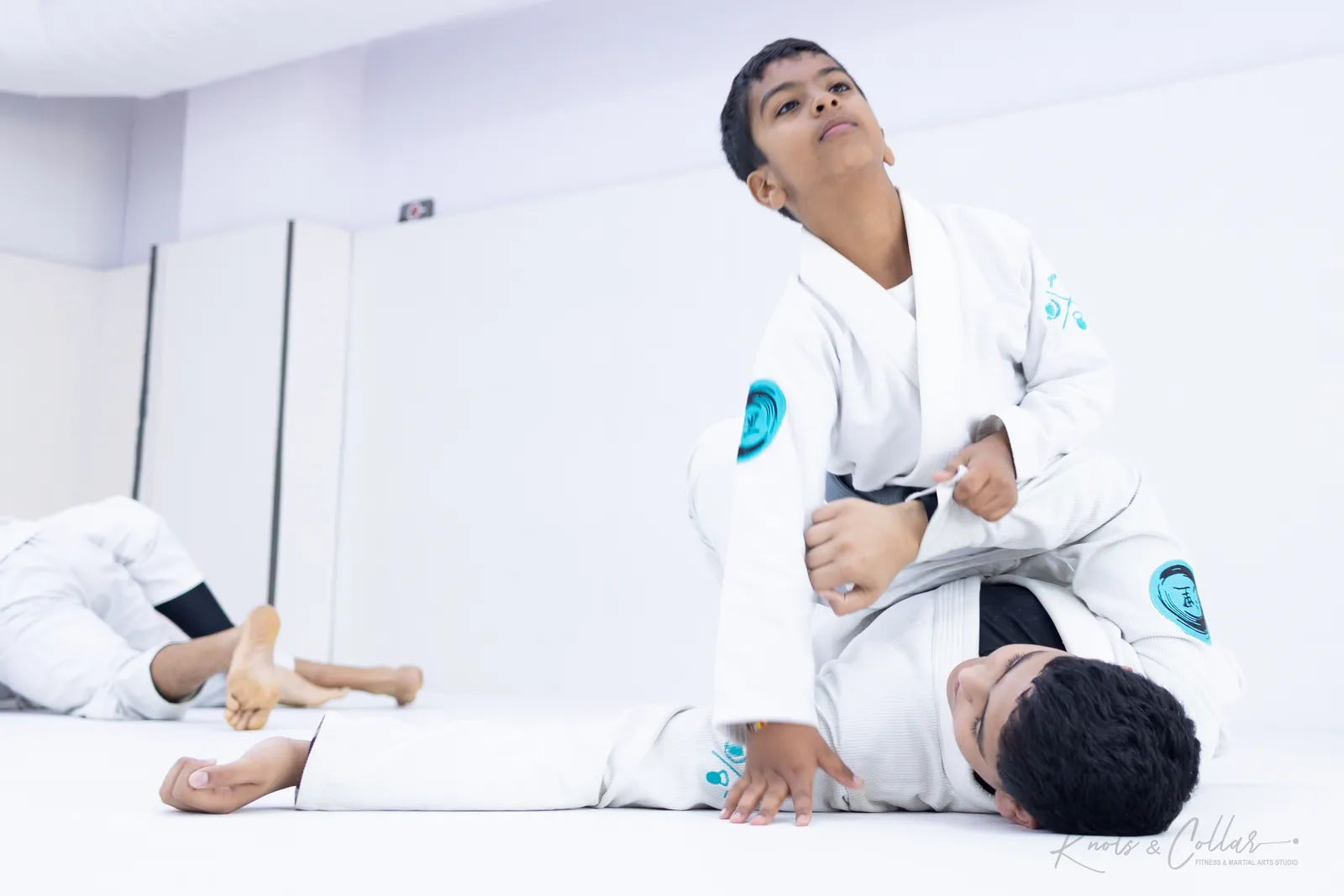
Children learn to be at ease with adults. Rolling with a bigger, older partner teaches a child to stay calm, to use technique rather than force, and to feel at home in a room full of grown-ups.
Adults learn care and control. Training with a child teaches an adult to place their weight carefully, to apply pressure without hurting, and to let a smaller partner work. That control makes them better training partners for everyone.
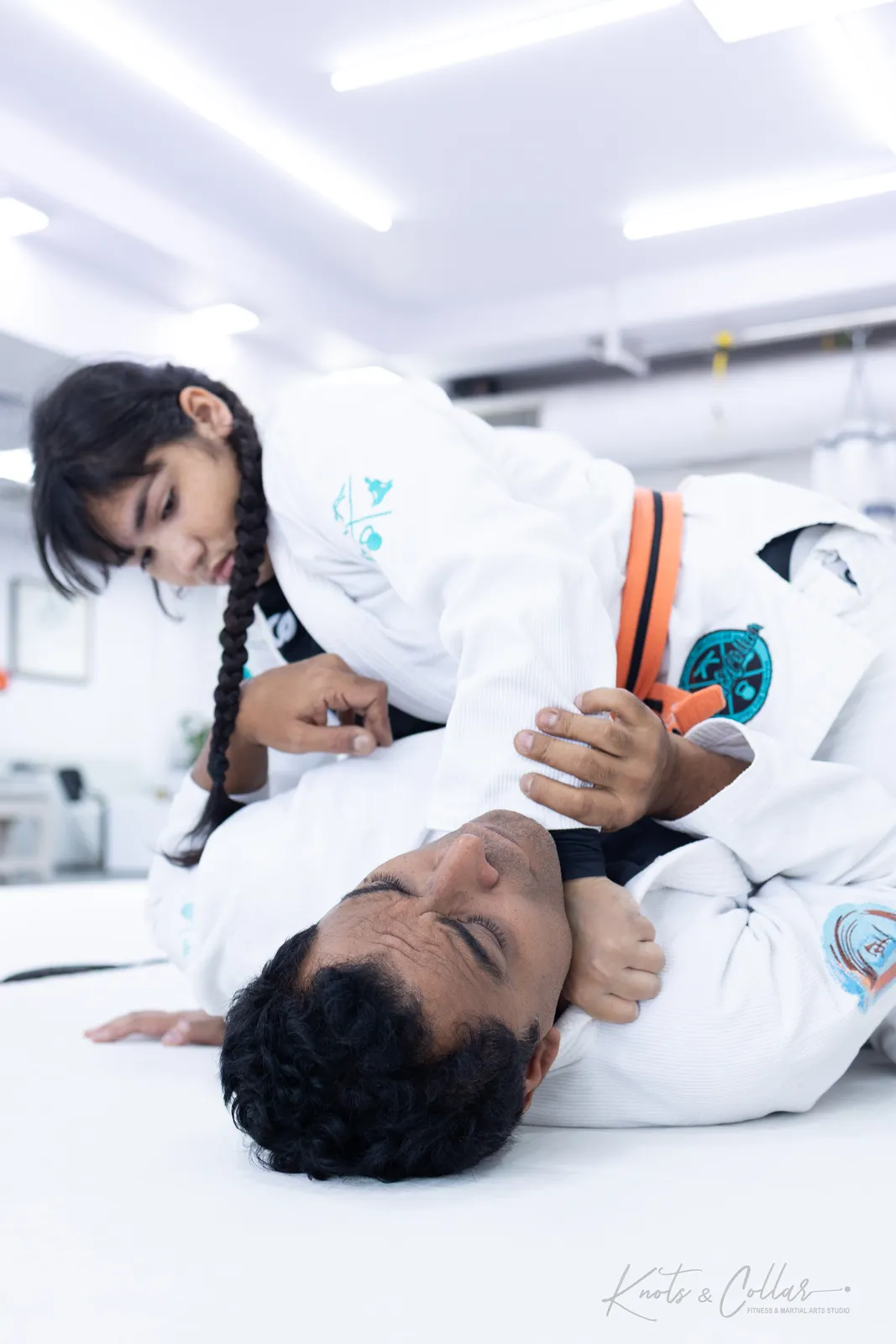
Both learn from each other, and the whole room gets a little kinder for it. Our kids classes take children from age 3, and our guide to martial arts for kids has more on how we teach them.
The people you train with
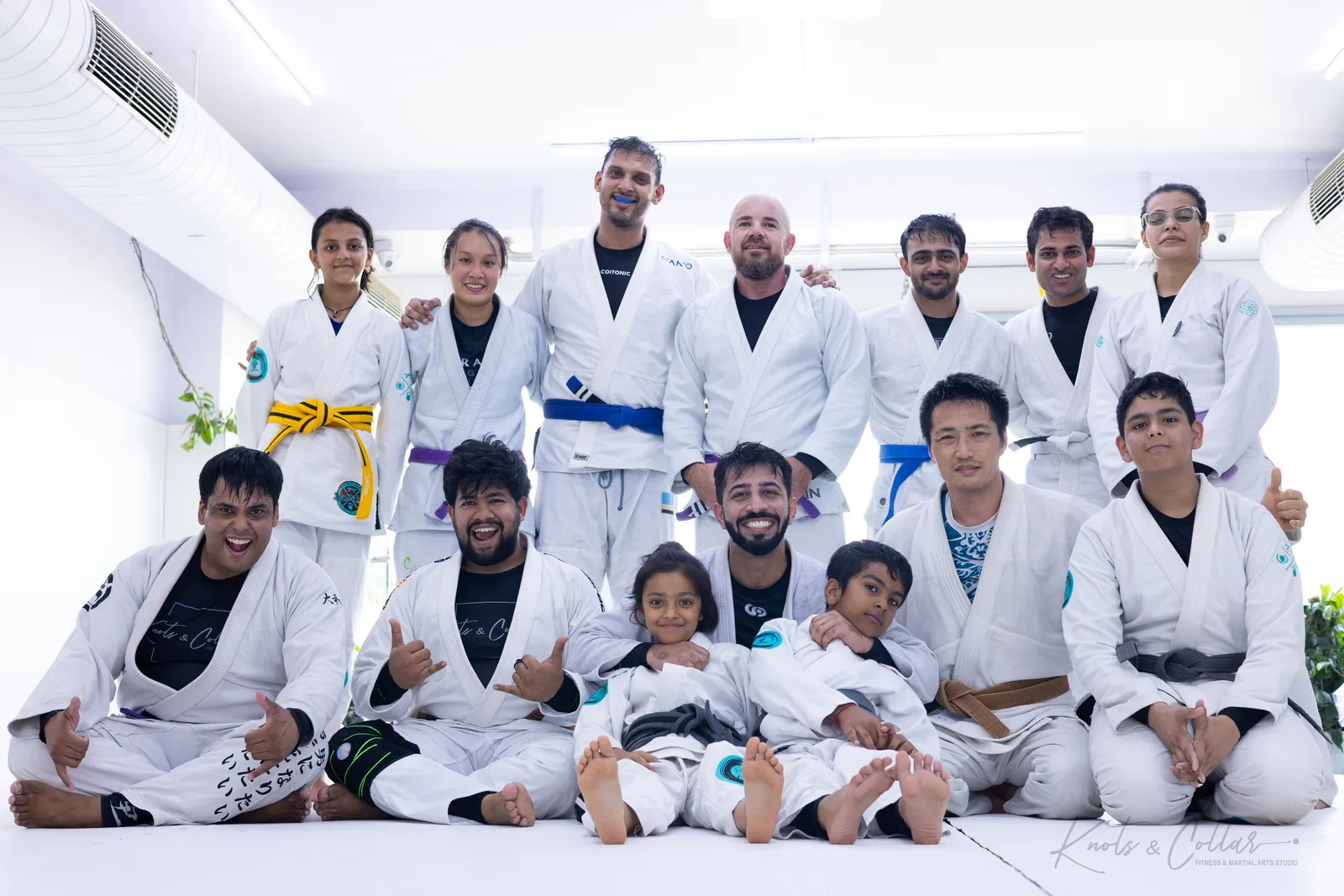
A Gi room is only as good as the people in it. Ours is a mix: students who started with us as complete beginners, professionals who train before work on a weekday morning, people who come in after work, women and men of every belt, and the regulars who never miss a Sunday.
The idea that holds it together is the studio’s own: Kindness Over Toughness. The higher belts look after the newer ones. Partners tap early and let go straight away. When someone gets something right for the first time, the room notices.
Sunday mornings are the heart of the Gi week. The 8:30am Essentials 1.0 and 9:30am Essentials 2.0 classes run back to back, and most people stay on to roll afterwards. Our Jiu-Jitsu Needs No Language videos show a full Sunday session from start to finish.
Visitors: a home for Gi jiu-jitsu in India
Knots & Collar has become a home for Gi jiu-jitsu in India and a regular stop for grapplers visiting Delhi. Students from other cities, people posted here for a few months, and travellers from abroad train with us. They bring their own game, we share ours, and everyone leaves with something new. If you are visiting, our visitors page has what you need.
Visiting black belts teach and roll on our mat too, and we film what they share so the whole community can learn from it.
Professor Aaron White of Havoc MMA in Denver taught his smash pass, from headquarters through to mount, and rolled eight live rounds with the team. Read the smash pass with Professor Aaron White.
Professor Bek, founder and head coach of Checkmat Kazakhstan, taught a seminar on takedowns, opening the closed guard, guard sweeps, the cross choke and how to structure training. Read Professor Bek’s seminar at Knots & Collar.
Professor Jad Strutzel, a CSW black belt and a Judo black belt, walked in to train and ended up teaching the class: the Judo that works for jiu-jitsu. Read Judo for jiu-jitsu with Professor Jad Strutzel.
What our members and visitors say
Knots & Collar is rated 5.0 on Google. A few words from the people who train with us:
“I am from Boston and was a little nervous to train in India, but this gym is a gem. It’s very clean with showers, training partners are generally well controlled and not trying to hurt you, and the coach was very good at breaking down technical moves step by step.”
— Alex Burton, visiting from Boston, on Google
“Having coach Binish Sukhija personally teach the BJJ classes is a huge advantage — his attention to detail makes every session valuable. The facility is exceptionally clean and hygienic, and the atmosphere is friendly and welcoming.”
— Adv. Amit Dhaka, adult BJJ, on Google
“The instructors are not only highly skilled but also incredibly patient and accommodating, making sure that new learners like myself feel welcome and supported.”
— Vaibhav Guglani, started as a beginner, on Google
“K&C has become a cornerstone of our 6 year old’s confidence, physicality and moral compass. Kindness over toughness!”
— Sanjiva de Silva, parent, on Google
Recent Gi classes
We film many of our classes and put them online in full, so you can see exactly how we teach before you visit. Alongside the two worm guard classes above, here is another recent Gi session.
The hip bump sweep in checkpoints. The sweep broken into stages, then the wrist lock when your partner pushes you back, the back take when you lose the arm, and the omoplata when they post. Read the full class notes.
The gi you train in: Made in Bharat
We make our own gi in India. The cotton, the weaving, the cutting, the stitching and the packing all happen here, and it is a 380 GSM gi built for daily training. Read Made in Bharat: the BJJ gi we build in India for why, and how to care for any training gi so it lasts.
Gi class times in Delhi
Gi runs through the week at our studio in Defence Colony. Each class is an hour unless shown otherwise.
- Tuesday: 7:30am, 8:30am, 7pm and 8pm
- Wednesday: 7:30am
- Thursday: 7pm and 8pm
- Friday: 7:30am and 7pm
- Sunday: 8:30am (Essentials 1.0, the foundations) and 9:30am (Essentials 2.0, the next layer), with rolling from 10:30am to 11am
The full timetable, with No-Gi and kids classes, is on our Gi Jiu-Jitsu classes page.
Requirements for your first Gi class
- Book a free first class on our schedule a visit page and sign the waiver online before you come.
- Arrive ten minutes early and tell the desk it is your first time.
- Wear comfortable workout clothes for the first class, or rent a gi at the desk. After that: a white gi, a full-sleeved rash guard and full-length black spats.
- Bring water, slippers and a small towel. Nails trimmed, jewellery off.
- No experience or fitness level needed. You will be paired with care, and you can sit out any round.
ABJJF India
ABJJF India (Agrya Brazilian Jiu-Jitsu Federation of India), a Section 8 non-profit founded by Professor Binish Sukhija, is building the national federation for Brazilian Jiu-Jitsu in India. Its work on rank verification, tournaments and inclusion covers the gi and No-Gi alike.
If you are in Delhi, our complete guide to BJJ in Delhi covers everything about training in the city. For the national picture, start with our complete guide to BJJ in India.
FAQs
What is Gi jiu-jitsu?
Gi jiu-jitsu is Brazilian Jiu-Jitsu trained in the traditional uniform: a cotton jacket, trousers and a belt that shows your rank. The collar, lapels, sleeves and trousers become grips you can use to control, sweep and submit your partner, which slows the game down and makes it a game of patience and detail.
Where can I train Gi BJJ in Delhi?
Knots & Collar in Defence Colony, New Delhi, runs Gi classes on Tuesday (7:30am, 8:30am, 7pm and 8pm), Wednesday (7:30am), Thursday (7pm and 8pm), Friday (7:30am and 7pm) and Sunday (8:30am Essentials 1.0 and 9:30am Essentials 2.0, followed by rolling). The first class is free.
Are the Gi classes suitable for beginners and experienced grapplers?
Yes. Every class has white, blue, purple, brown and black belts on the same mat. Beginners learn the technique step by step, competitors sharpen their game in positional rounds and live rolls, and experienced belts work on the finer details. Professor Binish Sukhija pairs people with care.
What do I need to wear for Gi class?
A clean white gi (white only at Knots & Collar), a full-sleeved rash guard underneath and full-length black spats under the trousers. Nails trimmed short, no jewellery, and a freshly washed gi every session. For a free first class, comfortable workout clothes are enough, and rental gis are available at the desk.
Can parents and children train together?
Yes. At our Saturday and Sunday jiu-jitsu sessions, kids and teenagers train alongside their families, and everyone is welcome. Children learn to be comfortable training with adults, and adults learn to control their weight and pressure with a smaller partner.
Can visitors train Gi at Knots & Collar?
Yes. Grapplers from other cities in India and from abroad train with us when they are in Delhi. Message the desk before you come and bring a white gi, or rent one at the desk.
Should I start with Gi or No-Gi?
Either is a good start, and most of our students train both. The gi slows things down and teaches grips, patience and escapes in detail; No-Gi is faster. If you are unsure, start with whichever class time suits you and try the other within your first month.
How long does it take to get a blue belt in the gi?
There is no fixed timetable. For someone training two to four times a week, blue belt typically comes somewhere between eighteen months and two and a half years. It is awarded for what you understand and can do on the mat, not for time served.
Who teaches Gi at Knots & Collar?
Professor Binish Sukhija, a Brazilian Jiu-Jitsu black belt in the De La Riva lineage and the founder of Knots & Collar and ABJJF India.
Book a free Gi class at Knots & Collar, Defence Colony. Kindness Over Toughness.