
Worm Guard Get-Up Sweep: Lapel, Half Worm Guard, Clear the Knee
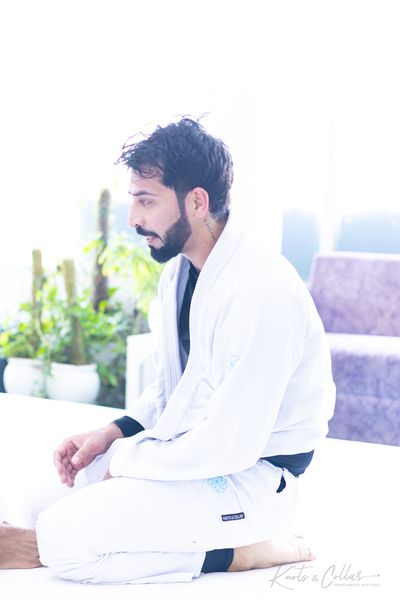
The worm guard looks like a fancy guard. In this Gi class from our mats in New Delhi, Professor Binish Sukhija treats it as a lesson in something else: how complex a position can be, and how you can make complex things simple. It starts with one question. What do you do when nobody gives you the sleeve?
The answer is the lapel, and from it, half a worm guard, a get-up sweep you have already drilled in the warm-up, and a clear way to finish on top or on the back.
Watch the class first, then use the notes underneath when you drill it.
Class chapters
- 0:00 Intro
- 0:37 The technical get-up
- 1:51 Why the lapel? Half a worm guard
- 6:12 Keep your grip: kick, drop, sit up
- 9:21 Clear the knee, take the top or the back
- 12:02 Rolling
Part 1: The technical get-up
The class starts solo, because the sweep at the end is this exact movement.
- Choose a side. Both hands on the ground, press and pull your foot back.
- Hip up, triangle, back. Don’t shuffle.
- Then one arm. Same side hand on the ground. The other can sit on the knee, act as a helmet or push.
Keep your feet planted. If they’re too far apart, you don’t have a base.
Then it goes to a partner, standing like a scarecrow with their feet apart and their weight on the far foot. Your left foot goes behind theirs, your right foot stays planted, your left hand is on the ground, and your right hand can hold any reference point: belt, sleeve, lapel. Hip up, pull back. It’s the same get-up, now with somebody attached. If you’d like to practise it on its own, it sits alongside the other warm-up movements for beginners.
Part 2: Why the lapel?
A sleeve grip gives you your partner’s shoulder and lat. You can push and pull them, and you keep them in a deadlift posture, where they can’t spring effectively.
But a good partner will fight that grip. “Nobody would give you this easy.” The replacement is the uniform. Holding it alone is a lot of muscle for minimum outcome, so you pass it under your foot, once and then again. Slowly your foot is wrapped and you have the shoulder and lat back. Our Gi vs No-Gi guide explains why grips like this only exist in the Gi.
The simple way in:
- Feet on the hips, pull the grip.
- The foot on the grip side goes out and comes over to under. It stays on the hip.
- The other foot goes around and in.
- Hand goes to the heel.
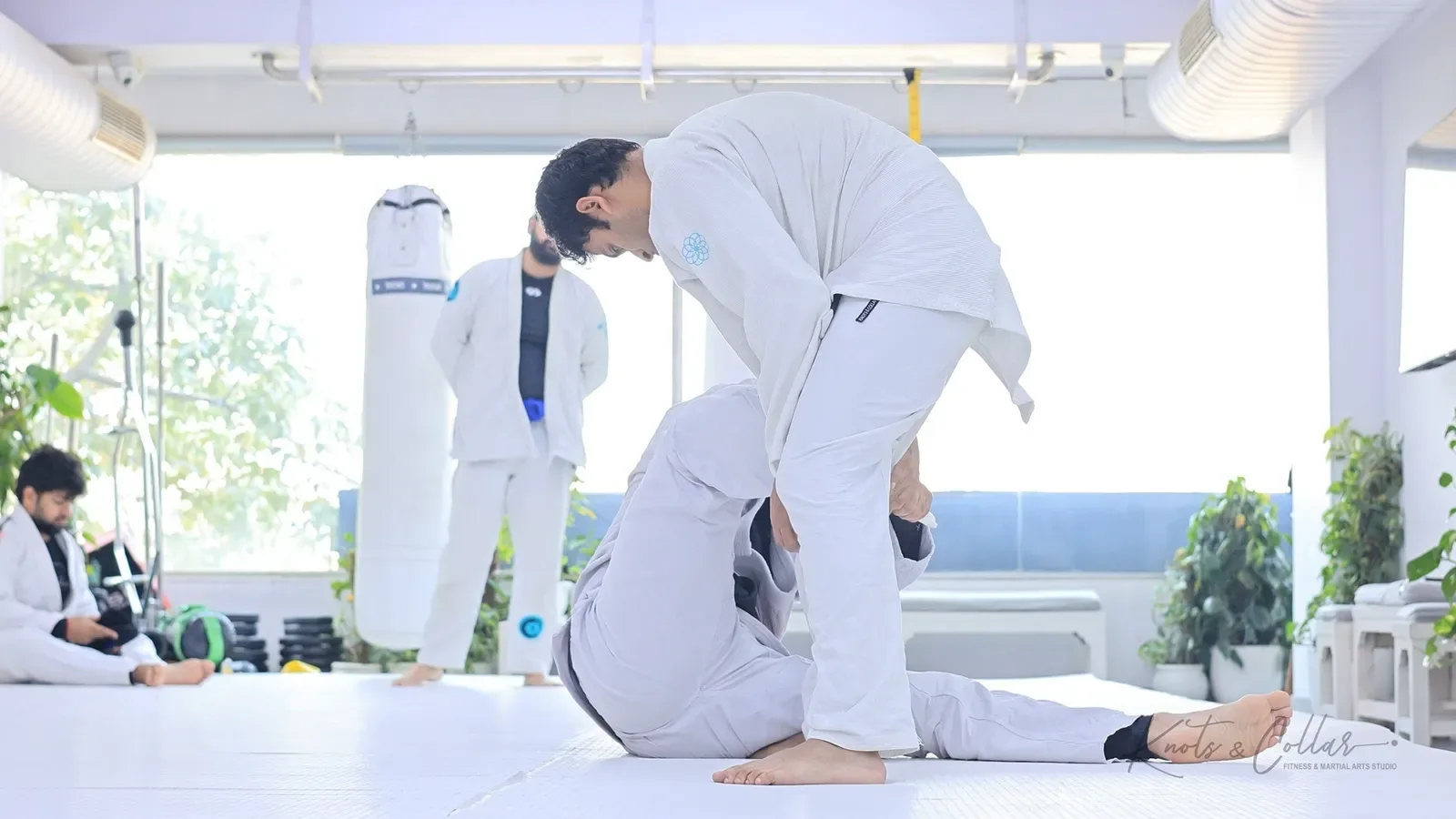
That is half a worm guard. “He can still fight. It’s 50-50, but this is how we start.”
Part 3: Keep your grip
The first entry is easier, but you have to let go of your other hand to do it, and this is a fight. Your partner will be stepping back and stepping over, and your chances of securing it come down. The second way, you don’t let go of anything.
- Kick from the right. You want your partner to step back, and the shoulder control means they can’t run away.
- Drop your left foot. Sitting up with it over the top is too much of a crunch. Left goes down, right goes up.
- Sit up and hand the grip over. If you can’t find it, look towards their back and you’ll have the range.
- Kick, up. The same technical get-up as the warm-up, with one foot now on their hip or thigh.
“This is enough. You don’t need to go 100%. This is enough to pull somebody down.”
Part 4: Clear the knee
If your partner’s knee is inside, they’re still playing some kind of guard. Use your forearm to pass the knee and take the top. If it’s your first time, let the grip go and simply mount.
If you’re further along, don’t run towards their head. Run away from them: capture the top foot, fall onto your shoulder, roll and pull. Let go only when you feel you have control.
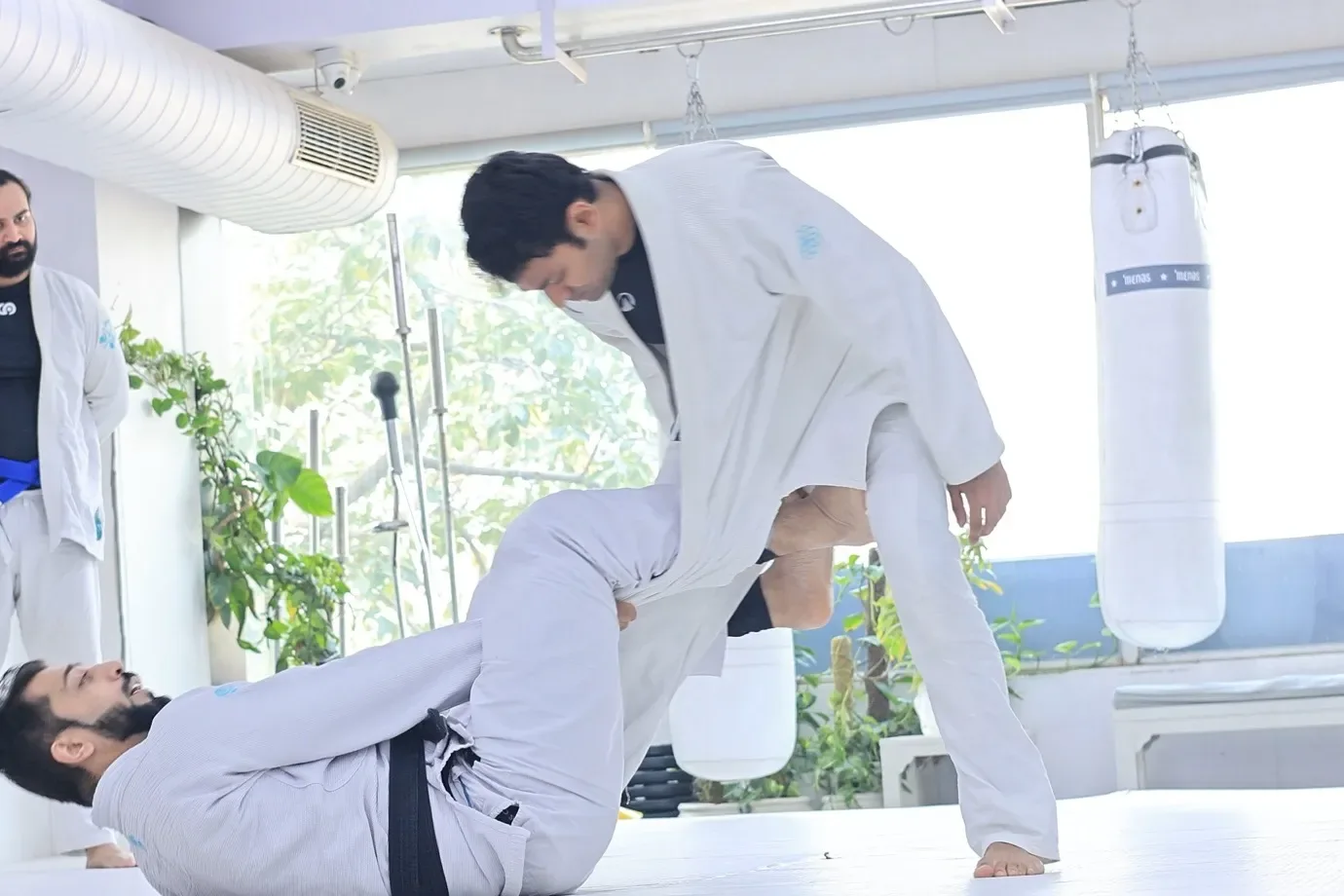
When you finish on the back, the hooks come in first. Our back control guide explains why.
How to drill it this week
- Solo: technical get-ups on both sides, feet planted, no shuffling.
- Half a worm guard: feet on the hips, pull, foot over to under, other foot around and in, hand to the heel. Five times each side.
- Kick and drop: kick from the right, drop the left, sit up and hand the grip over, without letting go.
- Finish: beginners clear the knee and mount; everyone else runs away, rolls under and takes the back.
Either of you can tap or call stop at any point. Drilling vs rolling explains why a move needs both.
This class sits alongside worm guard to berimbolo, which takes the same lapel grip into a sit-up guard, De La Riva and a back take. Our guide to guard types shows where all of this fits.
Rolling
The video closes on the live rounds that followed.
Where this class happens
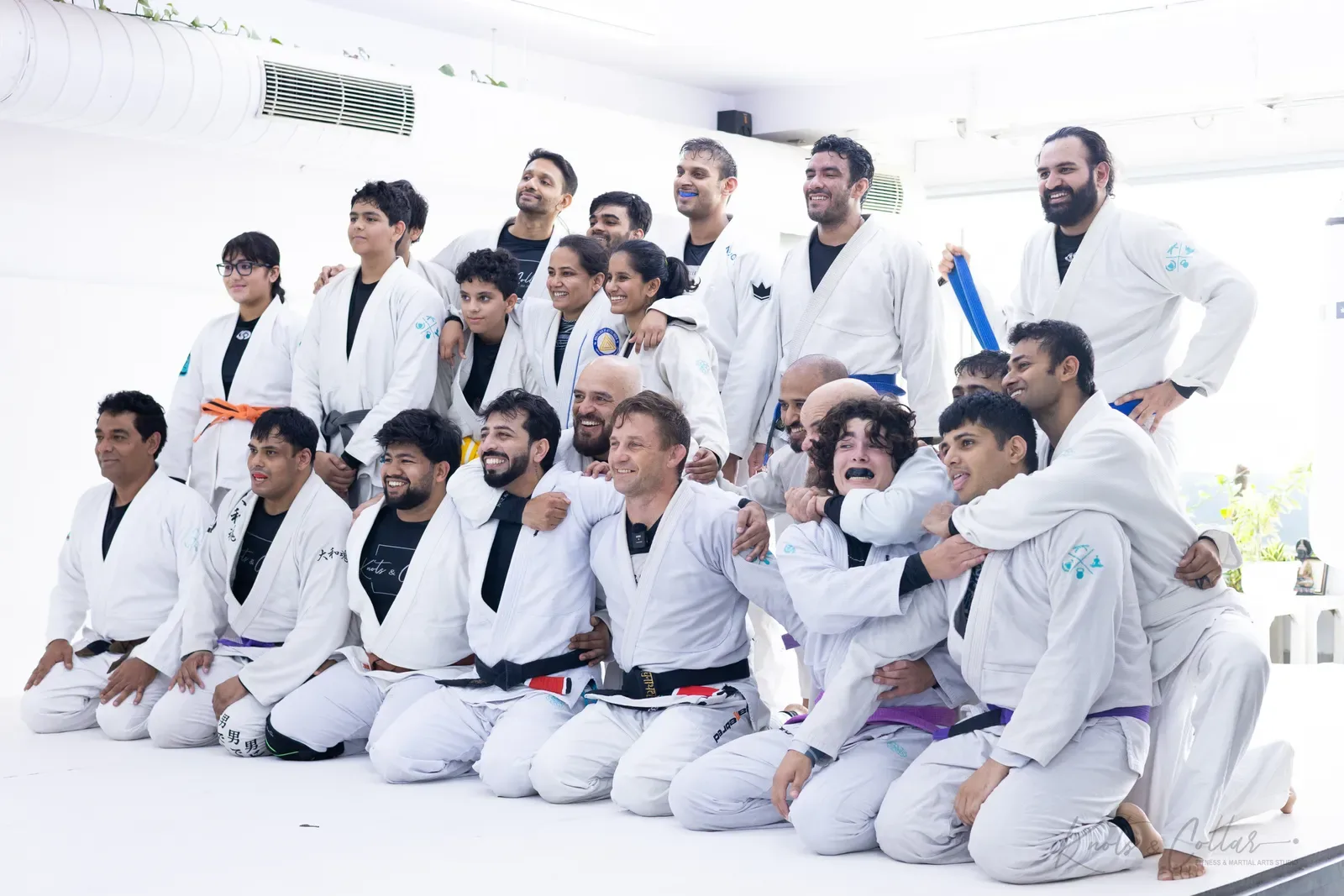
We train Gi and No-Gi through the week at our studio in Defence Colony. Our guide to BJJ in Delhi covers training in the city, and the guide to BJJ in India has the wider picture. If you are choosing where to start, here is what to look for in a BJJ academy.
Train with us
We teach Brazilian Jiu-Jitsu, Gi and No-Gi, at Knots & Collar in Defence Colony, New Delhi, seven days a week, for complete beginners and experienced grapplers alike. See the class schedule, book a free trial class, or message us on WhatsApp.
Hindi mein baat karni ho? WhatsApp par message kijiye, hum aapko class ke baare mein sab bata denge.
FAQs
What is half a worm guard?
With your feet on your partner’s hips, you pull the lapel grip, take the foot on that side out and bring it over to under while it stays on the hip. Your other foot goes around and in, and your hand goes to the heel. It is the first stage of the position: not full control yet, and more like 50-50, but it is how you start.
Why use the lapel instead of the sleeve?
A sleeve grip gives you control of your partner’s shoulder and lat, but a good partner will fight it. The uniform is the replacement. Holding it alone is a lot of muscle for very little, so you pass it under your foot, once and then again, until your foot is wrapped and you have the shoulder and lat back.
What is a deadlift posture in guard?
It is when your grip keeps your partner bent forward at the hips, as if they were deadlifting. Standing tall they can spring and move, and in that bent posture they cannot do it effectively.
How do you sit up from the worm guard without losing the grip?
Kick from your right so your partner steps back; the shoulder control means they cannot run away. Drop your left foot to the ground, because keeping it over the top is too much of a crunch. Then sit up and hand the grip over. If you cannot find the grip, look towards their back and you will have the range.
How much force does the get-up sweep need?
Much less than people think. In class Professor Binish says you do not need to go 100%. The kick and the same technical get-up from the warm-up are enough to pull somebody down.
What do you do when your partner’s knee is inside after the sweep?
They are still playing some kind of guard. Use your forearm to pass the knee and take the top. If it is your first time, let the grip go and simply mount. If you are further along, run away from them, capture the top foot, fall onto your shoulder, roll and pull for the back, and let go only when you feel you have control.
Where can I learn Gi BJJ in Delhi?
We teach Gi and No-Gi Brazilian Jiu-Jitsu at Knots & Collar in Defence Colony, New Delhi, seven days a week, for complete beginners and experienced grapplers. The class schedule is on our programs page, and you can book a free trial class or message us on WhatsApp.
Kindness Over Toughness.