
Hip Bump Sweep in Checkpoints, the Wrist Lock and the Omoplata from Closed Guard
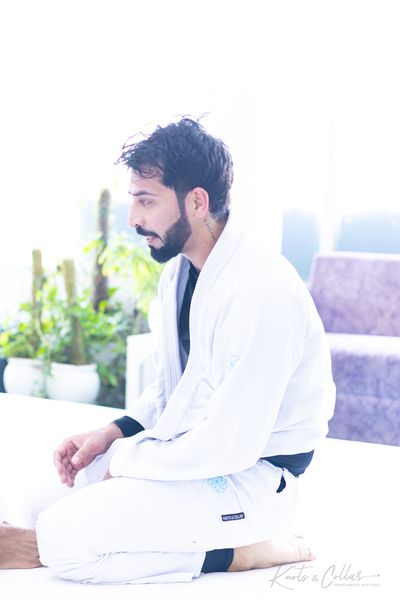
The hip bump sweep is one of the first sweeps everyone learns from closed guard, and most people do it in one breath: sit up, bump, and land in mount. In this Gi class from our mats in New Delhi, Professor Binish Sukhija slows it down into checkpoints, and then shows what to do with the three things your partner does to stop it: pushing you back, taking their arm away, and posting.
Each of those answers is an attack in its own right: a wrist lock, a back take and an omoplata. All three start from the same sit-up.
Watch the class first, then use the notes underneath when you drill it.
Class chapters
- 0:00 Intro
- 0:40 Hip bump sweep in checkpoints
- 3:00 He pushes you back: the wrist lock
- 5:09 You lost the arm: hug the back, sit through
- 7:28 Same-side dummy grip into the omoplata
- 9:53 Break the momentum, keep the ankle
- 11:22 Rolling
Part 1: The hip bump sweep, in checkpoints
From closed guard with the cross sleeve grip:
- Hip escape, open your guard, sit up and throw your belt towards your partner’s belt.
- Make them sit on their pocket. Kick your left foot outside so that, instead of sitting on their shin, they end up sitting on their backside. That’s the first checkpoint.
- Use your inner thigh to push them sideways, keep the arm in check, and be heavy on that pocket.
- Swing big, towards the posted arm. Your left foot becomes the belt, your right foot swings. “Do not do half a swing.” Half a swing leaves your leg stuck underneath, and that isn’t a proper mount.
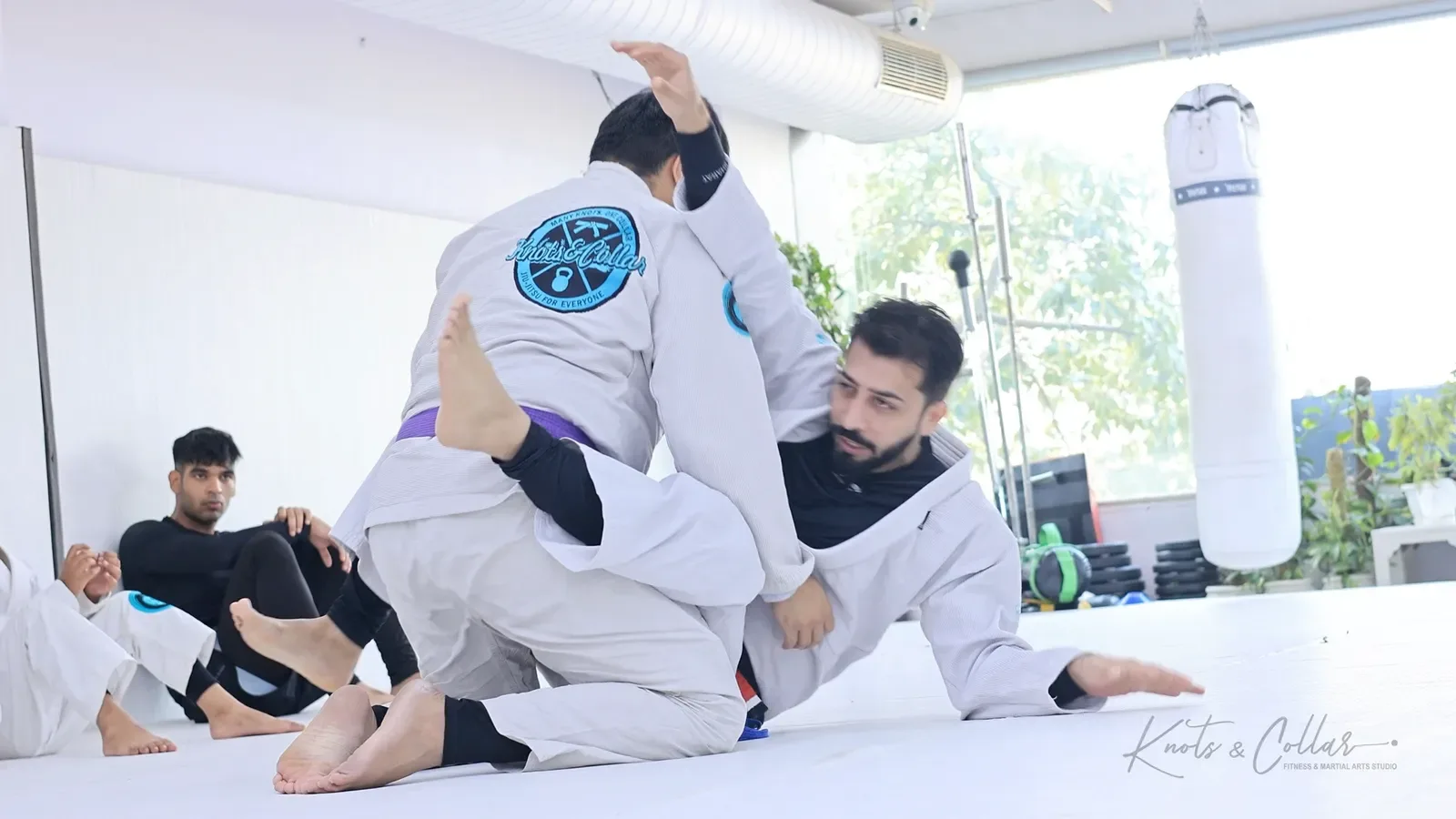
Why break it up? Doing the whole thing in one motion takes a lot of effort, and it puts both of you at risk. If your partner postures forward, your shoulder is in danger; if you finish in one go and they post, their shoulder is. The checkpoints also work in your favour: once they’re sitting on their pocket, they have to get back to their knees before they can fight back.
A quick note: if the arm crosses all the way to the other side, you don’t need the hip bump at all. Just hip escape and you’ll have the back, or the setup for a flower sweep. The idea is to get the sleeve and, ideally, stay in the centre. Our guide to guard types shows where closed guard sits among the others.
Part 2: They push you back: the wrist lock
You sit up, and instead of falling for the sweep, your partner drives you back down to the mat. Because you’re chest to chest and belt to belt, they can use that push. So accept it.
- You already have the sleeve.
- Left hand goes to the tricep or the elbow as you go back.
- Throw your shoulder over, the same shoulder shrug from the rear naked choke.
- Pull the elbow in and lean as you finish, like a deadlift.
Wrists don’t give much warning, so finish slowly and let your partner tap in good time. Our guide to BJJ submissions explains how tapping keeps everyone training.
Part 3: You lost the arm: hug the back, sit through
Sometimes your partner wins the arm back. Sometimes you let them. “We are already prepared that he will be posting the arm, because we are throwing it ourselves.”
- Hug the back and put your shoulder against theirs so there’s less space to fight.
- Make sure their arm goes towards your armpit, not inside. If it’s inside, don’t give the arm up.
- Fall towards the pocket, and as you fall, kick up and slide your grip from the shoulder to the elbow.
“It’s not even a fall, it’s actually a sit through.” You end up both looking in the same direction, on their back. From there, our back control guide covers what to do next.
Part 4: The same-side dummy grip into the omoplata
This time you keep the cross grip and add a dummy on the same side: just your forearm against their wrist, not a solid grip. You want your partner to defend it.
- Cross grip, and the free hand goes on the outside of the knee or the trousers.
- Same hip motion, then open and kick diagonally.
- You never really captured that arm, so they post with it, naturally.
- Kick once, the arm goes light, finish the omoplata.
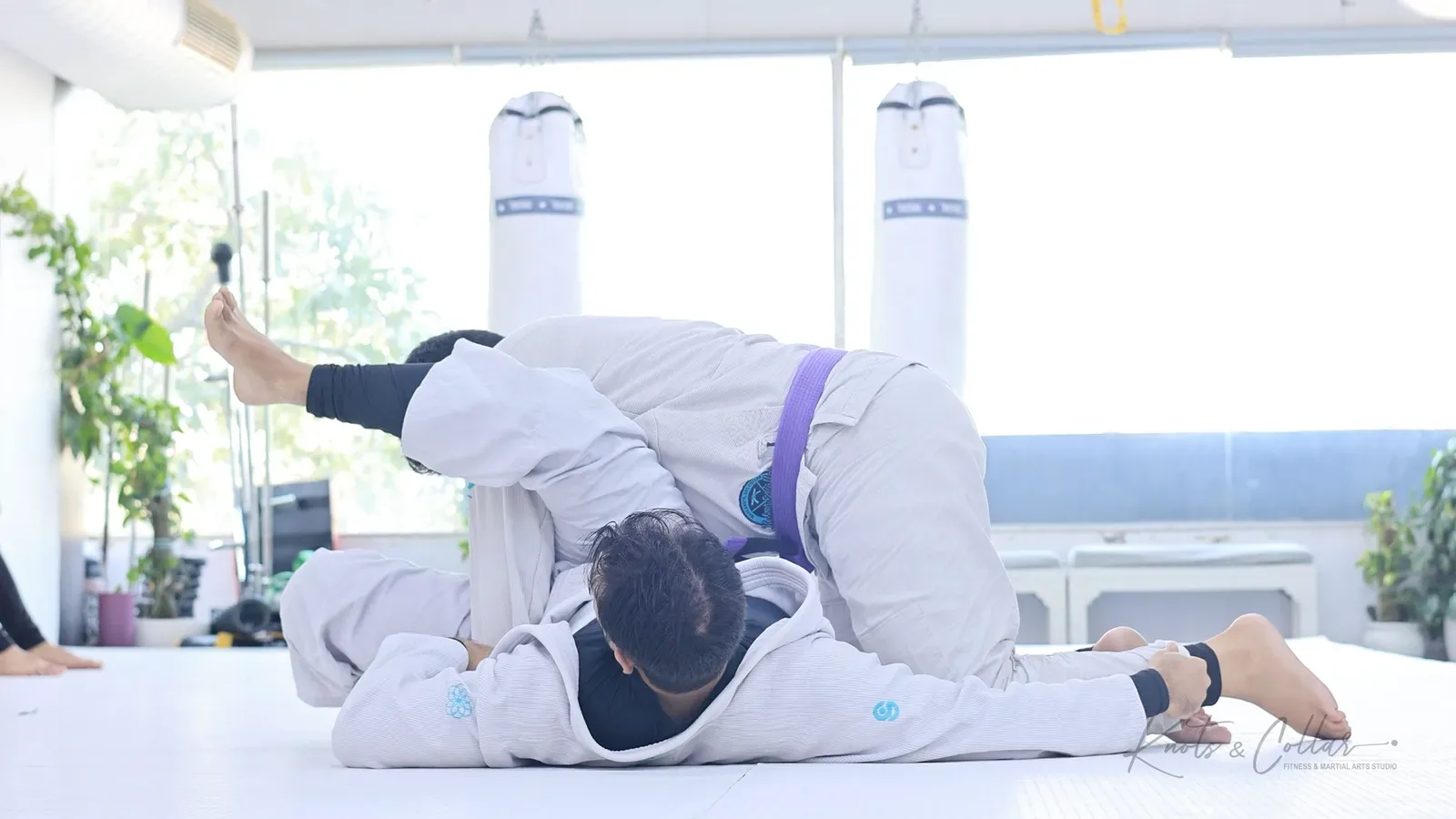
The kick is the key. “If you don’t kick and you start passing, you don’t have an omoplata.” Then you’re better off inverting or going belly down for the armbar.
Part 5: Break the momentum, keep the ankle
Last detail. You’ve got the control and you’re looking for the sweep, but your partner’s arm is already free to post. Keep swinging and they’ll most likely pass your guard. So break the momentum: kick them away, and their hand goes light.
What you don’t do is let go of their foot. Keep that ankle grip on the whole time. If you let go, they step over and you’re back to fighting the pass. With the ankle held, the sweep is still on.
How to drill it this week
- Checkpoints only: sit up and make your partner sit on their pocket. Stop. Reset. Five each side.
- The full swing: from that checkpoint, swing big towards the posted arm and land in a proper mount.
- Their reactions: have your partner choose to push you back, take the arm away or post, and answer each one slowly.
- Kick once: dummy grip, kick diagonally, feel the arm go light. No kick, no omoplata.
Either of you can tap or call stop at any point. Drilling vs rolling explains why a move needs both, and our Gi vs No-Gi guide is useful if you’re deciding where to begin.
Rolling
The video closes on the live rounds that followed.
Where this class happens
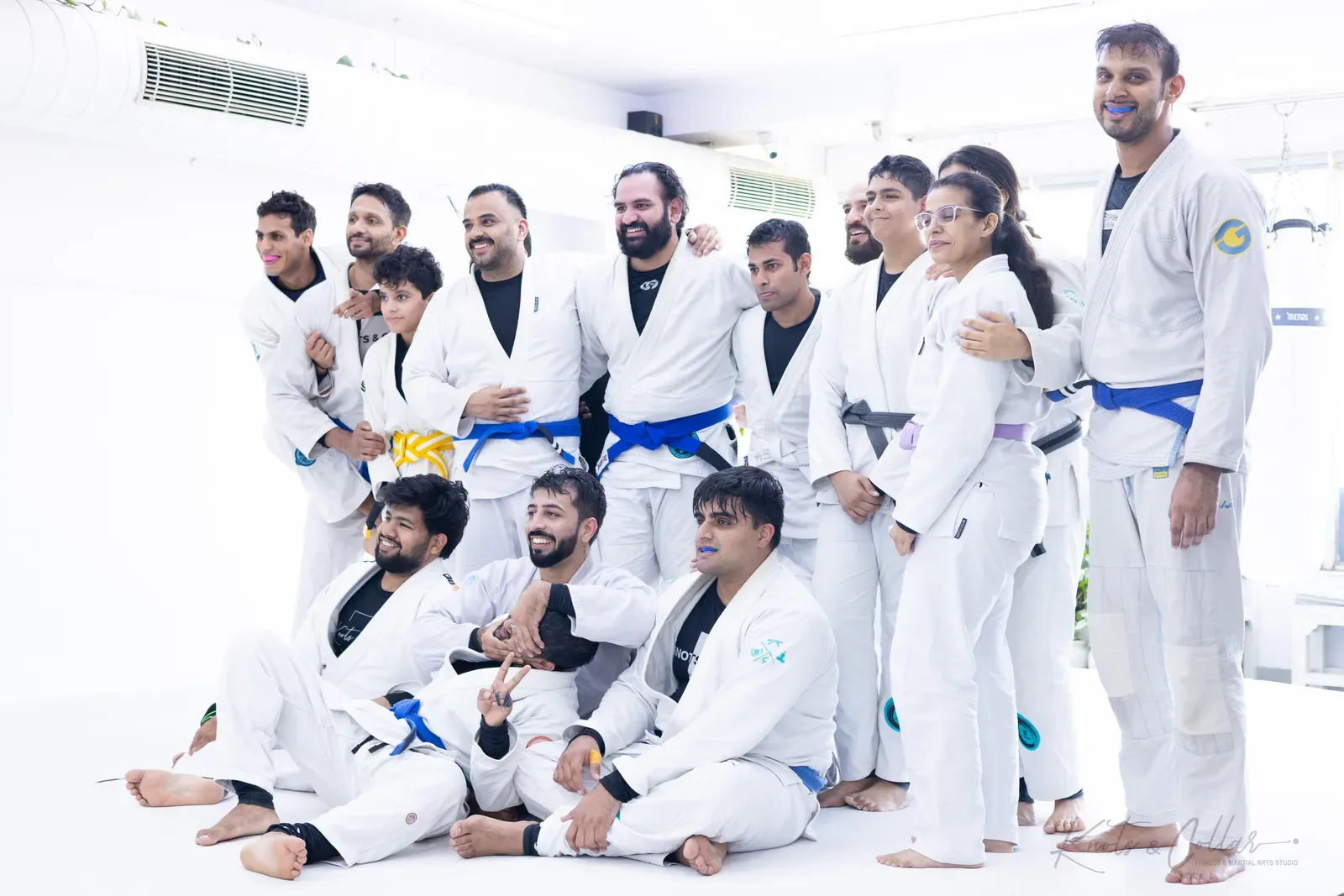
We train Gi and No-Gi through the week at our studio in Defence Colony. Our guide to BJJ in Delhi covers training in the city, and the guide to BJJ in India has the wider picture. If you are choosing where to start, here is what to look for in a BJJ academy.
Train with us
We teach Brazilian Jiu-Jitsu, Gi and No-Gi, at Knots & Collar in Defence Colony, New Delhi, seven days a week, for complete beginners and experienced grapplers alike. See the class schedule, book a free trial class, or message us on WhatsApp.
Hindi mein baat karni ho? WhatsApp par message kijiye, hum aapko class ke baare mein sab bata denge.
FAQs
Why break the hip bump sweep into checkpoints?
Doing the whole sweep in one motion takes a lot of effort and puts both of you at risk. If your partner postures forward, your shoulder is in danger. If you finish in one go and they post, their shoulder is. Checkpoints also help you: once they are sitting on their pocket, they have to get back to their knees before they can fight back.
What is the first checkpoint of the hip bump sweep?
Making your partner sit on their pocket. From the cross sleeve grip, you hip escape, open your guard and sit up, then kick your left foot outside so that instead of sitting on their shin, they end up sitting on their backside.
Why should you not do half a swing?
Half a swing leaves your leg stuck underneath, and that is not a proper mount. Swing big, towards the posted arm, with your left foot becoming the belt and your right foot swinging.
What do you do if your partner pushes you back during the hip bump?
Accept it. Because you are chest to chest, they can use that push. You already have the sleeve, so your left hand goes to the tricep or the elbow as you go back, you throw your shoulder over, and you pull the elbow in and lean as you finish the wrist lock, slowly.
How do you take the back when you lose the arm?
Hug the back and put your shoulder against theirs so there is less space to fight. Make sure their arm goes towards your armpit, not inside. Fall towards the pocket, and as you fall, kick up and slide your grip from the shoulder to the elbow. It is really a sit through, and you end up on their back, both looking the same way.
Why does the kick matter for the omoplata from closed guard?
The kick makes your partner’s arm go light. Kick once and the omoplata is there. If you do not kick and you start passing, you do not have an omoplata, and you are better off inverting or going belly down for the armbar.
Where can I learn Gi BJJ in India?
We teach Gi and No-Gi Brazilian Jiu-Jitsu at Knots & Collar in Defence Colony, New Delhi, seven days a week, for complete beginners and experienced grapplers. The class schedule is on our programs page, and you can book a free trial class or message us on WhatsApp.
Kindness Over Toughness.