
Breaking the Closed Guard: Seated or Standing, and Why Posture Comes First
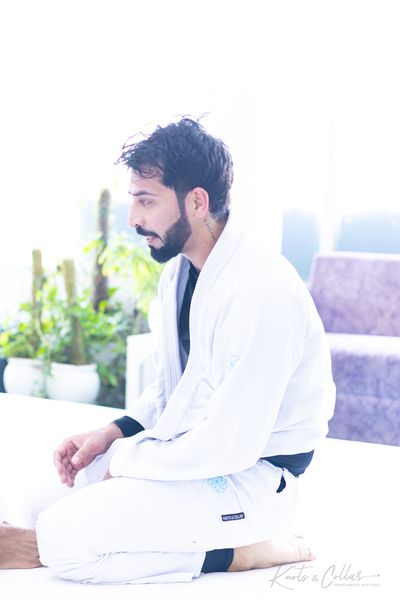
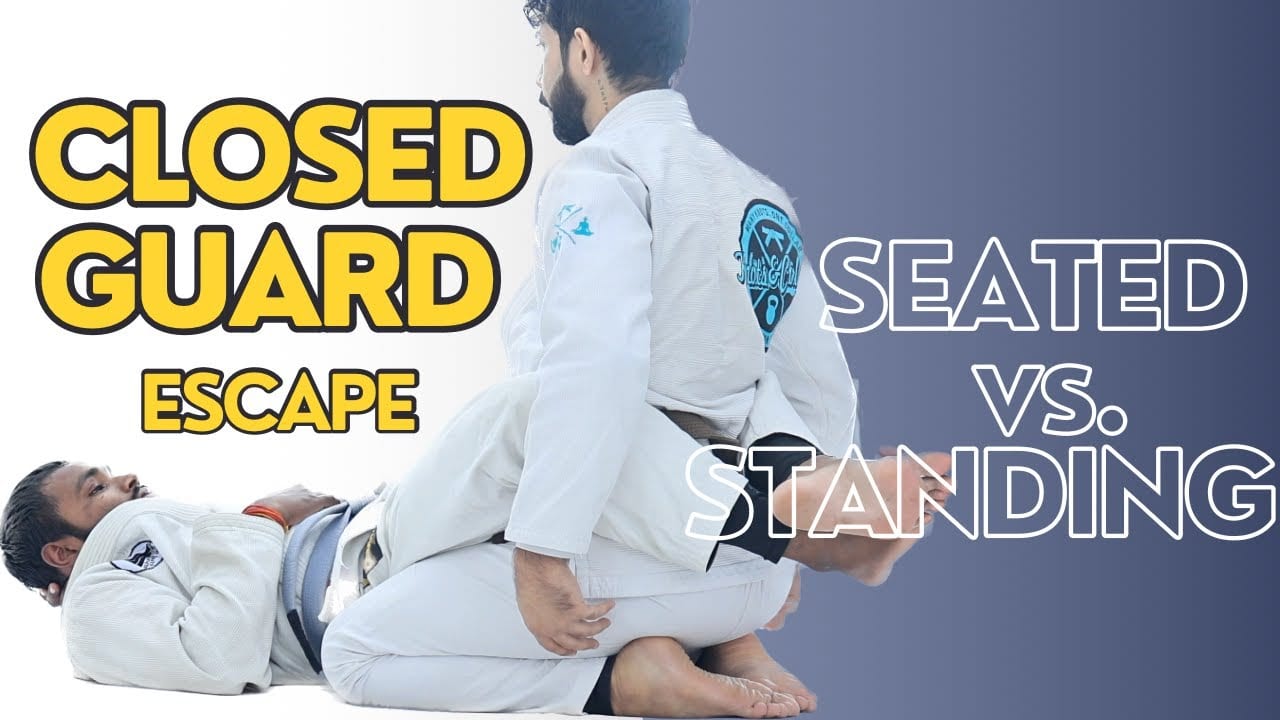
Before you pick a technique to open the closed guard, pick a type. In this short Gi class at Knots & Collar, Professor Binish Sukhija sets out the two kinds of guard break, seated and standing, how to choose between them, and the posture and footwork that make getting up in someone's guard far less of a fight.
Watch the class first, then use the notes when you drill.
Part 1: Two types, not two techniques
The class is a quick overview, so that everyone can choose the kind of pass they prefer. There are two types of guard break.
- Seated. You stay down in your posture, perhaps with him hugging you or you hugging him, and you pass from there.
- Standing. You get up and start opening the legs from your feet.
Why treat them as different? When you are seated and break the guard open, you mostly do not have to deal with his feet. You might deal with his thigh or knee, but because the distance between you is short, mounting him or finishing the pass is more likely. When you stand, however you get up, once the guard opens you have to deal with more of his legs, and finishing the pass takes more of a struggle.
Part 2: How to choose
Three things decide it:
- Preference. Which one suits you.
- Injuries. If you have an injury that suits one kind of passing, work with that.
- Conditioning. A standing break asks a lot of your legs: squats, sumo squats, holding positions. If your leg conditioning is not good enough yet, choose accordingly.
Part 3: The starting grips
Get into the rhythm quickly. One arm protects your armpit: keep the elbow in, and check his pocket with all your fingers to the side and your forearm against his thigh. The free arm takes a collar grip, like holding a steering wheel.
Then the posture. Without doing anything with the hips or the arms, only the curve of the back, you can feel the tension release. That alone makes it harder for him to use his legs. Harder, not impossible. Your arms stay relaxed; there is no weight in them.
Notice the armpit on the collar-grip side is exposed. He cannot do much with it because of the check on his hip, and the class comes back to that later.
Part 4: Getting up, knee first
The common first move is to bring a foot forward. That exposes your own heel, so do not start there. Move your foot and knee away instead.
- Head in the centre. Open your knee just to the side and lean that way. That is your base.
- Other foot to the centre. Bring your right foot in and step out.
- Touch your head to the ceiling. Rise as if you are reaching up. By the time you are almost in a half get-up posture, his guard is nearly gone.
- Then lean and use the forearm, and watch the footwork.
Do not start the break from a low position, because he can still pull you in with his knees.
Part 5: Own the centre line
As you go up, you also turn sideways. He is fighting along one line and you are on another. For him to win, he first has to square off to you again. You already have the centre line. Once you are up, start going back: keep moving your foot away.
The class then splits so each person can feel the break done on them before trying it. That feel, more than any explanation, clears up most of the doubts.
How to drill it this week
- Choose your type: try both for a few rounds and note which suits your body, your injuries and your legs.
- Grips and posture: armpit protected, hand on the pocket, collar grip, arms relaxed. Feel the tension go when your back changes shape.
- Knee out first: head centre, open the knee, lean, other foot to the centre, head to the ceiling. Ten slow reps.
- Turn as you rise: partner tries to square up to you; you keep the centre line and step back.
Either of you can tap or call stop at any point. Our guide to training without getting injured is worth a read before you add the standing version.
From the other side of the same position, the hip bump sweep class shows what the bottom player is trying to do. The guide to guard types places the closed guard among the rest.
Where this class happens
We train Gi and No-Gi through the week at our studio in Defence Colony. Our guide to Gi BJJ in India covers training in the uniform, and the guide to BJJ in Delhi covers training in the city.
Train with us
We teach Brazilian Jiu-Jitsu, Gi and No-Gi, at Knots & Collar in Defence Colony, New Delhi, seven days a week, for complete beginners and experienced grapplers alike. See the class schedule, book a free trial class, or message us on WhatsApp.
Hindi mein baat karni ho? WhatsApp par message kijiye, hum aapko class ke baare mein sab bata denge.
FAQs
What is the difference between a seated and a standing closed guard break?
In a seated break you stay down, in posture, and open the guard from there. Once it opens you mostly deal with his thigh or knee rather than his feet, and because you are close, finishing the pass or reaching mount is more likely. In a standing break you get up and open the legs from there, which means dealing with more of his legs and more of a struggle to finish the pass.
How do you choose between a seated and a standing guard break?
Three things from this class: which you prefer, any injuries that suit one type better, and your conditioning. Standing breaks ask a lot of your legs, with squats and holds, so if your leg conditioning is not there yet, choose accordingly.
What grips do you start with inside the closed guard?
One arm protects your armpit with the elbow in, and that hand checks his pocket or hip with all the fingers to the side and the forearm against his thigh. The other hand takes a collar grip, like holding a steering wheel. Your arms stay relaxed with no weight in them.
Why does posture matter so much in the closed guard?
In this class, simply changing the shape of the back, without doing anything with the hips or arms, releases the tension and makes it harder for the bottom player to use his legs. Harder, not impossible, but it is the first thing to fix.
Why should you not bring your foot forward first?
Bringing your foot forward exposes your own heel. Instead, keep your head in the centre, open your knee out to the side and lean that way for base, then bring the other foot to the centre and step up.
Why turn sideways when you stand up in someone's guard?
Turning sideways as you rise puts you on the centre line. To win, he first has to square off to you again, while you already own the centre. Once you are up, move your foot away and keep working back.
Where can I learn Gi BJJ in Delhi?
We teach Gi and No-Gi Brazilian Jiu-Jitsu at Knots & Collar in Defence Colony, New Delhi, seven days a week, for complete beginners and experienced grapplers. The class schedule is on our programs page, and you can book a free trial class.