
How to Escape the Back Mount: Posture First, Then the Step Over

The common instinct under a heavy back mount — both hands to the neck — is what makes you unable to breathe. This full No-Gi class from our mats in New Delhi fixes the posture first, then walks out of the position step by step.
Almost every white belt has been here: belly down, a heavier partner on your back, both hands clamped to your neck, no air and no plan. This class covers the whole sequence out of it — the posture, the step over into half guard, what to do when your partner switches to technical mount, and how to answer the gift wrap — and ends with live rounds so it gets tested under real pressure.
Watch the class first, then use the notes underneath when you drill it.
Class chapters
- 0:00 If there is a bend, he wins
- 0:18 Back mount escape
- 0:36 Back mount vs back control
- 1:15 Don’t sandwich your arms
- 2:50 Step over, pass the knee
- 4:09 Knees wide to half guard
- 5:23 Technical mount
- 8:34 Stretch wins the fight
- 10:26 Hands over, walk away
- 10:54 The gift wrap
- 13:11 Live rounds
Back mount is not back control
The class opens by naming the position properly, because the two get confused constantly.
Back mount is regular mount with one difference: the person underneath has turned belly down. The top person has not moved. You gave up the space, you turned away, and now they are on your back.
Back control is what comes next — hooks in, a seat belt grip over the shoulder and under the arm, and the rear naked choke on its way. Our guide to back control covers that position from the top.
Escaping the back mount is what stops the second thing from happening. Your partner may be sitting up on you, or sprawling flat with their chest against your back hunting the choke. The sprawl is the heavy one.
The mistake: both hands to the neck
This is where most people lose the position before they have even tried to escape it.
With a partner sprawled on you, the instinct is to bring both hands up to protect the neck. That puts both arms underneath your own chest — so you are sandwiched between their chest, your arms and the floor. In the class the demonstration is blunt: the moment the sprawl goes to full weight, you can hear the difference in the voice underneath. There is no air.
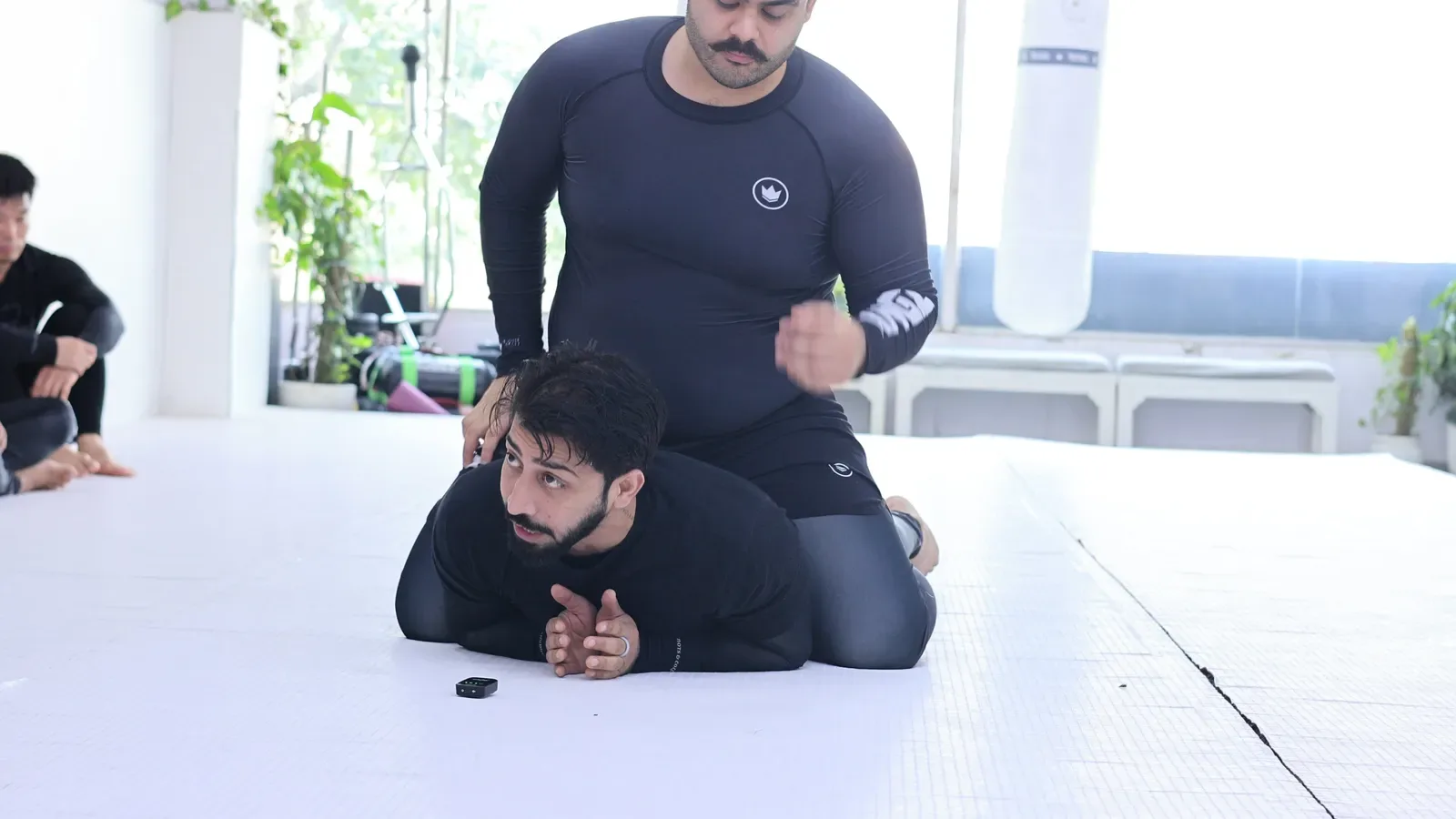
Survival comes before escape. If you cannot breathe, the rest of this article is theory — and in a self-defence situation, those same seconds are when the punches land. Our honest look at BJJ for self-defence makes the same point about position before technique.
The posture that lets you breathe
Instead of burying both arms:
- Post one arm out like a pillow and rest your head on it. Your chest is no longer trapped under your own limb.
- The other hand protects that side of the neck. One arm covers one choke entry, the posted arm covers the other side.
Test it honestly: have your partner sprawl at full weight. It is still uncomfortable. But you are breathing, and you can think.
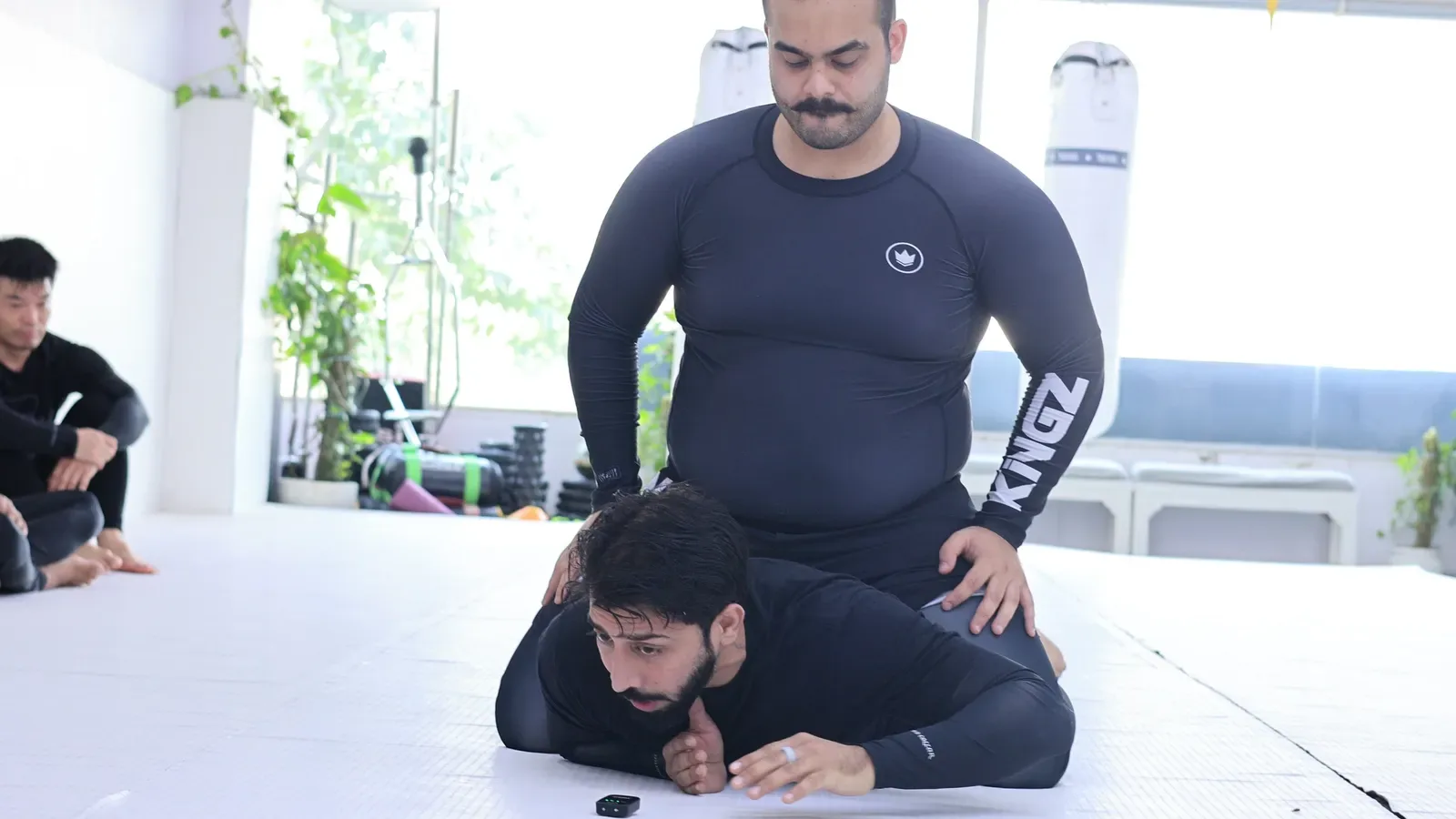
Step over, and pass the knee
Now the escape. Whichever side your neck-protecting arm is on, use the foot on that same side.
- Step over with that foot.
- Open your hip and pass your bottom knee through.
- Aim for half guard or quarter guard. That is the good outcome; ending in technical mount is the one to plan for, and it is covered below.
If their foot is too far away to step over, do not lie there hunting for it: walk your feet, capture the leg with your top foot, lift your hips and lead with the bottom knee. What you must not do is stay flat and still. Flat and still means they can walk to side control or start again on your back.
Knees wide, then into half guard
Once you have the leg captured, the details that make it work:
- Knees wide open — the same idea as a regular mount escape. It wrecks their base and exposes their ankle or heel.
- Hit them with the knee as you bring the bottom knee through. That is pressure they have to answer.
- Check with your elbow — against the thigh or against their body — as you turn towards them.
From there you are in regular half guard, and the class links back into work everybody already knows: underhook, kick, punch, belly down, finish with the back kick. If you want the other side of that position, our half guard pressure pass shows what the top player is trying to do to stop you, and the half guard roadmap lays out the rest.
When they switch to technical mount
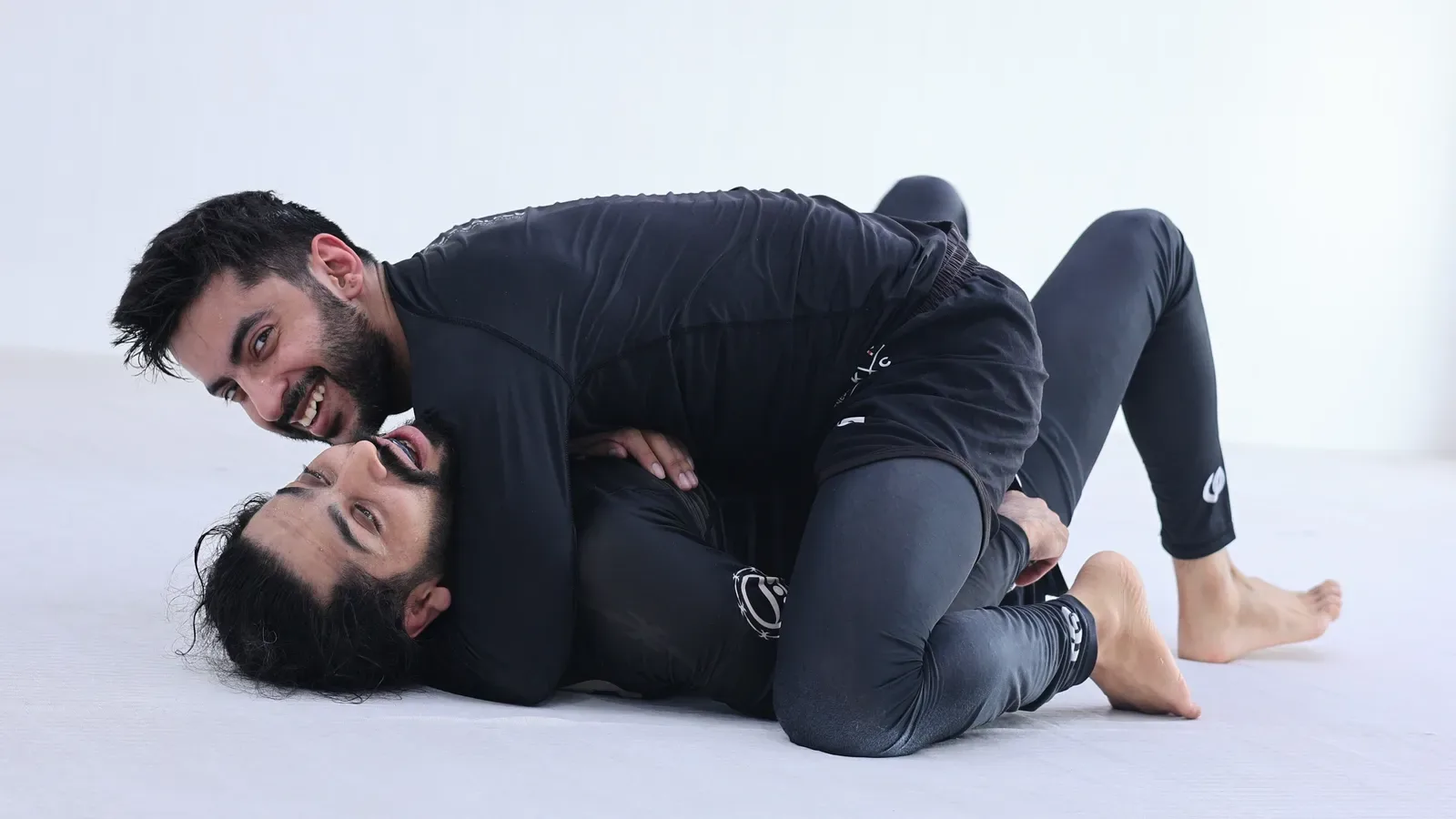
Sometimes, as you pass your bottom foot, your partner steps forward and lands in technical mount — mounted on you, but sideways, heel tucked near your hip. Also called side mount or modified mount.
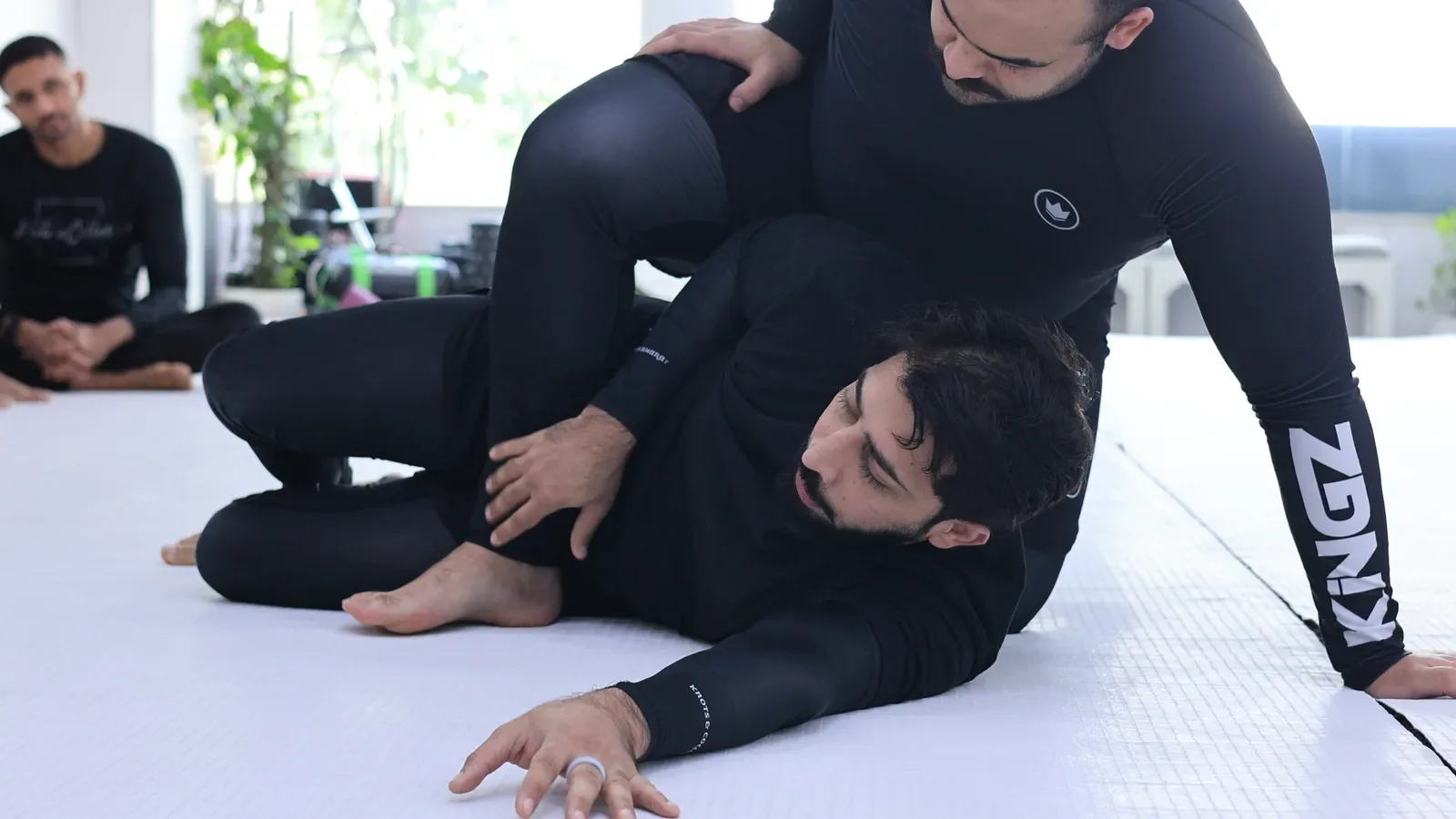
- The arm that is already inside goes against their knee — and it must be straight. Fully stretched out, aggressively so.
- The other elbow goes against their heel, the arm that was posted as your pillow.
- Drive your knee towards your own face, once, twice, three times, while keeping that arm stretched. Their base disappears.
- Hip escape, then throw both hands over to the far side. Their other knee is captured, so they cannot immediately recover closed guard.
- Turn belly down and start passing.
The line the class keeps coming back to is the whole principle in one sentence:
“If there is a bend, he will win the fight. If there is stretch, I will win the fight.”
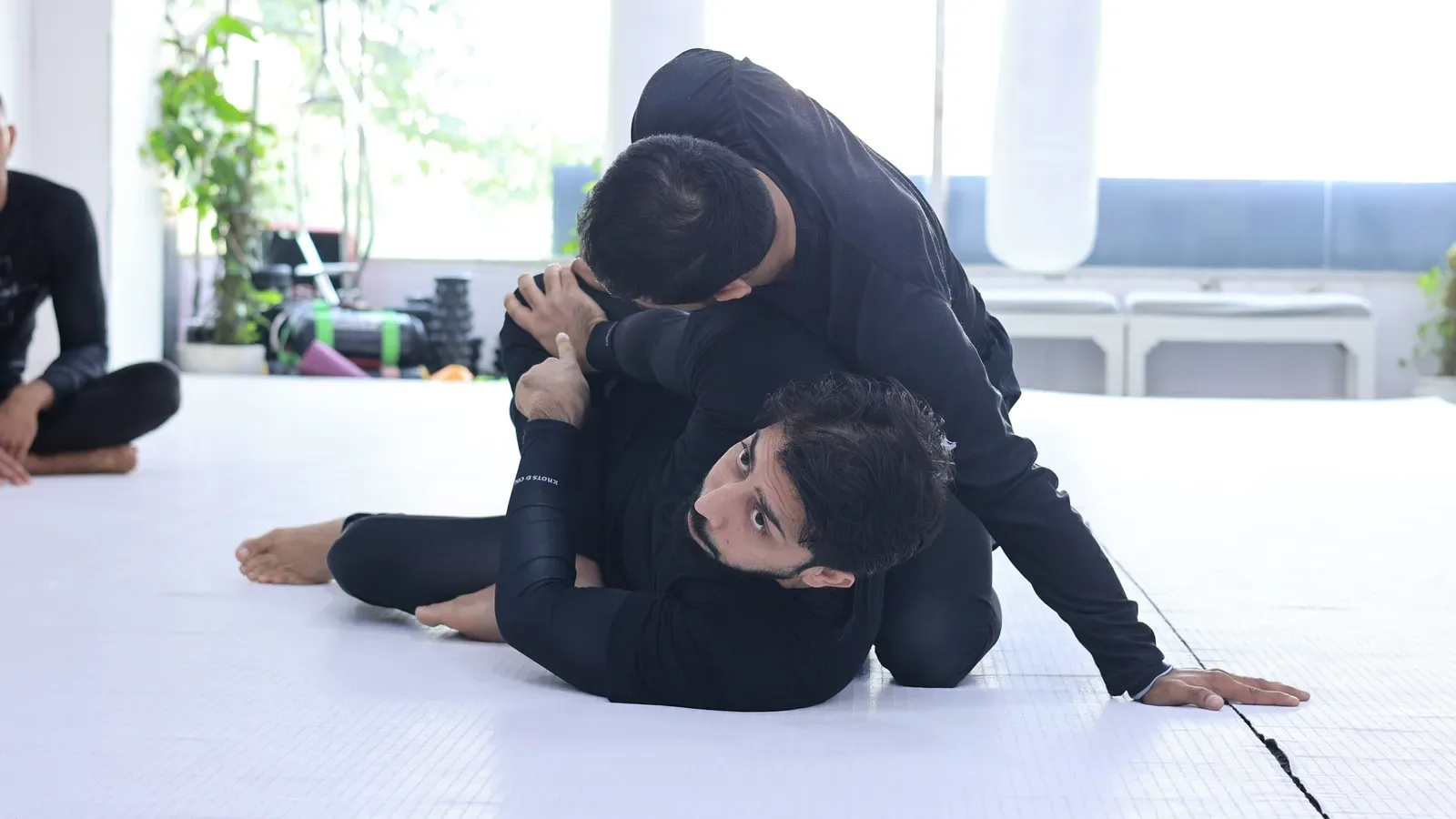
Two safety notes from the class, both worth repeating. Watch your weight on their captured knee as you come up — the position can load the knee like a leg lock, so slow down and let your partner feel it rather than running into it. And when you get up, favour the side your head is on.
Hands over, and walk away
After the hip escape there is a version where you simply throw both hands over, stay heavy, and walk away from them rather than trying to climb up towards them. Their foot is still stuck. There is no fight left in the position.
The gift wrap: accept the motion
The last piece is what to do when your partner is the one attacking — wrapping your arm across your own body for the gift wrap, on their way to back mount or back control.
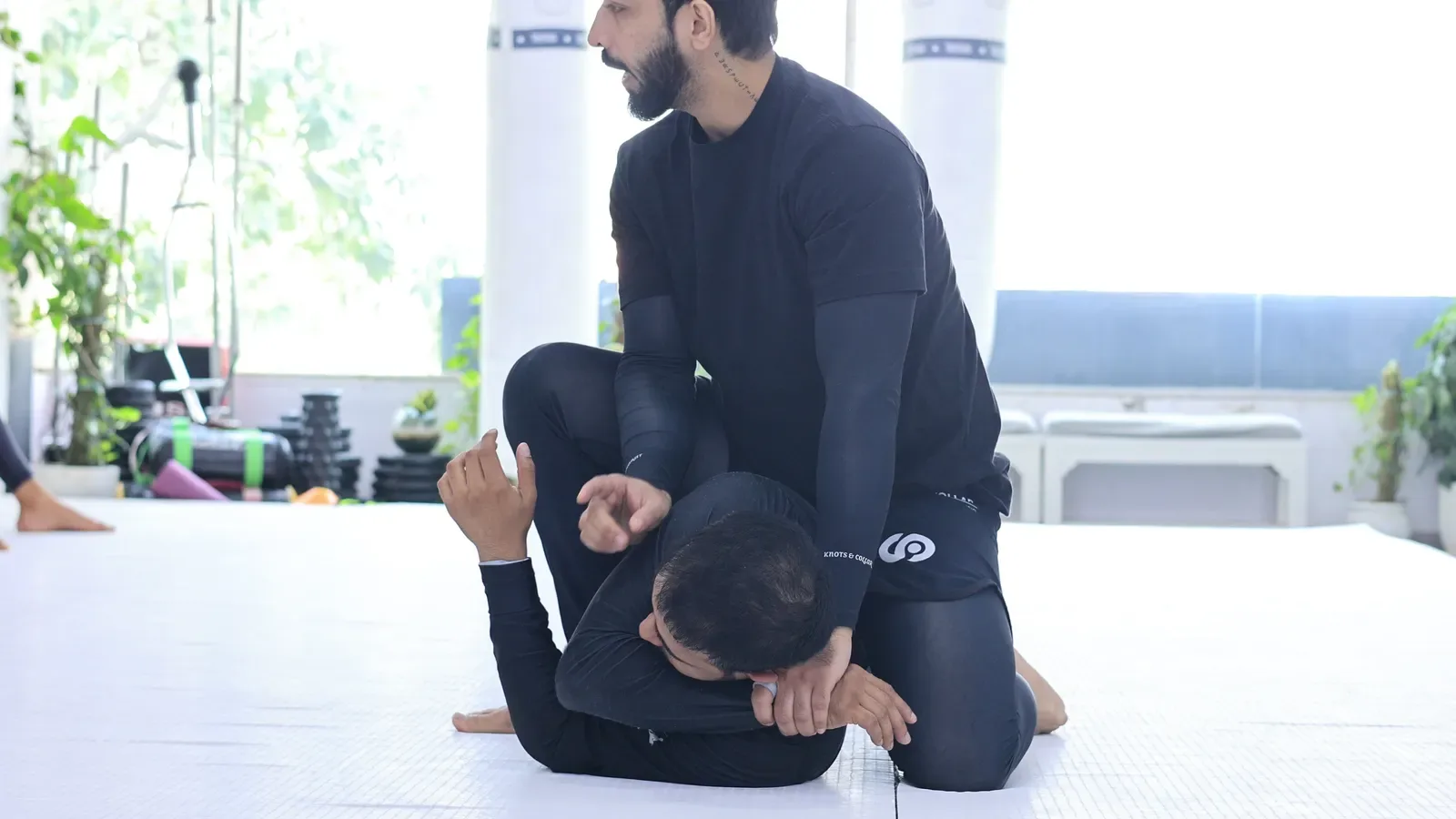
Accept the movement. Do not resist it. Fighting the turn while somebody's chest is driving into you is a strength contest you will lose, and it is the exact moment your arms get sandwiched. Go with it, keep the free arm out and protecting your neck, and arrive in the posture from the top of this article.
Then wait. Holding the posture is not the same as starting the escape — if you scramble the instant you land, they will simply take their feet to the other side, or settle into knee-on-belly. Let them commit first. Most of the time your partner gives you the foot, and then you go: foot over, capture first.
Then roll
The class finishes with live rounds, which is where any of this becomes real. A movement you have only drilled is a movement you will not find when somebody is heavy on your back and you are tired. Our note on drilling versus rolling covers how to move something from one to the other, and escaping bad positions puts this escape alongside the others every beginner needs.
How to drill it this week
- Start flat, belly down, partner on your back. Their job is to sprawl heavy and hunt the choke; yours is only to find the posture and breathe. Three rounds of thirty seconds.
- Add the step over. Same start, now escape to half guard or quarter guard. Reset every time you arrive.
- Let them take technical mount on purpose. Straight arm, elbow to the heel, knee to your face, hip escape.
- Finish with the gift wrap. Partner attacks it; you accept the motion and land in posture.
Go gently on the knee in the technical mount escape, and let your partner tap or call stop at any point. New to No-Gi? Our No-Gi beginner's guide covers what changes without the jacket.
Where this class happens
This was an ordinary No-Gi class at Knots & Collar in Defence Colony, New Delhi — not a seminar, not a demo team. White belts and coloured belts on the same mat, adults and teenagers drilling the same escape, and live rounds at the end where everybody finds out which bits they actually own.
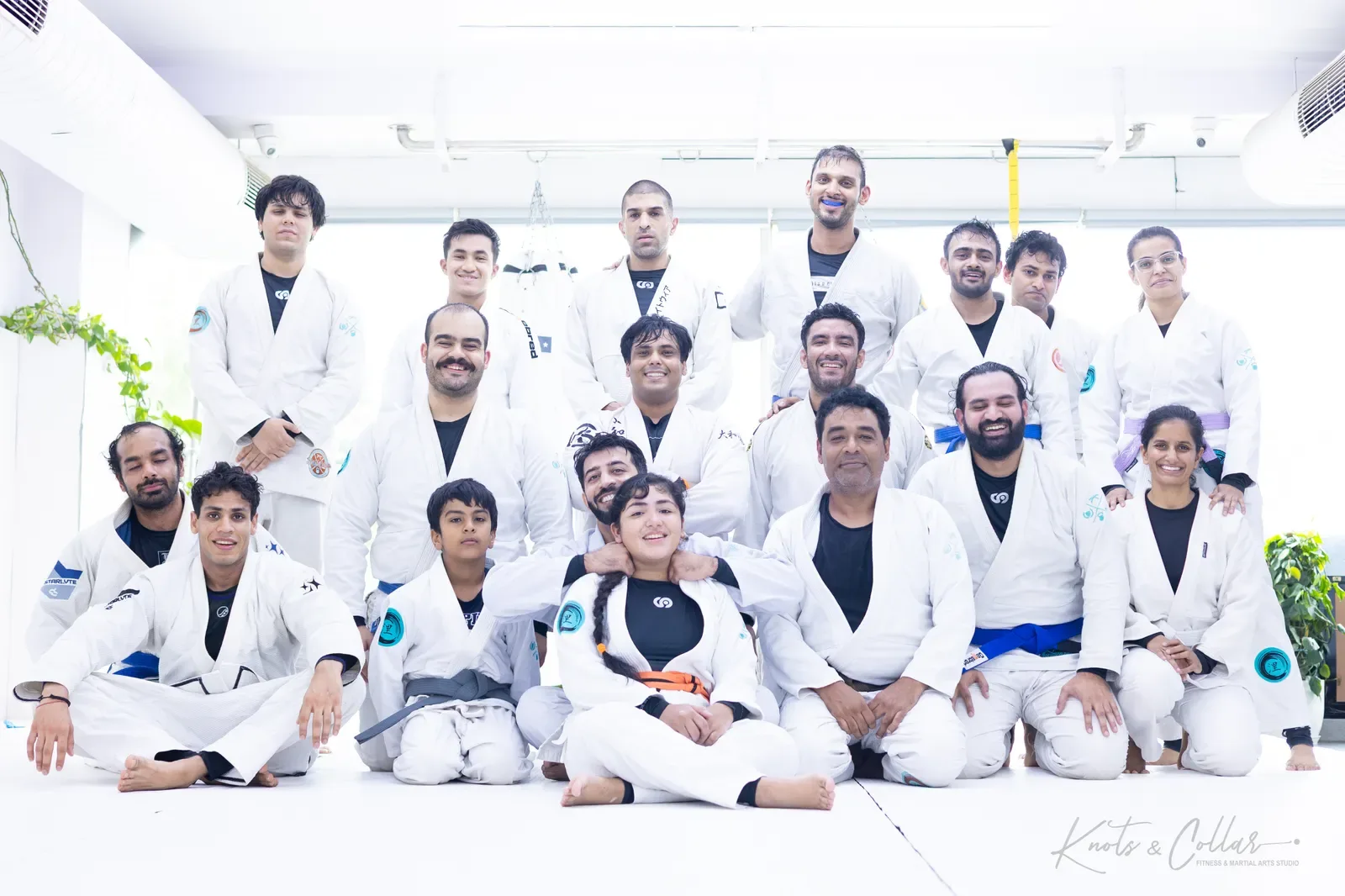
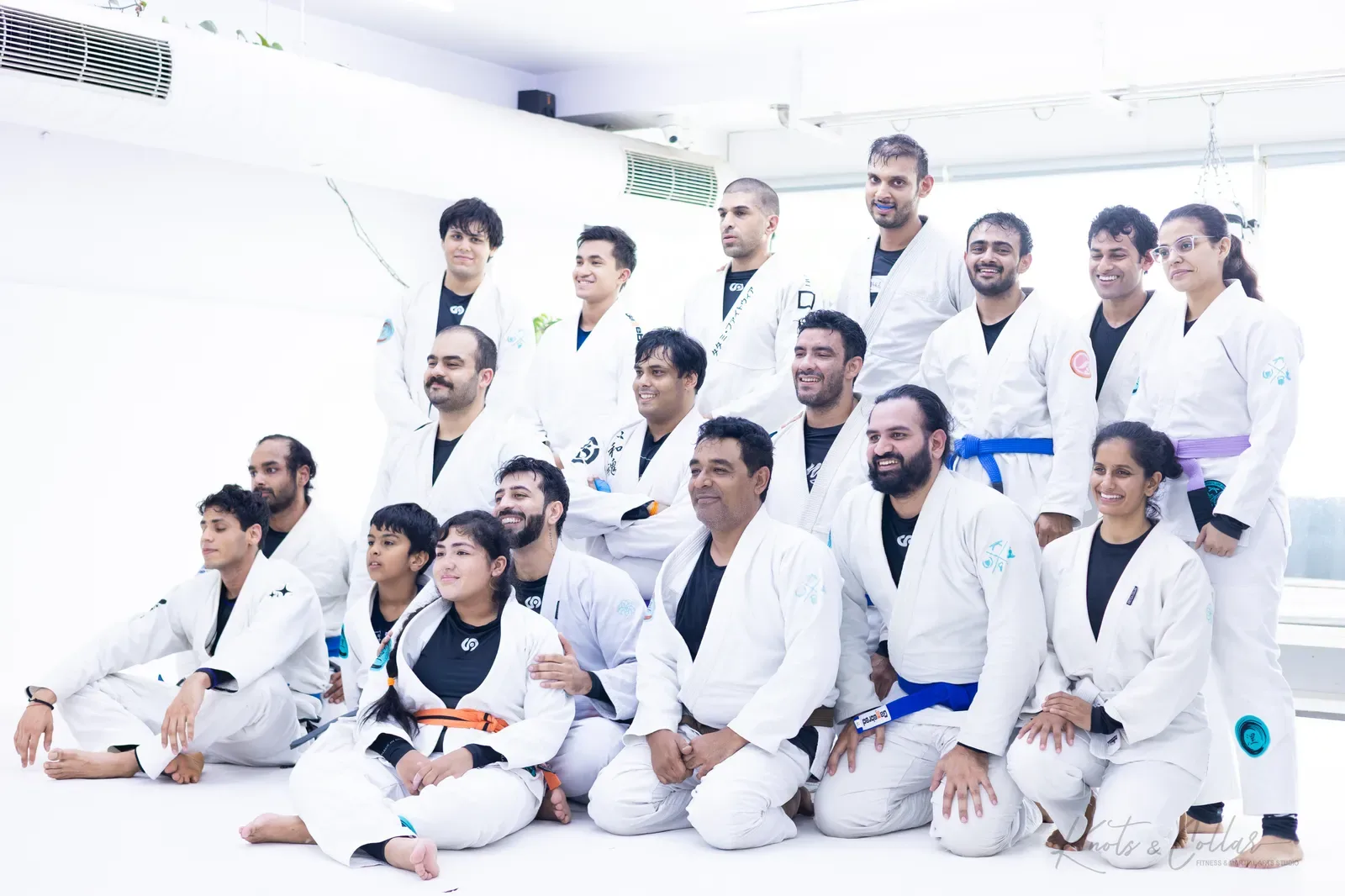
We train Gi and No-Gi, seven days a week, and members rate the studio 5.0 across 141 Google reviews. If you are choosing where to start, our guide to choosing a BJJ academy in India sets out what to look for on a mat before you sign anything — and then come and stand on ours.
Train with us
We teach Brazilian Jiu-Jitsu in the Gi and No-Gi at Knots & Collar in Defence Colony, New Delhi, seven days a week, for complete beginners and experienced grapplers alike. See the class schedule, or book a free trial class. For the wider picture of the sport here, read BJJ in India: the complete guide.
FAQs
What is the difference between back mount and back control in BJJ?
Back mount is when you turn belly down with your partner still on top of you — the mount, only you have given them your back. Back control comes after that: they get their hooks in and take a seat belt grip, which is where the rear naked choke lives. Escaping the back mount is what stops it becoming back control.
Why should you not cover your neck with both hands under the back mount?
Because both arms under your chest sandwich you between your partner's chest and the mat, and you cannot breathe. Post one arm out like a pillow and rest your head on it, and use the other hand to protect that side of the neck. You can still stop the choke entry, and you can still breathe under a full sprawl.
How do you escape the back mount step by step?
Fix the posture first. Then step over with the foot on the same side as the arm protecting your neck, open your hip and pass your bottom knee through to reach half guard or quarter guard. If their foot is too far away, walk, capture the leg with your top foot, lift your hips and lead with the bottom knee.
What if they switch to technical mount while you escape?
Put the hand that is already inside against their knee and straighten that arm completely — a bent arm loses the fight. Place your other elbow against their heel, drive your knee towards your own face to break their base, then hip escape, throw both hands over, turn belly down and start passing.
What should you do when your partner goes for the gift wrap?
Accept the motion instead of resisting it. Turning against a gift wrap when their chest is heavy on you costs energy you do not have. Go with the turn, keep the arm out and protecting your neck, hold the posture until they settle, and only then start working.
Is this back mount escape the same in the Gi?
This class was No-Gi, and the ideas carry over: posture before escape, a straight arm rather than a bent one, and the step over into half guard. In the Gi your partner has collar and sleeve grips available, so expect the choke entries to come sooner and the same posture to matter more.
Kindness Over Toughness.