
X-Guard Entry: Intercept, Kick Up, Sweep and the Half Get-Up

Sit square in front of someone and they can charge straight in. In this No-Gi class from our mats in New Delhi, Professor Binish Sukhija builds an X-guard entry that starts with an angle, and then answers everything that goes wrong after it: when your partner won’t move, when they’re heavy, and when you’re late.
It’s a class about having the next answer ready. Catch them in the air and you have the sweep. Miss it and you have the get-up. If the get-up is tough, you still have somewhere to go.
Watch the class first, then use the notes underneath when you drill it.
Class chapters
- 0:00 Intro
- 0:38 Take the angle: move away, intercept, kick up, fall
- 2:58 Arm under, make him move; push fails, pull
- 5:25 Fight the supporting foot, tripod sweep
- 7:10 Timing
- 7:39 Catch him in the air; late? Half a get-up
- 10:22 Get-up tough? Pass the foot over the head
- 12:04 Rolling
Part 1: Take the angle
If your partner is looking one way, you’re not in that line. Turn on your side. You don’t want to start where somebody can charge forward and take an immediate mount, or start pushing you backwards.
For them to fight into you, they first have to turn towards you. “The moment that you turn, we will find some advantage.” If guard itself is new to you, our guide to guard types explains how your legs do this kind of work.
Then the entry itself:
- Their right foot forward, your left foot forward.
- Your arm goes through, towards the knee pit. The more your arm stretches, the easier it is.
- Let them move towards you, and intercept.
- Fall onto the shoulder and kick up.
- Start pulling their foot into your armpit, and fall. You land very close to this foot, with the other foot at a distance.
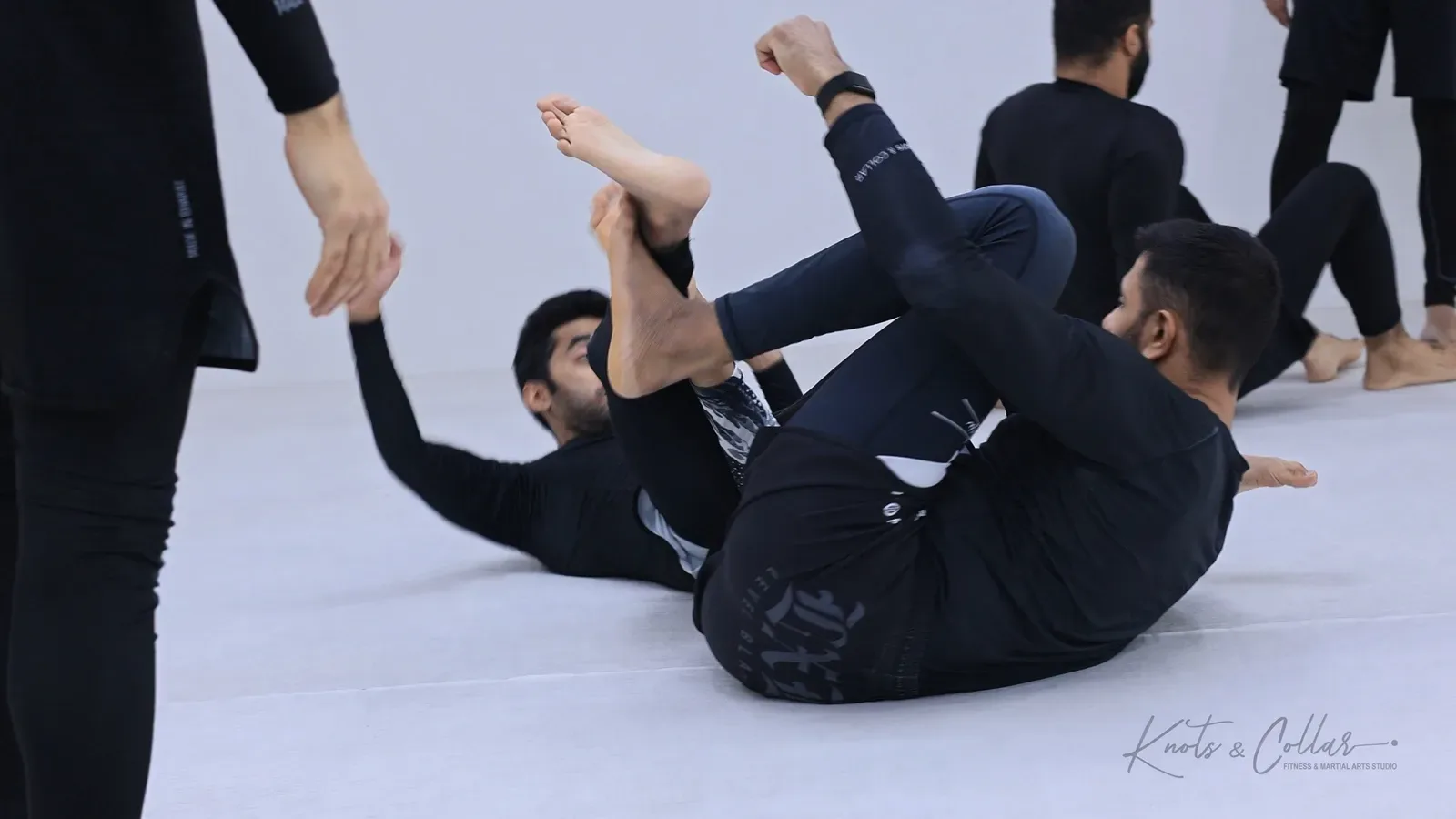
Drill only this half of the movement to begin with. Don’t start immediately: move away first, let your partner chase, then intercept.
Part 2: Under, not over, and when to pull
Your arm goes under, not over. If it’s over there isn’t much you can do, and you’ve given up on playing guard. Your partner will have side control easily.
Move away first, as if you’re going towards the back, so they have to reset and you can make them step in to be intercepted.
If there’s a size difference and you can’t move that foot at all, stop pushing. If you can’t push, you pull. Your head goes close, you grip under the knee, their shin comes close to your ear, and you fall sideways with your own shin in front.
“If the push works, good. If push fails for some reason, because he is being very strong, you better pull.”
One note from the mat: check where their foot ends up as you dive in. If it’s outside, you can swim in. If it’s inside your feet, diving in is hard, and you’re better off thinking about deep half.
Part 3: Fight the supporting foot
Read where your partner’s weight is. If they’re heavy on the free foot, kick back and up. If they’re heavy on the other side, fight the other side. Always fight the supporting limb, never the one that’s already strong. As Professor Binish puts it to the class, fighting that strong one is not a wise decision.
There’s a tripod sweep variation in here too. As you fall, kick big and your other foot comes in. Your left foot swings parallel to the mat and then up. It’s a transitional sweep, so don’t expect to stay there.
Part 4: Timing
All of this happens in momentum, while your partner is in the air. Once their foot is planted you’re simply in regular X-guard. Sweep before the foot comes down.
The same idea came up when one of the students asked about going for the mount. It should happen while you’re moving, not when you’ve stopped. When people stop they hold on stiffly, and then nobody can move. The opportunity is there while you’re both moving.
Part 5: Catch them in the air. Late? Half a get-up
“It’s a timing based sweep. If you are late and he has his foot posted on the ground, we are done with this sweep.”
When you’re late, you have a get-up instead:
- Left foot pushing them with the foot itself, not the shin.
- Right shin goes to the mat, foot planted.
- Kick and use that momentum to come up on your forearm, then your palm.
- Half a technical get-up, running into them.
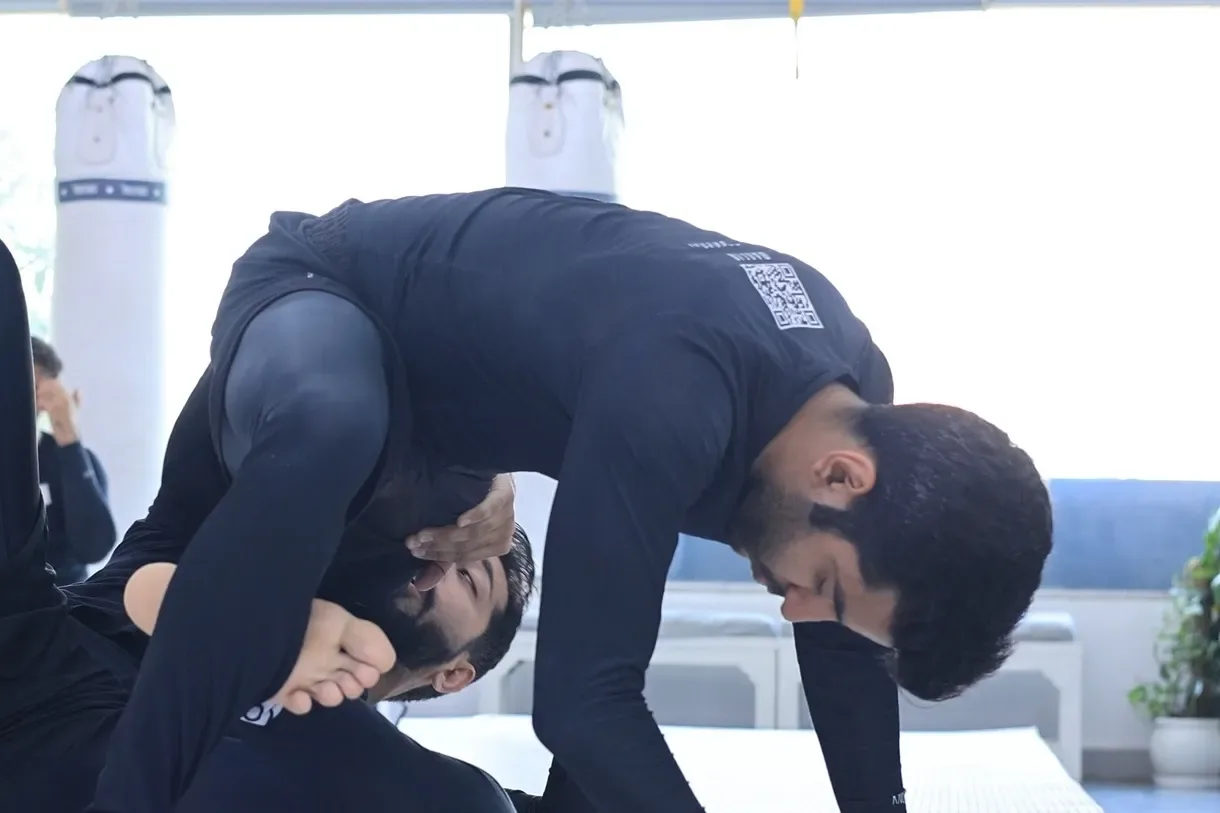
A full technical get-up can be very heavy on your neck if your partner decides to hook it. Half a get-up isn’t. If the movement itself is new, it’s one of the warm-up movements worth learning first.
“If you can catch them in the air with this foot, you will find your first sweep. If you are late with catching and they happen to post, you will find the get-up.”
And once you’re standing, remember you’re in the takedown battle, and you already have the takedown loaded.
Part 6: When the get-up is tough
Sometimes your partner is too heavy, or their legs are longer than yours, and the kick doesn’t help. Then lift that foot over their head, catch, hook, and carry on into a back escape.
If you want more on escaping and taking that position, our back mount escape class and back control guide are the next step.
How to drill it this week
- Half the movement: move away, let your partner chase, intercept, kick up, pull, fall. Nothing else.
- Push or pull: have your partner refuse to move. Stop pushing, and find the pull.
- Supporting foot: have your partner shift their weight slowly, and call out which side you would attack.
- Late on purpose: let them post, then run the half get-up from the left foot push.
Go slowly on the get-up, and either of you can stop at any point. New to grappling without the jacket? Our No-Gi jiu-jitsu beginner’s guide is the place to start, and drilling vs rolling explains why a move needs both before you can find it under resistance.
Rolling
The video closes on the live rounds that followed, with the class trying it against partners who were fighting back.
Where this class happens
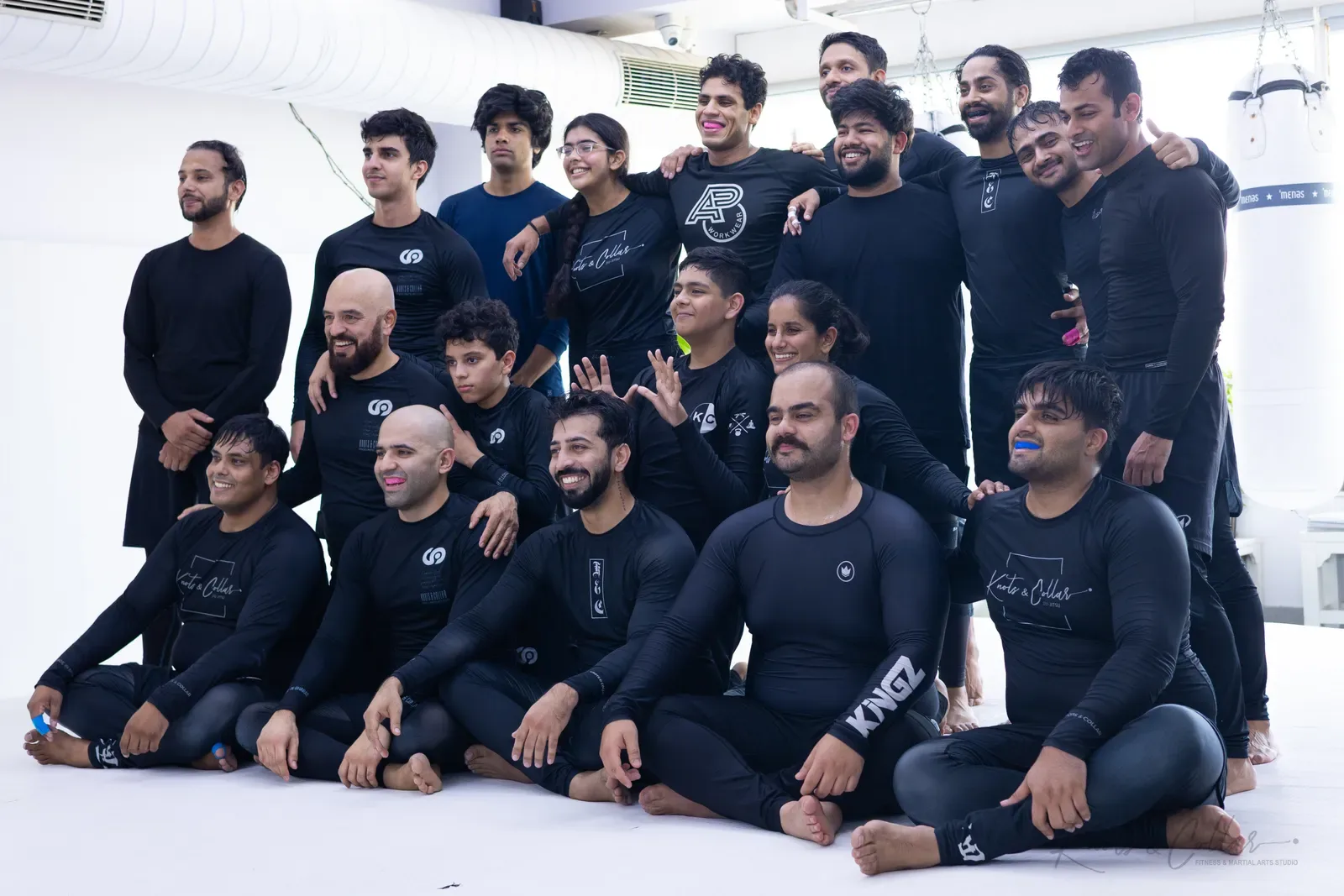
We train No-Gi and Gi through the week at our studio in Defence Colony. Our guide to BJJ in Delhi covers training in the city, and the guide to BJJ in India has the wider picture. If you are choosing where to start, here is what to look for in a BJJ academy.
Train with us
We teach Brazilian Jiu-Jitsu, No-Gi and Gi, at Knots & Collar in Defence Colony, New Delhi, seven days a week, for complete beginners and experienced grapplers alike. See the class schedule, book a free trial class, or message us on WhatsApp.
Hindi mein baat karni ho? WhatsApp par message kijiye, hum aapko class ke baare mein sab bata denge.
FAQs
How do you enter X-guard from standing or sitting?
Do not sit square in front of your partner. Turn on your side so they have to turn towards you first. With their right foot forward and your left foot forward, your arm goes through towards the knee pit. Move away, let them step in, intercept, fall onto the shoulder, kick up and pull their foot into your armpit as you fall.
Should your arm go over or under the leg in this X-guard entry?
Under. If your arm goes over, there is not much you can do from there, you have given up on playing guard, and your partner can take side control easily.
What do you do if you cannot move your partner’s foot?
If there is a size difference or they have decided not to move, stop pushing and pull. Your head goes close, you grip under the knee, their shin comes close to your ear, and you fall sideways with your own shin in front.
What does it mean to fight the supporting limb?
Read where your partner’s weight is and attack the leg holding them up. If they are heavy on the free foot, kick back and up. If they are heavy on the other side, fight the other side. Fighting a limb that is already strong is not a wise decision.
Why is the X-guard sweep timing based?
The sweep happens in momentum, while your partner is in the air. Once their foot is posted on the mat, that sweep is gone and you are in regular X-guard, so you need your next option.
Why use half a technical get-up instead of a full one?
A full technical get-up can put a lot of strain on your neck if your partner decides to hook it. Half a get-up has you running forward into them instead, so it is no longer heavy on your neck.
Where can I learn No-Gi BJJ in India?
We teach No-Gi and Gi Brazilian Jiu-Jitsu at Knots & Collar in Defence Colony, New Delhi, seven days a week, for complete beginners and experienced grapplers. The class schedule is on our programs page, and you can book a free trial class or message us on WhatsApp.
Kindness Over Toughness.